
9 of the Most Beautiful Fall Destinations
And they’re all in Ontario.
By Jessica Wynne Lockhart


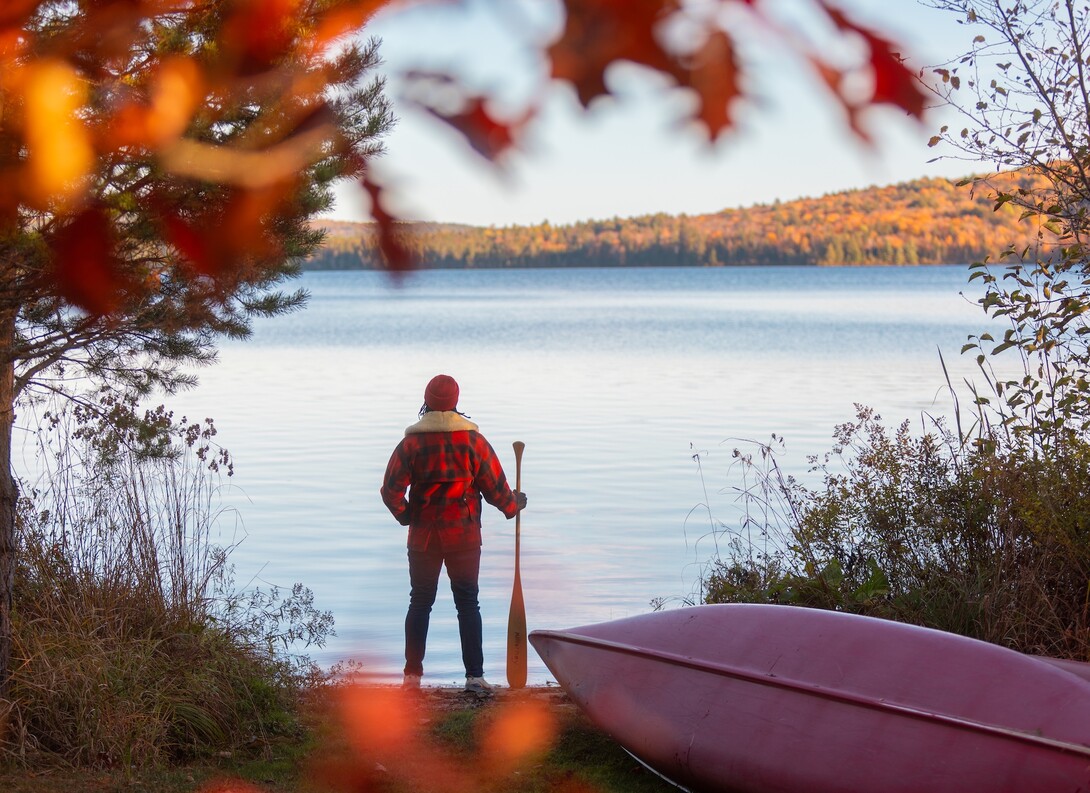

Algonquin Provincial Park is one of Canada’s favourite outdoor destinations for good reason. Located in Central Ontario, about four hours north of Toronto and three hours west of Ottawa, and spanning a massive 772,300 hectares, Algonquin Park is open year-round for camping and outdoor adventures. Algonquin Park and Ontario’s first provincial park (in fact, the first provincial park in all of Canada) was created in 1893 to restrict logging and protect wildlife.
Today, Algonquin Park features Canada’s best canoe tripping, hiking and backpacking trails, mountain biking, cross-country skiing, and thousands of frontcountry and backcountry campsites. The Park is famous for fall colours and inspired Canada’s legendary Group of Seven artists, including the enigmatic Tom Thomson.
Simply put, the best time to visit Algonquin Park is whenever and as often as you can! This article will provide an overview of access points, Algonquin Park camping, outdoor activities, a season-by-season overview and much more. Visiting Algonquin Park is an iconic Canadian experience that shouldn’t be missed.
As you’d expect for such a huge area, there are many ways to access Algonquin Park. Highway 60, running between the towns of Huntsville and Whitney, is the primary access. This scenic highway passes through 56 kilometres of Algonquin Park, which includes the Visitor Centre and Logging Museum, nine campgrounds, several private resorts, day use areas, hiking trails, canoe routes, cross-country ski areas and more.
It’s just under a four-hour drive from the GTA to the Park’s West Gate on Highway 60 (via Highway 400 and Highway 11), or just over three hours from Ottawa to the East Gate (via Highway 17). Parkbus offers regular routes from Toronto (year-round) and Ottawa (summer only) to destinations along Highway 60.
There are also several access points for backcountry canoeing and hiking located east of Highway 11 and north of Huntsville, near the towns of Kearney and South River. East of North Bay, secondary Highway 630 is used to access the more remote Kiosk campground, and the Brent campground is reached via a forest road leading south of Highway 17, east of Mattawa. Finally, there are several access points (including the Achray campground) west of Highway 17 at Petawawa, all accessed via well-maintained forest roads.
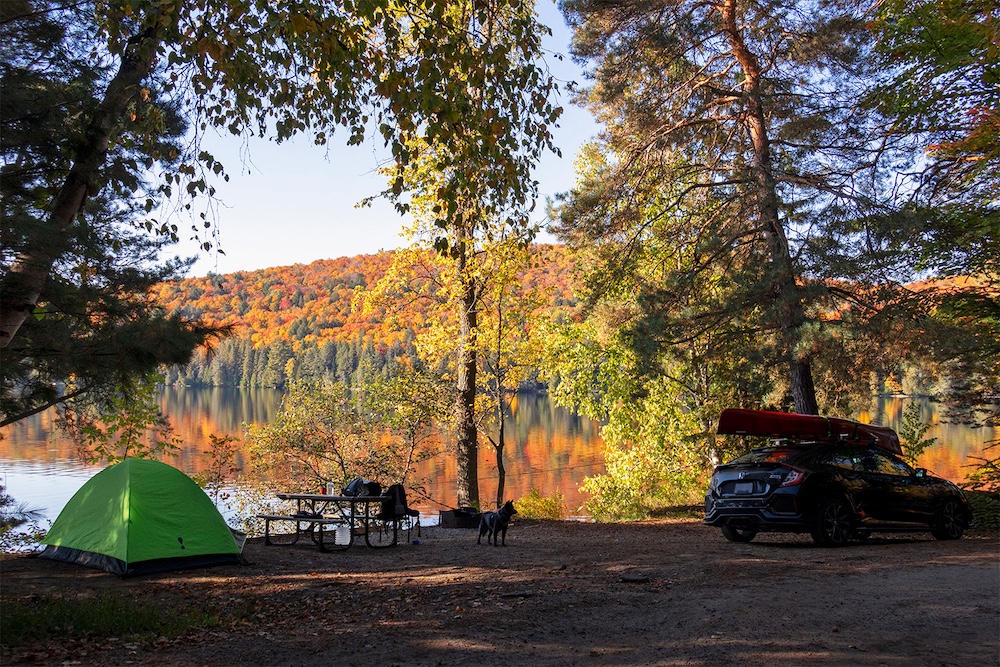
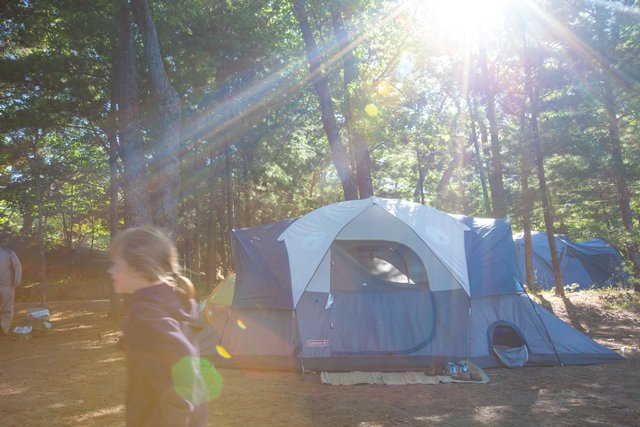
Algonquin Provincial Park boasts nearly 1,300 campsites divided amongst 12 campgrounds. There are nine campgrounds along the Highway 60 corridor alone, with the others scattered around the perimeter of the Park.
“Frontcountry” camping is also known as car camping or drive-in camping, meaning that you can access your campsite easily from your vehicle. These sites are often suitable for tent camping, trailers or RVs; some have electrical service, others do not. Some campgrounds also have pet-free and radio-free sections. Campsites come equipped with picnic tables and firepits, and campgrounds offer communal water taps and pit toilets. Larger campgrounds include comfort stations with indoor toilets, hot showers and laundry facilities. Frontcountry camping is a great way to experience the outdoors with some creature comforts.
The best Algonquin campground is a personal question that’s usually based on what you’re looking for (activities, nature photography); who you’re camping with (family, young children, friends); and where you’re coming from (ease of access). Each Algonquin campground has attributes everyone will enjoy. Here’s an overview.
Tea Lake: This small campground is located on the north side of Highway 60 at KM 11, close to the West Gate. It offers good privacy, with less than 50 sites for tent camping only. It is a good choice for hikers, as it’s close by the Whiskey Rapids, Mizzy Lake, Peck Lake and Hardwood Lookout trails. Paddlers will also enjoy being able to paddle from Tea Lake into Smoke and Canoe lakes—no portaging required—or along the Oxtongue River.
Canisbay Lake: Located at KM 23 on Highway 60, on the north side of the highway and almost halfway between the West and East gates, Canisbay Lake offers 242 frontcountry campsites, as well as 16 paddle-in sites that can only be accessed by water. The area features mature hardwood forests and beaches, and is especially popular for mountain biking, with over 30 kilometres of trails available. A section of the campground is designated dog-free and radio-free (quiet). The campground is also close to the Track and Tower and Hemlock Bluff trails.
Mew Lake: Located about halfway between the West and East gates at KM 30.6 on the south side of Highway 60, Mew Lake is a great choice for those looking for a modern campground with over 100 sites and plenty of amenities for all types of campers. There’s a mix of electrical and non-electrical campsites, with good access to hiking trails, including: Bat Lake, Two Rivers, Track and Tower and Hemlock Bluff trails. It also provides easy access to the 16-kilometre-long Old Railway Bike Trail. Mew Lake is open year-round, with a heated comfort station, outdoor skating rink and cozy yurts and cabins for winter glamping.
Lake of Two Rivers: This well-established Algonquin Park campground is located at KM 31 on the south side of Highway 60, about halfway between the West and East gates, adjacent to the Visitor Centre. Over 200 campsites suitable for tents, trailers and RVs are open early May through late October. The Two Rivers and Bat Lake hiking trails and Old Railway Bike Trail are easily accessible from the campground. Algonquin Outfitters’ Lake of Two Rivers Store is right at the entrance to the campground, providing you with grocery items, hot food (and cold ice cream), camping equipment and bike rentals.
Pog Lake: This large campground is centrally located along Highway 60, on the south side of the road. It features nearly 300 campsites and three comfort stations. The epic Centennial Ridges trail is close at hand, and you can also get onto the Old Railway Bike Trail right from the campground.
Kearney Lake: This campground at KM 36 on the north side of Highway 60 is open for the May long weekend and then mid-June through Labour Day. It features 103 non-electrical campsites, making it best for tent campers. The epic Centennial Ridges trail is close at hand, and you can also get onto the Old Railway Bike Trail if you cross the highway.
Raccoon Lake: Located five kilometres south of Highway 60, and as close to the East Gate as you can camp, this campground is set on a small, picturesque lake. It’s a quiet campground offering 48 non-electrical campsites that are best for tent campers. Raccoon Lake is open from mid-June to Labour Day. Campers can use the comfort station at the nearby Rock Lake campground. The Booth’s Rock trail is located just a few kilometres away and the Old Railway Bike Trail is accessible from the campground.
Rock Lake: Continue down the road from the Raccoon Lake campground to reach Rock Lake’s secluded campground, eight kilometres south of Highway 60 and as close to the East Gate as you can camp. This campground is a great base for those looking to paddle or hike. Over 100 campsites are available, including two barrier-free sites. The Booth’s Rock trail is accessible right from the campground, as is the Old Railway Bike Trail.
Whitefish Lake: This campground is designed for large groups, with 18 campsites accommodating 10 to 40 people. It is located at KM 37 on Highway 60.
Kiosk: This campground on Kioshkokwi Lake in the more remote northwest corner of Algonquin Park is small and quiet, with only 26 private, non-electrical campsites. It’s a great place to stay before or after a backcountry canoe trip. Showers are not available. There’s a historic cabin for rent at Kiosk, which sleeps six.
Brent: This small, quiet campground on Cedar Lake is open late April through late October, with 30 non-electrical campsites, with no shower facilities. The campground is accessed from Highway 17, on Algonquin’s north side. Hike the Brent Crater trail while there.
Achray: Located in the northeast corner of Algonquin Park, well off Highway 17 and adjacent to Petawawa, the Achray campground is located on the waterfront of Grand Lake, with close access to the spectacular Barron Canyon for hiking and paddling. The campground features 45 non-electrical sites, along with a yurt. No showers are available. The Jack Pine and Berm Lake trails are accessible right from the campground.
Are you looking to try glamping? Algonquin Provincial Park offers roofed accommodations in many different locations throughout the Park.
Camp Cabins: Mew Lake offers four rustic cabins, each with a queen bed and bunkbed, barbecue, propane heat, fluorescent lighting and more for comfortable overnight stays—year-round. Cabins sleep five and one of the cabins is dog-friendly.
Yurts: There are six soft-sided yurts at Mew Lake, each with capacity for up to six guests. These yurts have power and propane heat, along with a barbecue, and offer a unique glamping experience year-round. There’s a single yurt available for rent at the Achray campground that is only available from May through mid-October.
Drive-in Ranger Cabins: There are five former ranger cabins that are accessible by vehicle in Algonquin Park. These cabins are rustic in that they don’t have running water or electricity. Each cabin has a unique history and layout. Ranger cabins are not available for rent in the winter.
Frontcountry campsite permits for Algonquin Provincial Park can be reserved online or by phone up to five months in advance of your stay. The online reservation portal includes brief descriptions and photos of each campsite to help you choose the best for your needs.
You can also subscribe to Algonquin & Beyond for even more detailed frontcountry campsite reports and photos.
It’s important to respect the rules laid out by the Park to ensure the natural habitat remains intact and visitors can continue to enjoy the Park year to year. Check-in and check-out for frontcountry campsites is 2 p.m. If the occupants of the campsite you’ve booked have vacated before 2 p.m., however, you are usually permitted to set up camp before the 2 p.m. check-in time. You are also able to explore the Park before 2 p.m.—the permit included with your camping reservation is good for the whole day on your day of arrival and departure.
If you’d like to have a campfire, you’ll need to purchase wood from the Park or from a local supplier. As well, you cannot collect deadfall, so be sure to bring kindling to help get your fire started.
One of the most important rules is to keep a clean campsite to prevent attracting animals. If your campsite is being left attended or if you are sleeping, you must properly store your food and other attractants. The best place to store food is in your vehicle, but there are also lockers available at Pog Lake, Kearney Lake, Lake of Two Rivers and Mew Lake campgrounds.
When it comes to cleaning your dishes, do so in a bin at your campsite. Make sure to thoroughly scrape your dishes beforehand to remove any food scraps. When you’re done washing the dishes, grey water can be disposed of at the trailer sanitation station or by pouring it down the vault toilets.
Lastly, be courteous. Keep noise and light to a minimum (especially at night), don’t walk through campsites that aren’t yours, and clean up after your pets (and yourselves after you leave!).
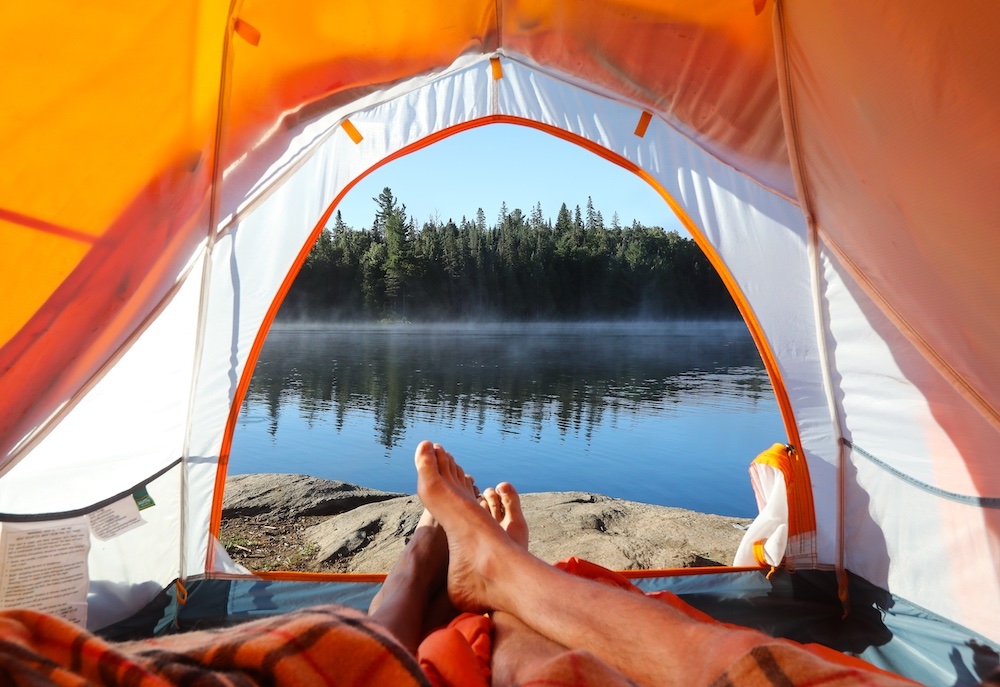
Canoeing and backpacking are the most popular ways to access Algonquin Provincial Park’s vast interior areas for backcountry camping. There are 29 access points where you can get into the backcountry by water or land. There are special rules for backcountry camping, including a can and bottle ban. Be a conscientious camper and follow the principles of Leave No Trace to protect the environment and ensure everyone has a good experience.
By definition, backcountry campsites are more primitive. Besides offering a few spaces to pitch a small tent, each offers a firepit and box privy toilet. Backcountry camping in Algonquin is the ultimate way to reconnect with nature. Most outdoor enthusiasts travel in Algonquin’s backcountry by canoe or by foot in the spring, summer and fall months, with snowshoeing and backcountry or cross-country skiing being the preferred travel methods for hardy Algonquin backcountry winter campers. The following sections will tell you more about canoeing and backpacking in Algonquin Park, and later on we’ll discuss Algonquin in winter.
With over 2,400 lakes and more than 2,100 kilometres of maintained canoe routes, Algonquin Park lives up to its reputation as one of Canada’s best places to paddle. Whether you are a beginner or an expert, there’s truly something for everyone in Algonquin Park. For your first visit, your best bet is to browse the Official Canoe Route Map produced by the Friends of Algonquin Park, which indicates access points and established routes.
For a detailed guide, read our Complete Guide to Canoe Tripping in Algonquin Park.
Here are a few highlights of canoe tripping in Algonquin from various access points.
Canoe Lake is a convenient point to access beginner Algonquin canoe routes, located along the Highway 60 corridor. The on-site Portage Store offers canoe rentals and there are a variety of easy options for overnight and multiday trips, where you can experience short portages and practice your skills. Backcountry campsite reservations must be made well in advance for this popular starting point.
Rock Lake is a pretty body of water on the east side of the Highway 60 corridor. It’s the gateway to a range of options for canoe trippers, beginner through more advanced, with portages into nearby lakes and access to many flatwater route options.
Kioshkokwi Lake—aka Kiosk—is located in the northwest corner of Algonquin Park. Not only does it feature a quiet campground that’s more private than most other areas in Algonquin, Kiosk also serves as a gateway to some of the most remote canoe tripping in the Park, suitable for intermediate to advanced trippers. Canoe rentals from Algonquin North Wilderness Outfitter are available on Highway 17 at the Highway 630 turnoff to Kiosk.
Grand Lake, located at the Achray campground, is a popular access point for the spectacular Barron River canoe route. This three- to five-day flatwater route includes a stunning canyon formation. The access road to this launch site is open from mid-May to late-October.
Lake Opeongo is one of Algonquin’s largest lakes, featuring countless islands and plenty of shoreline to explore by canoe or sea kayak. The lake features a large marsh area with great potential for moose-viewing. Opeongo serves as an access to many canoe routes north of Highway 60; canoe rentals are available onsite from Algonquin Outfitters. Algonquin Outfitters and Opeongo Outfitters also offer water taxi services to ferry you across the big lake to various portages.
Kawaywaymog Lake, also known as Round Lake, is located about 20 minutes east of Highway 11 at South River. This is a good access point for intermediate to experienced paddlers looking for harder, lesser-travelled Algonquin canoe routes.
The Tim River access point is a good place to access the Nipissing River, one of Algonquin’s best waterways for spring brook trout fishing. Located on the west side of the park, about 23 kilometres east of Highway 11 at the town of Kearney, it affords access to more challenging portage routes and generally fewer crowds than Highway 60.
Cedar Lake, also known as the Brent access point, is the starting point for the Petawawa River canoe route in Algonquin Park. This is known as one of Ontario’s best whitewater canoe trips for experienced paddlers, with great scenery. Most paddlers make a three- to four-day Petawawa River trip to finish at Lake Travers.
There are nine historic ranger cabins scattered throughout the Park that can be reserved in advance and utilized by backcountry canoeists. Many of these cabins require a couple days of travel to reach and can be a great way to break up a trip by offering you a dry and warm place to spend the night. Though they have no electricity or running water, they do have wood-burning stoves. Each cabin has a unique history and layout.
Though often overshadowed by its famous canoe routes, Algonquin is a great destination for overnight backpacking. The options for backpacking in the Park provide wonderful opportunities for those dipping their toes into backpacking, as well as more experienced backpackers who want to kick things up a notch before taking on more challenging trails like the La Cloche Silhouette and Lake Superior Coastal Trail.
The Park features three multiday backpacking trails, each with its own unique attributes.
The Eastern Pines Trail is accessed from the Achray entry point, west of Highway 17 and the town of Petawawa. It features three loops: a four-kilometre day hiking loop around Berm Lake (there are no campsites on this route); a 6.5-kilometre overnight loop around Johnston Lake; and a 17.5-kilometre overnight loop up to Bucholtz Lake, down to Stratton and back. There is also a 1.3-kilometre, there-and-back extension on the eastern edge of the largest loop that ventures out to High Falls. There are campsites along this section of trail as well. Although there are some rugged sections of this trail, with a fair amount of elevation gain, the Eastern Pines is considered to the easiest of Algonquin’s backpacking trails.
The Western Uplands is Algonquin’s premier—and most challenging—overnight backpacking trail featuring 32-, 55- and 88-kilometre loops (distances are approximate) in the hardwood hills on the west side of Algonquin Park. There are two side loops that can be done as well, around Maggie Lake and out to Loft Lake, depending on which campsites you book and whether you want to add even more distance. There are two access points to this trail. The most commonly used is at the southern end of the trail system, at the Oxtongue River Picnic Area on Highway 60. There is also access from the Rain Lake Access Point, on the western edge of the Park; this will require hiking an out-and-back section of trail along Rain Lake to get to the northern loop.
Starting from the Mew Lake Campground, the Highlands Backpacking Trail offers an out-and-back portion of trail that leads to two loops stacked on top of each other. Completing one or the other loop used to require 19 and 35 kilometres of hiking; however, a section of the out-and-back portion of trail was closed in June 2025, requiring a 2.7-kilometre re-route. The trails traverse mixed wood forests with backcountry campsites on pristine lakes south of Highway 60.
Backcountry reservations are highly recommended, especially during the spring, summer and fall. Canoe route campsites are typically booked by lake, allowing you to choose which campsite you want to stay on when you arrive at your destination lake for the evening. Some larger lakes are booked by section, allowing you a choice of campsite within a portion of the lake. Backpackers are required to reserve specific campsites.
You can use Ontario Parks’ convenient online reservation system or make reservations by phone (888-ONT-PARK). As with frontcountry camping, reservations can be made up to five months before your date of arrival. You must state your Algonquin Park access point (and egress point) when making a reservation.
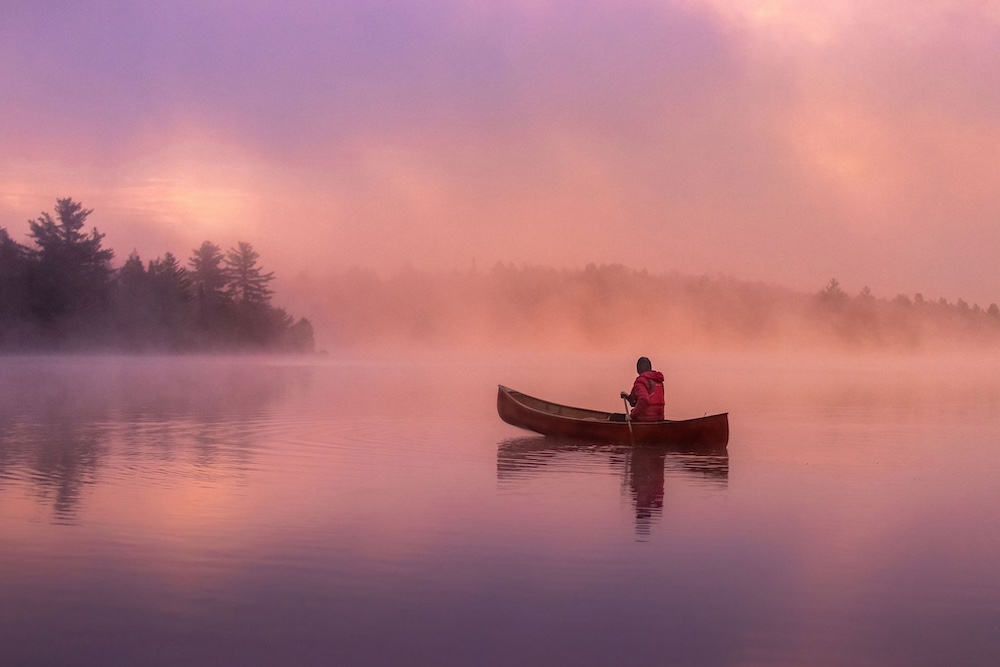
You can see photos and descriptions of backpacking campsites when you book on the reservation website. However, since you book paddle-in campsites by lake, you’ll have to discover for yourself the features of each campsite on the lake when you arrive. Or, do a bit of digging online first, reading trip reports and blog posts to get helpful tips on which campsites on a given lake are the “best,” subjectively speaking.
In general, all backcountry campsites have a firepit and privy. Some campsites on popular lakes, like Joe Lake, have a cable system for a bear hang (but don’t rely on there being a cable system set up; always come prepared to be able to hang your food yourself). Many campsites have bushcraft benches, tables and other structures. Some of these have been constructed by park rangers, while others are the work of campers breaking the rules. If you encounter bushcraft on a campsite, leave it there but don’t contribute to further craftsmanship on the site. Many sites also have grills that have been left behind; many campers find this helpful for cooking over the fire, but technically, these grills go against Leave No Trace principles. As well, you should be prepared with everything you need to prepare your food and not be reliant on there being a grill at your campsite.
Each campsite in the backcountry has unique features, like hills, rock slabs, and beaches. Some are on peninsulas, next to swamps, on islands or in clearings. Many love the added adventure of deciding which campsite on a lake to stay on.
Following the rules set out by Ontario Parks makes it so people can continue to enjoy the beauty of the backcountry, and wildlife and habitats remain undisturbed and intact.
Firstly, note that cans and bottles are not permitted in the backcountry. You are responsible for packing out all your garbage.
Have a plan for storing your food and other wildlife attractants. Algonquin Park recommends hanging your food. A proper food hang involves a pack or canister being suspended 13 feet off the ground, seven feet from the trunk of a tree, and three feet from the branch it’s hanging from.
Unlike in campgrounds, you can forage for wood in the backcountry. Be sure to only collect dead wood (live wood doesn’t burn well, anyway). It’s great etiquette to leave firewood at your campsite when you leave for the next occupants to use. Never leave a fire burning unattended, and always make sure your campfire is completely out before going to bed or leaving your campsite.
Bushcraft is not permitted in the Algonquin backcountry. Do not construct tables, benches, shelters or any other manner of structures. As well, do not relocate or create new firepits.
You may only camp on designated campsites. Do your very best to camp on permit. Build rest days into your trips and be realistic about how far you can travel in a day so you can avoid having to camp off permit. If you do need to camp off permit for safety reasons, common courtesy is to take one of the less-desirable sites on the lake. The next day, do your best to get back on permit again.
When doing dishes, thoroughly scrape all food scraps into a garbage bag. Then use biodegradable soap to wash your dishes in a bin away from shore. Bury the grey water far from shore.
Even though campsites in the backcountry feel more secluded, still keep noise to a minimum as sound travels very easily over the water. When portaging, be courteous and put your gear off to the side if you are not single carrying. People carrying canoes always have the right of way!
Lastly, being in the backcountry might seem like the perfect opportunity to let your dog off-leash. But Algonquin Park rules are that dogs must remain on leash at all times. This is the respectful thing to do for both other campers and wildlife.
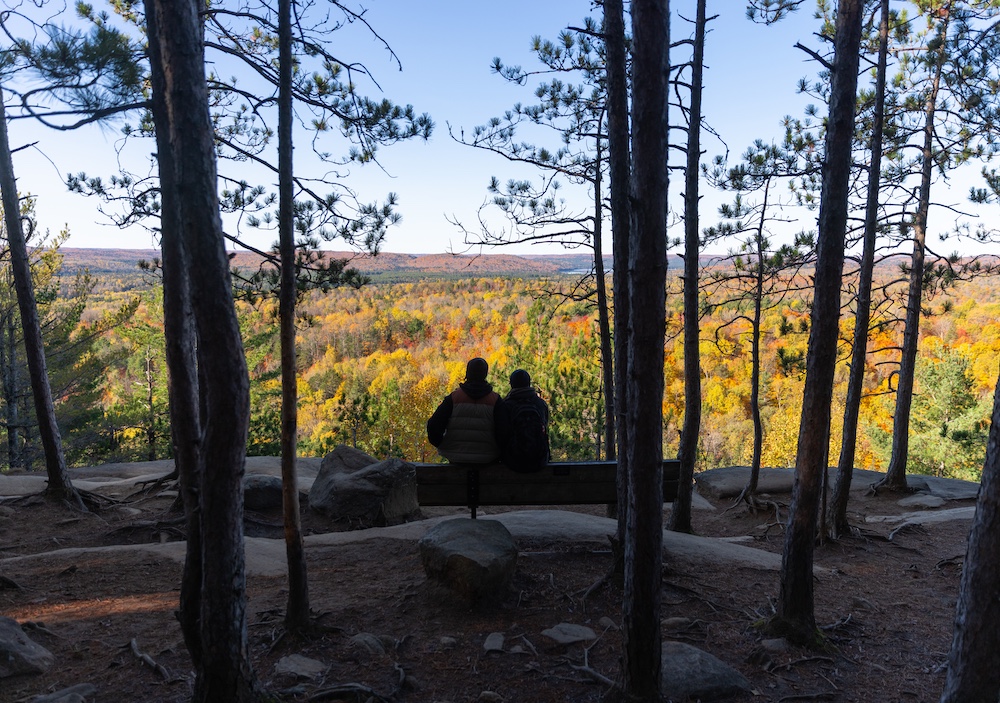
Hiking is a great way for just about everyone to experience the natural beauty and diversity of Algonquin Provincial Park. The Park boasts more than 20 trails for day hiking. The best trails in Algonquin Park include great scenery and a chance to learn more about the landscape and ecosystems. Here’s an overview of Algonquin hiking trails, in each section of the Park.
Whiskey Rapids: A moderate 2.1-kilometre loop along the Oxtongue River, located east of the West Gate.
Hardwood Lookout: An easy one-kilometre trail with fantastic views of Smoke Lake and hardwood hills, ideal for leaf-viewing in autumn.
Mizzy Lake: An 11-kilometre, full-day hike through ponds and lakes. This trail is known for great wildlife viewing. As such, dogs are not allowed on this trail.
Peck Lake: An easy 2.3-kilometre walk around Peck Lake, with interpretive signs explaining the ecology of Algonquin lakes.
Track and Tower: An excellent 7.5-kilometre loop with a lookout over Cache Lake. You can also make a 5.5-kilometre side trip on the abandoned railway to Mew Lake.
Hemlock Bluff: Trek for 3.5 kilometres through a mixedwood forest with a scenic lookout at Jack Lake.
Bat Lake: Located about midway along the Highway 60 corridor, this 5.8-kilometre day hike includes a towering stand of hemlock trees and a scenic lookout.
Two Rivers: Located close to Algonquin campgrounds, this moderate 2.3-kilometre hike ascends to a rocky cliff for great views.
Centennial Ridges: A challenging 10.4-kilometre loop that offers spectacular views over Whitefish Lake and Lake of Two Rivers from two ridges. Expect lots of elevation changes on this hike.
Lookout: While the trail isn’t overly long at 2.1 kilometres, you’ll cover a lot of elevation over a short distance to get to the lookout, providing an expansive view of the forest of Algonquin Park and Lake of Two Rivers in the distance.
Big Pines: Experience an old-growth white pine forest and the remains of a 150-year-old logging camp on this 2.9-kilometre trail.
Booth’s Rock: This 5.1-kilometre hike near the Rock Lake Campground, located near Algonquin’s East Gate, explores the legacy of logging baron J.R. Booth. You’ll hike up to an incredible view overlooking Rock Lake.
Spruce Bog Boardwalk: This easy 1.5-kilometre hike provides a closer look at black spruce bogs, including unique carnivorous plants and bird species, reflective of landscapes in Northern Canada. As the name suggests, you’ll cross many boardwalks and a bridge during this hike.
Beaver Pond: This two-kilometre hike visits two active beaver ponds, one visible from a great lookout.
Algonquin Logging Museum: Walk into history on this 1.3-kilometre interpretive trail, including a recreated logging camp and a steam-powered amphibious tug used in Algonquin’s early logging days.
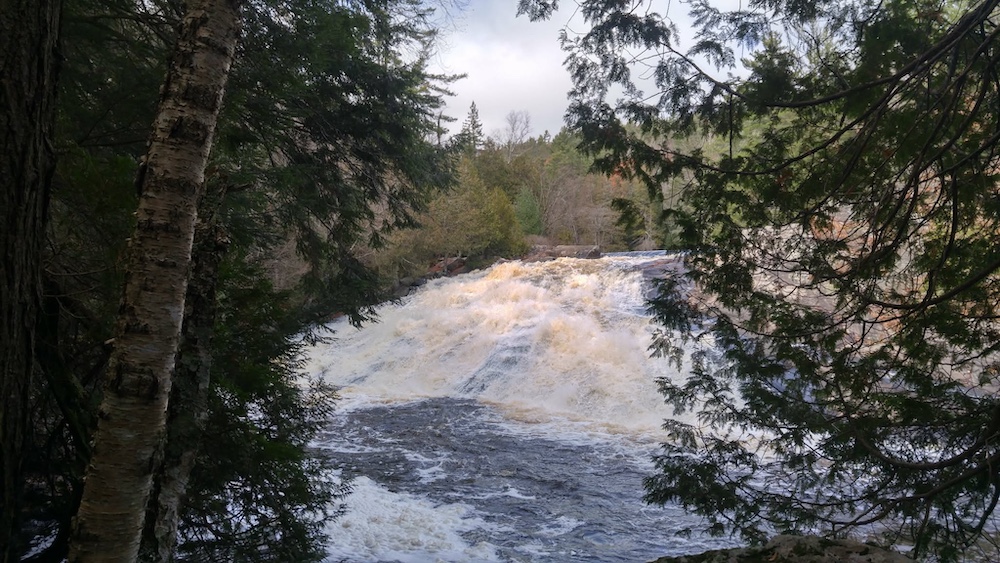
High Falls: This 1.9-kilometre, out-and-back trail follows the west side of the York River, passing several beautiful waterfalls.
Barron Canyon: Glimpse into the 100-metre depths of the Barron Canyon on this 1.5-kilometre-long interpretive trail. The trailhead is located 10 kilometres from the Sand Lake Gate.
Berm Lake: The trailhead is located in the Achray Campground. This 4.5-kilometre hike circumnavigates Berm Lake through a pine forest, with interpretive signs along the way.
Brent Crater: See first-hand what happens when a meteorite crashes into the earth on this two-kilometre hike. The trail includes an observation tower for a bird’s eye view of the crater, as well as interpretive signs to learn more about the area’s geology. It’s accessible along the road to the Brent Access Point.
Interpretive trail guides, including maps, are available from the Friends of Algonquin Park for many hikes. You can also use the official Park Map for an overview of all hiking trail locations. Algonquin hiking trail maps are also available on apps like AllTrails.
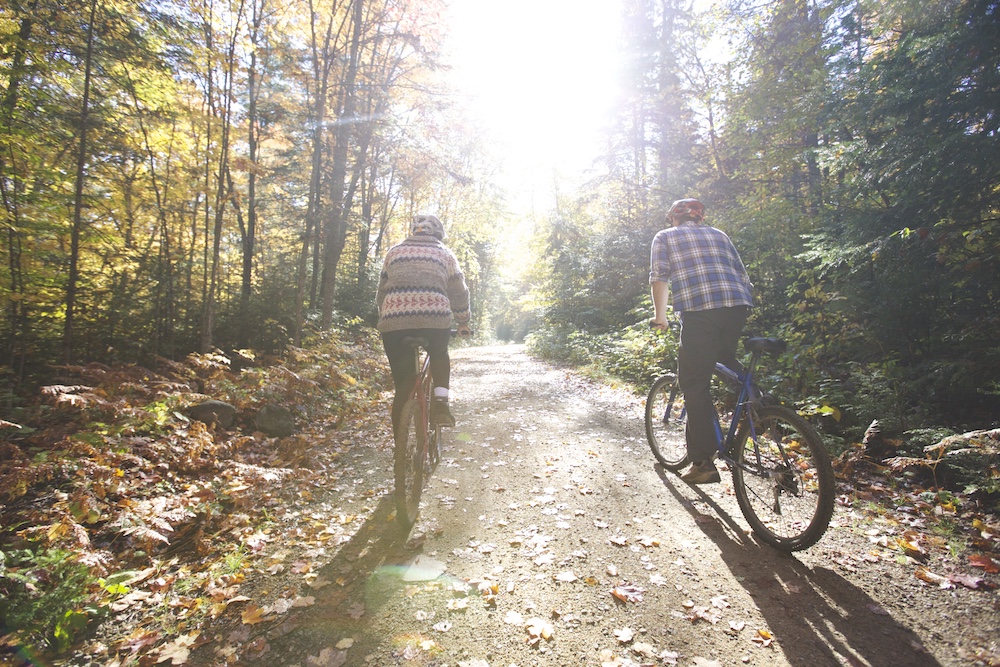
Algonquin offers excellent gravel riding and mountain biking. The Old Railway Bike Trail is a historic 16-kilometre (one-way) corridor between Mew Lake Campground and Rock Lake Campground, offering an easy ride with gentle grades.
For challenging mountain biking, check out the Minnesing Mountain Bike Trail, accessed near the Canisbay Lake Campground. Several loops are available, ranging from 4.7 to 32.2 kilometres in length, with a range of difficulties. These trails are remote: be self-sufficient with water, snacks, and basic bike repair parts and tools.
There are also 6.5 kilometres of mountain bike trails at Byers Lake, located at the Kingscote Lake Access Point on Elephant Lake Road, north of Harcourt and west of Maynooth.
Bikes are allowed on some Park roads and offer a great way of getting around Algonquin Park campgrounds.
Read our Guide to Cycling in Algonquin Park to learn more about biking opportunities, from bikepacking to fat biking.
Algonquin Park is a renowned sportfishing destination, with special rules to make sure it is sustainable. Fishing in Algonquin Park is the subject of entire articles—and complete life quests for some diehard anglers. Algonquin lakes and rivers are home to pretty much all of Ontario’s popular sport fish, including lake trout and brook trout, which are rare in Central Ontario. You can catch northern pike, muskellunge, walleye, small and largemouth bass, as well as species of panfish.
Check out Fish ON-Line for a complete overview of catch records from local lakes. Here are a few highlights that will help you get started searching for the best fishing spots in Algonquin.
Signing up for a guided Algonquin fishing trip is a great way to catch more fish or learn a new skill. Check out Voyageur Quest’s 3-day Algonquin trout fishing canoe trip for a backcountry fishing adventure. Meanwhile, Algonquin Fly Fishing offers a comprehensive array of guided fly fishing trips and lessons in and around Algonquin Park.
Algonquin Park is located within Ontario Fisheries Management Zone 15. A valid Ontario Outdoors Card and fishing licence is required; these can be purchased online or at the West Gate and East Gate, as well as the Canoe Lake and Opeongo Lake access points.
In general, fishing seasons in Algonquin Park extend from May through the end of September for brook trout and lake trout; late May or late June through November or December for most other species. Certain areas have restrictions and slot sizes to protect sensitive fisheries. Possession (and use) of live baitfish is prohibited in Algonquin Provincial Park. Winter (ice) fishing is not allowed in Algonquin Park, from December 1 to late April. Review the specific regulations before wetting a line.
Horseback riding opportunities are limited in Algonquin Park, but a few options exist. Check out the Algonquin Equine Lodge for guided trail riding packages, including overnight cabin stays. Meanwhile, South Algonquin Equestrian Trails offers guided horseback trail rides (day trips and overnight tours), along with a campground and cabins. Both of these operators offer trail rides in and adjacent to Algonquin’s “panhandle” area, north of Haliburton and west of Maynooth.
Many are unaware that there are two locations in the Park where you can take horses for overnight trail rides, or “horsepacking.” These are considered backcountry camping trips, and you’ll need to bring your own supplies for your horse (think: food, water, and containment). The Leaf Lake Horse Packing trails are located near the East Gate and are the same trails that are used for cross-country skiing in the winter. The White Partridge Horse Packing trail is 13 kilometres long and can be accessed just south of Lake Travers along Achray Road. The trail travels along an old cart trail to White Partridge Lake.
Call the Park for help with planning.
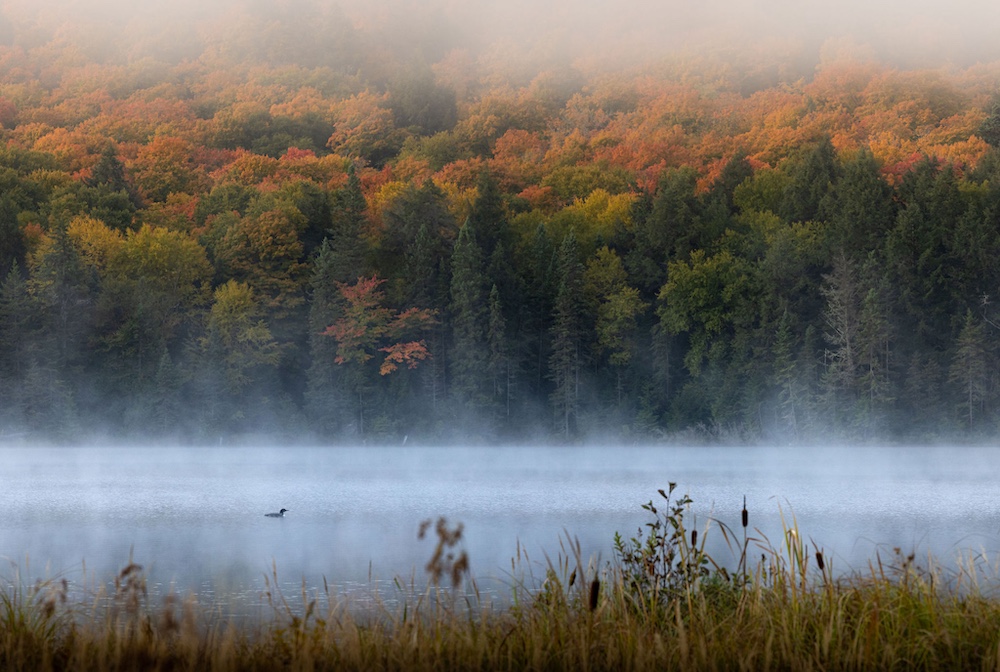
There’s no surprise that Algonquin Park photography is dominated by landscapes, fall colours and wildlife. Even a casual photographer can capture iconic images in this dynamic place. To up your game, consider signing up for an Algonquin photo workshop. Regardless of your skill level and interests, Follow Me North offers custom Algonquin Park photography tours to help you appreciate and capture this great wildlife park as it reawakens in spring.
Or, for a uniquely Ontario wildlife vacation, sign up for a multiday guided wilderness canoe safari to photograph moose in Algonquin Park with Voyageur Quest and professional photographer Rob Stimpson.
Algonquin Park photography tips and etiquette
Your smartphone takes great portraits and landscape photos, but it’s likely not enough for serious wildlife photography. Investing in a mirrorless or SLR digital camera will give you access to a wide range of interchangeable lenses, including zoom and telephoto lenses that are essential for capturing wildlife from a respectful and safe distance. Wildlife viewing and photography are most rewarding when they are practiced with respect, skill and patience. Good ethics include protecting the natural environment and ensuring wildlife are not harassed or habituated.
It is illegal to cut live vegetation for any reason in Ontario Parks. Do not bait wildlife or use sound recordings to attract birds. Read Ontario Parks’ etiquette guide for wildlife photographers to learn more.
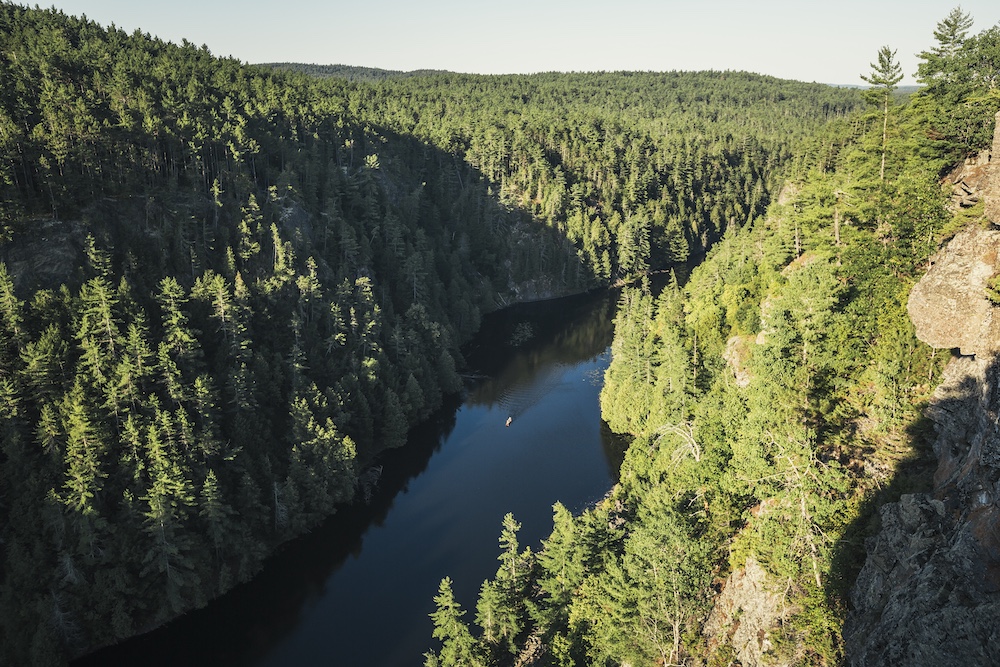
One of the biggest attractions in Algonquin Park includes the Barron Canyon, located inside the Sand Lake Gate on the east side of the Park. An easy 1.5-kilometre hiking trail takes you to the top of this majestic 100-metre-deep canyon, where you can see the Petawawa River winding below. Be careful—there are no safety railings.
For an even bigger adventure, paddle through the canyon on a day trip or multiday canoe trip. Park at Squirrel Rapids and paddle up the Petawawa River and back, or start at Brigham Lake and paddle down to Squirrel Rapids—this second option will require you to park a vehicle at either end, or you can inquire with Algonquin Bound Outfitters about a shuttle. A multiday trip will start at the Achray access point.
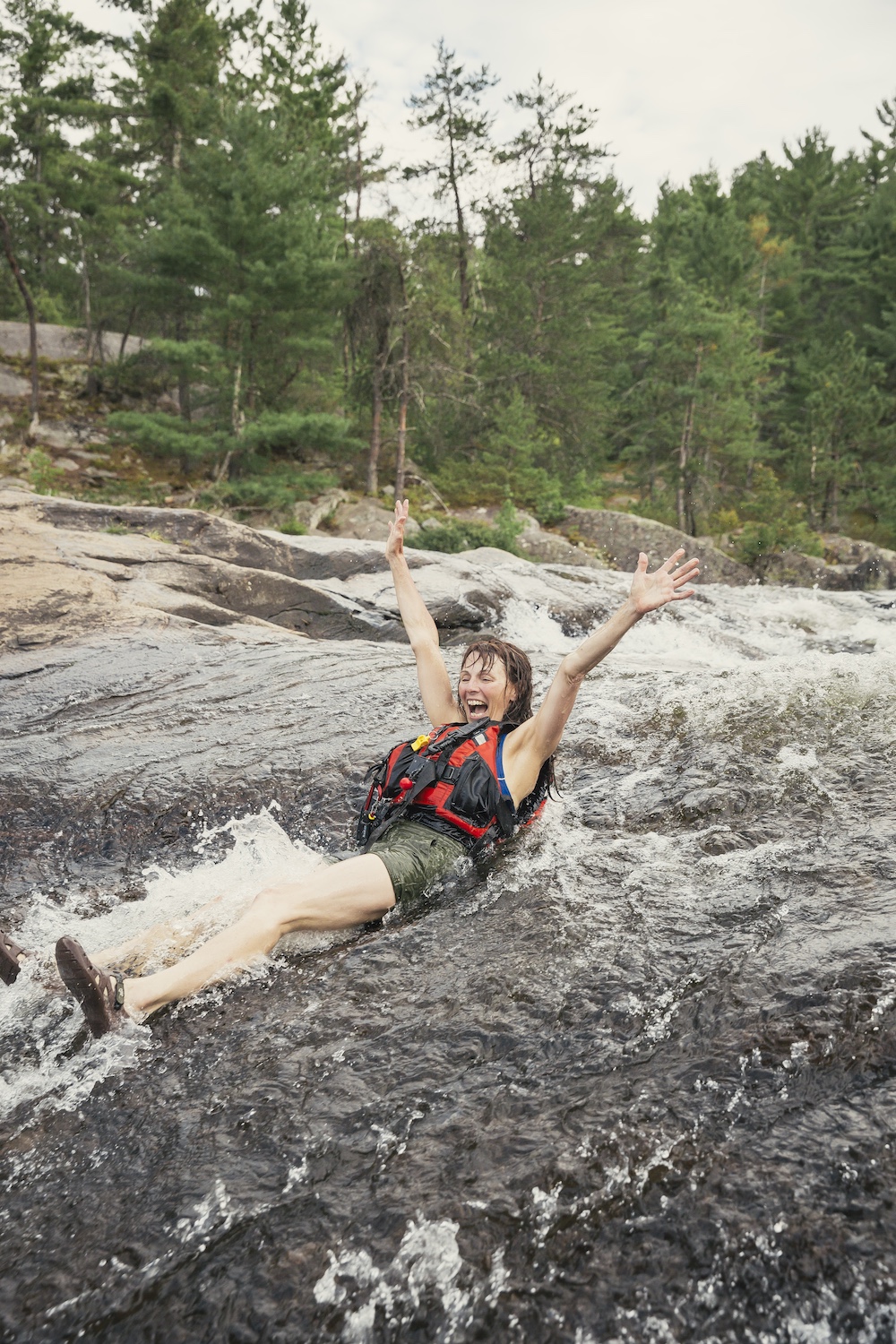
It turns out “High Falls” is a popular name for waterfalls in Algonquin Park. Although there is a High Falls along the High Falls trail in the southern portion of the Park, there is also a High Falls between Carcajou Bay and McDonald Creek, just off Grand Lake. But the most well-known High Falls is the one that forms a natural waterslide between Stratton and Highfalls lakes, near the Achray Access Point. There is a High Falls Cheater Trail accessible from Barron Canyon Road that’s approximately a five-kilometre hike one-way. It can also be reached via the Eastern Pines Backpacking Trail, from the end of Stratton Lake, or from the portage between St. Andrews Lake and Highfalls Lake.
Once there, you can let the water carry you down the flat rocks—be sure to wear your life jacket and keep your feet out in front of you.
The Algonquin Art Centre is a worthwhile stop at KM 20 on Highway 60, in the heart of Algonquin Provincial Park. Check out the exhibits and learn more about how the Park has inspired some of Canada’s most iconic art.
Speaking of Canadian art, Algonquin was a favourite place of legendary landscape artist Tom Thomson, who died mysteriously on Canoe Lake in 1917, just before his colleagues formed the Group of Seven. You can visit the sites of many of Thomson’s greatest paintings, as well as a memorial to the artist. Tom Thomson Lake makes an easy overnight canoe destination in the heart of the artist’s old stomping and sketching grounds. Read our article about a Self-Guided Tom Thomson Tour.
Did you know Algonquin was established as a forest reserve to promote responsible logging? Get a glimpse of Algonquin’s rich logging history at the Algonquin Logging Museum, located near the Park’s East Gate on Highway 60. There’s an immersive hiking trail and great interpretive exhibits, indoors and out.
Similarly, the spectacular Algonquin Visitor Centre is a great place to learn more about the Park’s natural and human history, along with having a fantastic gift shop and bookstore. The Visitor Centre is located at KM 43 on Highway 60 and is open year-round.
Along with great canoeing, hiking and cross-country skiing, many seek out dark places to observe the night sky in Algonquin. Northern lights viewing is a possibility, especially away from bright lights in backcountry areas.
Algonquin Provincial Park is open year-round. Its midlatitude location in the heart of Central Ontario means the Park has four distinct seasons, each with its own charm for visitors.
Spring is a time of wildflowers, songbirds and high water in Algonquin Park. Cascades like High Falls, located along the York River and reachable via the High Falls Trail at the southern part of the Park, are in full flow, making for impressive photography. Wildflowers start emerging on the forest floor soon after the snow melts, and stunning neotropical migrant songbirds return to breed in Algonquin’s forests, wetlands and shoreline areas throughout May.
The ice leaves most Park lakes around the end of April, coinciding with the start of the fishing season for brook and lake trout, as well as opening day for many frontcountry campgrounds in Algonquin. While it’s tempting to get on the water as soon as possible, remember that it is ice-cold. Late May is a popular time for skilled whitewater canoeists to run the Petawawa River. Daytime temperatures warm rapidly in May, with long hours of sunshine. But nights can be cold with frost well into the month. The transition from spring to summer is usually marked by an onslaught of biting blackflies and mosquitoes.
Summer is peak season in Algonquin Park, with busy campgrounds, canoe routes and trails. Reservations for frontcountry and backcountry camping, as well as day use on weekends, are generally essential at this time of year.
Summer is the best time of year for beginners to try canoe tripping or backpacking in Algonquin Park. The weather is most stable, with warm, sunny days—sometimes with elevated levels of humidity. And the biting blackflies and mosquitoes tend to dissipate towards mid-July—though there can be exceptions!
Most Algonquin Park canoe routes are navigable all summer long, though you can expect to find seasonal low water conditions on streams and in wetland areas during drier years. Summer season generally extends from Canada Day in early July through mid-September, when nighttime temperatures become cool, rain becomes more common, and the Park transitions to fall.
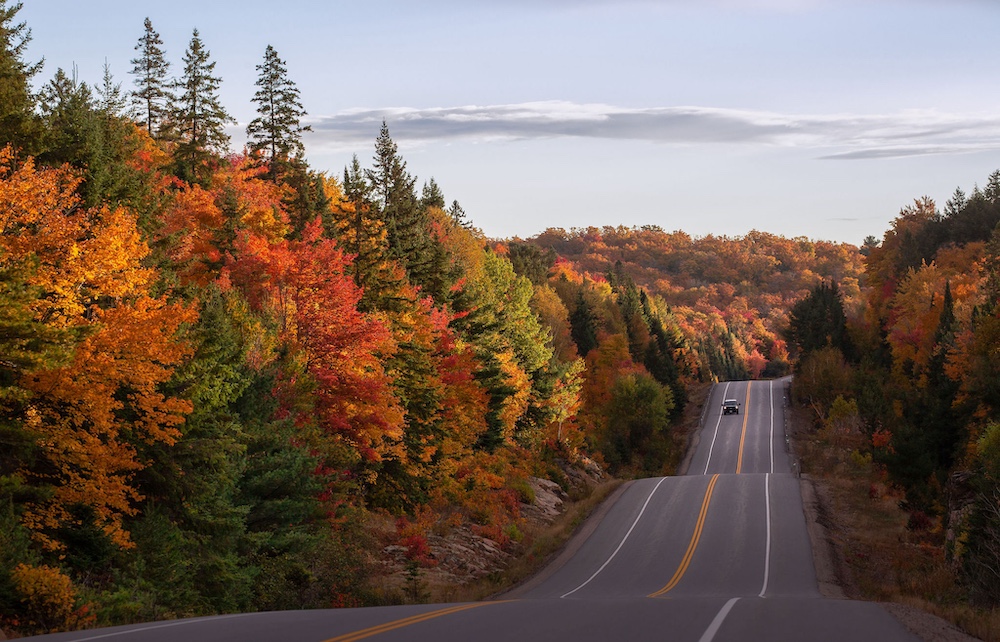
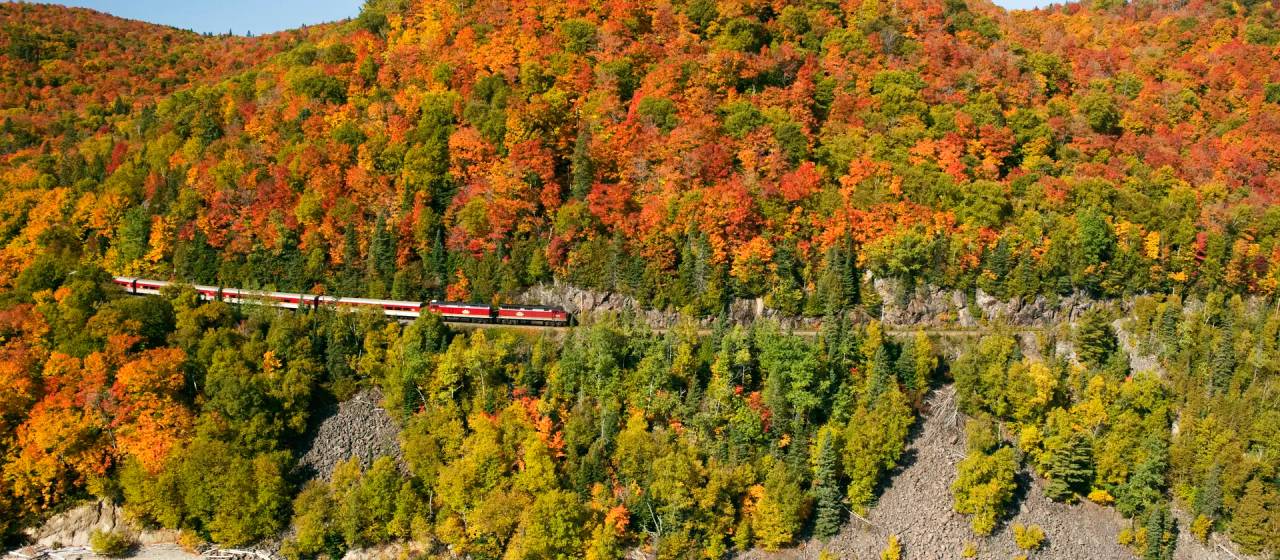
Algonquin Park fall colours, especially along Highway 60, are some of the finest in Ontario. Visiting Algonquin in the fall to witness eruptions of red, orange, yellow and purple on the hillsides is truly an iconic Canadian experience. It’s tough to predict peak fall colours, though you can keep an eye on the Ontario Parks fall colours report. The leaves usually start to change by the third week of September, with peak colours occurring at the end of September or early October. The leaves start coming down quickly around Thanksgiving.
Algonquin’s diverse forest community makes each area unique for fall colours. The Highway 60 corridor boasts the most hardwood maples; the north end of the Park, accessed via Highway 17, tends to be more mixed woods, with colourful maples and birches offset by stalwart evergreens. Birches, poplar and tamarack trees—the latter being the only coniferous tree that changes colour in the fall—glow golden later in autumn, and sometimes into early November.
Check out the Two Rivers Trail on Highway 60 for a great fall colour hike in Algonquin. The Track and Tower Trail, also located on Highway 60, is a more demanding 7.5-kilometre loop with a stunning lookout over Cache Lake to take in the colours. Take in the more subtle colours of fall in the northern wetlands surrounding the 1.5-kilometre Spruce Bog Trail. You can’t really go wrong with any hike in Algonquin in the fall, but be warned that all the trails along Highway 60 can be quite busy at this time of year. In fact, the Park often sells out of day permits on weekends at the end of September and beginning of October.
Going midweek will help to avoid the crowds. If you do manage to score a day-use permit on a weekend, get to the trailhead early—both so you have a quieter experience and so you are sure to find a parking spot in the lot.
If you want to leaf-peep from the highway, do so with proper etiquette. Buy a day-use permit and use designated pulloffs. Do not stop in the middle of the highway; if you choose to pull over, ensure it is a place where your vehicle can be parked safely off the road. Do not block other motorists.
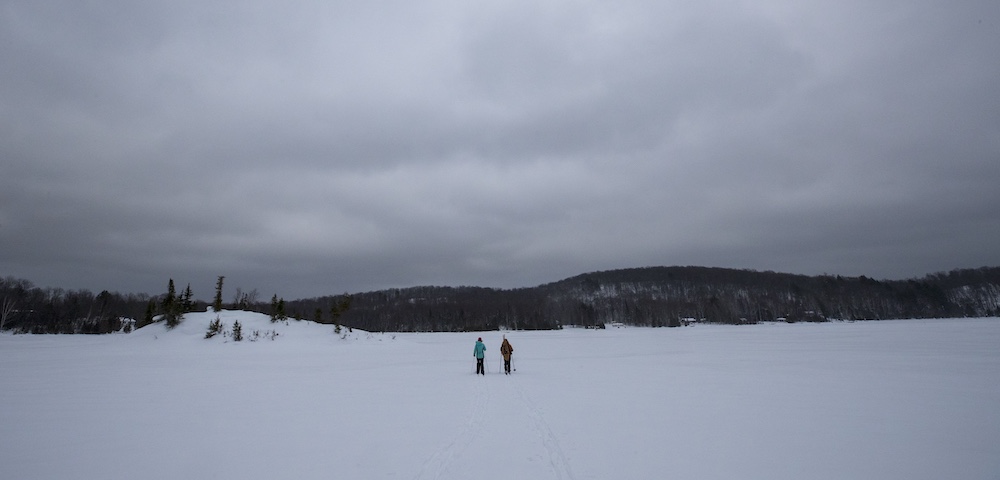
Winter is a magical season in Algonquin with fewer crowds and distinctive experiences, typically extending from mid-December through the end of March.
Winters in Algonquin can be harsh and unforgiving to the unprepared. Be honest with your skills, pack emergency gear and err on the side of caution. Remember that no ice is safe ice and be especially careful around flowing water. Winter driving is perhaps the greatest hazard of all, so take the time to get weather and road forecasts, make sure your vehicle is equipped with winter tires, and drive cautiously.
Winter camping
Algonquin is one of the few Ontario Parks that offers winter frontcountry camping. Algonquin’s Mew Lake campground is open year-round, offering over 100 campsites, as well as four cabins and six yurts. Campsites can be reserved online or by phone (888-ONT-PARK). Mew Lake includes a heated comfort station with indoor toilets, running water and hot showers. The campground also features an ice skating rink and easy access to a variety of trails for winter hiking, snowshoeing, cross-country skiing and fatbiking.
Experienced and hardy campers can also go winter camping in Algonquin’s backcountry. Following established backpacking trails is the safest way to do so, though those with ice safety skills may choose to accept the inherent risks of travelling on frozen lakes. Backcountry reservations are required.
Winter hiking
Many hiking trails along the Highway 60 corridor are open for day use in winter, however plowing of parking areas can be delayed when crews are working hard to clear roads. Have several options in mind before setting out, especially if there’s been fresh snow. You can find out which trailheads receive winter maintenance here.
Programming
Algonquin’s Visitor Centre remains open in the winter months, with seasonal Discovery Programs led by experienced park naturalists to learn more about how local ecosystems adapt to winter’s cold. There are great opportunities for winter bird-watching adjacent to the Visitor Centre.
Cross-country skiing
Algonquin Park offers some of the finest cross-country skiing in Central Ontario, with 72 kilometres of trails, accessible in several locations along the Highway 60 corridor. There are 17.5 kilometres of groomed and trackset trails at Fen Lake, located from the Park’s West Gate entry point. Near the East Gate, the Leaf Lake system offers an outstanding 36-kilometre network of groomed and trackset trails, which are ideal for experienced Nordic skiers. There’s a rugged 18-kilometre loop for backcountry skiing on the Minnesing Wilderness Ski Trail. Beginner Nordic skiers can try a new 2.2-kilometre groomed loop at the Airfield Ski Trail, near Mew Lake Campground.
Two woodstove-heated ski cabins are available for rent on the groomed cross-country ski trails at Leaf Lake, just inside Algonquin’s East Gate on Highway 60, for overnight stays in the winter. The cabins are accessed by skiing six or eight kilometres from the parking area. Reservations are limited to one-night stays. Renters only have exclusive use of the cabin from 6 p.m. to 8 a.m. and must make the cabin available to other skiers outside these times.
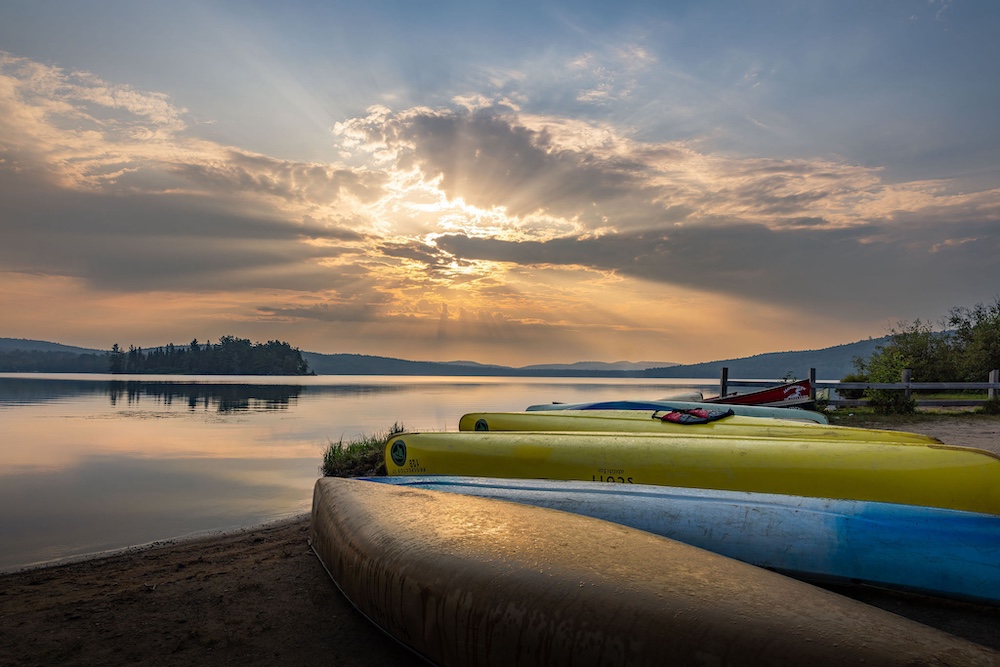
From rental canoes and kayaks to mountain bikes and cross-country skis, as well as canoe trip outfitting and guided adventures, Algonquin Park has plenty of options to get you ready for a great adventure. Outfitters are located within the Park at several access points, as well as at various locations outside the Park boundaries but en route to popular access points.
Algonquin Outfitters manages all the outfitting services at locations within Park boundaries. These include: the Portage Store at Canoe Lake (canoe, kayak, SUP rentals and outfitting); the Opeongo Store at Opeongo Lake (canoe, kayak, SUP rentals and outfitting; water taxi service); the Lake of Two Rivers Store at the Lake of Two Rivers campground (mountain bike and fat bike rentals, groceries, cafe, food and ice cream); and the Brent Store at Cedar Lake (canoe rentals and outfitting).
Algonquin Outfitters has a base just west of the Park boundary in Oxtongue Lake, where they offer equipment rentals (canoes, kayaks, SUPs, cross-country skis, winter camping gear), full and partial gear outfitting, and guided canoe trips (day and overnight).
The Portage Outpost offers canoe rentals and camping gear outfitting from their base in Dwight, about 25 minutes west of the Park boundary on Highway 60. For those arriving from the east side of Algonquin on Highway 60, check out Opeongo Outfitters in Whitney, which offers rentals, outfitting, water taxi services on Opeongo Lake, guided trips and more. Algonquin North on Highway 17 provides canoe rentals and outfitting for those looking to access the northern portion of Algonquin Park, including the Kiosk access point on Highway 630.
Additional canoe outfitters include: Algonquin Basecamp in Kearney; Algonquin Bound Outfitters, with locations in Petawawa and Madawaska; Algonquin Portage in Petawawa; Deep Roots Adventure on Kingscote Lake; and Voyageur Quest Outfitting, near South River and the Kawaywaymog Lake access point.
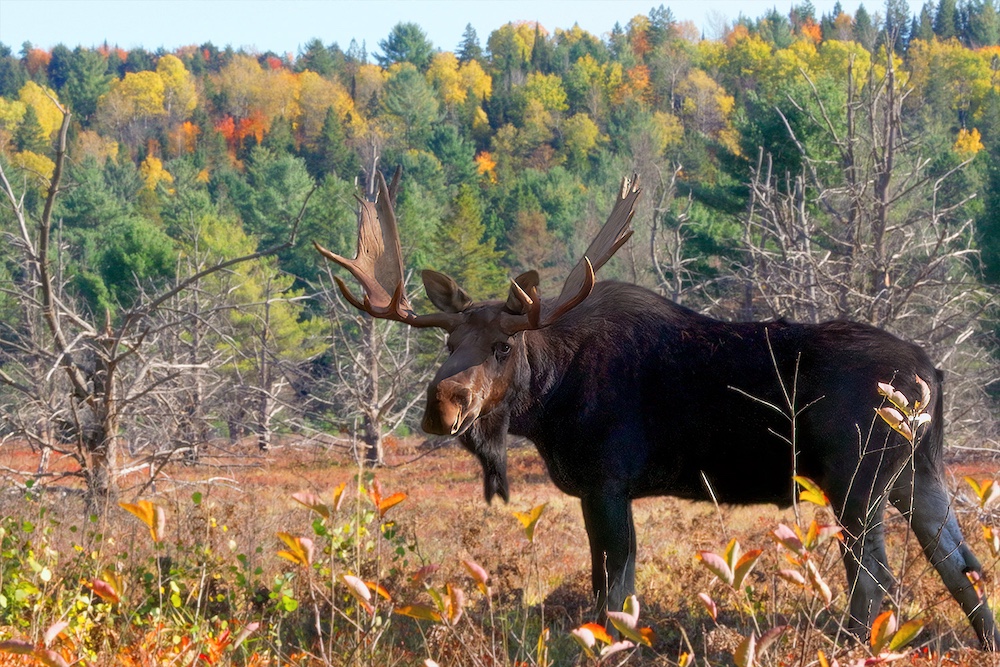
Algonquin Provincial Park boasts a range of iconic Canadian wildlife, including moose, black bears and wolves. Ironically, Algonquin wildlife encounters are more common along the Highway 60 corridor—especially for moose, which are drawn by lingering road salt and open areas along the road, causing a major hazard for motorists. While it is always exciting to see a moose along the edge of the road, do not harass the animal by pulling over or approaching it to take pictures. Hailstorm Creek on Opeongo Lake is recognized as one of the best places to see moose in Algonquin’s backcountry. This vast wetland is accessible on overnight canoe or kayak trips or by taking a water taxi.
Black bears and wolves are typically more elusive. Wolves, in particular, are rarely seen—though research in the Park has made huge contributions to our understanding of this species. Every year, there are reports of “problem” black bears that become habituated to human food in campgrounds and popular backcountry areas. Whether in the frontcountry or backcountry, it is important to store your food properly to minimize the risk of this sort of negative and dangerous encounter. Though bear attacks have been recorded in Algonquin Park, they are exceedingly rare.
Loons are common on many Algonquin lakes through the spring and summer months. The Park is home to dozens of species of migratory songbirds, as well as year-round populations of woodpeckers, chickadees and Canada jays. A Park bird checklist is available at the Visitor Centre; contribute valuable citizen science by uploading your observations to eBird. You can also see aquatic mammals like beaver, otter and muskrat on waterways in the Park.
You have the best chance of seeing any species of wildlife by travelling slowly and quietly. Use binoculars or a telephoto lens to observe wildlife from a safe distance. Photographers can sign up for guided wildlife safari photo workshops with Follow Me North Photography and Rob Stimpson to capture great images.
In general, the weather in Algonquin Park is similar to much of Central Ontario and the Near North throughout the summer months. The Park tends to receive a bit more snow and cooler temperatures than surrounding areas in the winter, owing to its higher topography. Spring and fall are transitional seasons, with the possibility of dynamic weather and cold, high water. Lakes generally become ice-free in late April or early May, but water temperatures are freezing cold and rivers often in flood, making this a hazardous time of year for canoe tripping.
The Park covers a large area and weather can vary from place to place. Depending on where you’re going in the Park, here are a few reliable weather forecasts:
There can be extreme weather in Algonquin Park. Storms and tornadoes have been encountered, including a devastating microburst in late June 2025, which hit the Kiosk campground and required emergency evacuations. Similarly, a wind shear event levelled trees in a band just north of Canoe Lake within the past decade. Keep an eye on weather forecasts, monitor conditions and use good judgment to stay safe.
Late fall and winter in Algonquin Park can also be hazardous to the unprepared. In general, lakes begin to freeze from mid-November through mid-December. You may think you can beat the crowds by planning a canoe trip in November, but beware, short daylight hours, lots of precipitation (rain and snow), and cold temperatures make this time of year especially challenging. Algonquin receives plenty of snow and often is impacted by lake-effect whiteouts, especially on the Highway 60 corridor. Keep tabs on road conditions to plan a safe trip. You can get up-to-the-minute snow conditions in Algonquin Park on the Ontario Parks Snow Report.
Check out the Algonquin Park Live Cam, located at the Visitor Centre on Highway 60, for a real-time perspective on weather conditions in the Park.
There are plenty of different choices for Algonquin Park maps. For starters, the Friends of Algonquin Park provides an up-to-date, Ontario Parks-approved map that’s especially convenient for planning canoe trips. For more detail and a different perspective on the Algonquin backcountry, check out the series by Maps by Jeff. Finally, Chrismar offers a series of Algonquin Adventure Maps that are excellent resources for both paddlers and hikers.
The Portage Grill at Canoe Lake is a great spot for a casual meal and a cold drink after an Algonquin Park canoe trip. Meanwhile, the Lake of Two Rivers Cafe and Grill satisfies cravings for good coffee, burgers, fries and ice cream adjacent to one of Algonquin’s most popular campgrounds. For upscale dining in Algonquin Park, treat yourself at Arowhon Pines Resort, Bartlett Lodge or Killarney Lodge.
There are plenty of other options just east and west of the Park along Highway 60, including The Mad Musher in Whitney, the Algonquin Inn at Oxtongue Lake and Algonquin Pizza and Panini, just west of the Park. Another local favourite is Henrietta’s Pine Bakery in Dwight, about 20 minutes west of Algonquin’s East Gate on Highway 60.
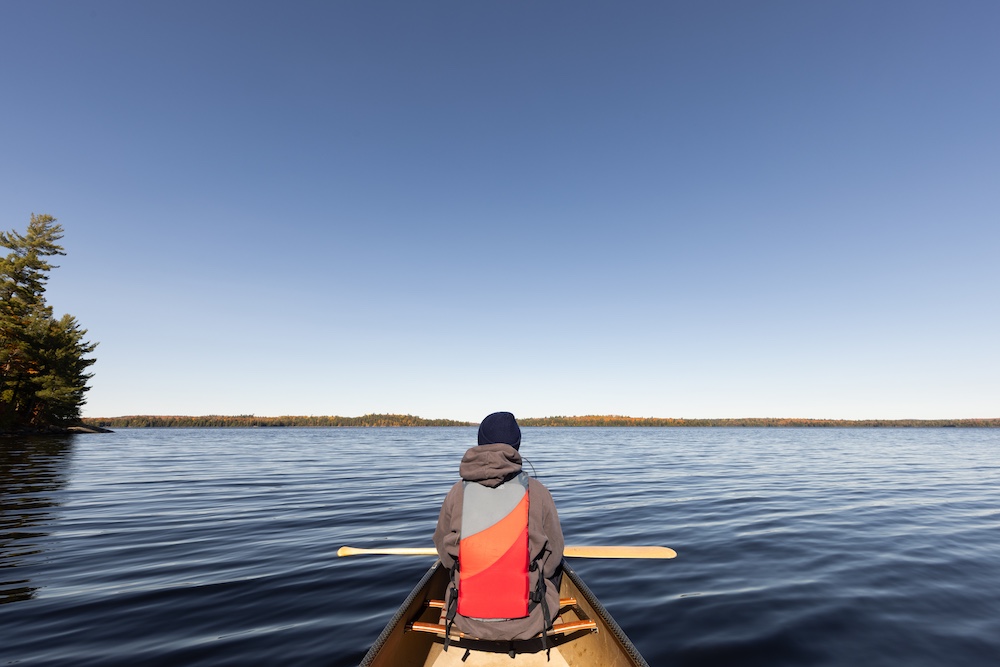
Parkbus offers a convenient and economical Algonquin Park Day Trip package with two pickup sites in Toronto, Fridays through Sundays throughout the summer months. The Algonquin day trip starts with pickup in Toronto between 7:30 and 8:15 a.m., with arrival at Algonquin’s West Gate around 11:15 a.m.
From there, you have many options on how to spend your day. You could take a half-day canoe trip on Canoe Lake; hike or bike at Lake of Two Rivers; or hike and enjoy the beach at the Pog Lake and Whitefish Lake campgrounds. The bus will get you back to Toronto later that evening.
Overnight trips are also available, staying in campgrounds or the backcountry. Parkbus also offers a winter ski or snowshoe Algonquin Park day trip package, as well as guided trip options.
Many other outfitters and tour providers offer Algonquin day trip packages—both guided and self-guided. Algonquin Outfitters offers great local knowledge and specializes in canoe trips, as well as dining options and a unique Tom Thomson tour for art lovers.
Northbound Tours offers guided Algonquin day trips with pickups from Toronto’s Yorkdale Mall. Algonquin Adventure Tours offers many options for active guided day trips in Algonquin, including paddling, hiking, cycling, wildlife photography and more. Based in Dwight on Highway 60, The Portage Outpost also offers guided canoe day trips.
Prefer to do it yourself and provide your own transportation? That’s no problem, but be sure to book an Algonquin day use vehicle permit in advance (up to five days) online, especially on weekends and during peak season (July through the end of September). Check out the day hikes described in this article. If you prefer getting out on the water, Canoe Lake and Opeongo Lake both have on-site canoe rentals.
As described above, Parkbus and Northbound Tours offer convenient Algonquin Park tours from Toronto. Along with the wide-ranging Algonquin guided trips offered by Algonquin Outfitters and Algonquin Adventure Tours, check out Voyageur Quest for unique Algonquin guided experiences—including accommodations, canoe trips, winter programs and photography—on the Park’s west side, near South River.
Meanwhile, Opeongo Outfitters offers guided canoe trips and boat tours on Opeongo Lake and other destinations. Wilderness Union offers a range of Algonquin Park adventure programs in all seasons of the year. Call of the Wild offers three- to five-day guided trips in the Park and can even arrange for transportation from Toronto. Driftwood Paddle runs specially tailored guided trips in Algonquin’s northwest corner.
Some of Canada’s most prestigious and well-established youth canoe camps are based in Algonquin Park. These camps offer distinctive outdoor experiences for kids, often focused on canoe tripping and camping. The list of options includes Taylor Statten Camps on Canoe Lake (Camp Ahmek for boys and Camp Wapomeo for girls), Camp Arowhon on Tepee Lake, Camp Pathfinder on Source Lake (boys only), Camp Tamakwa on South Tea Lake and Camp Tanamakoon on Tanamakoon Lake (girls only). Each camp has its own appeal; do your research through the Ontario Camps Association to find the best option for your kids.
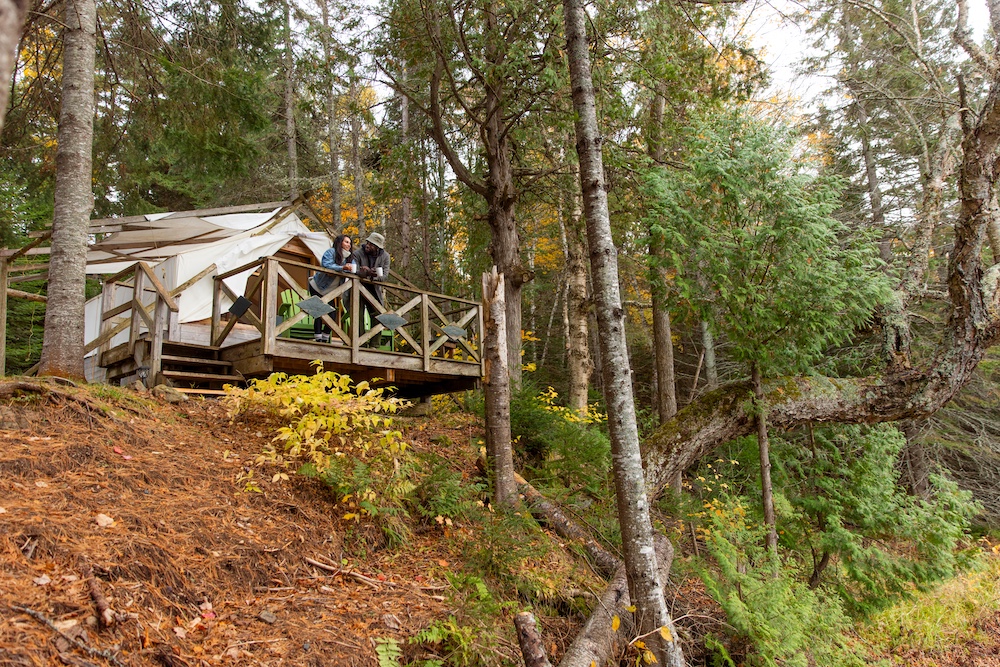
Not up for camping? No problem. There are plenty of hotels near Algonquin Park, as well as luxe resorts within Park boundaries. You can also find Algonquin Park cottage rentals nearby. Here’s an overview of options.
For the ultimate luxury experience, book an all-inclusive stay at a resort or lodge in Algonquin Park. Options along the Highway 60 corridor include the Arowhon Pines Resort, Bartlett Lodge and Killarney Lodge, as well as the Algonquin Couples Resort, located near the Park’s East Gate. The Algonquin Log Cabin is a year-round retreat located on the west side of the Park, near the town of South River. Located just west of Algonquin Park, Deerhurst Resort is a renowned destination in Central Ontario’s Muskoka. Algonquin Eco-Lodge, located on the southern edge of the Park, has its own set of trails and paddling opportunities, plus a secluded stay at off-grid lodgings.
Cottage rentals inside Algonquin Park are rare, but there are plenty of options available nearby, including Oxtongue Lake Cottages, The Pines Cottage Resort, Parkway Cottage Resort and Lakewoods Cottage Resort, all located just outside Algonquin’s West Gate. Hay Lake Cottages is located near Whitney and the Park’s East Gate.
Check out the picturesque community of Huntsville for hotels near Algonquin Park. Finally, the Wolf Den Hostel and Nature Retreat, located in Oxtongue Lake just west of the Park boundary, is described as “comfortable, communal and affordable”—with hostel-style accommodations and private cabins, making it a perfect base camp and place to meet like-minded adventurers.
Being respectful of nature, wildlife, and other Park users is of utmost importance to keep parks like Algonquin open for use. Do not forage for food, feed or harass wildlife, or litter—this keeps animals safe.
Keep dogs on a leash and pick up after your pet. Do not leave dogs on campsites unattended.
In general, leave a natural area the same or better than you found it, for example, by packing out trash.
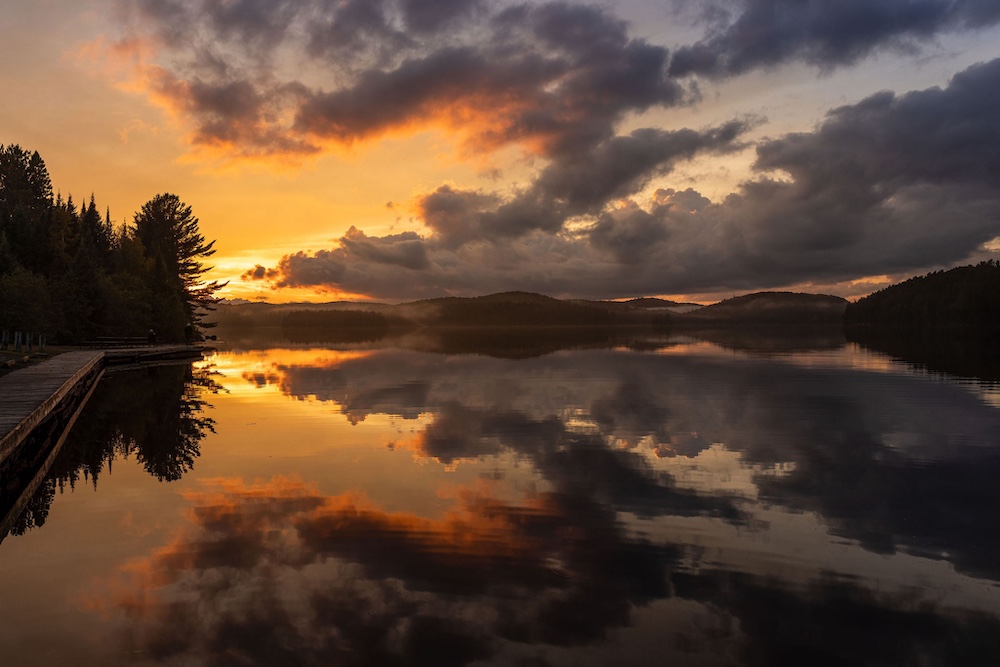
Suffice to say, Algonquin Provincial Park is Ontario’s premier destination for camping and outdoor activities—in all months of the year. The Park is easy to access yet offers plenty of space and wild country to connect with nature, for all levels of campers and outdoor enthusiasts. The Park offers multiple campgrounds, including drive-in sites for family campers and RVs, as well as remote backcountry sites for adventurous paddlers and backpackers.
From well-established networks of canoe routes, extensive hiking and backpacking trails, to groomed cross-country ski trails, mountain biking, world-class fishing and more, there’s truly something for everyone in Algonquin Park. It is the type of place that takes a lifetime to explore.