Winterizing Outboard Motors

Easy things you can do to be ready for spring fishing in Ontario.

With the investment anglers have in their boats and motors, it’s surprising to see the number of people who have problems on the season's first trip, especially when a little maintenance in the fall would all but eliminate them. Sitting under a pile of snow all winter can really take a toll on an outboard motor and, regardless of how well your engine worked last season, without a little care before winter, you’re setting yourself up for trouble next year.

Here are a few easy things you can do to help keep your motor in good shape through the winter so it’s ready to go next spring.
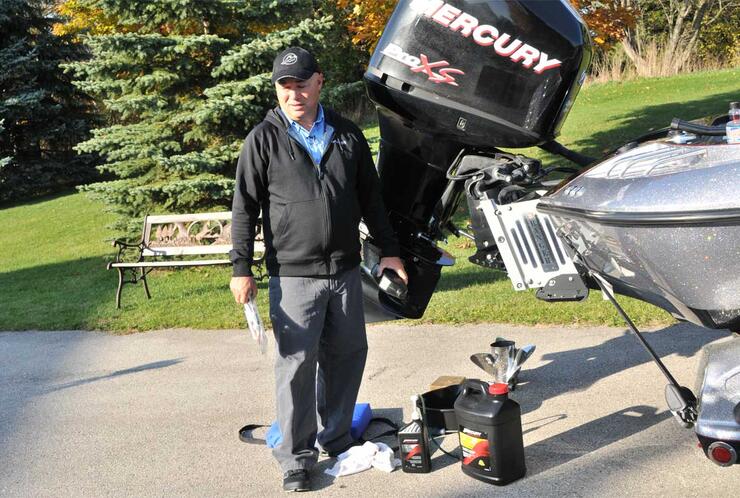
changing boat oil

Change the Lower Unit Oil

The first thing to do is change the oil in the lower unit. This ensures that 
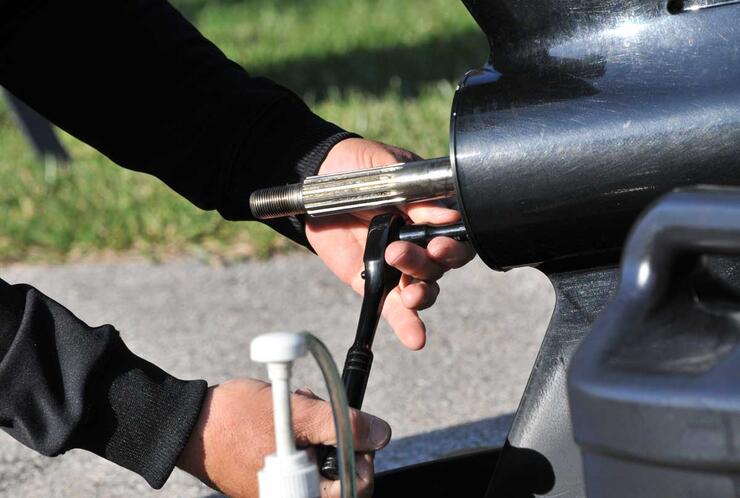
  1. There is no water in the gear case that could freeze and cause a crack
  2. Can alert you to any potentially serious internal problems.
tilting a boat engine

Change the Gear Oil

To change the gear oil, start by tilting the engine into the “down” position so that it is as vertical as possible. Place a catch-tray under the engine and locate the two or three screws on one side of the lower unit housing. If you have a large outboard, you may need to remove the propeller to access the lowest of these.
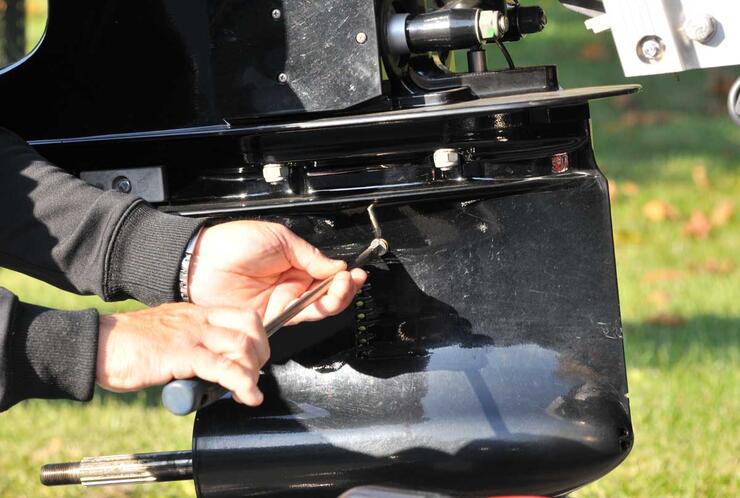
removing screws on the gearcase of a boat

Remove the bottom screw first, then the top one(s) and let all the oil drain out of the gear case. The lower plug will have a small magnet on it that is there to attract any metal filings that may have worn off the gears. A few filings are normal, but if you notice an unusually high amount of them it could be a sign of pending engine damage—have the engine checked by a professional. While you have the plugs out, replace the small gaskets on all of them and clean off any debris.
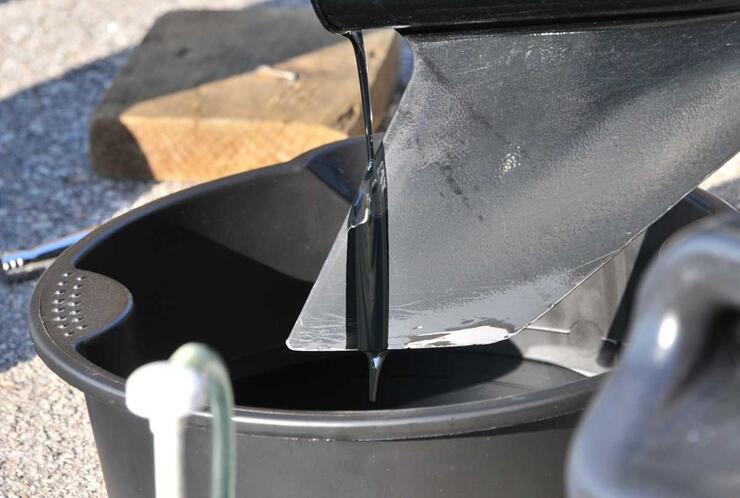
draining boat oil

While the oil is draining, take a look at its colour. The old oil should look like old oil; if it looks whitish and creamy, it’s a sign that water has been getting into the engine somehow. Water in the gearcase is a guaranteed recipe for disaster so, if the old oil doesn’t look right, take the engine to a dealer and have it checked.
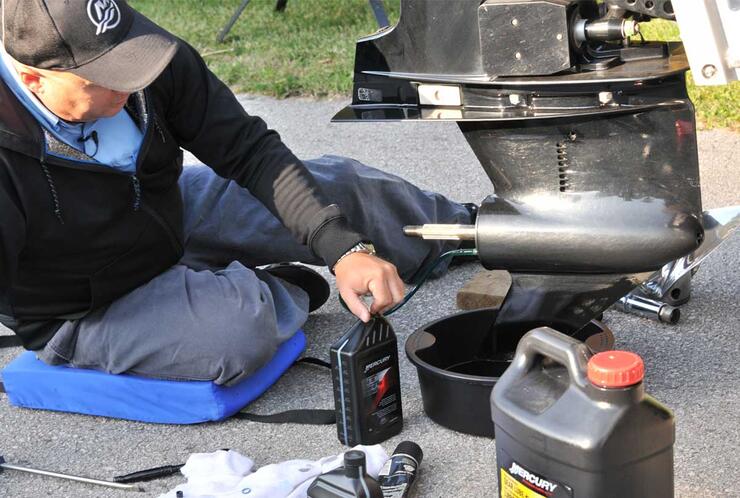
re-filling the boat gearcase

Once the old oil has drained, re-fill the gearcase with the manufacturer’s recommended oil. Always fill the gearcase from the bottom hole and keep pumping it in until oil begins to ooze from the top hole.
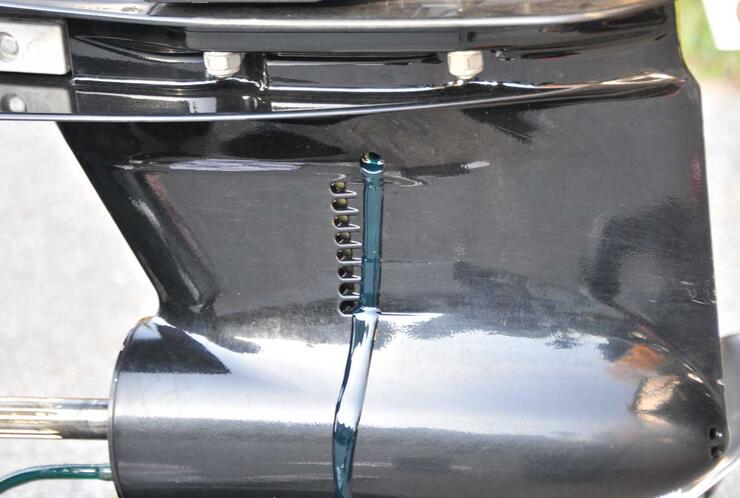
re-installing the upper plug of the gearcase

When you see oil coming out of the top hole, re-install the upper plug(s) to create a vacuum. Then remove your oil pump or tube of lubricant and quickly re-install the lower plug.
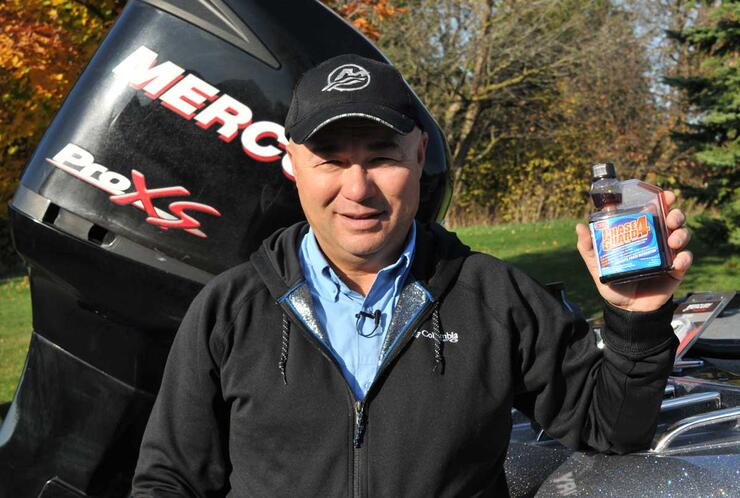
fill the gas tank of a boat

Fill the Gas Tank and Add Fuel Stabilizer

Next, fill the gas tank(s) and add fuel stabilizer if the boat won’t be used for several months. This eliminates the possibility of condensation forming inside the gas tank, which could contaminate the fuel and possibly foul the engine. The stabilizer will also prevent the fuel from breaking down and becoming gummy, which can happen to untreated fuel in as little as three months.
Don't Forget These Motor Winterizing Tasks

  • It’s a good idea to change the spark plugs every season too, especially if you use your rig a lot, and by doing it in the fall, you’ll ensure an easy start-up in the spring.
  • Finally, take a grease gun and give a squirt to any of the grease fittings on the engine. Visually check the engine, especially around the propeller, and remove any fishing line, vegetation, etc.
  • Give the motor a quick wash to keep it looking good, cover it up, and you’ll be all set to go when next spring rolls around.
About Bob Izumi

Bob Izumi is a Canadian professional angler, and the host of Bob Izumi's Real Fishing Show. He is most known for his success in bass fishing, and was awarded angler of the year in 2004.

Recommended Articles

Best WhiteFish Tactics

In Part Two, Learn Best Rods, Reels and Lure Presentations for Whitefish

10 Facts About Lake of the Woods

10 facts amazing about this massive Northwest Ontario Lake!

Smashing Topwater Smallmouth in the Heart of Walleye Country

From spacious, spotlessly clean cottages to aggressive multi-species action.

Eating Northern Pike

The Best Recipe to Cook This Fish

Ontario Brook Trout

Fish these 10 sweet spots.

Don’t Be Afraid Of Muskies

Muskies are fish of 10,000 casts and are found in large bodies of water in Northwestern Ontario.

Trade the Signal for the Strike

Why Fly-In Walleye Trips are Ontario’s Ultimate Bucket List Adventure

Great Fishing in Northern Lights Country Up Highway 588

Find bass, walleye and trout on your next fishing trip.

St. Francis Titans

Fishing the Original Muskie Capital of the World

Prime Time for Ontario Panfish

The best time to ice fish for crappies and panfish is when the predator activity is low

Reaching Deep For Walleye

Fishing for big Walleye in Ontario's Bay of Quinte.

The Best Of Times in Northern Ontario

A guide to the best time of day to hit the ice while fishing this winter.

Stalking Prehistoric Long Nose Gar

Fishing a unique fish species in Ontario.

3 Great Ontario Walleye Destinations

Karl of Extreme Angler recommends must do walleye lakes in Ontario.

The Perfect Shore Lunch

Try this award-winning recipe on your next Ontario fishing trip.

Labour Day Lunkers: Why Fall is the Ultimate Time for Lang Lake Bass

Discover a chain of seven interconnected lakes where the smallmouth are built like footballs and the topwater action remains white-hot well into September.

Irregular Lake Trio

Fly in to Woodland Caribou Provincial Park to fish for trophy muskie and northern pike.

Top 5 Wet flies for Brook Trout

Fly Fishers describe their favourite brookie flies.

Smallmouth Bass in Sunset Country

It's great to be a smallmouth angler in Sunset Country because of the numbers and size of bass.

Baptiste Bass

Catching 5- to 6-Pound Smallmouth Bass Each Fishing Season