Eating Northern Pike
The Best Recipe to Cook This Fish
By Gord Pyzer










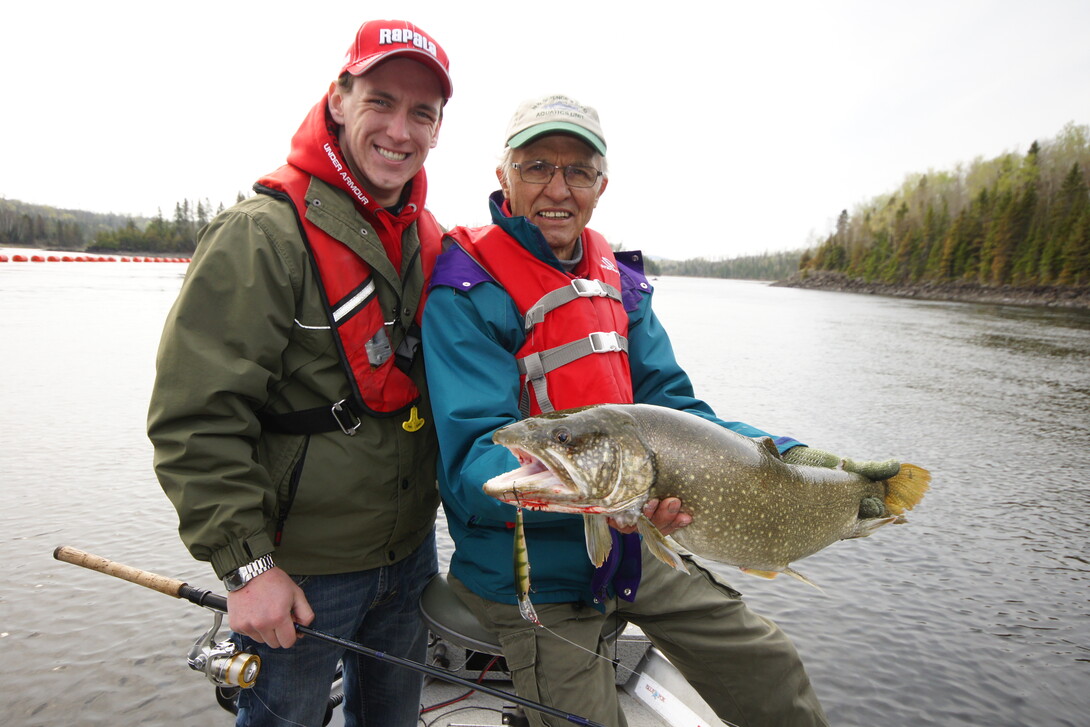

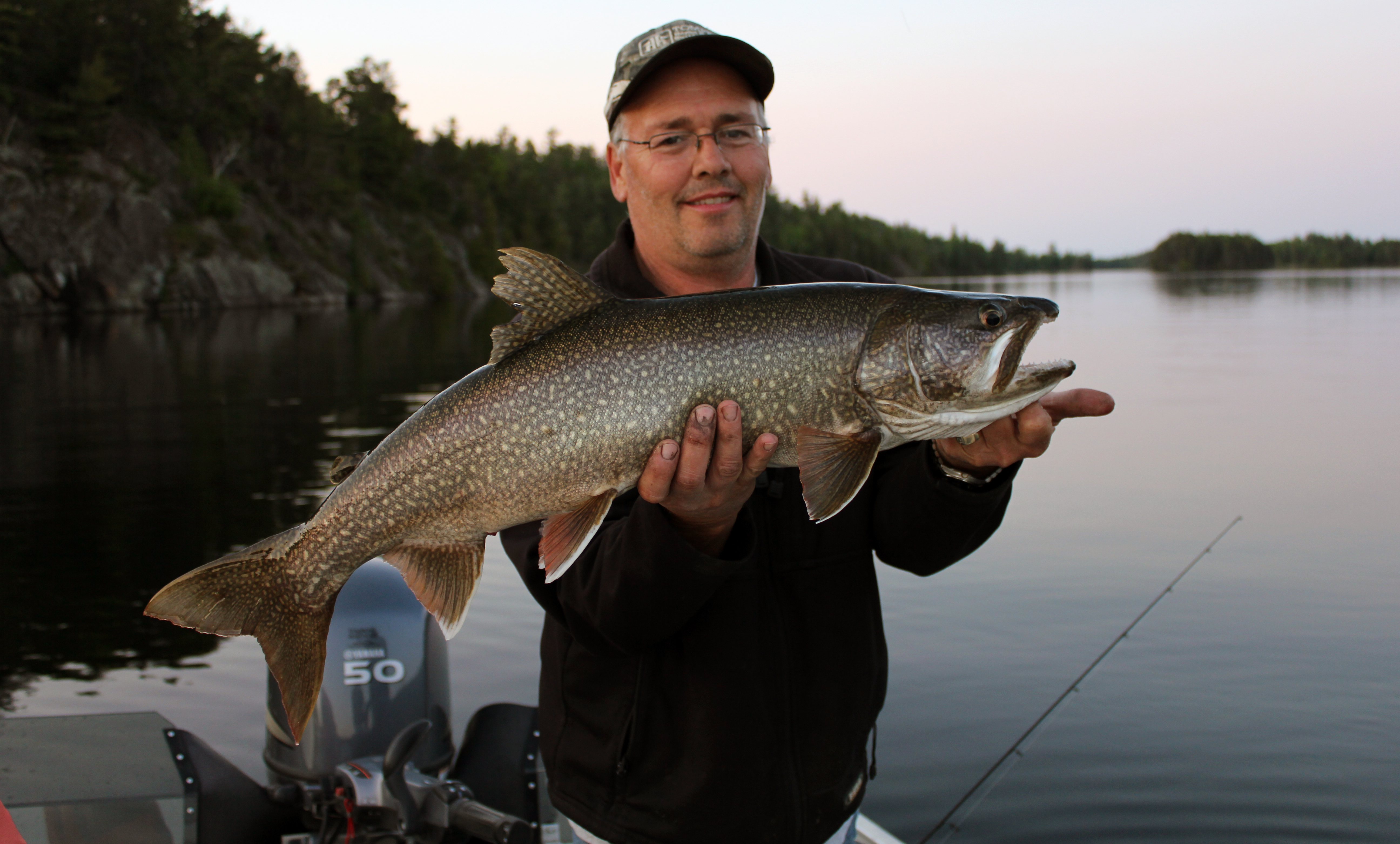
Lake trout are traditionally thought of as deep-water fish. This is certainly true in most instances, especially in summer and when the waters are warm. However, there are many instances where lake trout are not only in shallow water but also in fast currents. In fact, I’ve had some of my most spectacular lake trout fishing over the years not in lakes, but in large rivers.
Sometimes these fish are seeking out cooler water temperatures, at other times they may be pursuing baitfish. One thing is for sure: current-loving lake trout are both aggressive and hard fighters. Here are some techniques to score on river lake trout wherever they are found in Ontario.
The drop-back technique is not a new one for many trout and salmon anglers. It has been employed successfully for many years on Canada’s West Coast and on large rivers along the Great Lakes. What has changed are the lures that are being used. Traditionally, diving cranks like Shad Rap or Wiggle Wart are top baits. These days, the lures that really seem to shine are jerk baits. These lures were originally designed to be cast and jerked, but they’re phenomenal lures for dropping back to lake trout.
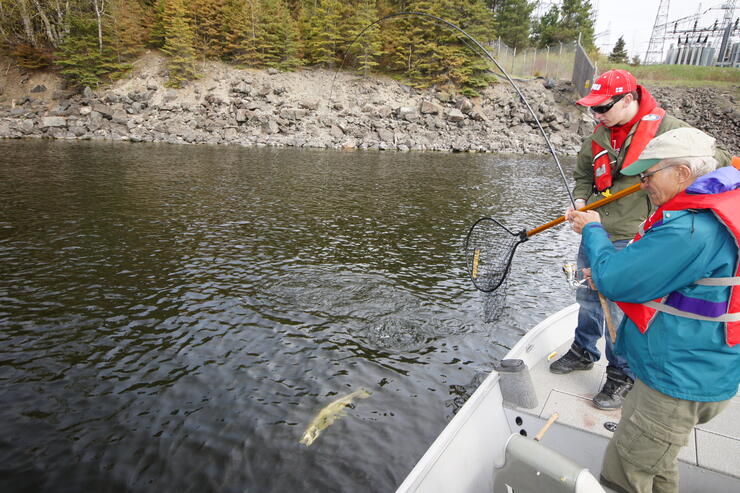
The drop-back technique involves slowly working lures through prime fish-holding areas in a river. You can swing the lures through the tail out of a pool and slowly lose ground to the current. Lake trout usually try to avoid heavy currents and sit on the lip of the break, or in depressions where they can keep belly to the bottom, out of the current. Deep holes at the base of a rapid are also prime for lake trout. By dropping back, your lure is presented in the face of any fish around.
One thing that’s certainly become much clearer over the years is that lake trout will come up off the bottom and slam a lure that’s dropped back. You don’t need to have lures grinding the river floor to catch a fish. So, a jerk bait that is down four or five feet off the bottom is still very effective. In deeper river water, a deep-diving jerk bait is an option.
Most of the jerk baits I’ve tried have tracked very well in current. However, you may find that in very fast water, some will pull left or right, spin, or pop out of the water altogether. You can really only find this stuff out by fishing with the various baits. Always check the bait action at the boat side before you let it out.
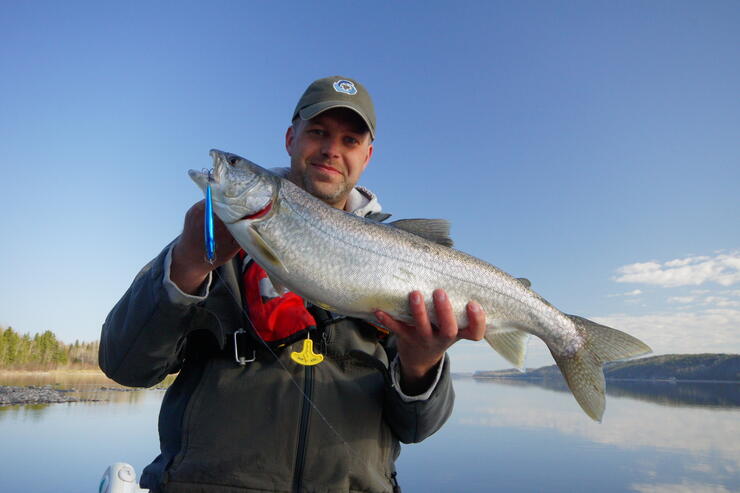
Very few lake trout can resist the flutter and flash of a spoon. As you might guess, this really doesn’t change much in a river environment. What changes is how you fish a spoon. If you like to cast, spoons are a great option. Generally, heavier body spoons are easier to throw and work in the current. Unless you are in really deep water, don’t go too heavy. I find a half-ounce spoon is about right in most situations. If the lakers are really shallow, a lighter spoon will be easier to fish with.
The technique is very simple. Cast your spoon quartering upstream. When the spoon hits the water, slowly engage the reel. The key is to allow the spoon to sink, while still getting the flash and action out of it. You want the spoon to drift downstream close to the bottom, but not on the bottom. This will take some practice, and you will lose a few spoons. However, the drifting pulse of a spoon is strong medicine for lake trout in the current. The strikes will be hard and unmistakable.
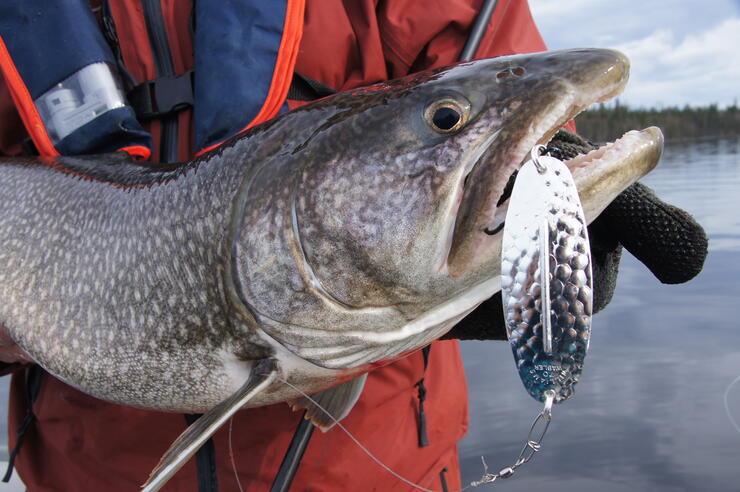
Another good spoon presentation in rivers is what I like to call "fluttering." You are more or less dropping back a spoon, similar to how you would a jerk bait or diving crank. The key with fluttering is to use a spoon that is heavy enough to get down, but light enough not to sink to the bottom. My two favourite lures for this are the classic Williams Wabler and the Williams Nipigon spoon. Both have excellent action in the current, although the Nipigon spoon has a slightly tighter wobble. Just cast them out and hold them in the current.
Perhaps the most unusual, and potentially most effective, way to catch river lake trout is with a jig. Any type of jig will work, but bucktail jigs are especially good. The beauty of a jig is that it can be fished in a variety of ways in the current. You can pitch it upstream and drift it down, swimming it as you go. You can cast it into a pool and work it back upstream with short hops. Troll it, swimming it just off the bottom. Or, if the water is deep enough, you can drift and vertically jig it. There is no wrong way to fish a jig. It pays to have a few different weights of the jig, usually from one-quarter to five-eighths, depending on water speed, depth, etc. The lighter jigs are better for drifting and fluttering behind a boat. Heavy jigs get down in deep holes and heavy current.
River lake trout fishing is both fun and challenging. If you’ve never tried it, this is the year to do it. I guarantee you will never look at lake trout fishing the same way again.