9 of the Most Beautiful Fall Destinations
And they’re all in Ontario.
By Jessica Wynne Lockhart




It feels like every spring, there are more conversations about ticks in areas where they weren’t a worry before. Growing up in Southern Ontario, I spent most of my summer days tromping through the forest and fields, but ticks were never a concern. Now? They are on my mind anytime I’m around long grass or out for a walk in any natural area.
If you feel the same, it’s not in your head; tick ranges are expanding, and numbers are booming. It’s important to understand where ticks are commonly found, as well as the potential risks associated with tick bites, and what to do if you find a tick on you or a pet.
Read on to find out everything you need to know about ticks in Ontario.
Ticks are arachnids, like spiders and mites. They have eight legs and are known as external parasites, meaning they latch onto the skin and feed on the blood of other animals, mainly mammals and birds, but also occasionally reptiles or amphibians. Ticks have been found on every continent, including latched onto penguins in Antarctica.
Ticks go through four life stages: egg, larva, nymph and adult. At each stage, they must feed on blood to progress to the next life stage. Both nymph and adult ticks feed on humans and pets, such as dogs and cats, although adult ticks are more commonly found on these hosts.
Ticks find hosts by clinging to grasses or leaves with their lower legs and outstretching their upper legs. When a potential host brushes up on the grass, the outstretched arms cling to the fur or clothing and climb on. Ticks do not actually jump. Researchers have observed ticks being pulled onto their host by static electricity, which may create a bit of a “jump,” but often they just crawl onto the host as they come into physical contact. They detect hosts by sensing the smells, heat, moisture or vibrations.
Once they have moved onto the host, ticks climb to a warm, soft area where they can attach themselves and begin feeding. Over the course of feeding on their host, they become extremely engorged, increasing their mass up to 600 percent. After feeding, nymphs drop and enter a period of dormancy, where they moult and emerge as an adult. When the adults finish feeding, a female will begin to lay thousands of eggs.
Ticks are incredibly resilient and can withstand long periods without feeding. They are susceptible to cold temperatures, but some survive harsh winters by burrowing into soil or leaf litter until snow can act as an insulator. Warmer winters increase the number of ticks that survive, which in turn increases local populations. Many areas that historically did not report ticks or had only a few in small numbers are becoming hot spots as we experience these milder winters.
There are primarily two types of ticks in Ontario that concern humans and pet owners. They go by several different common names, which can be confusing at times. Their scientific names are Dermacentor variabilis and Ixodes scapularis. You may know the more common Dermacentor variabilis by the names dog tick or wood tick. This one is the larger of the two and does not carry Lyme disease. Ixodes scapularis is otherwise known as the blacklegged tick, or deer tick. This is the one to really worry about.
Additionally, you may come across articles discussing the lone star tick (Amblyomma americanum). While not yet widespread across the province, it has been reported in the southernmost parts of the province, such as the London and Waterloo areas.
Other ticks may be seen in the forest or discussed, especially the winter tick (Dermacentor albipictus), which mainly parasitizes deer, moose and elk. As many as 100,000 of these ticks can latch onto a single moose, even causing some calves to die from blood loss.
All ticks have eight legs, and no wings or antennae. They move slowly and methodically, crawling along clothing or fur. They often feel hard to the touch, like a small pebble. If attached, they may be mistaken for a skin tag or scab.
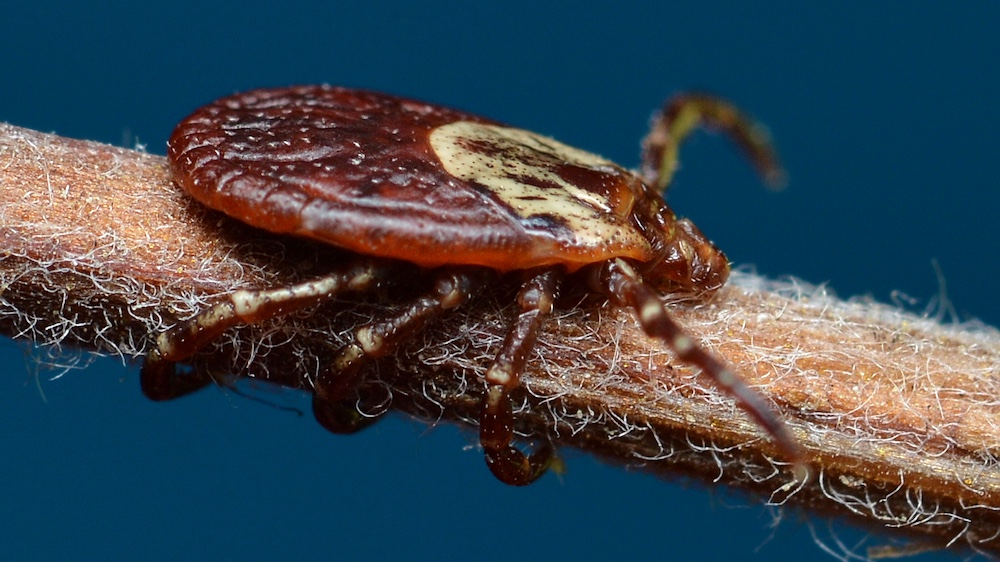
American dog ticks are the larger of the two ticks that feed on humans. Adult American dog ticks are about the size of an apple seed before feeding and have a distinct, flat, oval shape. They are brown or grey, with white patterning on their backs. Their eight legs are darker than their bodies, which may be confusing, considering the blacklegged tick also has the namesake black legs. The distinguishing features of dog ticks are their overall size and light patterning, which blacklegged ticks lack.
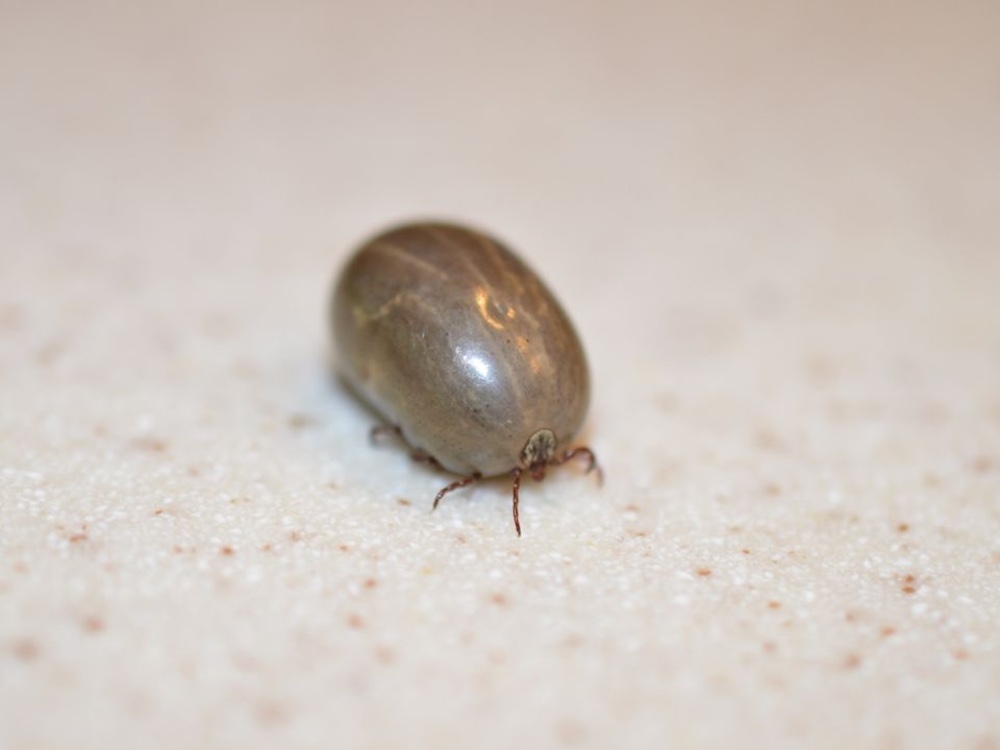
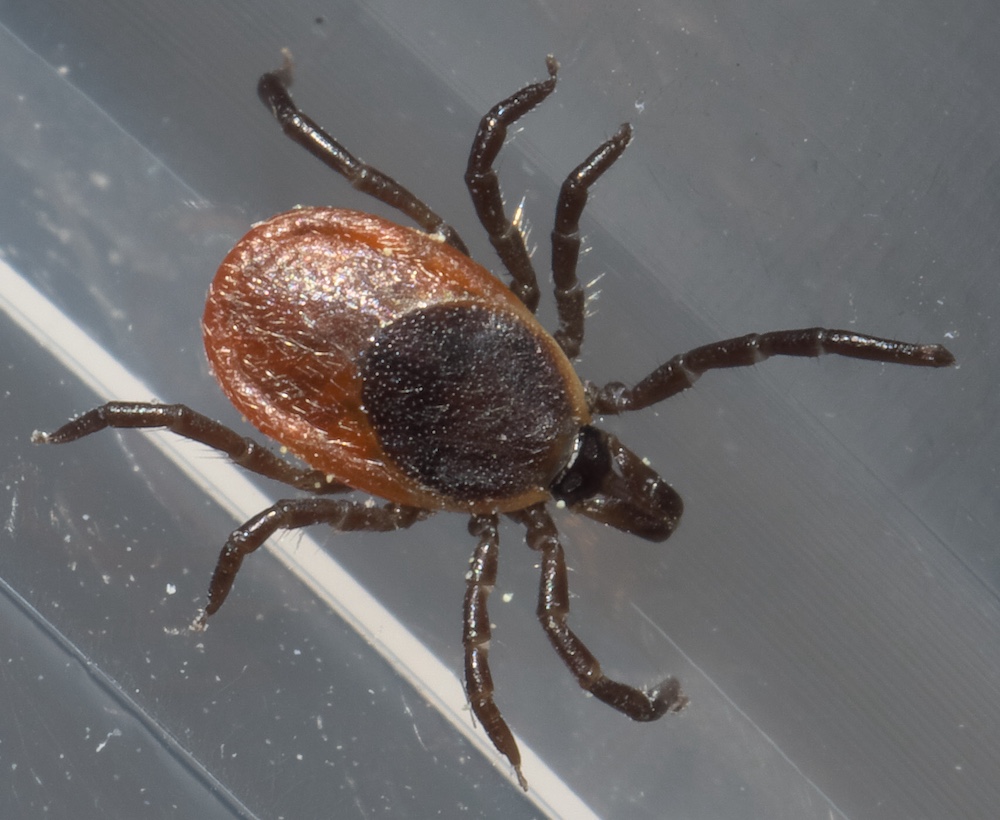
Blacklegged ticks are smaller than dog ticks, and unfed adults are about the size of a poppyseed. After feeding, they can swell up the size of a small pea. They have a dark brown or black body, with a reddish area just behind the head. They also have dark legs, hence the name. Consider the size and reddish markings to distinguish blacklegged ticks from dog ticks.
Ticks are versatile in selecting habitats, but most are commonly found in wooded areas or overgrown meadows. Ticks could be present anywhere there are plants for them to hang from. That said, birds and other animals can unknowingly transport ticks to many unlikely places, and they can even end up in gardens or backyards. They prefer moist natural areas, which is often where larger numbers of ticks are found. Some areas become known as “tick hot spots” and local health authority websites may be able to identify these.

While ticks can be active whenever temperatures are about 4° Celsius, peak tick activity occurs during the spring and summer months. In fact, 70 percent of all Lyme disease cases in Ontario are reported between June and August, according to Public Health Ontario. This timing also coincides with the time of year when more people are active outside and wearing shorts, potentially making it easier for ticks to latch onto hosts.
In the late summer and early fall, many more nymph-stage ticks are looking for hosts. While bites on humans from nymphs are less common, these tiny ticks are tougher to detect. Unfortunately, this only reiterates that precautions for ticks need to be taken anytime temperatures are warm enough for them to be active.
In the winter, ticks tend to go dormant, but they can become active if temperatures get above the 4° Celsius threshold.
In addition to the unsettling nature of blood-sucking arachnids latching onto unsuspecting hikers, gardeners or pets, ticks are also hosts for a plethora of illnesses. Lyme disease is the most common and one which can be particularly debilitating. As tick ranges have expanded and more bites are reported, it is important to be aware of the risks associated with ticks.
Ticks that carry Lyme disease in Ontario are blacklegged ticks, often in the nymph stage. The blacklegged tick is the smaller of the two that feeds on people and pets, and the nymphs are so tiny they are often not spotted at all. These ticks carry the bacteria that causes Lyme, which is then passed on to the host when the tick is attached. The percentage of blacklegged ticks carrying Lyme disease in Ontario is around 20 percent on average, but some regions are much higher. For example, the Thunder Bay District Health Unit reported that 40 percent of tested blacklegged ticks carried the bacteria that cause Lyme disease.
The risk of Lyme disease decreases dramatically if the tick is found and removed before 24 hours of attachment to the host. For blacklegged ticks suspected to have been attached for more than 24 hours, pharmacists and walk-in clinics can assess Lyme risk and prescribe antibiotics if necessary.
Symptoms of Lyme disease include large rashes—most notably the “bullseye” rash around the bite site—and flu-like symptoms, but over time can progress to more severe symptoms such as facial paralysis, arthritis, numbness in the extremities or even heart palpitations. The symptoms vary, making Lyme historically and notoriously very difficult to diagnose. Most (but not all) people infected with Lyme notice the rash as a first symptom.
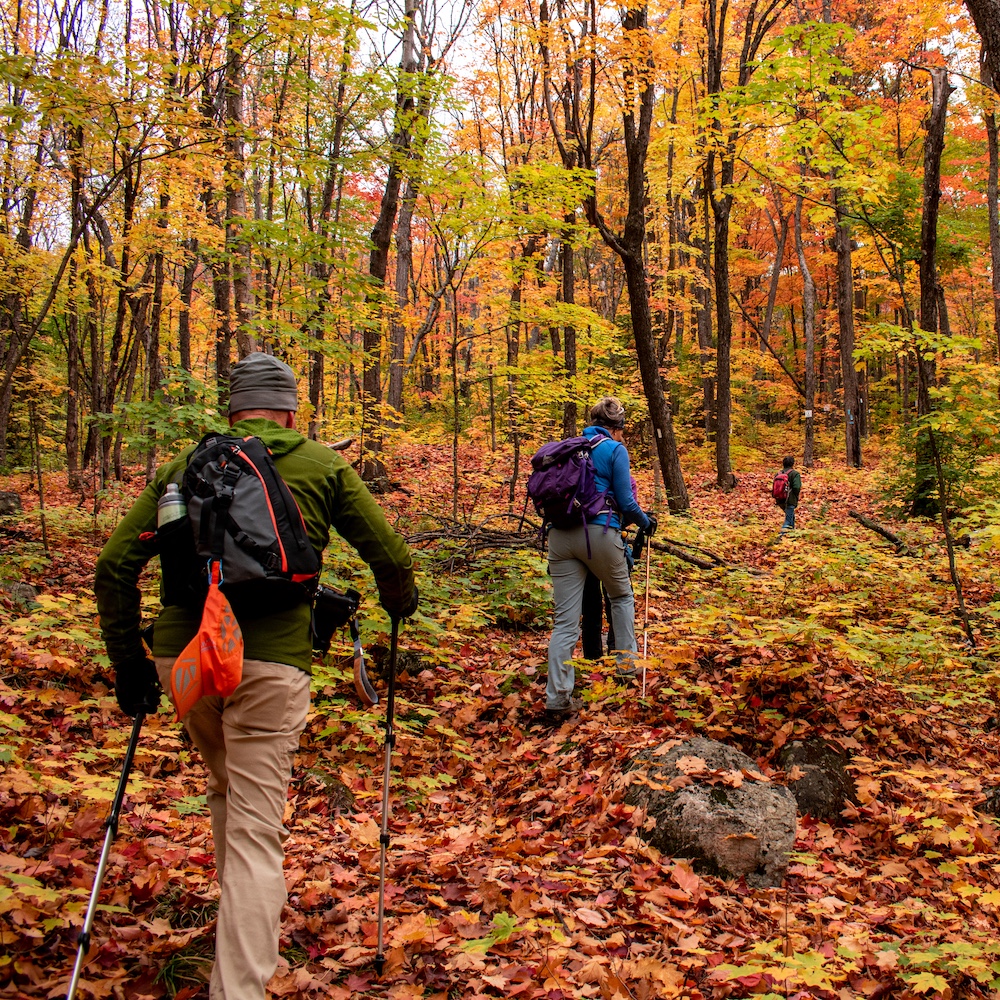
While ticks are unsettling and objectively gross, summer is fleeting. There are ways to still get outside and enjoy natural areas while minimizing tick risk. Knowing how to repel ticks and prevent bites will greatly reduce the chances of them grabbing hold. Ticks need access to exposed skin, so wearing long pants and shirts with long sleeves makes it much more difficult for them to latch on. Tucking socks into pant legs and shirts into pants also reduces the access points for ticks. Wearing lighter coloured clothing helps in spotting ticks more easily.
After a hike or any time outside, do a quick tick check, or even better, have a friend do one for you. Check over all clothing, especially creases and seams. As soon as you are able, go for a swim or shower as well. While in the shower, check areas that retain heat, such as your armpits, the backs of your knees and the groin area. Ticks may also hide in hair if they have time to climb that high. Ticks can take some time to embed, so rinsing off fully helps wash away stragglers. Putting clothing or linens in the dryer on high heat, or in a black garbage bag in the sun, can help kill any ticks that may have been hiding inside.
Specially-designed clothing treated with permethrin, or permethrin sprays you can apply yourself, are available. Permethrin is a low-grade pesticide which is shown to kill ticks on contact. Be sure to follow all instructions, including not applying directly to skin or to clothing, and refrain from washing these treated clothes in waterways as they can cause harm to aquatic ecosystems, particularly the invertebrates living in the water like mayflies.
Classic DEET, the same stuff used in bug sprays, has also been shown to have some effectiveness against ticks. Unlike permethrin, which kills ticks, DEET works as a repellent. It may need to be reapplied, as with mosquito repellent.
A third, more uncommon chemical used against ticks, is picaridin, which is relatively new to North America, although has been used in Europe for several years. Unlike DEET, picaridin sprays do not melt plastics or distort clothing, and it is fairly odourless. Picaridin sprays are found in some outdoor stores, often marketed as DEET-free repellents.
With their hard external skeleton, ticks are difficult to kill. Ticks can survive in water for up to two days, but flushing one down the toilet will dispose of it. Other ways to kill ticks include freezing them for several days in a sealed container or dropping them into rubbing alcohol, which kills them quickly and effectively.
If you find a tick embedded in you, it’s important to remove it promptly and properly to avoid the possibility of infection. Using a pair of tweezers, or special tick-removing tweezers, firmly grip the tick as close to the skin as possible and slowly pull straight up. They embed themselves deep in the skin, so it’s important to pull up and try to get the whole tick out. If small pieces are left behind, clean the wound with soap and water and disinfect with rubbing alcohol or iodine swabs. Monitor the bite area for a few days for signs of infection, but the body should repel fragments that are left the same way it would for a splinter.
To identify the tick and record its location, photos can be uploaded to eTick.ca, a nationwide service that tracks the spread of ticks across Canada. The eTick website will provide identification of the tick, along with precautions that can be taken if needed. If you are unsure how long the tick has been embedded, it’s best to consult a health care professional to determine if antibiotics are needed.
If you found a tick on your body or on the body of someone you know, you can contact your local Health Unit to find out whether they accept ticks for identification and disease testing. Note that these tests are only conducted to keep track of disease-carrying tick numbers in the province, not to diagnose Lyme disease in humans. In parts of the province where tick populations are already established and have been heavily documented, public health units are no longer accepting ticks for testing.
If you want to know whether you’ve been bitten by a tick carrying Lyme, you can pay to have a tick tested for multiple pathogens by the private company Geneticks.
Humans and pets can both get Lyme disease, and vigilance for ticks attached to dogs is also important. In addition to dogs having ticks attached to themselves, they can also bring them into the house, where the tick may move onto a human host. Similar to the tick check we perform on ourselves, check over dogs, ideally with a fine brush, after any time outside and especially after they frolic through grassy fields. Ticks on dogs will also seek out warm, moist areas, so give special attention to the armpits, behind the ears, between the toes and under the tail.
Removing ticks from dogs follows the same process as humans, using tweezers, although it may be more difficult to have a dog stay still when removing them. Be sure to monitor the area for signs of infection after removal.
There are oral and topical medications for dogs that kill or repel ticks. These are available through your veterinarian. Pet stores also sell permethrin spray that can be used on dogs, as well as essential oils, although the effectiveness of essential oils is inconclusive. There are a host of “natural” remedies on the market; you’ll find various accounts about whether these do or don’t work. Further, some vets are also offering Lyme vaccines for dogs. Talk to your veterinarian to see if that is an option.
Ticks thrive in grassy, damp areas. Unfortunately, those are often areas that are great to visit in the summer, like urban parks, conservation areas or hiking trails adjacent to marshes. Province-wide, tick populations are highest around the Great Lakes-St. Lawrence area, with large concentrations around Kingston, Southwestern Ontario, Ottawa and Thunder Bay. Public Health Ontario regularly updates a tick-borne disease risk map showing the areas where ticks have been tested for Lyme or other diseases.
Unfortunately, there are few areas in Ontario where there are no ticks, although as a general rule, the farther north and more remote you go, the fewer ticks will be around. Many tick hot spots are high-traffic areas where many people and dogs travel, providing opportunities for ticks to jump on and off hosts.

There are even ticks in Northern Ontario, though they are concentrated around high-traffic areas. If you’re travelling for hiking or paddling, it may be helpful to research online about local tick hot spots, like Thunder Bay’s Rabbit Mountain. Staff at provincial park kiosks may also be able to relay local information about “ticky” trails.
Consider backcountry canoe trips in Northern Ontario’s boreal forest, where ticks are less active, as winters are still harsh enough to keep tick populations relatively low. Backcountry trips in Wabakimi Provincial Park or frontcountry boreal parks like Neys Provincial Park or Pukaskwa National Park currently lie outside the known tick hot spot ranges.
To enjoy the places we love, we will have to learn to live with them. Staying on established trails, checking yourself and pets regularly, and swimming whenever you get the chance can all help you manage these creepy crawlies.