
Are You Up for the Challenge?
8 best 100-km bike routes in Ontario.
By Conor Mihell


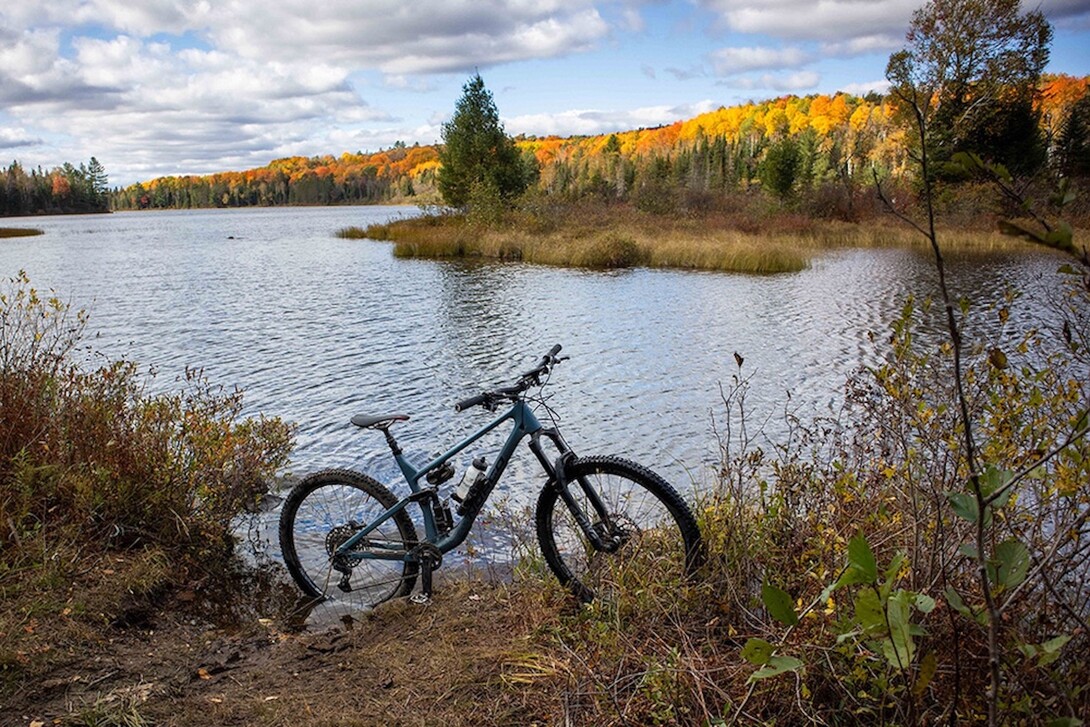

“There’s really something for every cyclist in Algonquin,” says Chris Bosworth, marketing officer at Algonquin Outfitters, a premier chain of outfitting and retail stores in Algonquin Provincial Park and the surrounding area.
Although Canada’s first provincial park is known for its world-class paddling and camping, Algonquin Park offers a treasure trove of cycling opportunities, for road bikes, mountain bikes, e-bikes, fat bikes and cruisers. Each type of biking comes with leisurely to challenging options, depending what kind of experience you’re looking for that day.
The abundance of wildlife and history make it one of the country’s most enduring parks to explore on a bike. Read on to take a cyclist’s journey through the land of lakes, forests and the Group of Seven.
Read our Complete Guide to Algonquin Park to learn about all the other outdoor adventure opportunities there are in the Park.
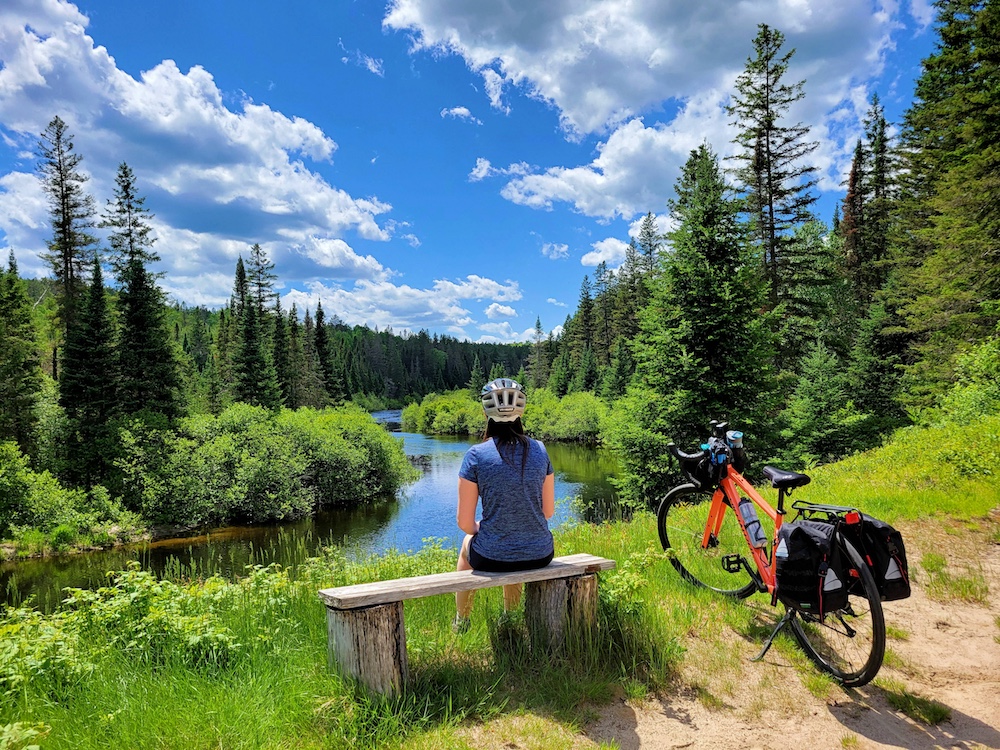
While there aren’t any formal bikepacking routes in the Park, you can string together a route from campground to campground if you get creative. Highway 60 runs for approximately 56 kilometres east to west through the Park and goes past nine frontcountry campgrounds. Book a campsite at different campgrounds to string together a weekend bikepacking trip.
Only those with road riding experience should attempt to ride on Highway 60, as it can be busy with traffic depending on the time of day and year; there are many blind corners and sections with narrow shoulders. You can also opt to ride the Old Railway Bike Trail for 16 kilometres as it runs parallel to Highway 60 and travels from Rock Lake Campground to Cache Lake.
Other bikepacking options involve cycling to access points in more remote parts of the Park, where there are campgrounds you can stay at. One example would be to bike to the Kiosk Campground in the northwestern corner of Algonquin Park. There are various options for starting this trip, including from Mattawa, Samuel de Champlain Provincial Park (camp here before you start out) or Eau Claire. Once you are off the Trans Canada Highway, you'll take Highway 630 all the way to the campground. This road is paved and for much of the way follows alongside the beautiful Amable du Fond River. Camp at the Kiosk Campground for a night before making your way back to where you began.
It might be tempting to bikepack along the hundreds of kilometres’ worth of logging roads in Algonquin Park, but note that this is not a legal activity.
For bikepacking opportunities close to Algonquin Park, try the Hastings-Haliburton 50/50 route, which runs south of the Park. This gravel route follows 260 kilometres along mixed gravel and paved routes; anticipate two nights and three days of riding.
Another option is riding the Park to Park Trail, a gorgeous rail trail, mostly gravel, that goes from Killbear Provincial Park to Algonquin Park. This 230-kilometre multi-use trail traverses former rail lines and passes through significant wetlands. The Seguin Trail, which runs from Hwy 69 to Hwy 11, is along the former Ottawa, Arnprior and Parry Sound Railway. The rail line was constructed through Algonquin Park, moving valuable lumber from Central Ontario to shipping yards on Georgian Bay.
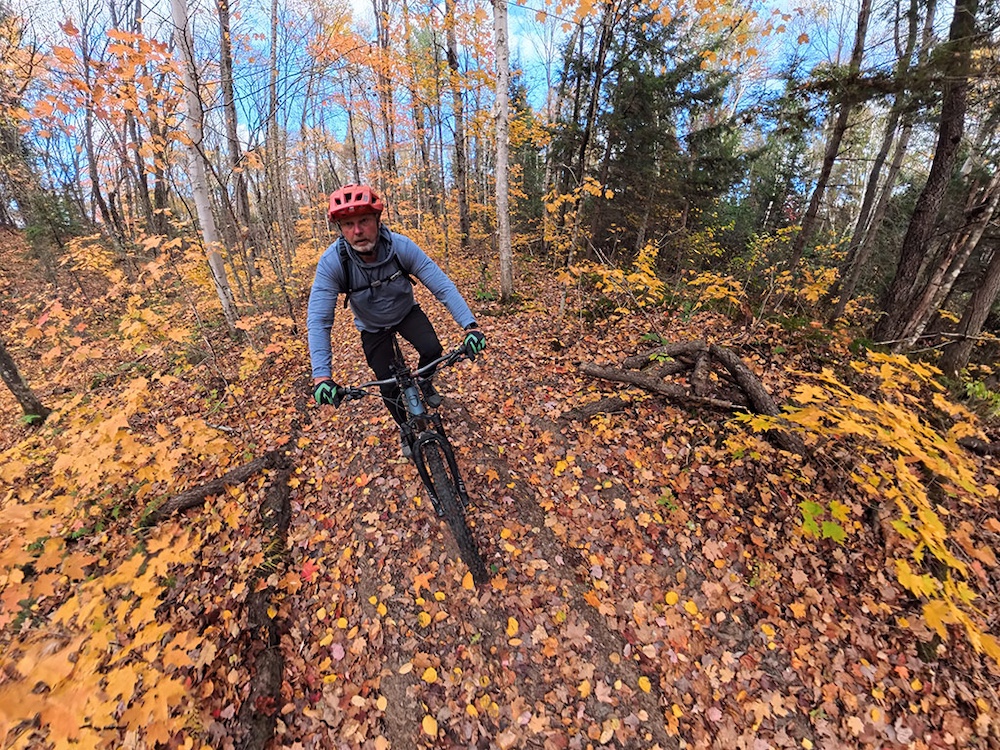
The Minnesing Mountain Bike Trail has bridges, numerous rock gardens, muddy sections, and twists and blind corners. The climbs are punchy and short at times, while some are longer and low-gear gruelling.
The trailhead is located on the north side of Highway 60, at the KM 23 marker. This network of cross-country riding has four consecutive loops: five, nine, 15 and 23 kilometres. Check with the gatehouse that the trail system is open before you go.
“Everyone from entry-level to advanced riders can have a good time,” says Bosworth. He warns, however, that cyclists on these trails should ride on a proper mountain bike that has fat, knobby tires and front suspension. Your bum will thank you.
The terrain is smooth soil, but it can get muddy with rain. Bring the proper rain gear. Expect bridges over river crossings and, on more advanced sections of the trail, technical terrain. The farther-out loops are also quite remote, so go prepared with emergency gear, bike repair kits, and extra water and snacks.
The Byers Lake Mountain Bike Trail is a 6.5-kilometre (13 kilometres round-trip) trail that is mostly a double track road. The trailhead is located about 10 kilometres east of the Kingscote Lake Access Point on Elephant Lake Road north of Harcourt. Classified as a blue trail, at times, horses make the trail muddy and bumpy to ride.
It is, however, a beautiful and scenic trail with views of the York River, Gut Rapids and Byers Lake. If visiting in spring, bring loads of bug dope!
Bosworth says he sends more families on this trail as it’s good for all abilities, and it’s flat.
It’s hard to categorize the Old Railway Bike Trail. Since it follows an abandoned rail line, it’s flat and wide. Most sections are hard-packed dirt, while others are lightly gravelled. It makes for a leisurely ride and is a great way to see a stretch of the Park without riding on busy Highway 60.
Stretching from Rock Lake Campground to Cache Lake, the 16-kilometre (one-way) trail follows the abandoned rail line of the Ottawa, Arnprior, and Parry Sound Railway, which opened in 1896 and was decommissioned in 1959.
Bosworth says families love the ride, as you can stop for breaks often to take in nature. Fall makes for a particularly enchanting ride as the canopy of trees creates a tunnel of colourful leaves over the trail.
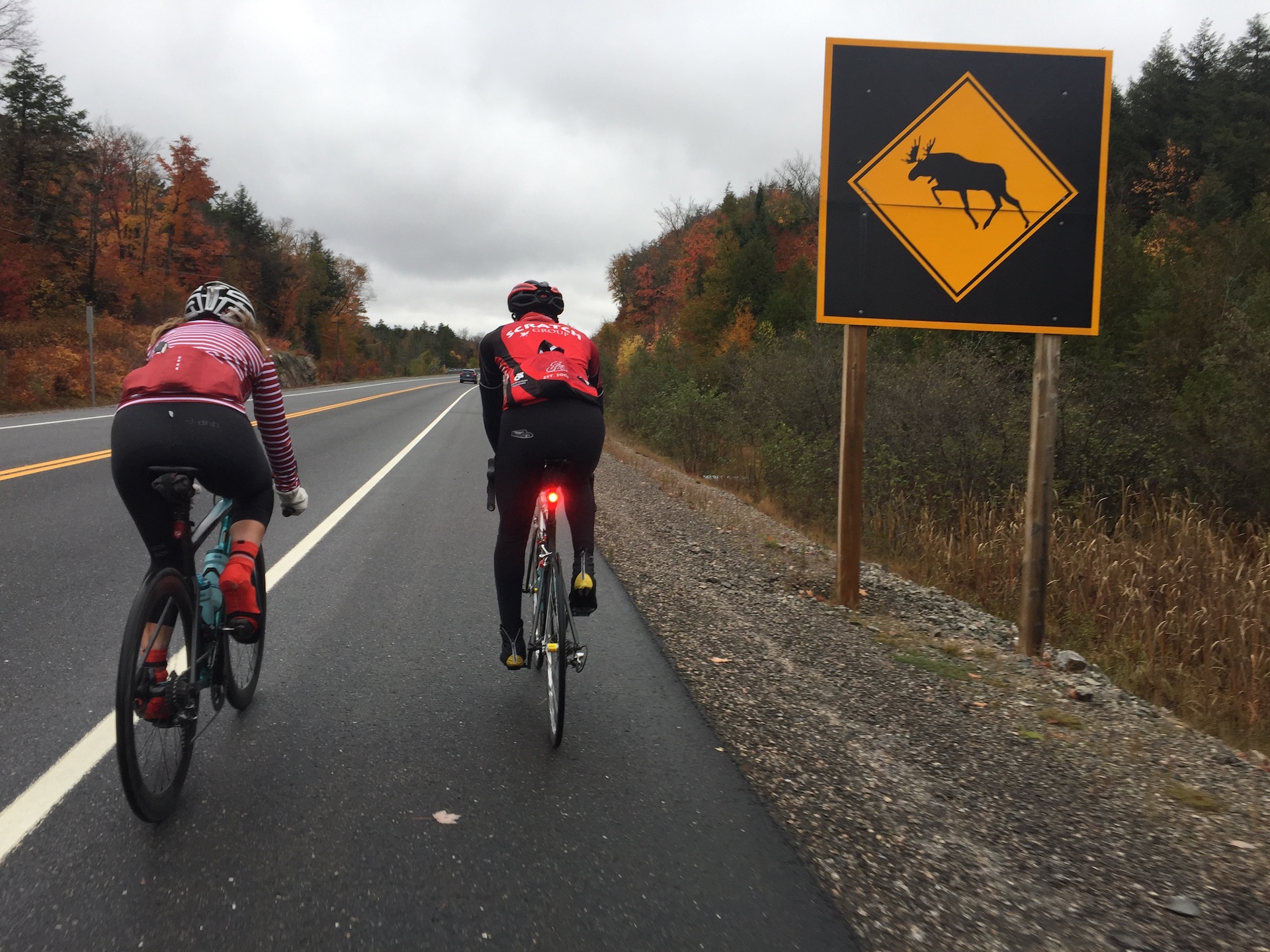
The best roadway for road cyclists is Highway 60, running east to west for 60 kilometres through the Park. In most places, the road’s shoulder is wide and paved, but use caution in other sections and especially around bends and on the far side of hills. This can be a busy road on weekends in particular. If cycling in the early morning or evening, watch for wildlife crossing.
You can choose to ride across and back again, or park a vehicle at either end. If you end in Whitney, just outside the east gate, The Mad Musher has mac and cheese, burgers and other classic comfort food that hits the spot after a day of riding. In Dwight, just outside the west gate, try the Boiler Room Tap & Grill or The Cookhouse Saloon.
Biking is allowed in all frontcountry campgrounds in Algonquin Park. Bikes can be a great way to get around, especially if you have kids. You can bike along campground roads to the comfort station, beach or campground office.
There are also various informal trails between campsites and, at some campgrounds along Highway 60, connector trails to the Old Railway Bike Trail, which runs for 16 kilometres from the Rock Lake Campground to Cache Lake.
The connector trails traverse bridges over lakes, your tires crunching over gravel. Expect some wildlife—loons calling on the lake, beavers chewing wood for their lodges and various birds making homes in the wilderness.
Campgrounds along the Old Railway Bike Trail include Rock Lake, Raccoon Lake, Whitefish Lake, Kearney Lake, Pog Lake, Lake of Two Rivers and Mew Lake. You can go all the way to the Track and Tower Trail at Cache Lake, or make a stop at the Lake of Two Rivers Store for some ice cream.
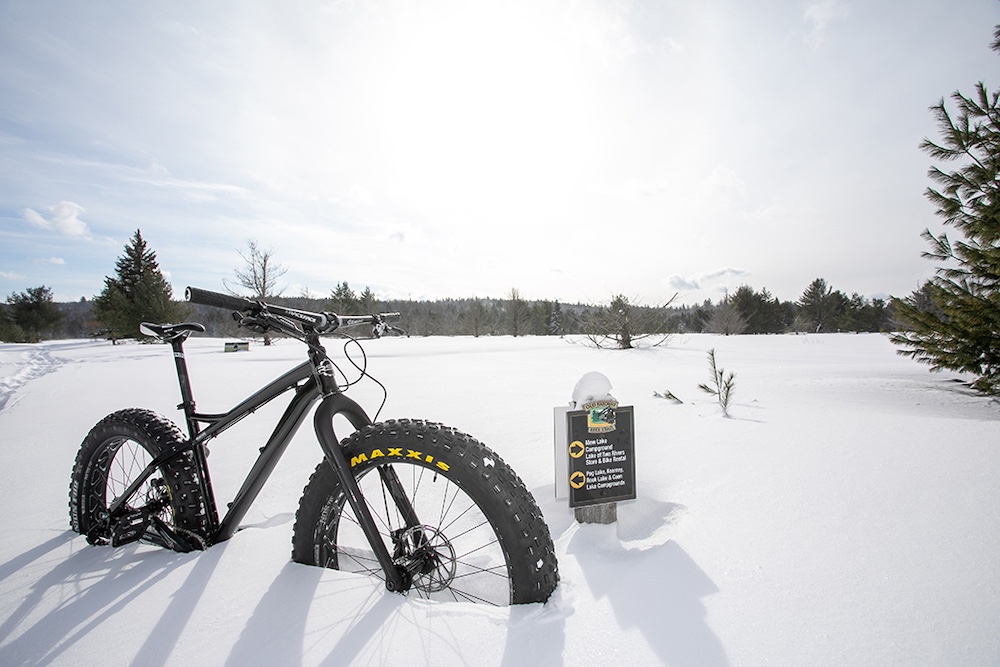
There are no designated groomed winter fat bike trails in Algonquin Park.
“People do it, but it’s not easy,” says Bosworth.
However, snowshoers often traverse the Old Railway Bike Trail in the winter, thus creating a hard-packed surface great for fat biking. The trail is also track set for Nordic skiers, so be mindful of riding over the tracks. There is plenty of room for everyone! To check the current snow conditions, check here.
The Lake of Two Rivers Store, run by Algonquin Outfitters, inside Algonquin Park rents a variety of bikes in the summer months. Fat bike rentals are available at the Haliburton location, south of the Park.