Keystone Muskies
Fishing Tips for Targeting Muskie on Cedar Lake
By Jim Saric










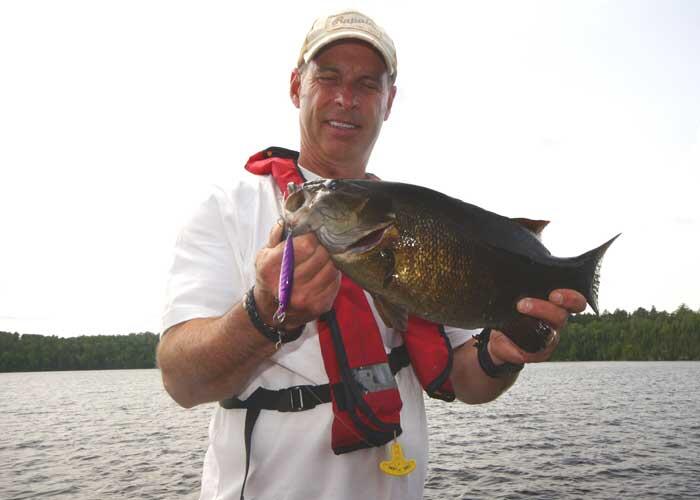
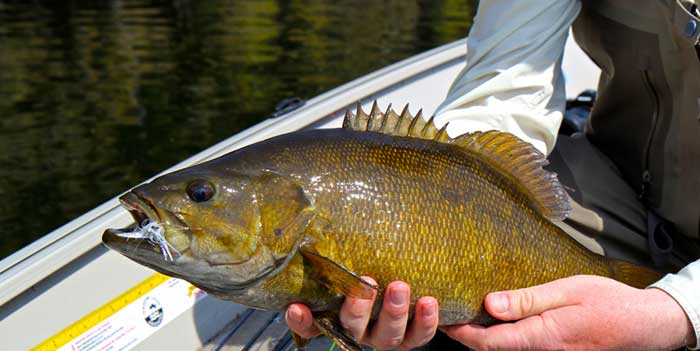
Some of my clearest summer memories are of being a kid and looking at smallmouth bass under the slats of a dock, trying to tempt them with rubber worms, grasshoppers, crayfish, and a wide assortment of lures. Whether it was the Government dock at Marie Louise Lake in Sleeping Giant Provincial Park or the diving dock at a friend’s camp, big bass could always be found lurking in the shadows.
While I grew to love bass as a boy, it’s as a grown man I’ve really learned to appreciate what a great sport fish they are. When hooked on lure or bait, smallmouth bass becomes the best fighting fish of its size in Ontario, putting up a scrap on light tackle that can rattle even the most jaded angler.
The smallmouth bass is native to some areas of Ontario but has been widely introduced throughout Northeastern and Northwestern Ontario. Almost all the bass lakes north of the boundary waters have been seeded at some point by fish stocked by MNRF, tourist operators, anglers, or by accident. It's remarkable how well these warm-water fish have done in chilly lake trout lakes throughout the north.
Smallmouth bass favour rocky areas of lakes, especially points, and will set up over boulder-strewn mid-lake shoals. In the summertime, they will seek the shade provided by an overhanging tree, dock, or boat. Weedy areas close to deep water are also excellent summer smallmouth areas, as they offer both shelter and lots of food.
In rivers, smallmouth can often be seen basking in pools or working the current areas and riffles. Rivers that connect, or enter lakes often have bass residing in them during the summer. Here, they feed on insects and crayfish while enjoying the cooler, more aerated water. River bass is usually very wary of any movement, and this can make for tougher fishing.
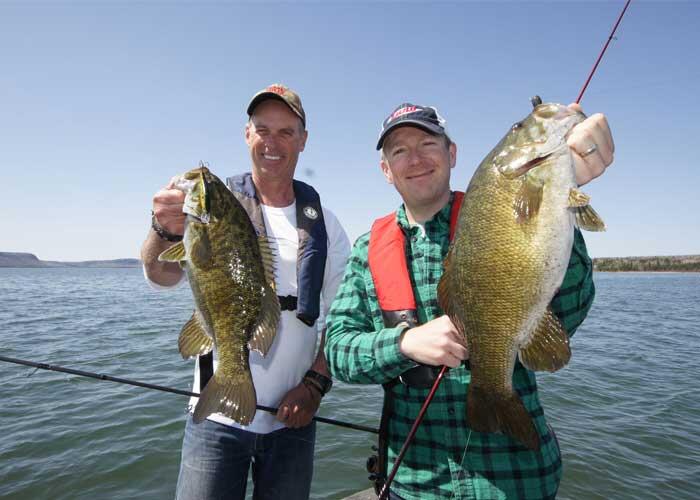
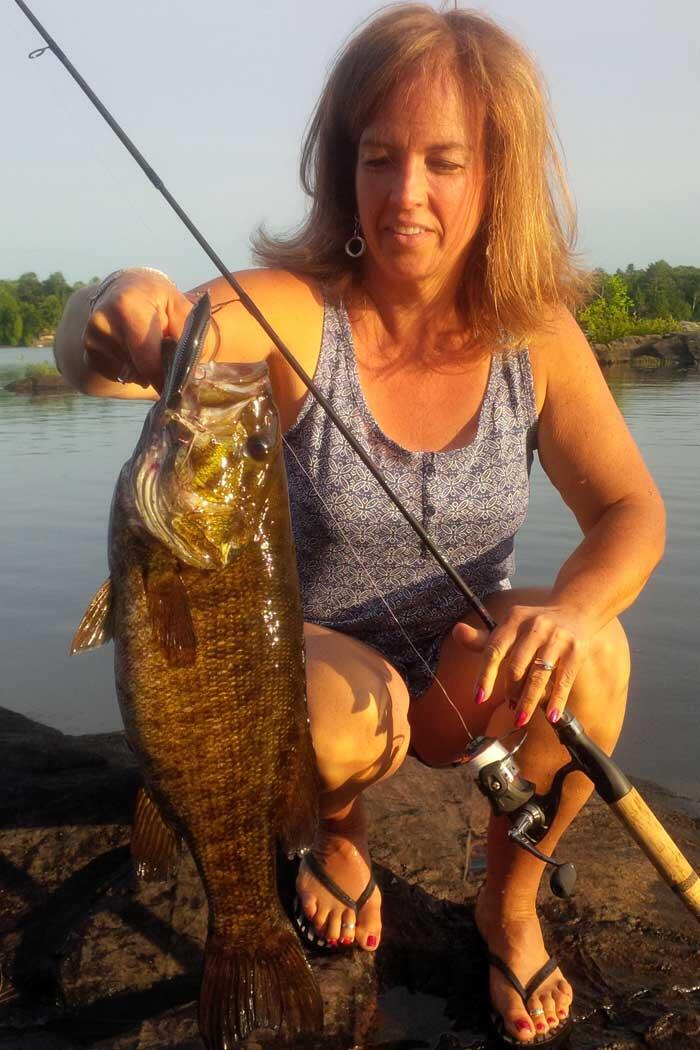
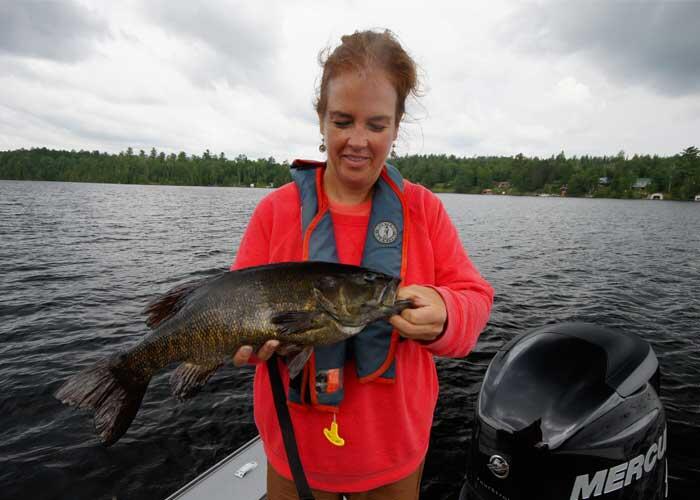
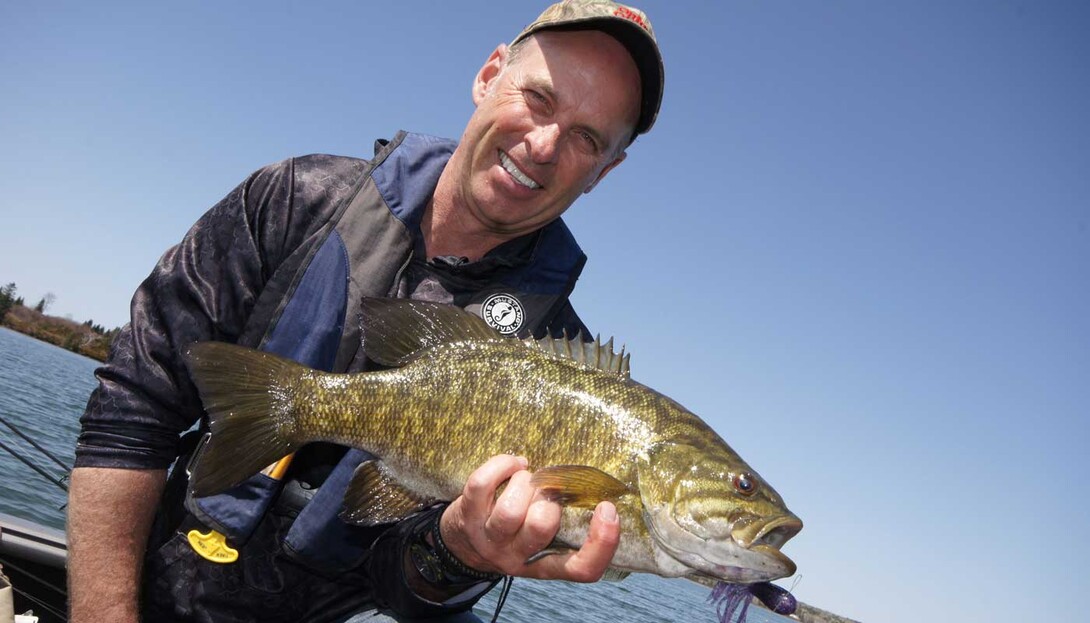
An average Northern Ontario smallmouth bass weighs from a pound to two pounds and will measure 15 or 16 inches. A bass of 18 inches is very respectable, and a bass of 20 inches is definitely trophy material. The largest smallmouth I've heard of in the north measured 23 inches.
Smallmouth bass can be caught in a variety of ways and with just about any tackle. Certainly, this is one of the reasons the smallmouth bass has attracted so much attention from the angling press over the years. Trolling, still fishing, fly fishing, jigging, and casting all work. Generally, a light to medium-weight spinning rod coupled with an open-faced reel will do the job. Monofilament in the 6- to 10-pound breaking weight class is fine, but the lighter test will improve success in ultra-clear waters (and especially in rivers). I use the braided lines when throwing crankbaits and top-water lures. The hookups are more solid with braid, although you should use a softer rod as the braid has no stretch.
Jigs are a good choice for bass and are especially effective when fished with a 2- or 3-inch twister tail grub. Fish the grub on a flat, grey 1/8- or 1/16-ounce mushroom head along the edge of sunken boulders and drop-offs. A slow, swimming motion will attract deep-water smallmouth. Four-inch worms or shads fished on a small worm hook with a split shot clamped about 18 inches up the line are also deadly. Cast the worm to shore, and slip it slowly back to the boat. Tube jigs are very popular and quite deadly. Smoke- or pumpkin-coloured tubes are top producers, although I've had great success with both purple and blue tubes.
Crankbaits such as the #7 Shad Rap, X Rap, Husky Jerk, and Big O are good when trolling or casting for bass. A pause and jerk retrieve is best for the X Rap and Husky Jerk. Bass will often crack these lures on the pause. You should feel the lip of the plug bumping the bottom when trolling. A slightly quicker trolling speed than you would use when walleye fishing will stir up the bass and trigger a hit. Top-water plugs like the Skitter Prop and Chug Bug are also a blast if the bass is hitting on top. Fish them the same as the jerk baits.
Bass are explosive fighters and often jump multiple times when hooked, so be prepared to be thrilled.
Fishing action like that brings back the kid in all of us.