Eating Northern Pike
The Best Recipe to Cook This Fish
By Gord Pyzer




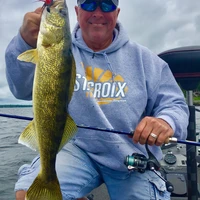


Lake Huron, like all of the Great Lakes, truly is a sport fisherman’s paradise. Huron is the second-largest of the five, and its coastline and islands offer unparalleled angling opportunities for both conventional tackle anglers and fly fishers. Georgian Bay, which comprises approximately one-third of the lake, lies almost entirely on the Canadian side and is often considered a body of water in its own right. With hundreds of islands and a varying shoreline which features everything from sandy flats and rugged, rocky humps, every sport fish found in the Great Lakes has a home in Georgian Bay.
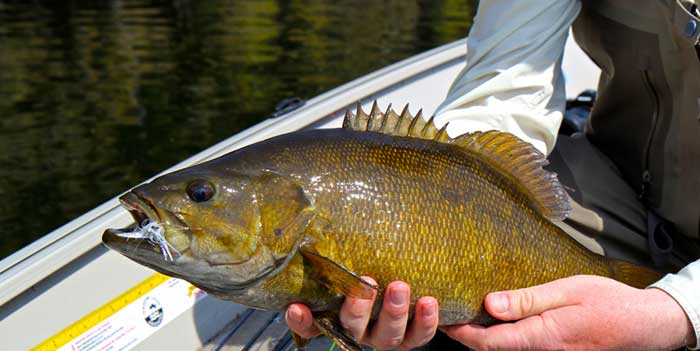
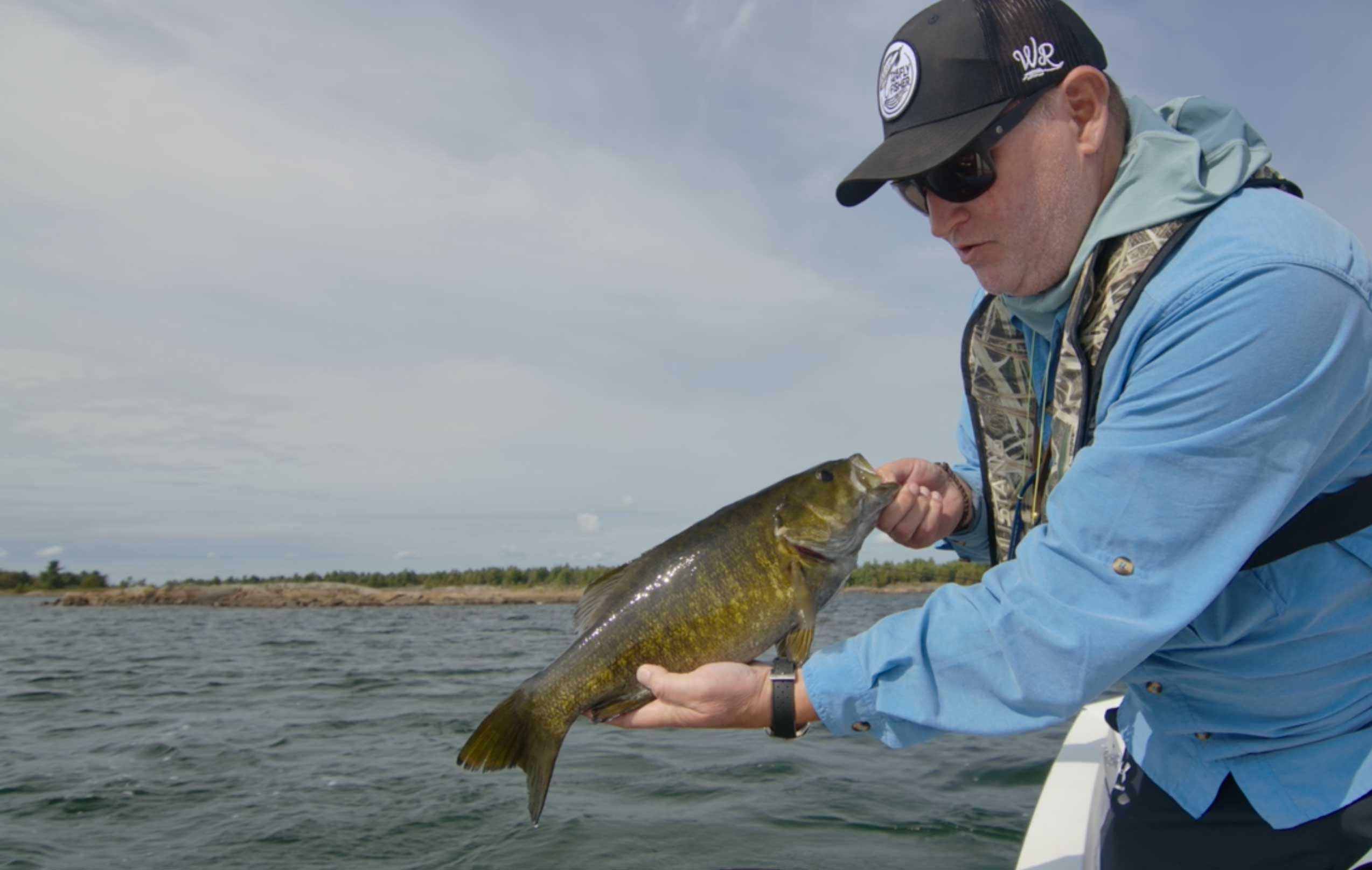
This past September, Mark Melnyk and I had the opportunity to visit Camp MacIntosh on the lower French River for a few days of smallmouth fishing. Although we could have made it a “multi-species” trip, and likely would have if we had more time, we decided to concentrate on smallmouth bass. Georgian Bay and the French River have long been known for muskie and pike, but dedicated bass anglers will tell you that this region may be some of the most diverse smallmouth angling on the planet.
Over the past years, I’ve had several opportunities to fish the northern side of the bay, and I will say this: the fishing is only surpassed by the beauty of this region. This trip, from the Key River Marina off Highway 400 to Camp McIntosh, is no different. From the Key River, into the bay proper, you really get a sense of the sportsman culture of this area, as it seems that everything touched by man has a fishing theme.
Camp McIntosh follows that theme as a full-service facility, located just a few kilometres from the bay proper and the inner barrier islands. We were greeted by the owners, Tracey and Andres Dupuis, at the dock and immediately felt at home. The facility itself is exactly what one would expect from a 75-year-old fishing camp, and it was clear from the start that Tracey and Andres took pride in their property as it was all well-maintained, with groomed grounds and clean cabins. Depending on the size of your party, the facility has six cabins that sleep from two to seven people and are all nicely appointed with comfortable beds and bathrooms. While it may be rustic, the facility is charming and has everything that anyone needs from a fishing camp in Ontario’s near north.
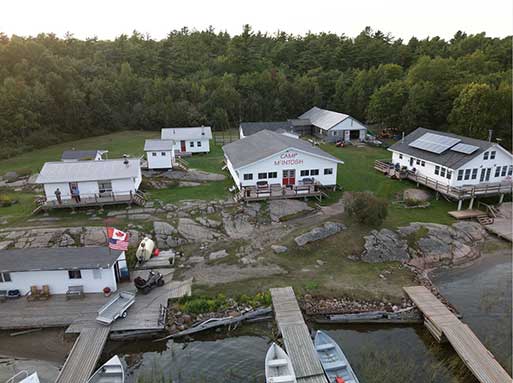
During our stay, there were several other guests with us, and as it turned out, everyone was after something different. One party was focused solely on muskie, and the other two were after walleye and pike. This gave us a broad perspective of what the camp offered, and as it turned out, everyone was successful. Even the muskie guys talked about the encounters that they had on a daily basis. We, however, were going after smallmouth bass, and given the time of year (mid-September), we were expecting the fish to be in or near their fall transition. What this means is, with the bay beginning to cool down, the fish should be coming out of deeper, colder water and up onto the more shallow humps in five to ten feet of water, making them considerably more conducive to fly angling.
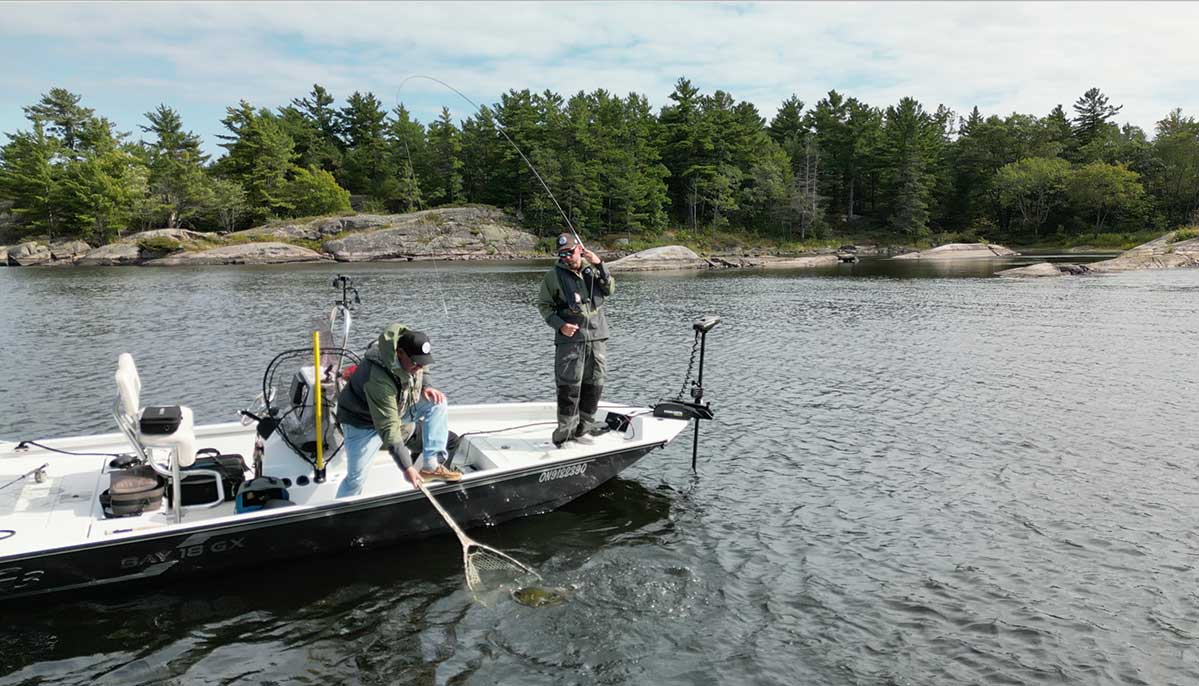
We spent the first day working the river upstream from the camp, as far as the La Dalle Rapids. Even with our big bay boat, we had no issues navigating the river and found nice smallies wherever we fished. The river, being out of the wind, was pleasant, very readable and fished well, but we struggled to find fish over two pounds. Our thinking was that if we were able to find water temperature in the mid 60’s around the barrier islands, that would be our next move, and so the following morning, that’s where we headed.
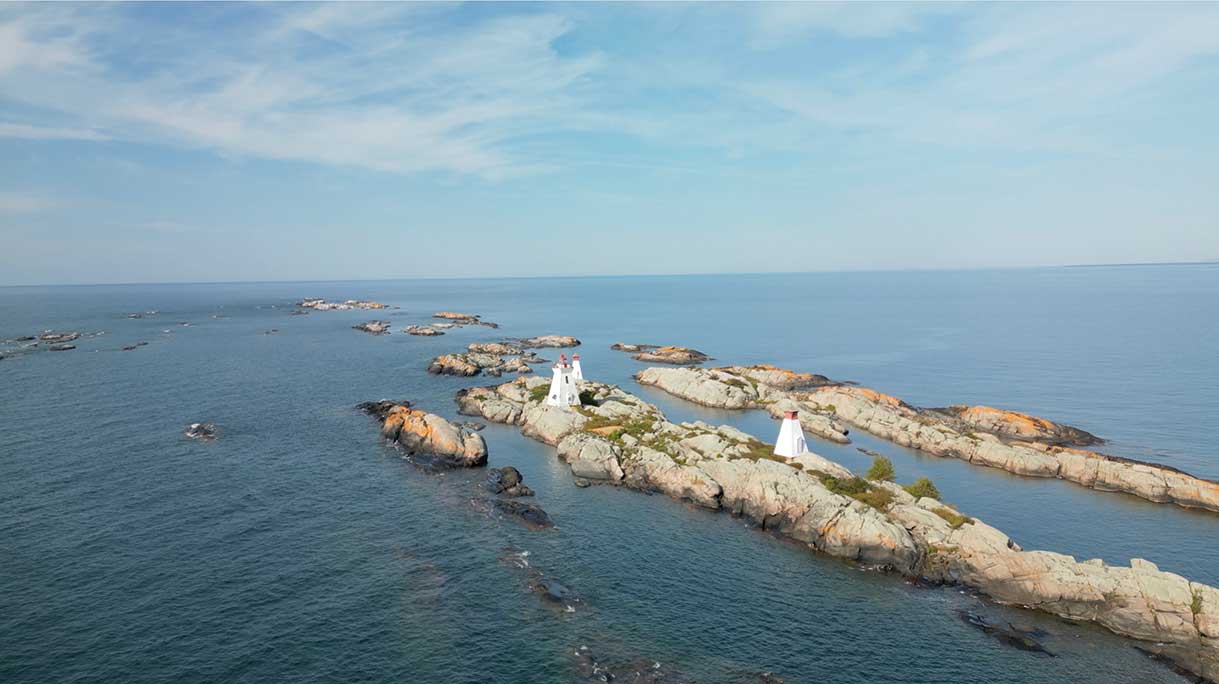
The Bustard Islands are essentially a large, rocky outcropping just outside the mouth of The French River. Its countless channels and inlets form several smaller islands, and at first glance, it seemed to me that it would take a lifetime to figure out. We didn’t have that long, so we started exploring, looking for good water temperature and working humps and shoals that would warm the quickest. It was beautiful water, and we gave it its due, but in the end, we had difficulty finding water over 57 degrees, which told us that the bass may not be up in the shallower zones.
From here, we moved back into the inner islands, close to the French, hoping that the warmer water from the river would provide a good mix and get us back to the mid 60’s. As it happened, our plan came together, and as soon as we found the temps, we found the bass.
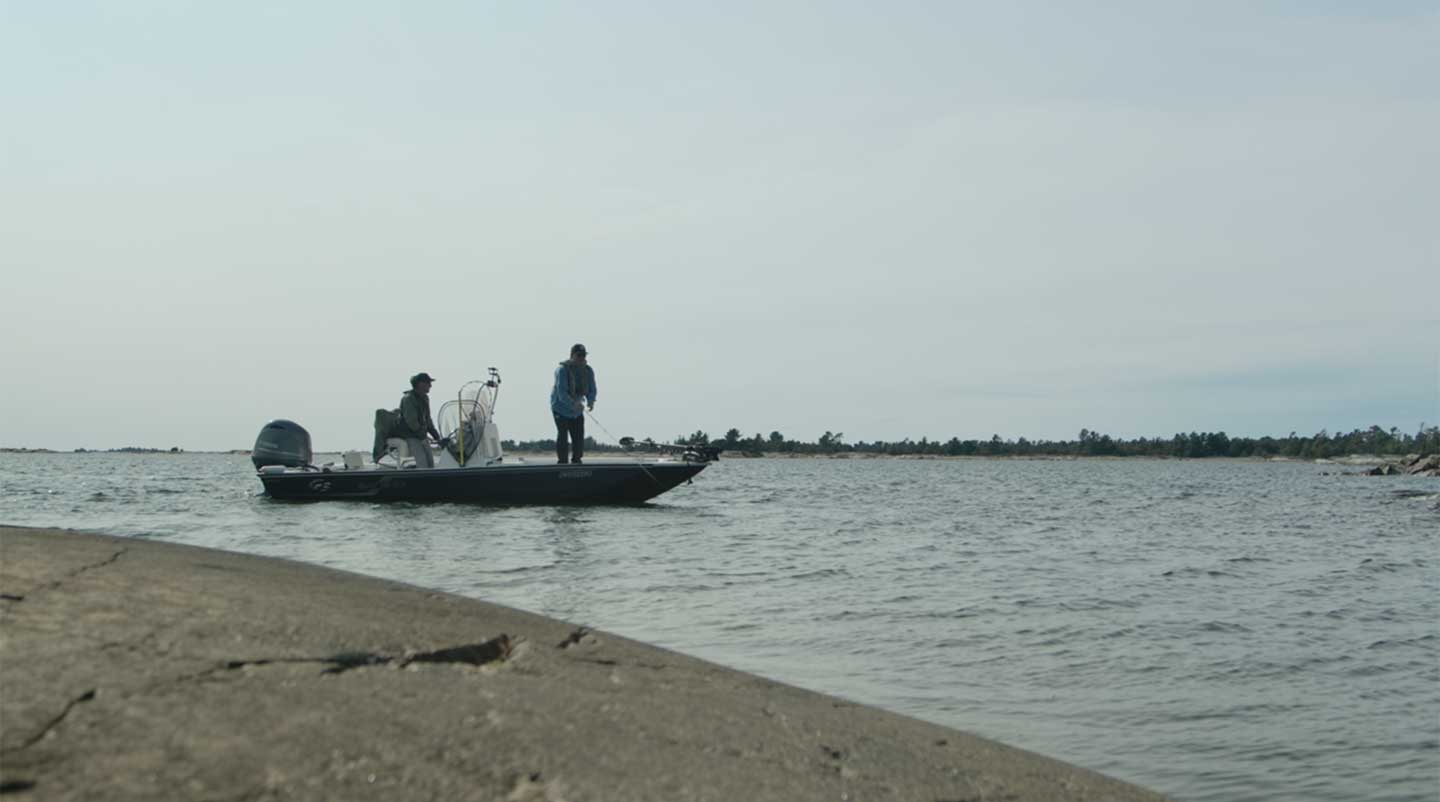
Water temperature is critical to finding fish, and open water smallies are no exception. At this time of year, the bass will look for forage in these warmer zones as a result of schools of baitfish moving into them. Although it may have been a bit early, due to a very warm summer, we still felt that the bass would be at least starting to transition into their autumn patterns, and we weren’t far off. While we didn’t exactly knock it out of the park, we did find fish on a regular basis, which kept us busy for the next couple of days.
Locating smallmouth regularly required us to move a fair bit and probe with various types of flies, such as crawfish, leeches and some large aquatic insect patterns. The most consistent, though, came with medium-sized baitfish patterns like Popovic’s Hollow Fly and Clouser minnows. These patterns suggest just about any baitfish found in the country, but for my money, variations with olive, orange, red, white and black will get the job done just about anywhere you travel. We also relied heavily on the sinking lines in our kits to get the flies down and keep them in the zone through the 12 to 6 feet of water that we narrowed down to be the high percentage zones.
If I’ve said it once, I’ve said it a thousand times: the Great Lakes hold some of the finest fly fishing on the planet, and Camp McIntosh and the French River are only galvanized by belief. If you are looking for a getaway that is close to the city but far enough away to make you feel like you're still in the woods, you won’t be disappointed in the facility, the hospitality or the fishing.