Spanish River Canoe Trip
Everything you need to know to plan an adventure on this beginner-friendly whitewater river.
By Jeff Jackson



My first unguided whitewater trip was a French River canoe trip. My son was five at the time, my wife didn’t believe I could paddle any of the rapids, and we got caught in multiple rain showers. I lost my favourite sunglasses, and we didn't catch any fish. But we still remember it as a fantastic trip. I've done it numerous times since—even as a guided trip with Black Feather. I've always gone with my son, and it has been memorable and fun every time.
As far as river trips go, canoeing the French River is one of the easiest wilderness trips thanks to its accessible location and friendly whitewater. Just north of Parry Sound, the French River is only 3.5 hours from downtown Toronto, and it’s a great way to get away from it all.
The river flows 110 kilometres from Lake Nipissing west to Georgian Bay, cutting through beautiful Canadian Shield terrain. It offers canoeists fantastic scenery and more than 250 campsites. Once a major travel route for First Nations, fur trappers and loggers, this river is Canada’s first designated heritage river.
A real benefit of a French River canoe trip is there are few portages. All rapids can be portaged, and many can be run, depending on water levels and how comfortable you are paddling in whitewater. An intro to whitewater course will increase your skills and ensure you’re comfortable on the river.
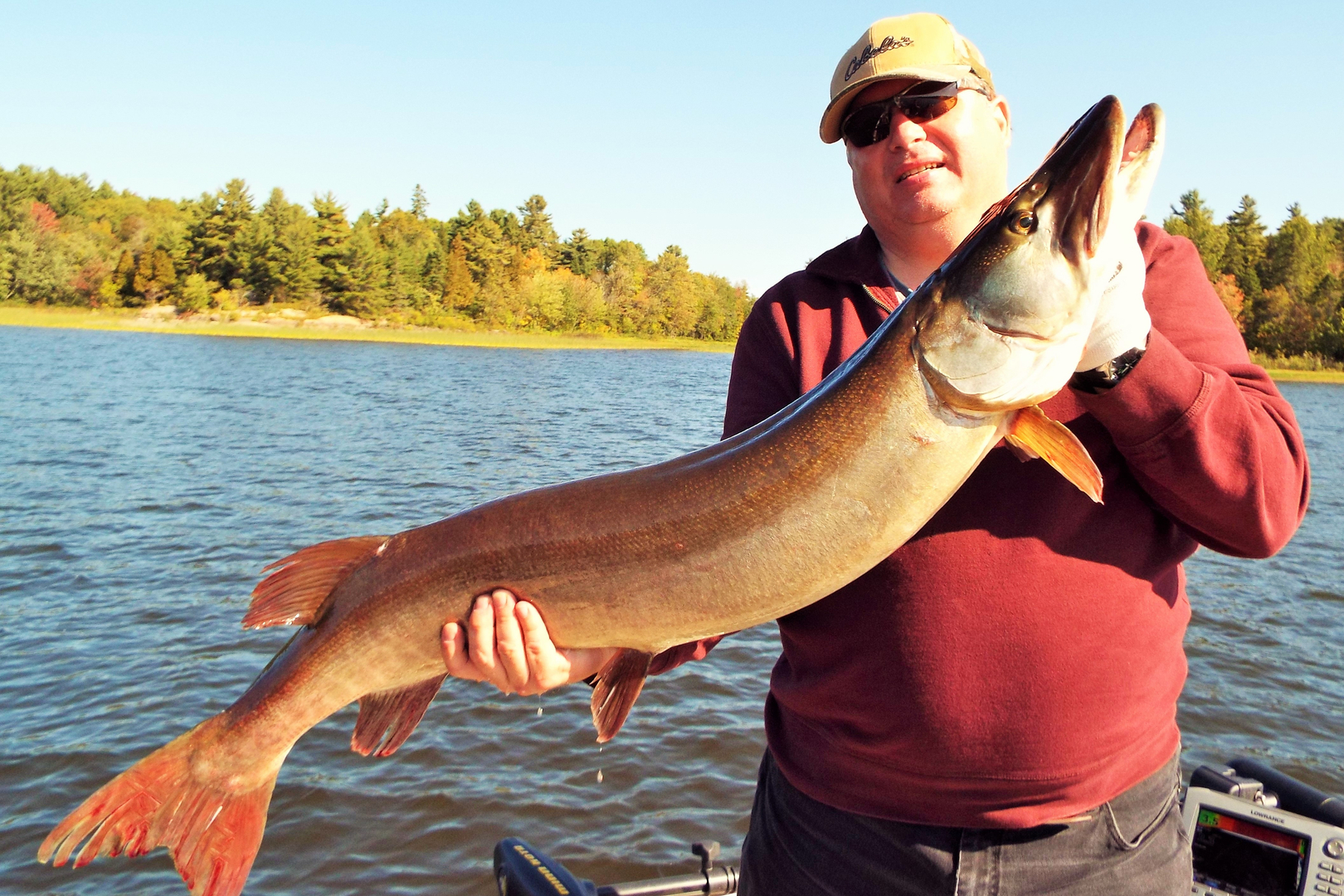
French River canoe rental companies and outfitters can simplify your journey. Be sure to get your fishing license too; the river is full of walleye, smallmouth bass and northern pike, and there’s nothing better than fresh fish for dinner. And don’t miss the award-winning French River Visitor Centre before or after your trip on Highway 69.
Planning a trip to the French River is even easier with help from the locals. Rely on the expertise of those who know the river for route and gear recommendations. If you need a canoe rental for your French River canoe trip or accommodation before or after your trip, see this list below.
The people at Hartley Bay Marina offer canoe rentals, fishing guides, and all the guidance you could ever need to plan your French River trip.
The French River Supply Post and Marina offers a great place to access the river. With a rental fleet, large parking lot and local expertise, this is a one-stop-shop for getting started. You can also leave your vehicle here for overnight trips.
The Lodge at Pine Cove is a great place to get on the river. They offer a range of vacation ideas, including guided French River trips, if that's what you're looking for. They also have beautiful cabins for rent.
Bryer Lodge is a quiet housekeeping cottage resort located on the shores of the French River. It offers canoe and kayak rentals, including delivery for a charge. Best for trips launching in the eastern section of the river.
Guided tours take the guesswork out of planning a French River canoe trip. If you're looking for more natural interpretation and luxury, go guided. All you need to do is show up with a sense of adventure, and the guides will do the rest.
Black Feather’s French River for Families trip is a four-day adventure on one of most scenic sections of the French River, starting at Wolseley Bay and finishing at Highway 69. Expect excellent campsites, clear water and beautiful Canadian Shield scenery.
The Organic Boat Shop offers various guided trips on the French River, including an Ice Out Trip, Fall Colours Trip, Upper French Trip and Lower French River Trip. Some of these trips involve day trips and returning to cozy accommodations at night, while others take you into the backcountry for a true camping experience.
The experts at MHO Adventures offer a French River Family Adventure. You'll spend four days travelling 40 kilometres on the Main Channel of the French River, from Wolseley Bay to Dry Pine Bay. This section has great whitewater for beginners to learn on and offers classic rocky and pine-clad scenery the area is known for.
Accessing the French River is the only limit to what the river can offer. Over its 110 kilometres length, there are several access points, but the most commonly used—and the ones were you can leave a vehicle overnight—are:
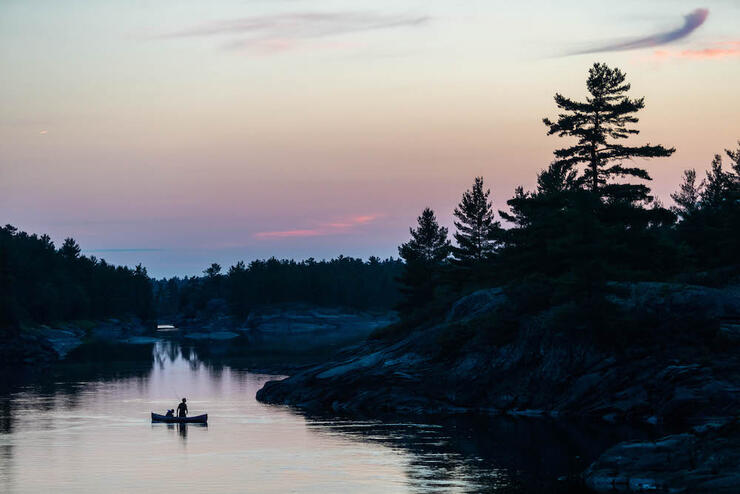
Booking sites on the French River is easy. You can book online, just be sure to click the Backcountry tab so the French River appears as an option. The French River recently moved to a site-specific reservation system, so you'll need to select your campsites in advance and stick to this itineray during your trip. Photos of each of the campsites are provided as well as a description of the amenities, including whether there is a privy, fire pit or picnic table. Campsites can be reserved up to five months in advance of your arrival date.
There are a few French River paddling maps you can buy, but the best is the newly updated (in 2021) official park map. It's sold at the French River Visitor Centre, most of the local lodges and access points, and on the Ontario Parks website. You can also purchase it from various outdoor stores, such as The Complete Paddler, Algonquin Outfitters and London's Paddle Shop.
The newest maps of the French River were created by Maps by Jeff—he has an updated West French River and East French River map. These detailed maps provide approximate travel times, elevation profiles of portages, historic sites and much more. These maps are also sold at various outdoor stores.
Kevin Callan’s A Paddler’s Guide to Killarney and the French River covers many trips in the region and is another valuable resource for planning.
With three channels, the French River's route possibilities would take a lifetime to explore fully. Except in spring, the current is rarely so strong that you can’t paddle upriver, making an out-and-back trip doable. If you’re trying to choose a route, get a paddling map at one of the links above and then start dreaming.
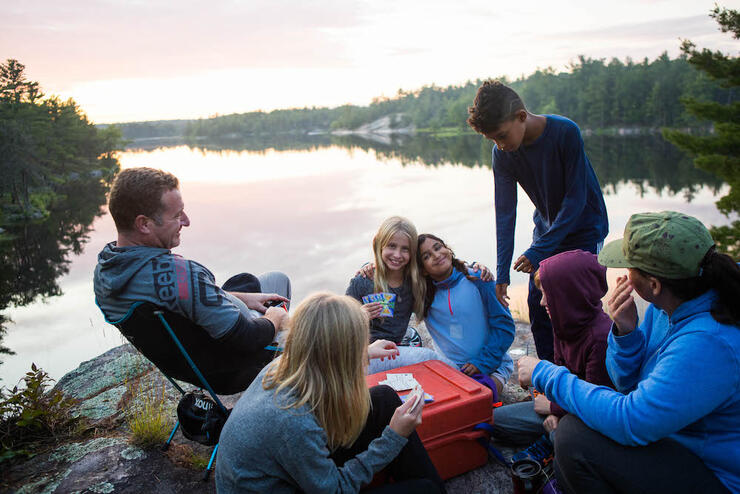
Keep in mind, if you’re paddling downstream, there’s a good chance you’ll be paddling into the prevailing west wind. While 25-kilometre days are possible, not everyone thinks they’re fun. I find anywhere from five to 15 kilometres a day with kids is reasonable and allows for lots of swimming, fishing and fun times at camp.
The classic French River trip is Wolseley Bay to Highway 69. Leave one vehicle at the French River Supply Post and Marina. This will be the vehicle you use when you finish the trip. Then drive all your gear and people up to the Lodge at Pine Cove. You can leave your car here, unload and get on the water.
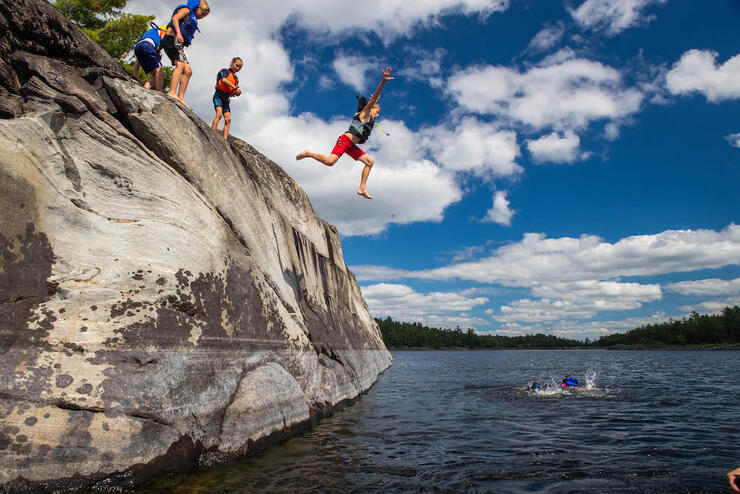
Starting here, you’ll hit the majority of the French’s rapids on day one, depending on how fast you move. Beginning with Little Pine Rapids, you'll get a good idea of what's coming downstream. There are some fantastic campsites along this stretch. Big Parisienne Rapid is the last set of real rapids before Highway 69. It's worth taking your time on day one and camping near one of the rapids, especially if you have kids; they'll love playing in the water and jumping off rocks.
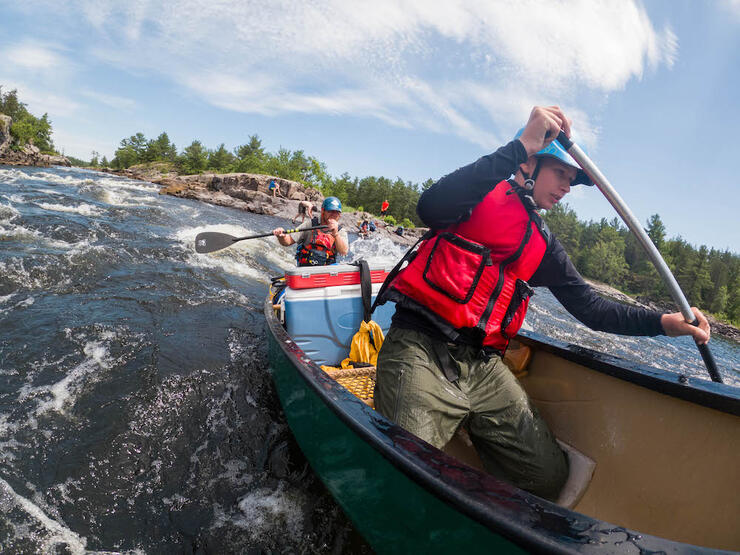
Most rapids are runnable if you have experience and skill. Depending on your comfort level, you could portage all your gear to the end of the rapid, and then try paddling an empty boat. You can also line your canoe down the rapids. Don’t take any unnecessary risks. Big Pine Rapids (class II) are the most technical set of rapids. The portage is short.
Once you pass the Big Parisienne Rapids, it’s about 25 kilometres of flatwater until you reach your take-out. Although you can make it in one day, it’s nice to break it up into two and camp along the way.
The rapids eliminate boat traffic from most of this French River canoe route, and it'll feel like you're alone in the wilderness. Take out at the French River Supply Post and Marina.
Another way to tackle the whitewater section of the French River is to put in at the Lodge at Pine Cove then head downstream as far as Big Parisienne Rapids. This will take you through all the fun whitewater. We made this trip with six kids and it was incredibly fun for everyone. On the third day, we lined our boats back upstream and took out again at the Lodge at Pine Cove. It's an out-and-back, and if you're looking to practice paddling whitewater, this is the way to do it. Portaging around all the rapids is painless; none of the portages are longer than 500 metres and many of them are much shorter.
A more ambitious French River three-day canoe trip starts at Highway 69. You can leave a vehicle at the Pickerel River Marina, then take all your gear and paddlers a few kilometres north on the highway to the French River Supply Post and Marina. Put in here, then head west on the French River. The only portage on this trip is Recollet Falls, about 25 metres long. It's easy and not too far from the put-in, so you quickly get it over with.
You can circle 15 Mile Island by heading west on the French River then east on the Pickerel River back to your vehicle. There are no rapids on these stretches of river and only the one 25-metre portage. There is incredible scenery, excellent campsites and some stunning Canadian wilderness. The entire loop is about 30 kilometres, so you'll need to cover some decent distance each day. You'll most likely be heading into the wind while heading west and with the wind while heading east.
The best trip I’ve done on the French River was an end-to-end trip with a couple of other dads and three 10-year-olds. Starting from Lake Nipissing near North Bay and paddling to Georgian Bay was an epic trip. It was a difficult trip and took 11 days, although it would have been quicker with older kids. The river is 110 kilometres long and the voyageurs used to do it in a single day.
One of the biggest challenges was getting to the French's mouth on Lake Nipissing; we ended up taking a four-hour water taxi (towing three canoes) from Lichty’s Marina up near Monetville. We had to portage around the Chaudier Dams, and the 600-metre portage was the only real difficulty on the entire trip. Our partners resupplied us with food at French River Supply Post and Marina on day seven, and then we carried on. Once we reached Georgian Bay, we got a water taxi from Key Harbour Lodge to pick us up and take us back to a waiting vehicle at the Key Marina Resort. Using water taxis eliminated about 40 kilometres of paddling and took four days off our entire trip. And it was essential for keeping three 10-year-olds keen and happy.
Another one of the best French River trips is the 18 Mile Island loop. Putting in at the Lodge at Pine Cove you can take the main channel of the French River west, then paddle the French River North Channel back east and take out at the Lodge at Pine Cove. It's about 65 kilometres to circle the island, and it's a fantastic stretch of river. There are no portages on this stretch. Complete in five to seven days.
Whatever route you take, the French River is a guaranteed adventure. This is the river that Europeans followed to the fabled inland seas of the Great Lakes back in the 1600s. Today, you can follow the French River to some of the best campsites in the province. Here are seven of our favourites; campsite numbers are provided from the Ontario Parks French River map.
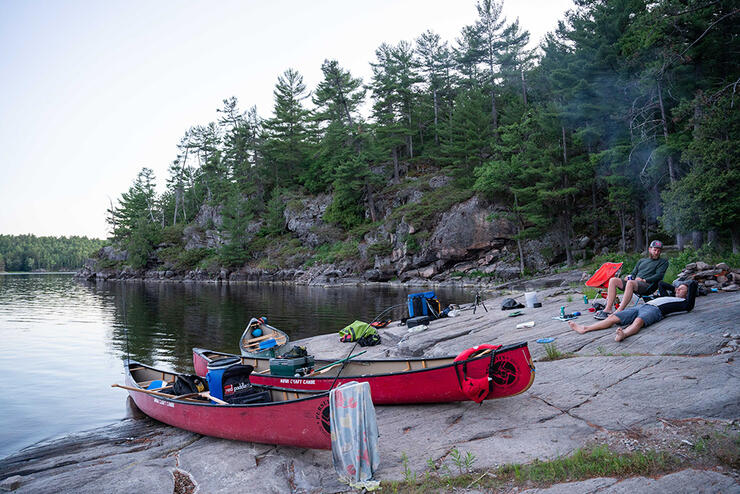
An island site located just downstream from the Dokis First Nation, campsite 319 is a great spot. There’s a shady slab of rock to pull in on, making it a killer place to spend the day. There are a few rocks in the area to jump off (don’t forget to scout the depth of the water) and watch the sunset and sunrise.
You’ll find lots of room for tents, a perfect rocky beach location for a campfire (forest fire hazard permitting) and overall it’s nice and secluded.
Located at the far end of Sand Bay, this campsite marks the junction of the French River and Georgian Bay. It’s a gorgeous place: look across the Bay to the Bustard Rocks and enjoy the view as the sun goes down. It’s relatively sheltered, but be aware that this is a different experience than the French River; when the wind picks up, waves and currents can get dangerous here.
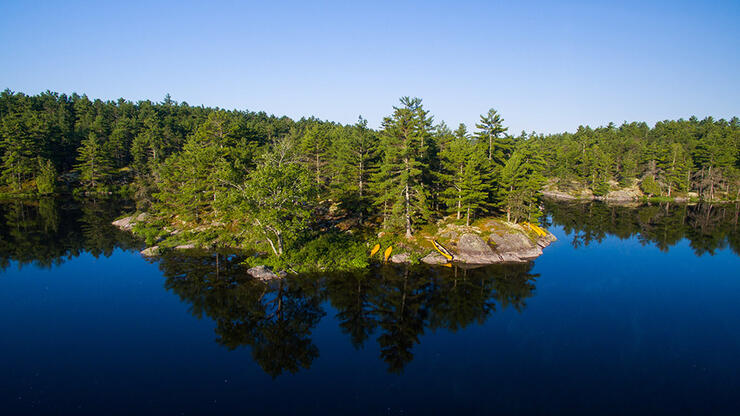
Located between the Blue Chute and Double Rapids (which is often too low to run) this island site was charred by the forest fire in 2018. Thankfully Mother Nature recovers quickly, so it’s a good spot to camp on again. The site is a bit uphill, but camping here is worth the climb. Along with a bunch of flat areas for tents, there’s a great perch from which to watch the sunset.
Depending on time of year and water levels, swimming the lower end of the Blue Chute can be a ton of fun, too. With significant rapids both upstream and downstream of this site, you’re unlikely to see power boats or cottagers, making it one of the remotest spots on the river in that regard.
This site is at the far end of the Dalles Rapids on river left. These rapids are easily run in low water, but may get technical in higher water. That said, the portage is pretty easy and if you’re camping here anyway, why not give them a really good scout, and maybe try them in an empty canoe? The site itself is a large rocky flat area, with plenty of forest to provide shelter should you need it.
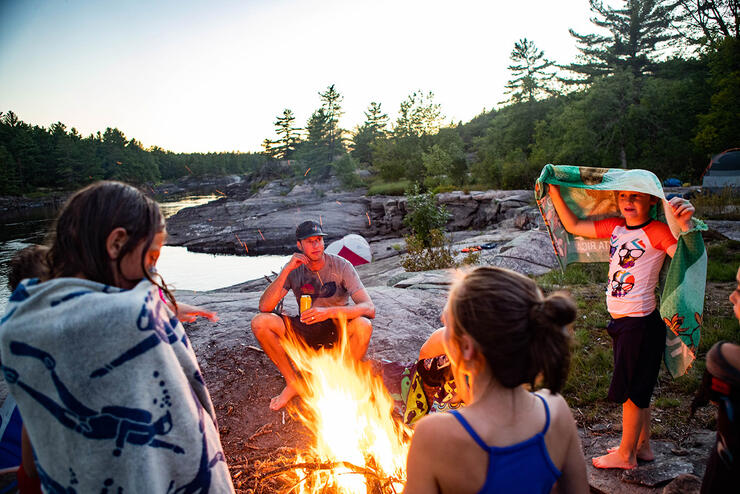
This campsite is located on river right, just below the Big Parisian Rapids. It’s an absolute favourite. If you’re up for paddling the chute it’s relatively straightforward, but if you’re not sure, the portage is easy. The site is at the end of the portage, so you can run the rapids in empty canoes or play in the outwash. A large flat area will support about as many tents as you have with you.
There are spots to jump off the cliffs into the water, just be sure to scout the water for hazards before making the leap. Packing a pair of swim goggles to scout jumping rocks is a great idea. With a west facing aspect this campsite is the perfect place to watch a sunset from and catch a few fish. You’ll be tempted to stay for a few nights.
Some campsites deserve the classification of epic and this is one of them. Just downstream from where the Pickerel River merges with the French, this island campsite consists of a collection of flat slabs and exposed shores with massive twisted pines.Near the French River
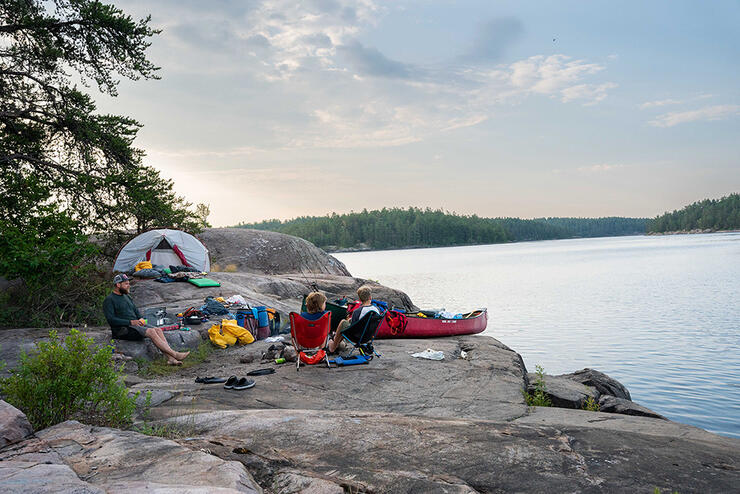
Although you may encounter some boat traffic and you can see a cottage from this campsite, it’s still a great one. Slightly elevated, there’s lots of flat area for tents and a couple of good rocks for jumping off. If you’re taking out at Highway 69, this is likely your last day on the river. Enjoy it.
Just north of the French River bridge is the French River Trading Post offering a restaurant and souvenirs. Kids will love the Hungry Bear and Blueberry Hound mascots that visit the outdoor dining area in summer. The ice cream is delicious and serving sizes are generous.
The French River Provincial Park Visitor Centre is a great place to start a river trip. With historical information about the river, impressive interpretive displays and a pedestrian bridge, it’ll provide perspective and context for your adventure ahead.