Eating Northern Pike
The Best Recipe to Cook This Fish
By Gord Pyzer










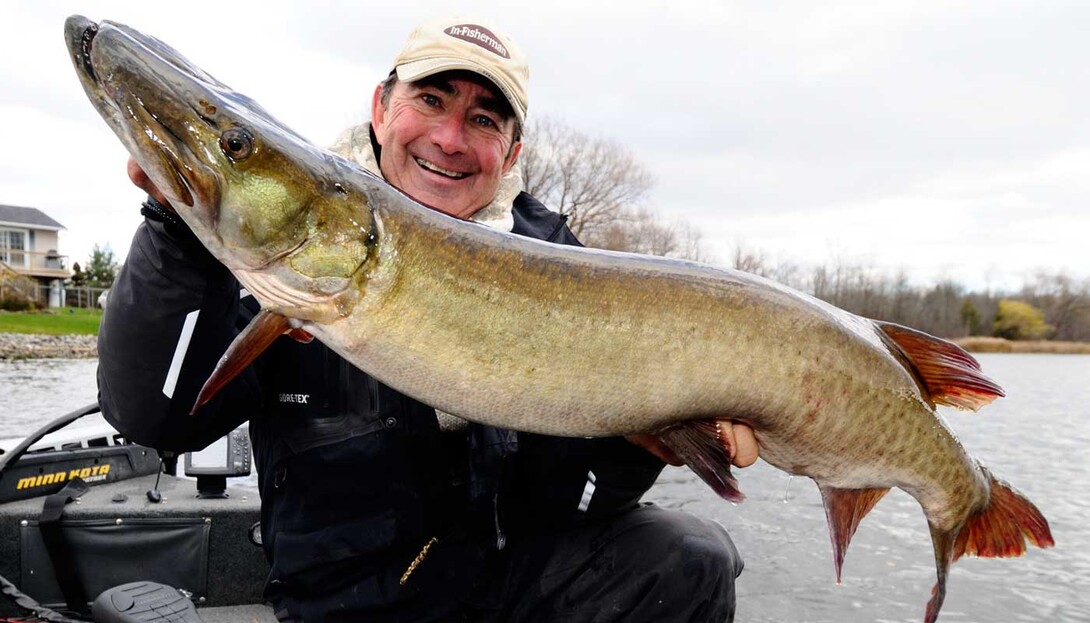
In last week's blog, I discussed with Ontario muskie guru, Wally Robins, and Ottawa Muskie Factory owner and guide, John Anderson, the many ways that muskie folklore hinders anglers in their quest to catch Northern Ontario's top predator.
This week, let's finish the conversation and blow some more muskie myths out of the water, making it easier for anglers to fulfill their dreams.
"Too many folks believe you have to use big baits all the time to catch muskies," says Robins, "but it is not true. This might be my favourite muskie myth to attack and for good reason. Talk to smallmouth and walleye anglers who fish muskie lakes in Northern Ontario, and you will hear endless stories about the big toothy critters they caught on 1/4-ounce jigs tipped with 3-inch grubs and traditional bass-size jerk baits."

"I have to tell you, too, that one of my favourite surface lures for muskies is a Top Raider. It is exactly 5 1/2 inches long. Compare that to the famous Zara Spook bass lure that is 4 1/2 inches long. Are you going to tell me that one inch matters?"
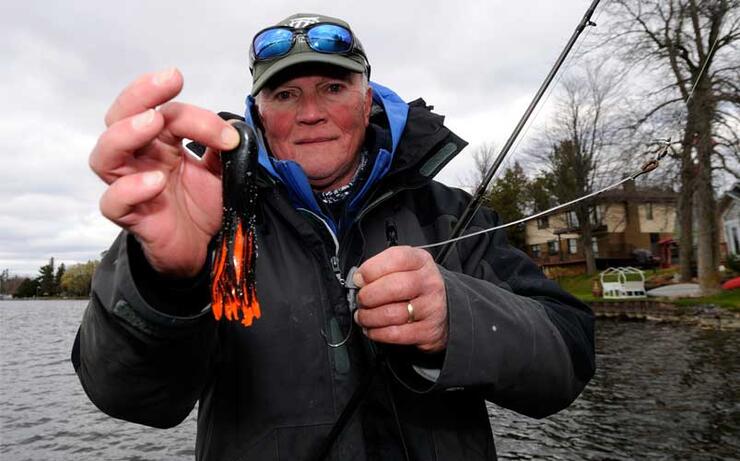
"In fact, in the cold water period of late fall, one of my go-to presentations for big muskies is using a 3/4-ounce flipping jig with a 6-inch shad trailer. You fished with me a couple of years ago, Gord, and caught a gorgeous muskie on a 5-inch Bass Magnet Tubezilla. So, yes, big baits catch big muskies, but so do smaller ones. And at certain times of the year, like right now, smaller lures are often better."
One of John Anderson's favourite fables, on the other hand, is the one that suggests that in order to catch a big muskie, you need to carry a suitcase-size tackle box filled with baits.
"Let's face it," Anderson chuckles, "I am a lure collector like most muskie anglers. It is fun. But the fact of the matter is that lures are simply tools. When was the last time you saw a carpenter carrying 200 screwdrivers?"
"If I had to, I could probably make do the entire season with two dozen baits."
"And selecting the right ones is a pretty simple system. The way to do it is by picking lures that cover different parts of the water column. For example, I'd recommend an angler get two or three surface baits, and half a dozen in-line spinners with different blade sizes from #7 up to #10. You might even throw in a couple of #12 if you’re really brave. Then, two or three glide baits and jerk baits, half a dozen soft plastic BullDawgs and Shadzillas and a few Bondy Baits and Shadzilla Vs for vertical jigging."
Both Anderson and Robins agree that a benefit of carrying fewer muskie baits is that you will become more proficient much faster with presentations. You quickly learn the intricacies of the lure and how to present it properly, thus catching more and bigger fish.

You will also develop confidence in the baits and won't get in the rut that Robins calls the endless process of cycling through 25 baits a day looking for the “magic bullet” that doesn’t exist.
And what do our experts have to say about the importance of colour when you're selecting a lure? Well, better hold on.

"It is an old wives’ tale," chuckles Robins, "probably created by the tackle industry to get us to buy more baits. The reality, however, is that when you're trying to decide what lure to throw for muskies, colour is far behind factors like the depth you want the lure to run, the action you want it to make and the speed with which you want to present it."
"As for the myth that 'any colour is good, as long as it’s black", Anderson chimes in, "I don’t buy it. Black can be an excellent choice, but so can pink, blue, green, brown, chartreuse and white. In fact, if you look at the prey fish that muskies eat, every one of them has a white body tone. It actually surprises me that white is rarely viewed as a good colour choice for muskie baits."
Anderson and Robins also agree that, at least from a colour perspective, “matching the hatch” is an overrated theory. Witness, they say, how eagerly a muskie will eat the brightest, gaudiest lure in your tackle box when their main forage is suckers and bullheads.
"Certain water systems may have colour idiosyncrasies," says Robins, "but for the most part, colour isn’t a major factor. It is a self-fulfilling prophecy. I mean, if muskie anglers on a certain lake swear that the best colour is fire tiger, then that’s what they are going to throw 90 percent of the time. And every fish they catch will 'prove' the point."
That noise you just heard, folks, was Anderson and Robins blowing another muskie myth out of the water.