
Pike Aplenty
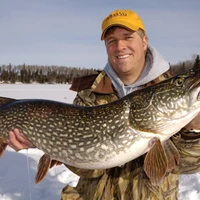
How to select the right spot to catch pike in late fall fishing in Ontario.
By Gord Pyzer




As anglers, we are always wondering what that next day on the water is going to bring. How many times have you been driving down the road – and I do this all the time – and see a little lake or a pond or a stream and wonder where the fish are or how many fish are there? Sometimes I’ll be driving down a country road and I’ll see a line of trees and I’ll think, “If that had 15 feet of water around it, where would I fish?” Or I’ll look at an old pasture with a pile of rocks in it and I’ll go, “Wow, that’s a high-percentage rock pile,” even though it’s on dry land.
So, taking some of those wacky thoughts that we anglers have, here’s something to think about. Next time you’re out there fishing, and you’ve got a hump, or a rockpile, or a weedline, or a point, or a row of docks, or whatever it might be that produces a couple of big fish for you every time you hit it, why not try to expand that area?
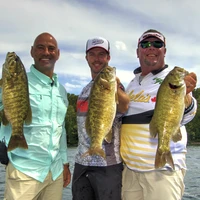
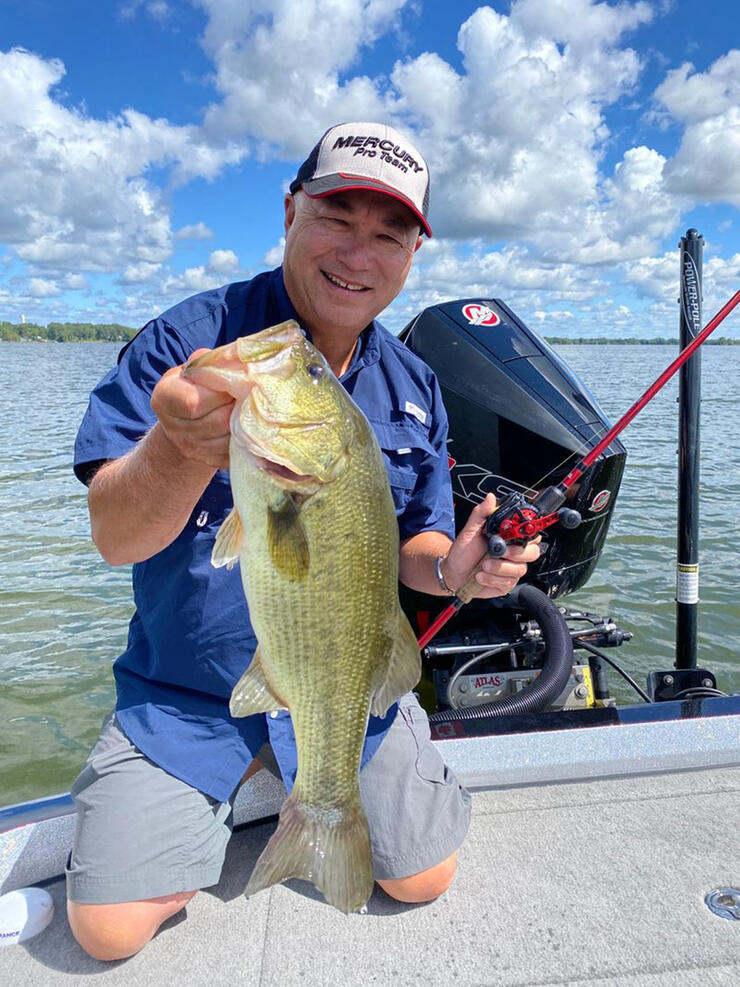
I do it in tournaments all the time, and I’ve been doing it for decades. If I get into an area that’s got a population of the species I’m going for – in this case let’s use bass – and I’m getting them in a specific area, then I know that at least there’s a population of fish that live there. That’s number one.
Then you want to expand on that high percentage part of the lake and try to figure out if there’s more fish in the area that you might be missing because you’re not fishing it. I see anglers doing this all the time – they’ll go into a spot that’s produced for them for years and if there’s no fish there they’ll move on. But in many cases, if they just changed their technique or went a little shallower, or a little deeper, or a little further down the breakline or weed edge, they might find the mother lode of fish.
That used to win a lot of tournaments for Wayne and me. We would catch a pretty good limit of fish and then we’d do nothing but fish new water for the last half of the day. We’d try to expand on the areas we already knew held fish and look for other fish on the outskirts of that, in spots that most anglers would miss.
In a lot of cases, we’re talking about looking for the unobvious. The spots that are obvious are the ones that you find on your Navionics chart: areas where the contour lines come together really close indicating a sharp break that goes up near the shore, an inside corner with some weeds on it, a nice rockpile or whatever it might be. The unobvious spots are the lead-in areas to those spots. I think of them as the highways that the fish may use to move into or out of those high percentage areas.
It happened to me practicing for the Canadian Open a few years ago in Kingston when I found a ton of smallmouth on transition areas. I had 35 hits one day (I had surgical tubing over my hook so I wouldn’t hook any fish) and they were all in 12 to 15 feet of water on rock breaks that went either from smooth rock to sand or smooth rock to rock/rubble/sand mixture. The fish were milling around on these edges like highways. I would run along and find a pocket of fish and then I would go maybe a half a mile further with no fish, then I’d find another bunch, then I’d go maybe a quarter mile and find another pocket of fish. I found probably seven areas on one day alone, on spots I’d never been to in my life but that was within about half a mile of where I’d caught fish before. Then the wind came up and, unfortunately, these fish moved, but on the calm days, they were definitely using these transition areas.
The bottom line is if fish use an area and you’re catching them on it, or you’ve had past success there, chances are those fish have come from somewhere and there could be other options in that area. By expanding the areas you’re fishing, and paying attention to some of the less obvious spots, you could run into some incredible fishing spots you never knew existed.