3 Great Ontario Walleye Destinations
Karl of Extreme Angler recommends must do walleye lakes in Ontario.
By Karl Kalonka







Ontario offers some of the finest fly fishing destinations in the world, and while that’s a bold statement, I stand by it. I’m lucky, doing what I do as a host of The New Fly Fisher Television Show, to fish in a lot of extraordinary places and have covered everything from tiny, high-elevation trout streams to the brawling waters of the Great Lakes. Through those experiences, I’ve come to get a pretty good handle on what rods I need for the conditions and my target species. Following is my list of the most common and sought-after fly rod fish, and the rods that you will need to handle the lines and the flies required to have consistent success.
For this, we need to consider a couple of things before really diving in. First and probably foremost, is the idea that specific rod weights are required for specific species. While that does hold some truth, in my opinion, the rod weight is more specifically matched to the size and type of flies that we are casting, with less emphasis on our quarry. For example, a 9-foot 5-weight rod will manage most of the smallmouth bass that you will find in Ontario. However, that stick may not be the best choice for smallmouth, because we typically are casting larger streamers or considerably wind-resistant flies on open water. As I like to say, “I’m casting an 8-weight fly on a 5-weight rod.” The result of this is that it simply makes you work harder than you should. Let’s start with the small and finish big.
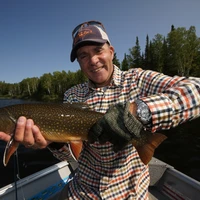
Many of us cut our teeth on small to medium-sized trout in streams. From Northern Ontario to small, isolated pockets in the south, brook trout still thrive and are highly regarded. Many of these tiny creeks still hold healthy and self-sustaining populations, and fly anglers still covet them. Many of us count the days until the trout opener, when these tiny creeks swell with spring runoff and hungry, eager brookies can be found casting flies to cut banks to rising fish.
The introduction of brown trout and rainbow trout across Southern Ontario further widened our range, giving us more and wonderful angling opportunities into June and in some cases, trout fishing will remain promising well into July.
Most of these fish found in the small to medium-sized streams will be handled well with short, light-weight rods such as 7 and a half feet, 3 and 4 weights, as we are typically casting small flies on light tippet. The shorter rods will perform better in tight, overgrown quarters and will also provide marginally better fight with six- to ten-inch trout. Even when fishing with small streamers in the early spate conditions, where short casts are the norm, these “ultra-light” setups will enhance the overall experience.
My choice here, for one rod to handle 90 of your situations, would be a 7-and-a-half-foot 4-weight. I like the 4-weight over the 3, simply because I will often find myself going to slightly larger streamers with short leaders, particularly during low hatch activity when the trout aren’t oriented to the surface.
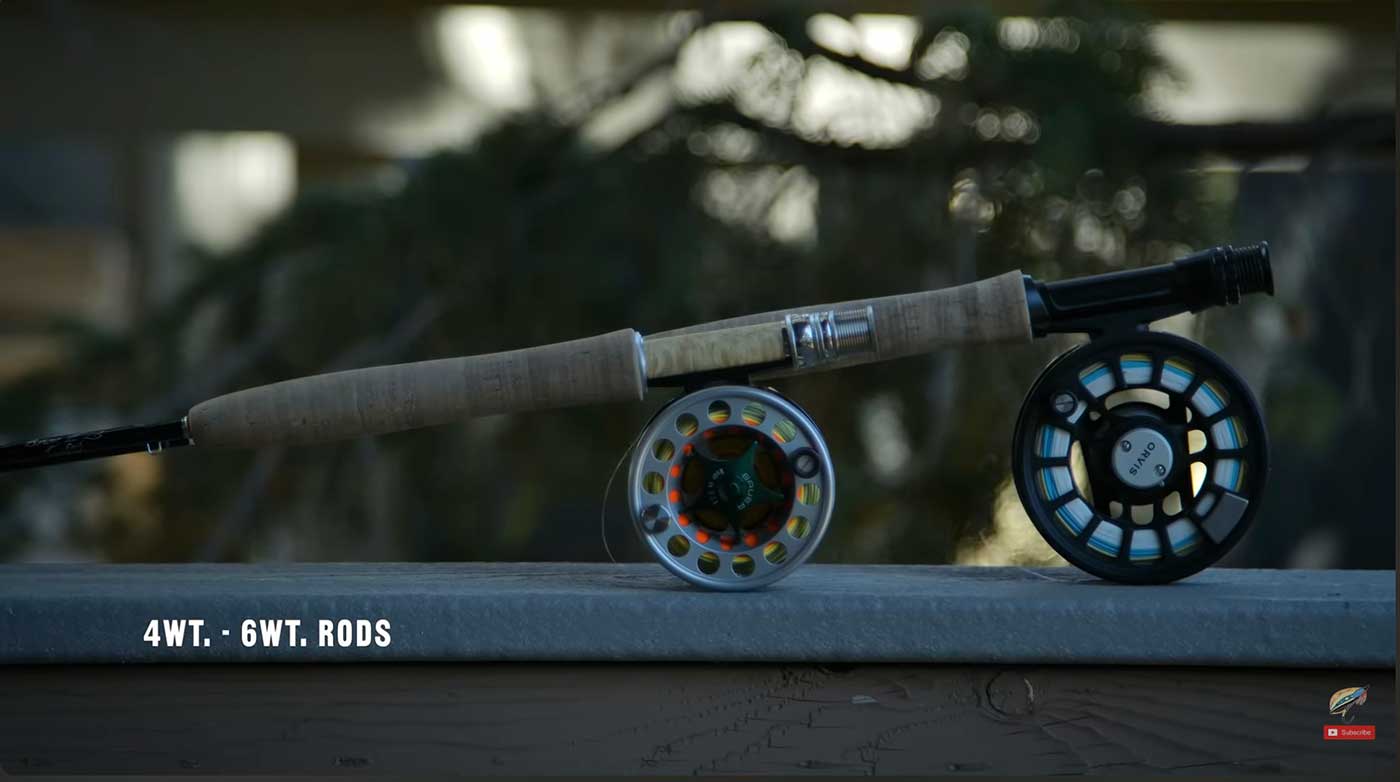
I fish on a couple of rivers in South Central Ontario that regularly yield “Next level” trout. Hunting for big fish will require a jump in rod length and line. When chasing hatches and looking for rising fish, a 9-foot 5-weight is my personal go-to rod. It manages light tippet well, down to about 6X or 3-pound, with small flies, but will also handle larger dries, such as brown drakes or foam terrestrial patterns equally well. This setup is also a very nice high stick nymphing rig and, for the most part, will handle medium-sized streamers, even on properly weighted sinking lines or sink tips. Further to that, a 9-foot 5-weight will also manage even the largest trout that are found, for the most part, in these rivers, without unnecessary stress to the fish during the fight. To that, though, I will add that when I feel the need to fish larger, more aggressive streamers on heavier sinking lines, I will jump up to a 6 or even 7-weight as it makes long casts with large flies far more efficient.
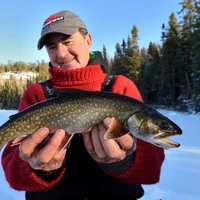
Fishing for World Record Brook Trout in Superior Country
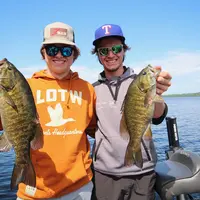
I do a good amount of river fishing for smallies, but have also found myself on the open water in areas like Georgian Bay and Lake Huron more frequently over the past few years. My suggestions here are applicable to both, as I feel that the fly selection comes into play considerably more when dealing with bass, as we are often casting large and weighted flies. The first rod that I reach for when going on a bass trip is my 9-foot 7-weight. It manages the larger, three and four-inch streamers that we more often than not fish with, along with medium-sized poppers. This rod will also cast reasonably heavy sinking lines or sink tips well and efficiently, requiring less work and undue fatigue. I’m not opposed to a 6wt here and will fish them, but for a dedicated smallmouth stick, the 9-foot 7-weight will get the job done just a little bit better.
I’ll keep this one simple. The biggest difference between smallmouth and largemouth is generally the water that we fish in for them. That being said, largemouth bass orient far more to woody structure and dense vegetation than smallies, precipitating the need to jump up one rod weight to an eight. Why? Dragging hooked fish out of log jams and lily clumps requires a little more stiffness, and the 8-weight will provide that. Also, as a general rule, largemouth baits are typically a couple of sizes larger, regardless of being sub-surface or surface baits. For a dedicated largemouth rod, the 8-weight is a better choice.
Fish for bass in Algoma Country
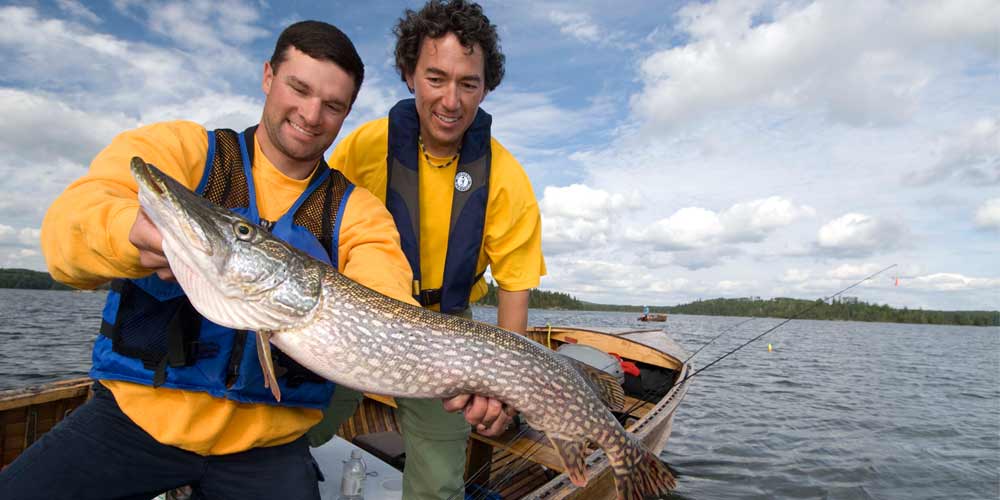
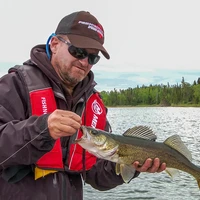
I’ve fished for some really big pike in really big water, and again, to keep it simple, I’ve never felt undergunned with a 9-foot 9-weight. I have, however, had that feeling with an 8-weight. Particularly late in the season, when dealing with dense weed beds. The 9-weight manages any flies and lines that I use, the wind that is often associated with open water and the weeds. I don’t think that you can do wrong with any of the big game rods available in a 9-foot’ 9-weight.
Drive or fly-in for northern pike fishing in Northeastern Ontario
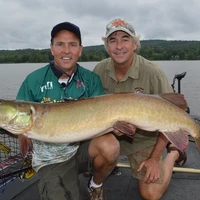
Muskie with flies have become increasingly popular, and while I don’t have a ton of experience, I think I have enough “Industry” savvy to hold an opinion or rods. In the past, 9- and 10-weight rods were kind of the standard. However, with the popularity of tying larger flies with shanks and various other means of fine-tuning the length and density of flies for varying types of water, dedicated muskie anglers will tell you that your fly cannot be too large. These fish, ducks and squirrels and anglers in the know, will often throw as large a pattern as they feel necessary simply to trigger the ultra-aggressive behaviour. I once witnessed, while with two clients, a post-spawn muskie trying to turn and ingest a steelhead that was easily four pounds, and I have had numerous encounters where they have taken 18-inch-plus smallies off my line. If you think your fly is too large, go bigger!
Having said that, my dedicated muskie stick is a stout 11-weight with an extended fighting butt. That gives me the ability to cast duck-sized flies on front-end loaded shooting heads 50 to 60 feet with relative ease, allowing me to cover more water efficiently.
Muskie-the fish of 10,000 casts - Sunset Country
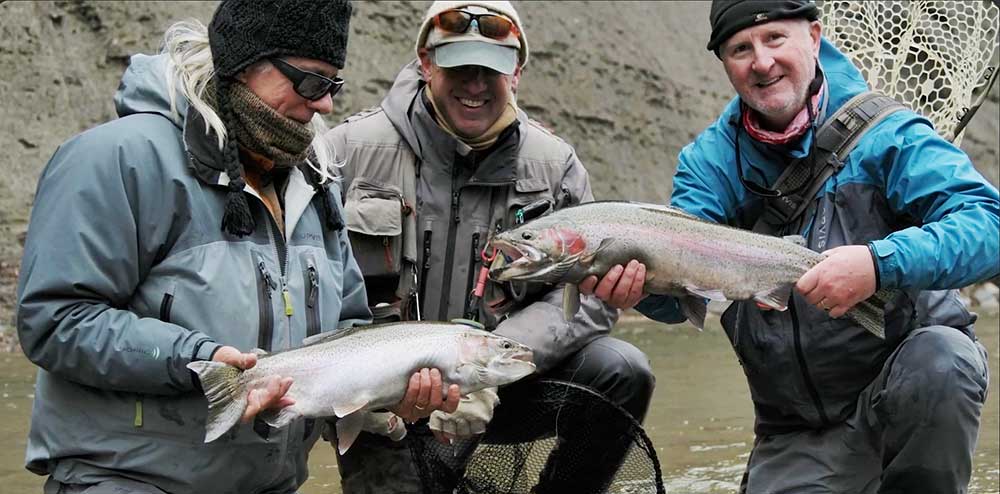
I’m going to end this with my favourite species to fish for in our province, the Great Lakes Steelhead. I’m not going to get into the argument that these fish are not “True” steelhead, due to their freshwater environment. The fact is, they do everything that Pacific West coast steelhead do, and we fish for them in all of the same manners.
With that, what is the best all-around rod for them? Let’s recognize for a second that the use of two-handed rods has become incredibly popular over the past 20 years, and if you dive down the steelhead hole, the odds are good that you will eventually buy one because they are really cool and even though you don’t need one, we fly people like to keep up appearances.
That being said, there is a case for one particular single-hand rod as being the best in the class all around steelhead tool, and that would be the 10-foot 7-weight. Why? There are a couple of very key features to this rod that make it a superior, “If I only have one steelhead rod” kind of rod. The main factor being it is flat out versatile. Over the past 20 years, traditional “Down and across” swinging has gained enormous popularity. This traditional presentation, in many opinions, is the way that these spectacular fish were meant to be fished, as opposed to the lowly strike indicator and nymph/egg presentation that was so popular from the 60’s to the 90’s. There was, at one time, a prevailing opinion that GL’s steelhead won’t take a swung fly and for whatever reason, it held on. I can say this, though, it is pure rubbish, and these days, you are likely to find as many “Swingers” as those still gravitating to bobbers.
With the advent of numerous single-hand Scandinavian and Scagit shooting heads, single-hand rods are actually making a comeback. 60- to 70-foot casts are very achievable, allowing one to cover larger rivers, and loop-to-loop sink tips give us unlimited versatility when wanting to be more of a traditionalist.
On the other side, there is no argument that nymphing is deadly effective and many of the smaller systems that flow into the Great Lakes are simply too small to swing flies on with effect. The 10-foot 7-weight gives us the length to “high stick” and dissect pockets and small pools and runs with ultimate efficiency, and that same length gives us the ability to step down to very light tippet in clear water conditions. The added foot in length also provides the fighting ability of an 8-weight rod, but the tip becomes more forgiving for those light tippets.
For my money, the only rod that one really needs is the old steelhead standard, the 10-foot 7-weight