
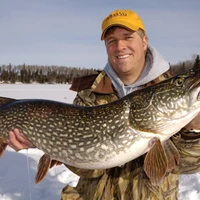
Eating Northern Pike
The Best Recipe to Cook This Fish
By Gord Pyzer







In fly fishing, there are a few bad words anglers can use. Probably the WORST word one can utter in any situation is the “W” word…. Wind. Unlike conventional angling, where the lure is the weight needed for an effective cast, fly fishing uses a weighted line to cast a basically weightless fly to a target. In spin casting or bait casting the weighted lure cuts through the wind making it markedly easier for casters to put the lure where they want it to go. In fly fishing, wind wreaks havoc with the cast often sending the fly line and ultimately the fly in the complete opposite direction. There are a few things fly fishers can do to help cut the wind’s effect on a cast allowing for precision (ish) casts to their would-be targets.
Just like our conventional angling cousins, who have the luxury of casting weighted lures to targets in search of fish, fly anglers can consider adding weight to their flies to allow for a more front-loaded cast cutting the wind more effectively than a non-weighted fly. Consider adding a cone head to the leader before you tie your fly to the leader or conversely switch your weightless fly to one that has either bead-chain eyes, barbell eyes or a conehead fly built into the flies’ construction. This added weight will allow the casting system to better cut the wind and hopefully get anglers’ fly into the vicinity of where they want to cast.
Fly rods and fly lines are categorized by weight. Typically, a good smallmouth bass outfit will see a 6-weight fly rod matched with a 6-weight fly line. A good northern pike setup will see anglers throwing an 8 or 9-weight rod with a matching 8 or 9-weight line. If anglers are having trouble casting in the wind, consider fishing an 8-weight rod for bass and maybe a 10-weight rod for pike. This “beefing” up the rod generally allows for more stiffness in the presentation increasing line speed and, in turn cutting the wind. If anglers don’t have the luxury of a heavier fly rod to turn to, they can invest (much cheaper) in a fly line that is one weight class above its fighting weight. So for bass, consider putting a 7-weight fly line on your reel to work with your 6-weight fly rod. The extra weight of the fly line will allow the rod to flex more in the fore and back cast increasing line speed and will assist in cutting wind.
Fly fishing leaders come in a variety of lengths and weights (thicknesses). These two factors can prove challenging to fly anglers in windy conditions. Traditionally, leaders can come in 9-, 12- and 15-foot lengths and depending on wind conditions, generally, the longer the leader, the more difficult it is to cast to distance. Many of today’s leaders are tapered which means they are thicker at one end (attached to the fly line) and thinner at the end where the fly is tied on. By cutting back the leader to say 4 or 6 feet, you allow the leader to better travel through the wind and not get blown around by gusts or steady blows. This turns the fly over in a more effective way but does risk the chance of spooking wary fish to a slightly shorter leader system.


