
Polarized Sunglasses
Why Quality Shades are a Must-Have Piece of Fishing Gear
By Bob Izumi


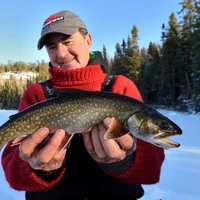




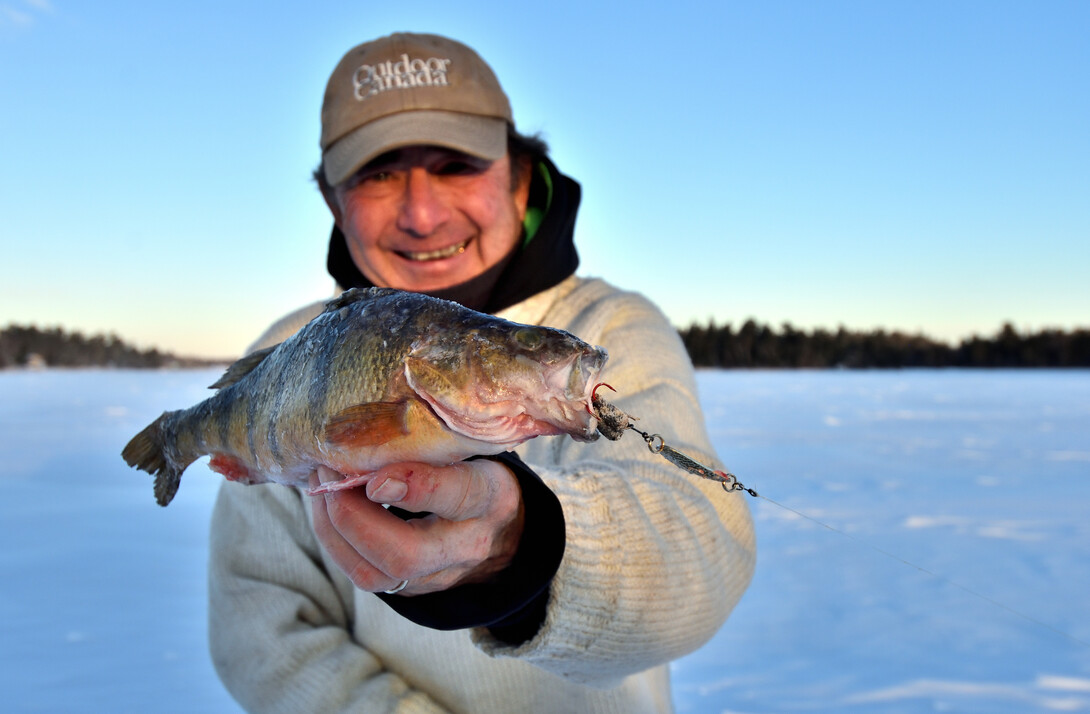
When we were together last, we talked about envisioning a hockey stick to unlock the winter treasure chest filled with big Northern Ontario crappies and jumbo yellow perch. If you recall, we discussed how important it is to locate a hard rock structure — underwater point, rock reef, saddle or shoal — with relatively shallow water up on top and sides that slope down to the basin of the lake. I highlighted, too, that we are always trying to find the small sweet spot where the slope flattens out and merges with the lake bottom. In other words, the spot on the hockey stick where the shaft meets the blade. Now, let’s catch the rascals.
If you’ve located and positioned yourself over top of the transition — which is where you want to be — it is possible that when you put your transducer into the hole and drop down your lure, you lose sight of it just before it hits the bottom. If this is the case, before you move away and drill another hole, thinking that you’re still on the slope, check the angle of your transducer. Depending on the model, you can often choose between a narrow 9-degree, moderate 15-degree and wider 23-degree cone. The broader the coverage, the greater your chance of encountering what is known as slope ghosting, or losing sight of your lure in the blind spot between the high and low spots on your cone coverage. So, set your angle to the narrowest setting until you can follow your lure all the way down to the bottom.
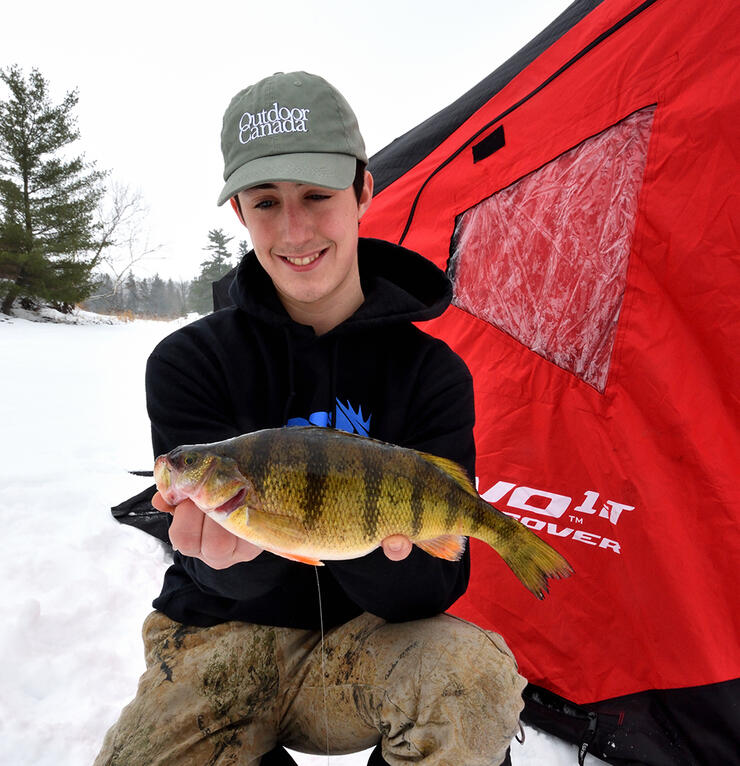
Now, here is another trick I often employ. When my lure is lying on the bottom, I like to lower my rod tip until it is just an inch or two above the water in the hole, and then I tighten up on the line so that it is straight up and down. Now, when I am lifted up my lure and start to jig it, I can monitor it on the sonar screen, but I can also see how far I have it hanging above the bottom. I find this really helps put things into perspective, especially when you zoom in your sonar four, six or eight times.
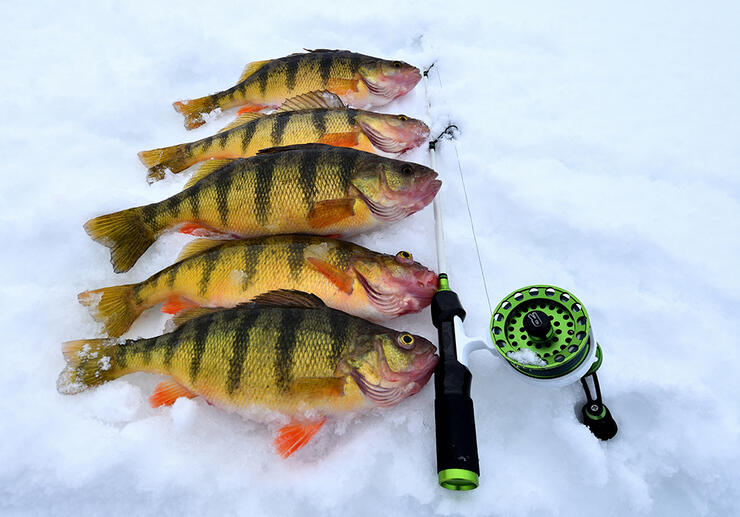
Remember, too, that you never want to place your bait below the fish. You always want it hovering at eye level or slightly above them. Some days perch — and especially crappies — will rise up several feet to eat your bait. But they typically won’t go down six inches to hit it.
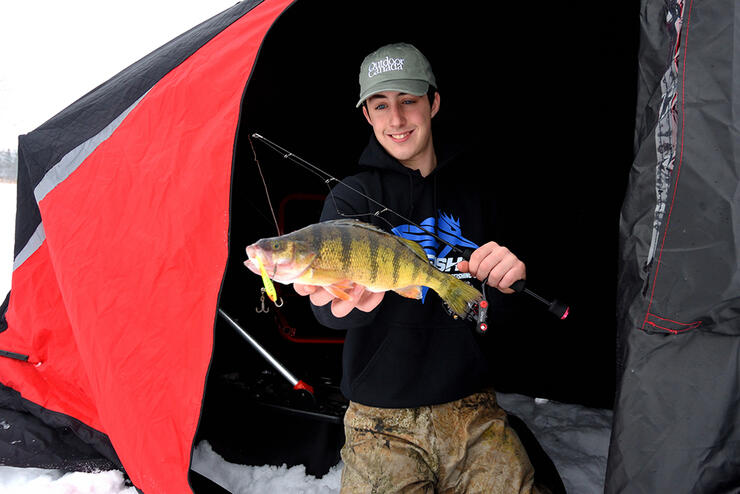
And speaking of rising up to smack your lure, if you spot a fish on the sonar screen shoot up quickly, stop, and then rush away, I find that most often it is a perch. But, if it rises up steadily in a much more measured manner and then freezes on your lure, it is typically crappie. The ideal scenario is when you can see two or more fish on the screen competing for your attention. Then all bets are off as to the species.
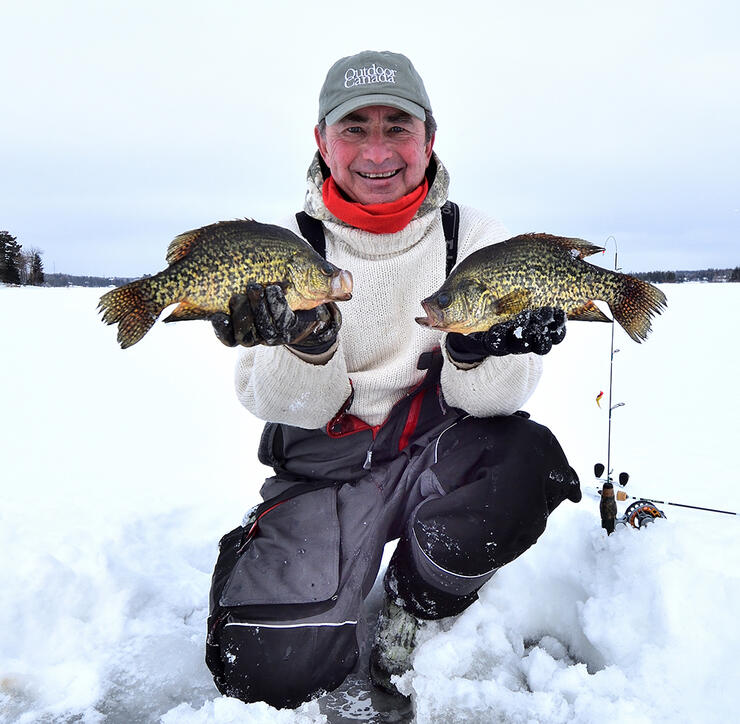
Even if I don’t see fish on the sonar screen, however, I begin with an aggressive presentation almost every day, in every hole, using a heavy compact spoon as a Williams Bully tipped with a minnow head. You can get a beefy spoon down to the bottom quickly, and snap it up aggressively to call in the fish. Then when they appear, however, you can switch over to finesse mode, rocking and nodding your rod tip gently, so that the dangling minnow head comes alive. Perch and crappies are extremely curious, even on the days when they won’t hit a fast-moving bait, so rattle your sabre to call them in and then slow way down to make them bite.
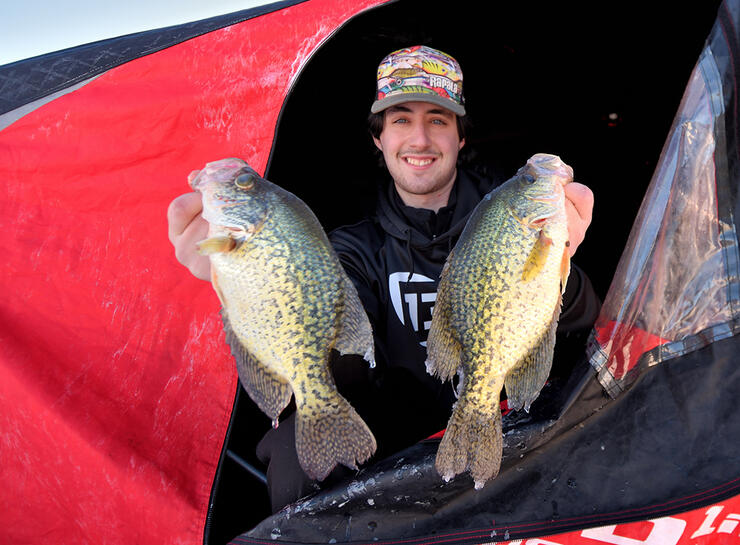
Interestingly, too, you will notice the fish will show a decided preference for either a horizontal or vertical presentation. When it is the latter, a spoon is hard to beat, but when they want a horizontally hanging meal, serve them up a jig. And don’t become thankful to catch only a few sporadic fish. Mediocre action, ironically, is usually a sign that you’re getting close to hitting the jackpot — finding the motherlode — so keep drilling holes until you find them dining in the Hard Rock Cafe.