
Top 5 Baits for Smallmouth and Largemouth Bass
What baits do you use to target bass? Find out why these 5 are the best!
By Ron James





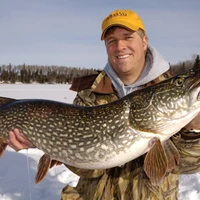






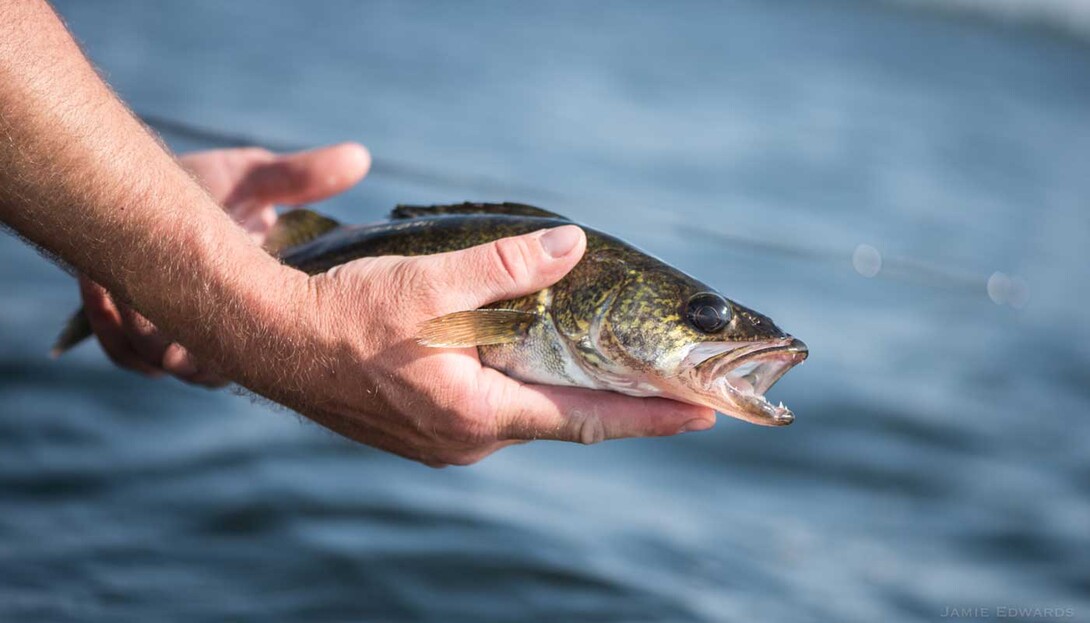
It's the bucket list moment you've waited for all of your life. You're finally settled in at a fly-in fishing resort, or perhaps an outpost camp in Northern Ontario, and you have hooked the fish of a lifetime.
Are you ready to get the perfect photos so that you can relish the moment forever?
It is Jamie Edwards' business to be ready.
While Edwards (Instagram: edwards_jamie) has forged a reputation as one of Ontario's top portrait and wedding photographers, it is his work as an outdoor photographer and videographer that has earned him especially high praise.
I've been fortunate to be involved in several projects that have tapped the Kincardine, Ontario pro's profuse talents, and I always find myself marvelling at his images. Let's not forget, too, that being confined to a boat, often under less-than-ideal weather conditions and totally uncontrollable light settings, is a huge challenge.
So, how does he do it?
Even more to the point, what can we learn from the seasoned pro to improve the quality of our own images?
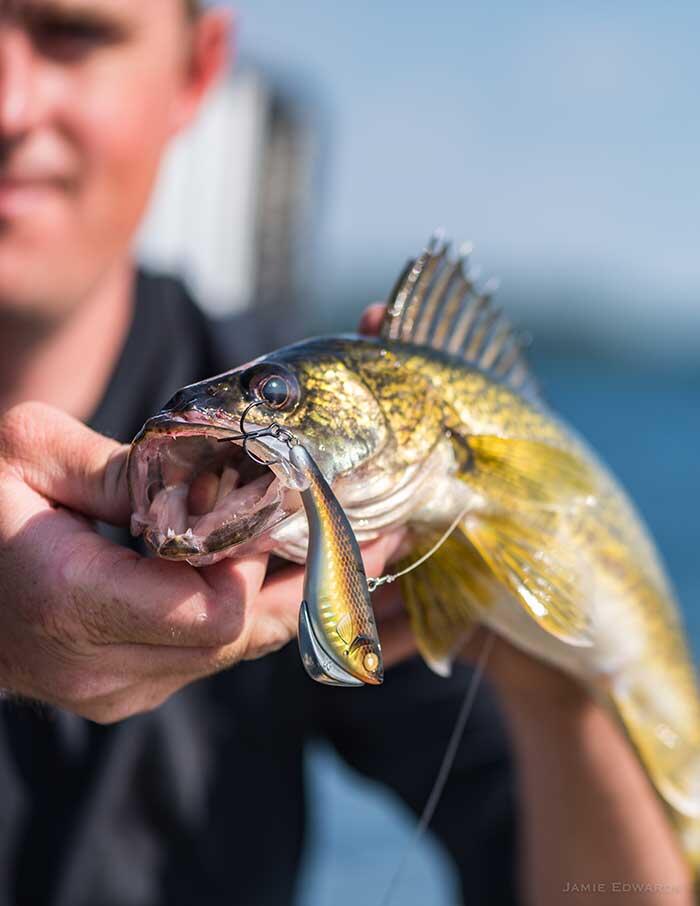
"For starters," says Edwards, "most folks don't realize the lens on their cell phone is wide-angle. So, they stand too far away. They don't get close enough to their subject to record a good image.”
"Something else to consider when you're taking a picture of a person holding a fish is that the focus point is the fish’s eyes, not the angler's. If the fish's eyes are in focus, the image will jump out at you. Most cell phones, however, want to automatically focus on the person's head. When you use a cell phone, you're almost totally at the mercy of the camera."

To complicate matters further, Edwards says the focus point on cell phones is typically located in the middle of the viewfinder, so the angler's face is recorded in the centre of the image. It makes for a boring picture, with all of the sky above the person's head being negative wasted space.
To solve the problem, especially when you use a digital camera, Edwards suggests doing two things. First, focus on the fish's eyes, and then with the shutter still half compressed, carefully move the camera laterally and recompose the scene.
Second, remember the "rule of thirds."When you look into the viewfinder, imagine it is divided equally by two lines horizontally and two lines vertically. Now, place your important subjects—the angler and the fish—either along one of the lines or at one of the points where the lines intersect.
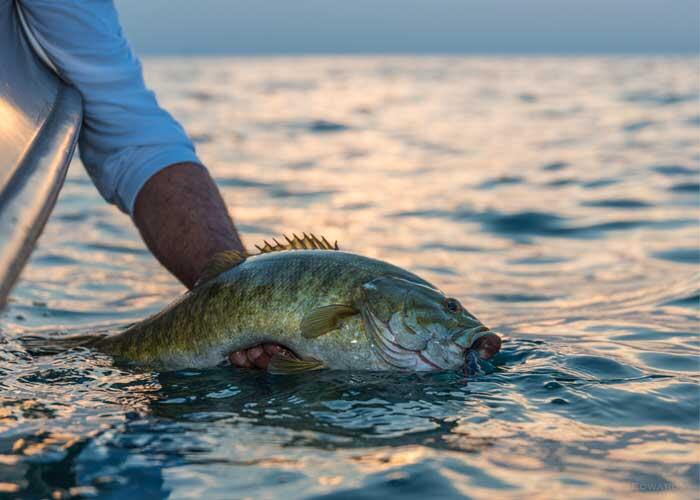
"Exposure is another dilemma I see folks anguish over," says Edwards. “The face of the person holding the fish is so dark because the camera exposes for the bright background sky.”
"The problem occurs because many people are still of the mistaken belief that the photographer should keep the sun to his back. All that does, however, is make the angler squint, and if he or she is wearing a hat, their face is hidden in darkness.”
"I always shoot into the sun, because I want the subject in the shade, not squinting.”
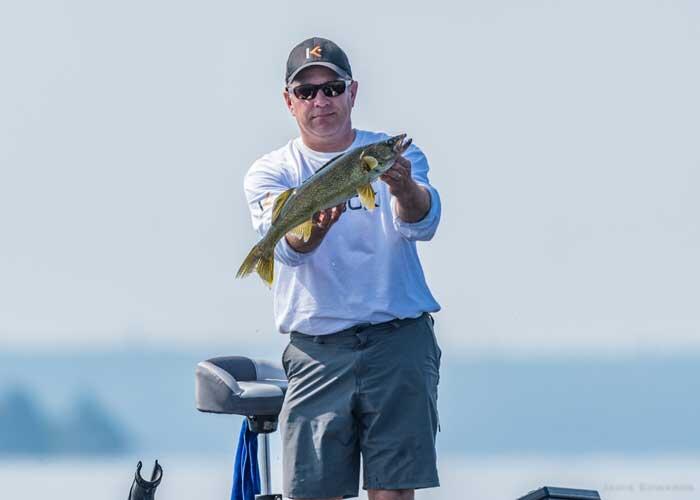
"I'll tell you another secret: I like to wear a bright white shirt. That way, when I shoot into the sun, I am a natural reflector. A lot of the light will bounce off me and reflect back onto my subject. The human body is a huge reflector. Try it and you will see the light reflected in the angler's eyes. It makes that much of a difference.
"My first thought always is to expose for the beautiful Northern Ontario sky. A blown-out sky doesn't look good on film. I'll also bracket my shots if I have the time, taking a couple of shots slightly underexposed and a couple slightly overexposed. Usually, one of them will be perfect.
"A little bit of sunburst and sun flare also makes a picture look great. And when you shoot into the sun, you never have the bill of the angler's hat cutting his or her face in half, with the lower section too bright and the upper section too dark.
"The ultimate is getting the sun on a bit of an angle behind the subject. About 30 percent is perfect for a nice definition."
(Be sure to check out Part 2 of Gord Pyzer's exclusive interview with Jamie Edwards next week, when Edwards shares more tips on taking the perfect fish photos.)