Eating Northern Pike
The Best Recipe to Cook This Fish
By Gord Pyzer





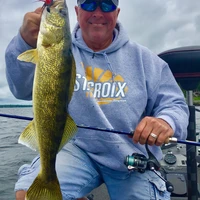

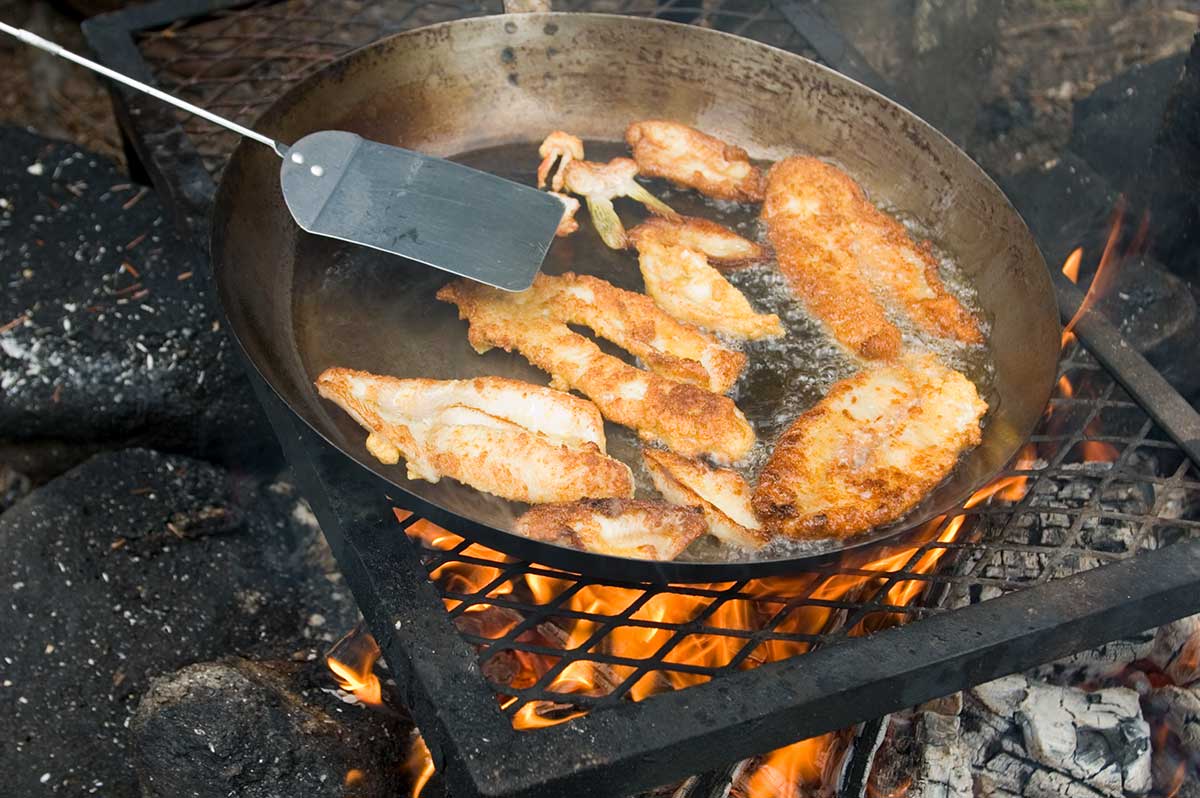

Imagine that you're sitting by a lake deep in the heart of Northern Ontario. The sky is baby blue, a warm breeze is keeping the black flies away, and the fish are really biting. For many people, that experience alone would be enough to satisfy. But in my opinion, if you really want to enjoy the perfect day outdoors, nothing beats a shore lunch of sizzling fillets from freshly caught fish, hot beans, canned peaches and black coffee. Shore lunches can make a bad day good and a good day fantastic.
The shore lunch is a Northern Ontario tradition, and the best recipes are passed along from generation to generation. There are subtle differences in all of them, but the basic timing and materials vary little whether you're on the French River, the Albany River or someplace in between.
Most of the elements of the shore lunch can be carried in a picnic basket or box, except for the frying pan, teapot or propane stove. These bulkier items can be stored in a plastic milk crate at the front of the boat. If you tend to be disorganized, having someone help you cook, open cans and otherwise stay organized can be of real assistance during shore lunch. However, most experienced guides keep their guests far away from the fire, and you should certainly keep the kids well back from the coals. For the sake of continuity, you may find it easier to run the shore lunch yourself.
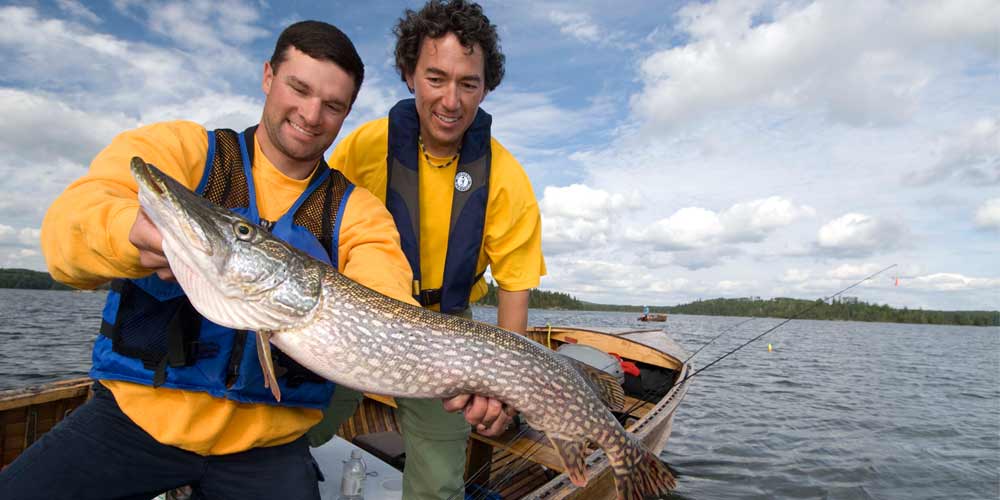
The centrepiece of the Northern Ontario shore lunch is usually fish -- preferably walleye, perch or northern pike, although I've enjoyed lake trout, brook trout and even bass. However, you can use everything from moose shoulder on a stick to cheese and crackers as a main course. Fish, however, is the best and easiest choice since it's freshly caught.
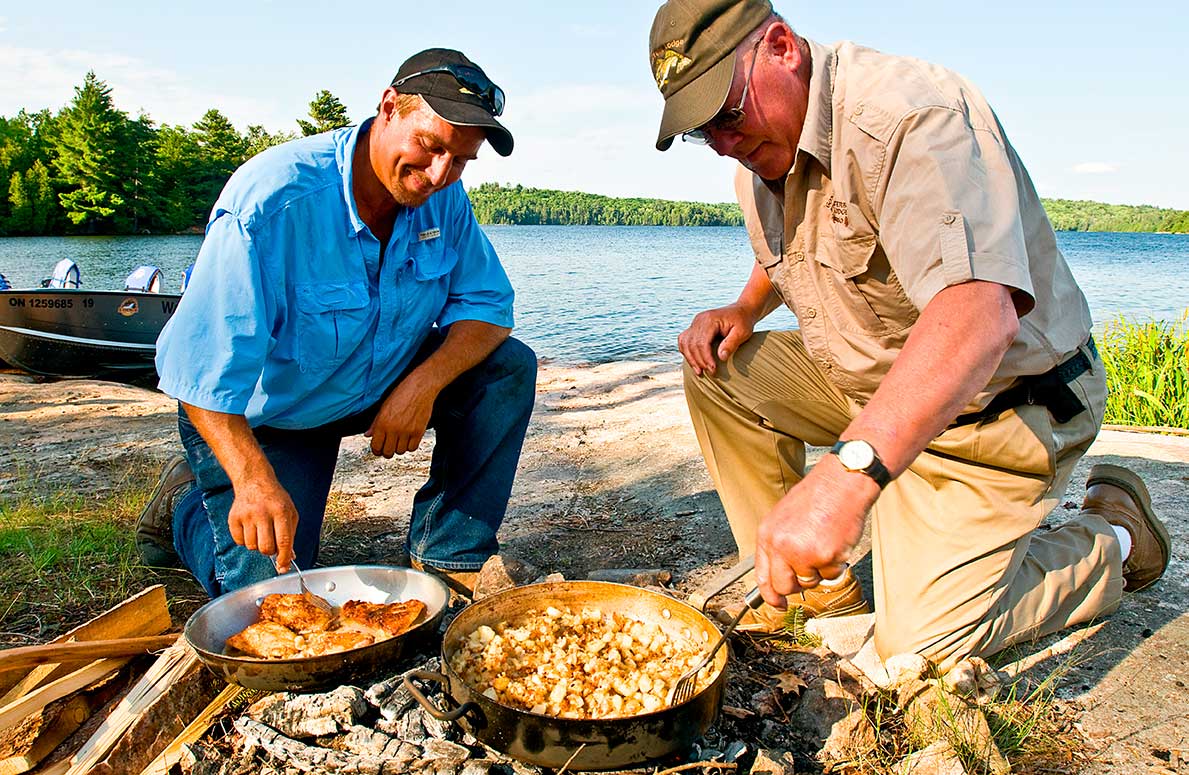
How many fish do you need for a shore lunch? Over the years, I've found that one hungry man and even a few hungry ladies can eat both fillets off of a two-pound walleye with ease. So figure at least a pound of fish per person, or two good-sized fillets. If you have some heavy hitters in your group, the amount of fish may be closer to two pounds per person. Once all the fish have been carefully filleted and de-boned, salt them on each side, and place them on a covered plate until they're ready to be cooked. Covering them keeps the wasps and bugs off them.
Remember that fish are eaten as part of a shore lunch counts against your daily bag limit.
Check the Ontario Fishing Regulations Summary for limits.
The shore lunch fireplace should be circular and at least 2 feet in diameter. If there's no fire pit around, you'll need to make one with flat rocks. However, all but the most remote lakes generally have a selection of fire pits to choose from, and I'd try to find an old pit before constructing a new one. Find the two flattest rocks on the fireplace and keep them free for cooking. Have your fellow shore lunch participants gather enough wood to keep the fire going for about an hour or so. Although any wood will do, the less smoke the better, so dry birch, cedar or driftwood is the optimum cooking fuel. Light the fire and work towards creating a nice bed of coals, as you'll want a nice even heat when doing a shore lunch.
There has been a move toward propane or stoves lately because they're clean and hot, but I do miss the smell of a wood fire when cooking a shore lunch, and it adds some flavour.
Once the fire is going, unpack the fixings for the shore lunch. This list of items I'll be running through is the template for 90% of the Northern Ontario guides I've fished with. Open a can of beans first and put the can near the fire on a flat rock. Keep a bit of the top attached and watch for the beans to bubble. Then fill the billy can with water and place it near the flames, on the other flat rock.
This will be for your after-lunch tea or coffee. Take out a paper bag with flour in it and drop the fish fillets in one at a time. Cover each fillet with flour by closing the bag and shaking it vigorously. Put the frying pan on the fire, and drop some bacon slices in. Cook the slices till crispy and then remove them to a plate near the beans. Stir the beans. Open some canned potatoes and cut them into thin slices. Cut some raw onions into slices as well.
Once the frying pan is really hot, add a half-pound of lard and allow it to melt (vegetable oil works as well). While this is happening, remove the other fixings from the basket, such as the bread, butter, and pickles. When the grease begins to smoke, drop in the potatoes and onions. They should not take too long to cook, but if the frying pan is big enough, you can cook them with the fish. When the onions are transparent, take them out with the potatoes.
Drop the fish fillets in and cover the bottom of the pan. Rock the pan slowly, allowing the grease and bacon fat to cover one end of the pan, then the other. As the fish cooks, the fillets will start to curl and turn golden brown. Turn the fillets over with the spatula, and repeat the procedure while rocking the pan. As the fish become ready, have the participants help themselves to the beans, the onion and potatoes, and the chunks of bacon. The fish are at their best right out of the pan and should be eaten promptly. Sometimes a little shake of salt on the fillet can really set off the flavour of the fish. A slice of bread and a few pickles add a nice touch to this feast.
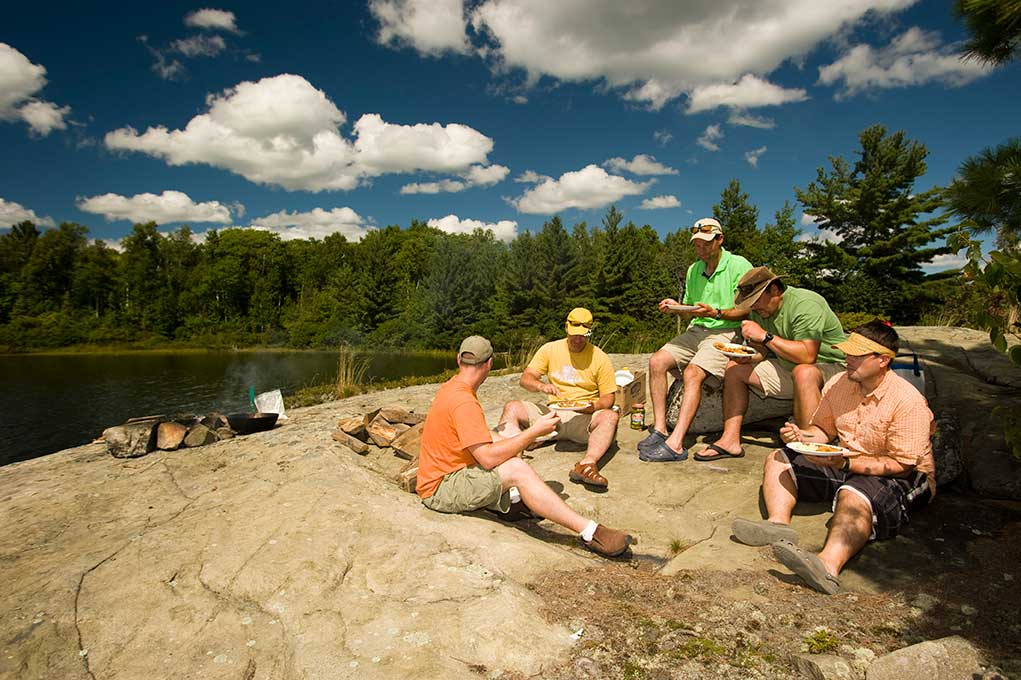
Once you have let your lunch settle a bit, clean the dishes, and pick up any garbage left around the campsite. Douse the fire, rub your distended belly, and you're on your way.
Utensils:
Food: