Yes—the vast majority of Northern Ontario remains open, safe, and welcoming visitors. Active wildfires are affecting parts of Northern Ontario, primarily the northwest, and travellers headed to specific areas should check conditions closely before departing. Everywhere else across this enormous region—a landmass larger than Texas—lodges, outfitters, parks, attractions, and communities are operating normally.
Before we get to travel guidance, the most important thing first: our thoughts are with the residents, First Nations, tourism operators, and emergency responders in the communities hit hardest by these fires. Some operators have lost lodges, aircraft, and livelihoods built over generations, and thousands of people have been evacuated from their homes. Northern Ontario is a family, and we stand with them as recovery begins.
Here's what travellers need to know right now.
Where Are the Wildfires in Northern Ontario?
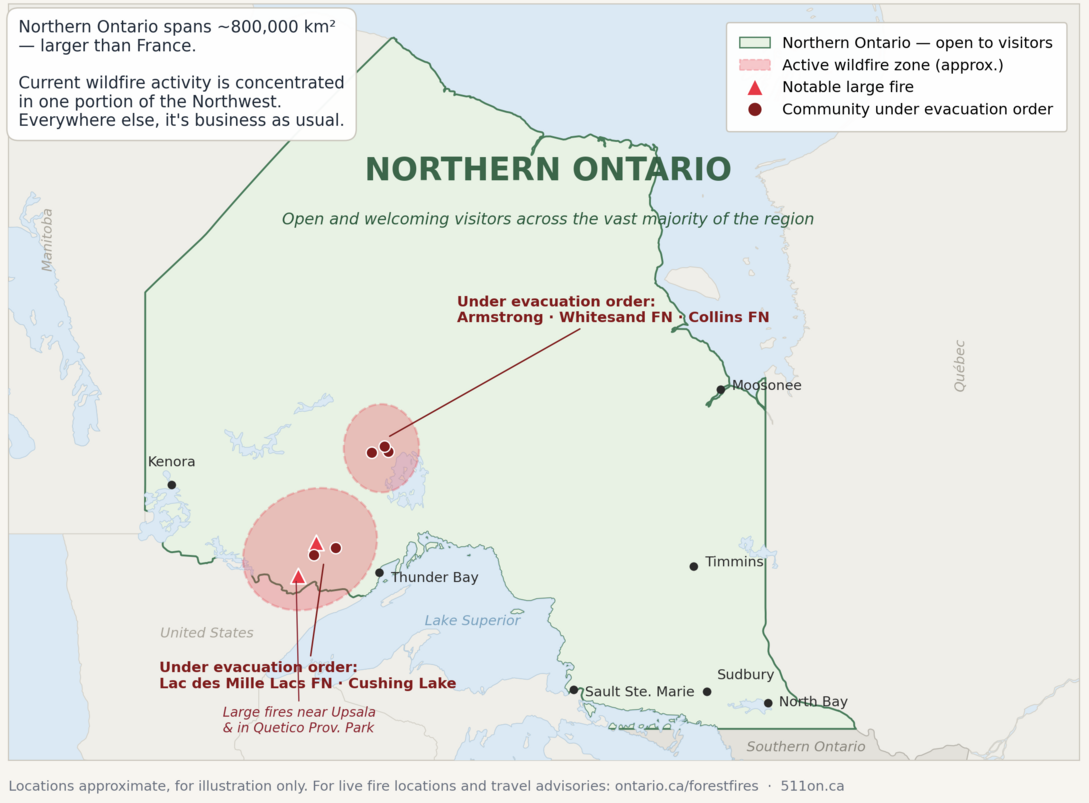
The current wildfire activity is concentrated in defined portions of Northern Ontario, particularly in areas west and northwest of Thunder Bay, including the Atikokan–Upsala corridor, the Armstrong area north of Lake Nipigon, and parts of Quetico Provincial Park. Evacuation orders are in effect for several communities in these areas, including Armstrong, Whitesand First Nation, and Collins First Nation. More than 800 residents remain evacuated to host communities across the province—including Thunder Bay, Kenora, Fort Frances, Sioux Lookout, Red Lake, and as far away as Barrie, Niagara Falls, and Toronto. That's down from a peak of over 2,800 in late July, as some communities have begun returning home. Highway 811 is closed except for local traffic evacuating the area.
Forest fire danger ratings remain elevated in parts of Northeastern Ontario, though this has not led to any evacuation orders or closures at this time.
What this means for your trip: If your destination is in or near these areas, contact your accommodation or outfitter before travelling and monitor official updates closely. If your destination is elsewhere in Northern Ontario—including Sault Ste. Marie, Sudbury, North Bay, Timmins, Temiskaming, Manitoulin Island, the Highway 17 North Shore corridor, and most of the Northeast—your travel plans do not need to change.
The map above shows current fire locations. For live fire and smoke tracking, use the Ontario Forest Fires interactive map and the FireSmoke Canada smoke forecast.
Should I Cancel My Trip to Northern Ontario?
For most travellers, no. Before making any changes to your plans, take these steps:
- Contact your lodge, outfitter, or accommodation directly. If you cannot reach the lodge, please check their social media, as they are being inundated with communications right now. Nobody knows local conditions better than the people who live and work there. Most operators across the region are open and running trips as planned.
- If your specific destination is affected, ask about rescheduling or relocating within the region rather than cancelling. Many operators offer flexible rebooking, and a sister lodge a few hours away may be completely unaffected.
- Check accommodation availability before heading toward Thunder Bay or the Marathon–Thunder Bay corridor. Air quality here has been variable in recent days and rooms have been in tight supply due to evacuee housing; confirm space and current conditions before you go.
- Some events are being rescheduled or cancelled. Please verify with event organizers prior to attending.
- Quetico Provincial Park's Dawson Trail Campground, including campsites, roofed accommodations, and day-use areas, has reopened as of August 14, 2026. The backcountry and all backcountry entry stations remain closed due to nearby fire activity, with a proposed reopening date of August 21, 2026—a date that has already been pushed back more than once. Check the Quetico alerts page before finalizing any backcountry paddling trip in the area, and call Ontario Parks Reservations at 1-888-668-7275 for refunds or rebooking rather than changing online.
You can find a new accommodation provider in the Northwest at www.visitsunsetcountry.com, in Superior Country at www.superiorcountry.ca, in Algoma region at www.algomacountry.com, or in the Northeastern region at www.northeasternontario.com.
Visiting the open areas of Northern Ontario isn't just safe—it's one of the most meaningful ways to support the region right now. Tourism keeps these communities strong, and every stay, meal, and guided trip in an unaffected area helps the North weather this season.
Are Roads Open? How Do I Check Before I Drive?
Most highways across Northern Ontario remain open; however, wildfire activity, weather, construction, or other events can impact travel conditions with little notice. Highway 811 is closed in both directions between Weaver River and Dog River Road, and Highway 527 is closed in both directions between Kopka River and 1st Avenue in Armstrong—both except for local evacuation traffic. Closures can shift quickly elsewhere in the northwest.
Before you travel, always check Ontario 511 for the latest road conditions, closures, construction updates, and travel advisories. If your route takes you through remote areas of Northern Ontario, check conditions before departure and again on the day you travel, as conditions can change quickly.
Are Trains Running?
VIA Rail service west of Toronto extending to Winnipeg, Manitoba remains suspended. Service from Sudbury to White River is operating normally. Ontario Northland Polar Bear Express is operating as normal. Contact the rail service if you have any questions.
What Is the Restricted Fire Zone, and What Does It Mean for My Trip?
Effective Wednesday, July 15 at 12:01 a.m. (local time), a Restricted Fire Zone (RFZ) is in effect across the Northwest Region and parts of the Northeast Region. In plain terms, here's what that means for visitors inside the zone:
- No campfires. Not at campsites, not on Crown land, not on the shoreline. Portable gas or propane stoves are permitted for cooking.
- No open-air burning of any kind, including fireworks.
- Never fly a drone anywhere near a wildfire. It's illegal, and it grounds the waterbombers and helicopters fighting the fire.
Anglers, paddlers, campers, and hunters can still enjoy the backcountry in open areas—just swap the campfire for a camp stove until the RFZ is lifted. Check the Ontario Forest Fires page for current RFZ boundaries, and check Ontario Parks alerts for any park-specific advisories before you go.
For a more comprehensive list of what is allowed in Ontario Parks, please check out this article.
Will Wildfire Smoke Affect My Visit?
Possibly, depending on where you are and which way the wind blows. Smoke from fires in Northwestern Ontario and the northern United States may create haze and reduced air quality at times, even in areas far from any fire—including parts of Northeastern Ontario.
Most visitors will experience this as occasional hazy skies. Travellers with asthma, heart or lung conditions, young children, and older adults should check the Air Quality Health Index for their destination and plan strenuous outdoor activity for clearer days.
How Can I Help the Communities Affected?
Three ways, in order of impact:
- Keep your trip. Travelling to open areas of Northern Ontario puts dollars directly into communities that depend on tourism.
- Rebook, don't cancel. If your destination is affected, work with your operator on new dates or a new location in the region.
- Respect all emergency measures. Follow evacuation orders, road closures, and the Restricted Fire Zone rules. Staying out of the way of emergency crews is a genuine form of help.
Official Sources to Check Before You Travel
Northern Ontario has always been shaped by nature, and the people here know how to look after each other—and their guests. The fires are real, the losses in affected communities are real, and so is the fact that across the overwhelming majority of this vast region, the lakes are calm, the trails are open, and the welcome is as warm as ever. Check the official sources above, call ahead, and travel smart. We'll keep this page updated as conditions change—check back before you go.