Top Three Ontario Musky Waters
Where to catch the fish of 10,000 casts.
By Jim Saric




The other day, I think I rattled a state-side musky fishing friend who is heading up to Northern Ontario shortly (God’s Country—he called it), wanting to know if I thought he should plan on casting or trolling.
I teased him with a terse reply, saying simply, yes!
All joking aside, it is a question many late-season, big-toothy-critter-anglers ponder once the water temperature dips and stays below the magic 15 °C / 60 °F threshold. Above these values, northern pike, and especially muskies, generally remain locked into relatively small home ranges. So, if you know a lake well and raise a nice fish on a piece of structure or cover, you can generally go back—numerous times if need be—and catch it.
But all bets are off once the water chills and stays below the threshold level, as it’s finally doing now. Until it reaches 5 °C / 40 °F, and the fish settle into their winter home ranges, they will roam the lake searching for food.
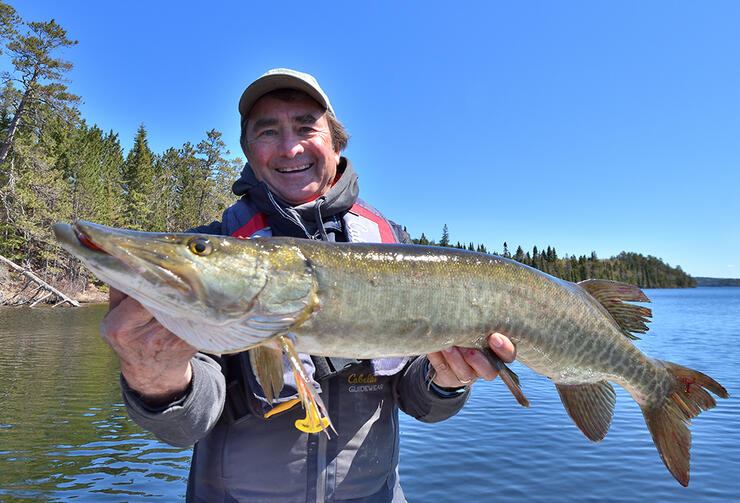
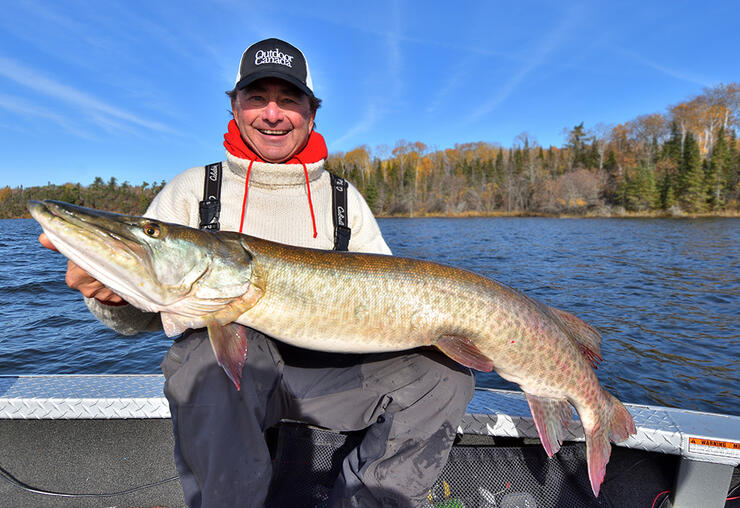
Knowing this, many anglers favour trolling as their “go-to” late fall game plan. It is a good call, too, and probably the best one if you don’t know the water well. That is because two moving objects—your trolled lure and a pike or muskie with wanderlust— have a much better chance of coming face-to-face with each other and colliding. There is only one problem with the strategy, though, and that is that trolling in some anglers’ minds means starting up the motor in the morning, putting out the lines, and then cruising endless miles of shoreline, until dark descends and it’s time to go home. That is a terrible strategy because you can increase your chances of success exponentially if you spend just a little bit of time carefully planning your passes.
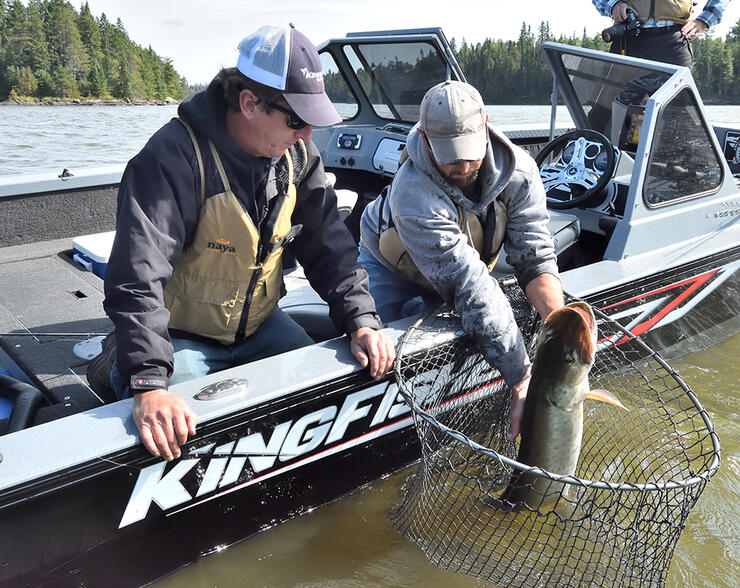
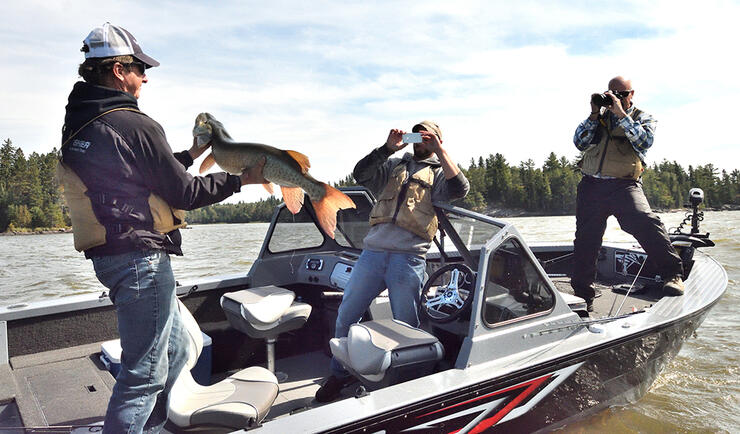
I was fortunate as a young muskie angler to make the acquaintance of the late Bob Vander Velden, who crafted the famous Bobbie Bait. He told me that when he raised a nice muskie and enticed it to follow his bait to the side of the boat where he could judge its size, he wouldn’t leave until he caught it. And the way he so often did it was to put down his casting rod and spend hours trolling his signature series lure back and forth, in and around the spot where he saw the big muskie.
Talk about not leaving fish to find fish.
To a young muskie angler’s ears, Vander Velden’s words were pure gold and so I adopted his method, if not in whole, at least in part. And like the legendary lure maker, it has served me well.
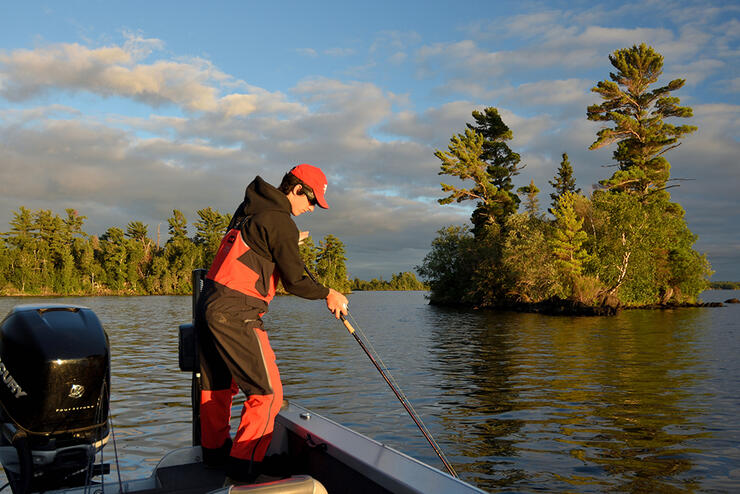
If I am on a lake I know intimately, I will typically start my trolling runs in the vicinity of the locations where I’ve caught nice fish casting in the summer. So, if a pencil reed bay has been hot, I’ll typically troll the deeper water out in front, especially, the areas associated with the lead-in primary and secondary points. If I am fishing a lake I don’t know well, on the other hand, I’ll scour a bottom contour map the night before and circle every spot that I’d fish in the summer. Then I’ll expand the zone a short distance— perhaps a kilometre or half a mile—and plan my trolling runs accordingly.
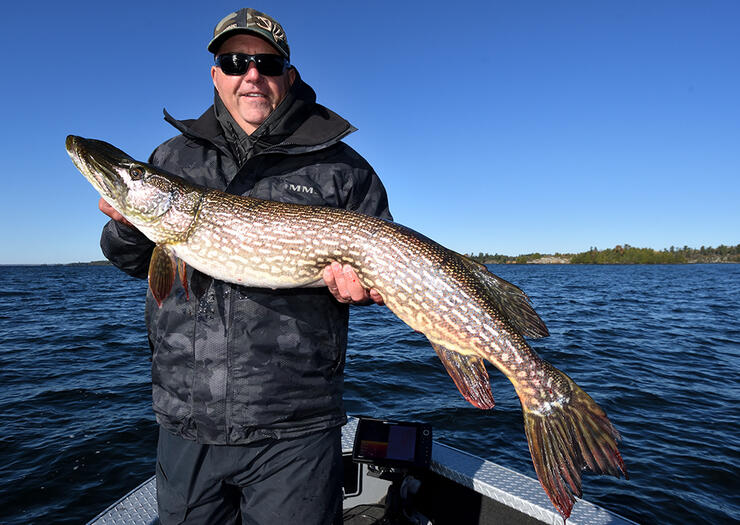
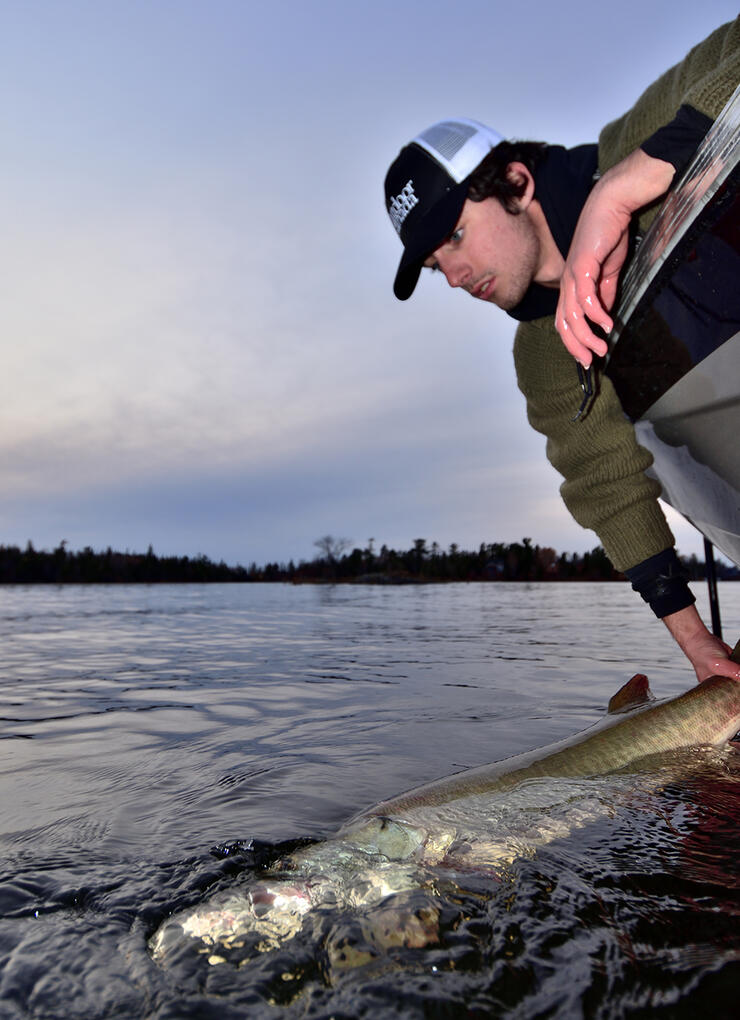
I have to confess, too, that while I enjoy trolling—my top five biggest muskies have all come pulling lures—I much prefer to cast. So, I reserve the tactic for inclement weather when it is so cold that my rod, reel, and line are freezing up and my fingers and mind are going numb. And while I like to start pitching lures around known summer feeding locations and kill zones, I’ll quickly gravitate to any nearby main lake structures— underwater points, saddles, ridges, and rock piles. And if I raise a nice fish but fail to catch it on a wide sweeping oval, I’ll put down the casting stick, pick up the trolling rod, and troll back and forth within the narrow confines of the high percentage zone, just like Bobbie did so successfully years ago.