
Spring Perch Fishing
Use These Tips on Your Next Ontario Fishing Trip
By Bob Izumi


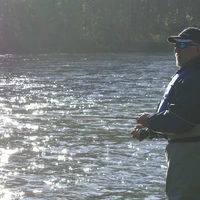


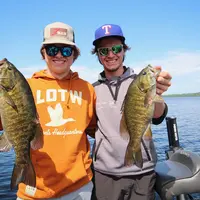


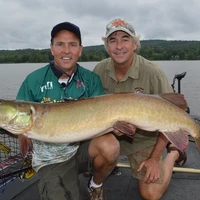
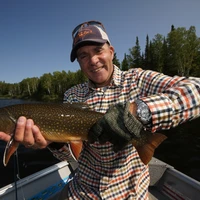


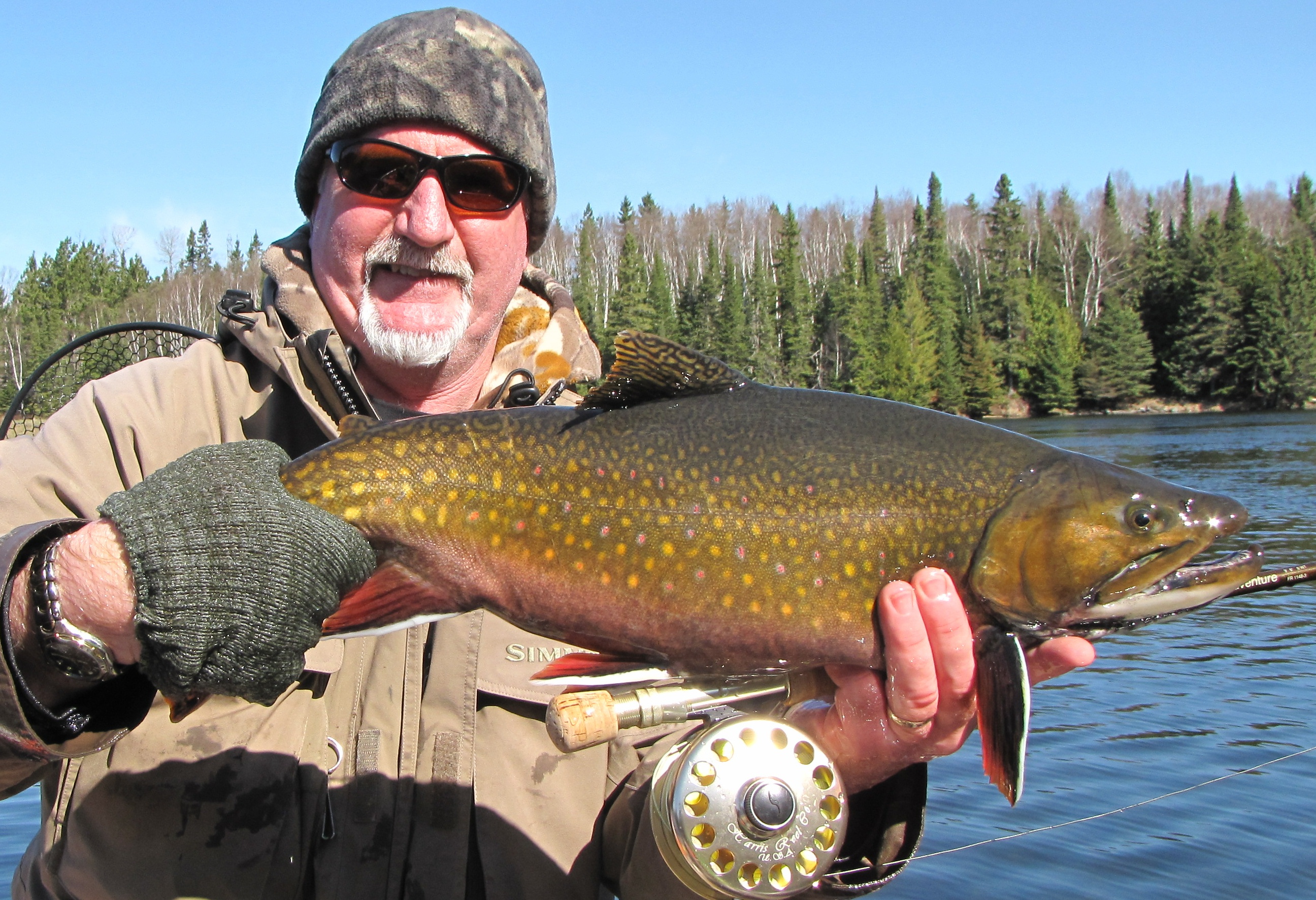
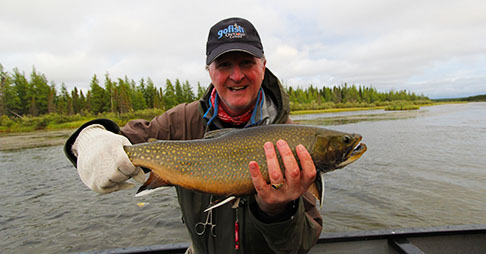
“Brook trout are symbolic of the wilderness,” says good friend and trout enthusiast John Winters, who notes that the brilliantly beautiful char demand pure water, typically found only in small remote pristine headwaters. “The lakes are sensitive to human disturbances and because of their low productivity, brook trout populations are vulnerable to over-fishing.
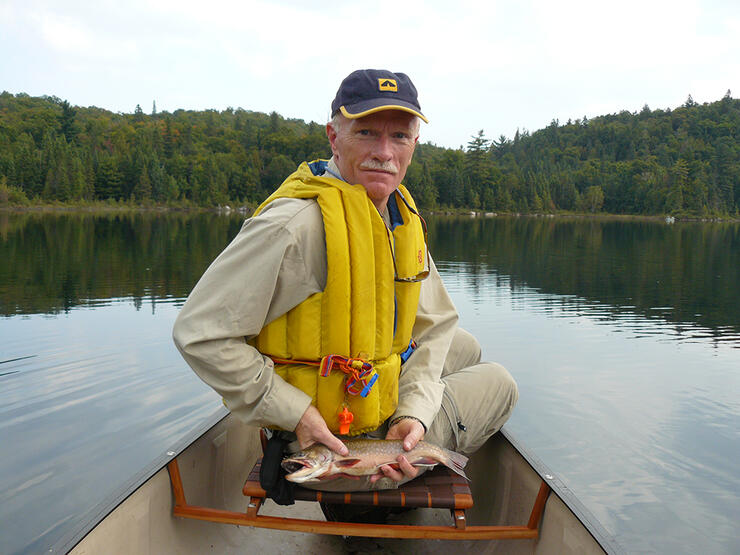
Retired Algonquin Park Superintendent John Winters says that brook trout are symbols of pristine wilderness and prized by anglers around the world.
“It is why brook trout, some folks also call them speckled trout, is one of the most sought-after fish in the world. They are the state fish in eight states in the United States, where sadly, few naturally self-sustaining populations remain today.”
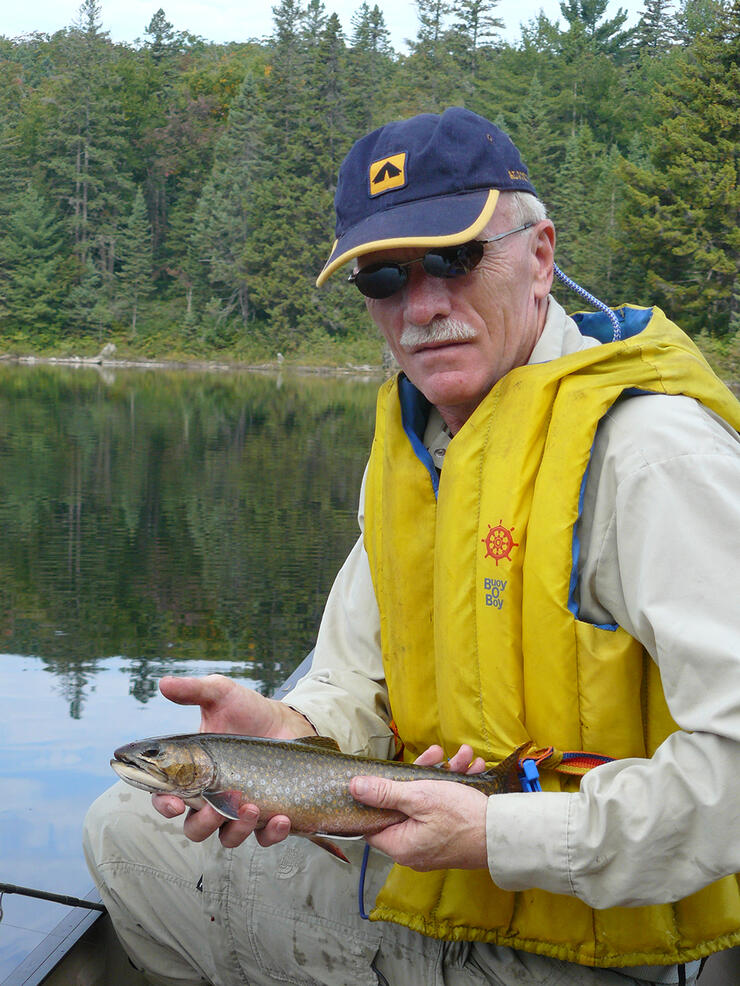
That this is not the case, however, in Ontario's awesome Algonquin Provincial Park, where for many years Winters served as the Park Superintendent, and where trout enthusiasts from around the world make bucket-list pilgrimages.
“There are many lakes in Ontario, as well as the rest of Canada, that support non-native brook trout populations,” says Winters. “The fish are raised in hatcheries and stocked to provide superb put-and-take angling opportunities.
“But there are very few examples of these stocked trout ever successfully reproducing, in spite of the tens of millions that are planted each year. This means that the lakes in Algonquin Park represent the most southerly self-sustaining brook trout populations on Earth.”
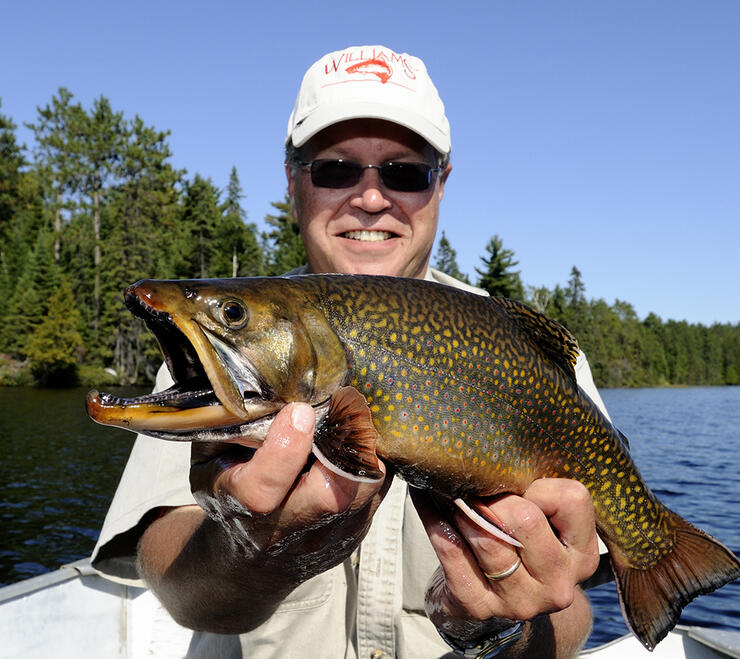
These same small, picture-postcard, granite-bottomed lakes—most are less than 40 hectares in size—are located on what Winters calls the “dome,” the highest point of land in this part of Ontario. Small underground springs, seepages, and streams flow off the dome into larger rivers forming parts of the Muskoka and Ottawa River watersheds.
Another characteristic of the dome lakes is that they are clear and cold, with surface water temperatures generally reaching only 20° C and bottom temperatures ranging between a chilly 13 ° C and 18° C, even in the middle of summer. Cold, oxygen-rich spring water bubbles up from the bottom to keep the lakes invigorated and refreshed.
“Fishing for brook trout in streams and rivers is not difficult,” says Winters, “but in these naturally self-sustaining lakes, it's a different story. The wild fish are few in number and elusive. And because of the nature of the lakes, productivity is low, with an average sustainable harvest of only .7 kg/ha per year. In simple terms, this means that an 80-acre lake can sustain only about 60 pounds of harvest, or 30 fish if the average weight is 2 pounds. And that is roughly the typical size brook trout in the Park, although anglers catch trophies up to 6 pounds occasionally.”
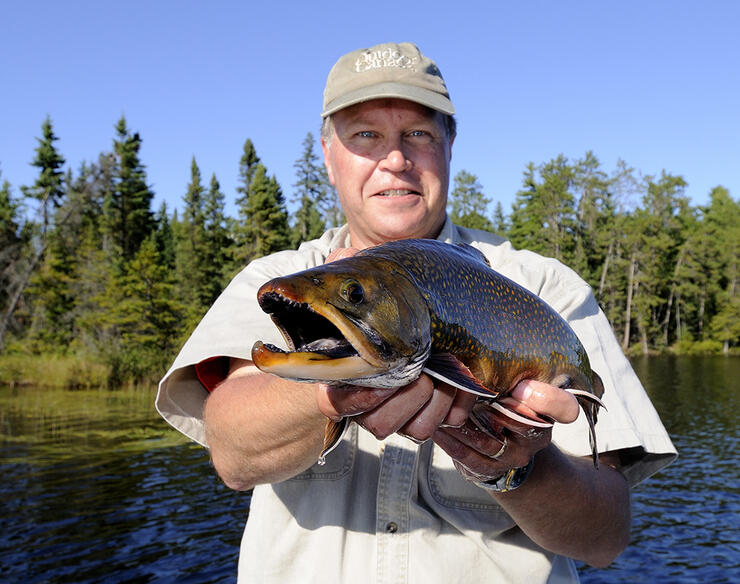
When he fishes in “The Park,” Winters launches his canoe and searches for what he calls “the quiet water” along a shoreline. Paddling slowly, he likes to flip a worm, weighted only by a small split shot, into any deep holes that he can see.
“Ideal fishing conditions are fair weather with cloud cover and a slight west or south-westerly breeze,” says Winters. “A cold north wind is usually the kiss of death. And I've never found that the time of day mattered much. I have caught as many brook trout in the mid-day hours as I have early in the morning or late in the afternoon.
Another favourite trout tactic of Winters is casting a small silver Williams Willow Leaf spinner adorned with a worm.
“My theory is that when you cover the hook with a worm, the smaller trout will bite out a chunk, but you won't hook them. You will hook the larger fish, however, brookies one-and-a-half pounds and bigger, in the lip or jaw, making for a quick and easy release. I also do well fishing with #3 and #4, chartreuse and fluorescent orange-coloured Bluefox Vibrax spinners tipped with a worm.”
Winters enjoys trolling these same baits slowly, paddling parallel to shore and around any rock reefs that he sees. If the wind is blowing briskly, he fishes into the breeze. It is a bit harder physically, he says, but you can control the speed of the canoe much more easily. He also focuses his attention on keeping the canoe in 6 to 12 feet of water and his lure 3 to 4 feet below the surface.
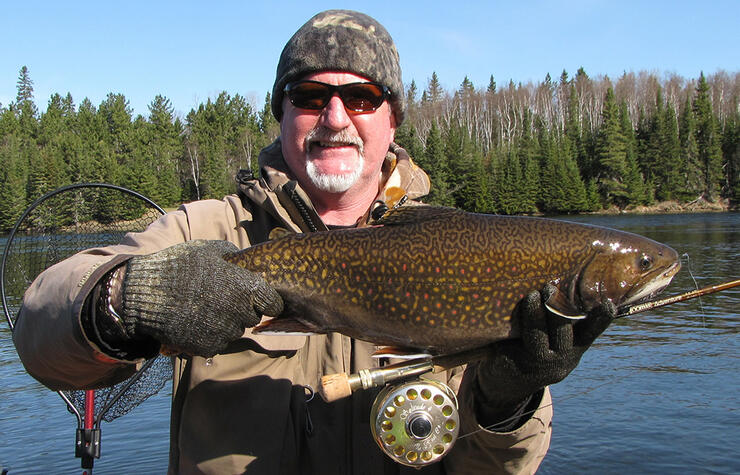
Winters says his most memorable day brook trout fishing in Algonquin Park saw him catch and release more than 40 magnificent fish in only four hours, but most days he considers half that many trout a good outing.
“The experience of paddling a quiet canoe, cutting through the water, catching and releasing wild brook trout, and keeping a couple of smaller fish for shore lunch is a great day in paradise,” chuckles the personable Winters.
“They are the most southerly, self-sustaining brook trout in Ontario and one of the largest concentrations of naturally reproducing brook trout lakes in the world.”