3 Great Ontario Walleye Destinations
Karl of Extreme Angler recommends must do walleye lakes in Ontario.
By Karl Kalonka


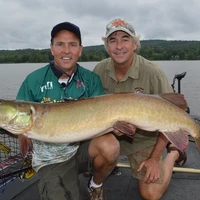





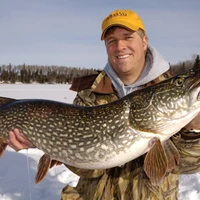


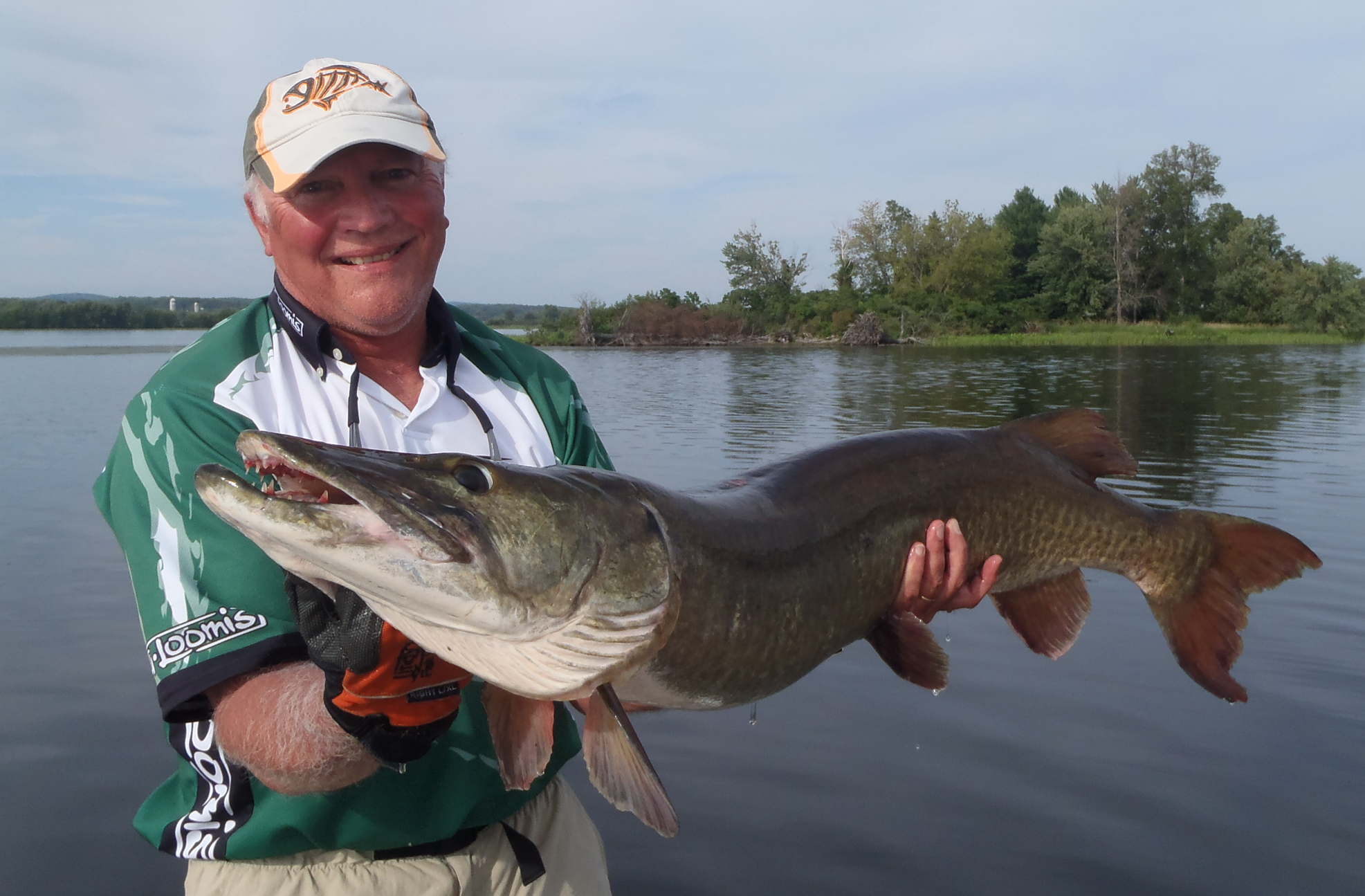
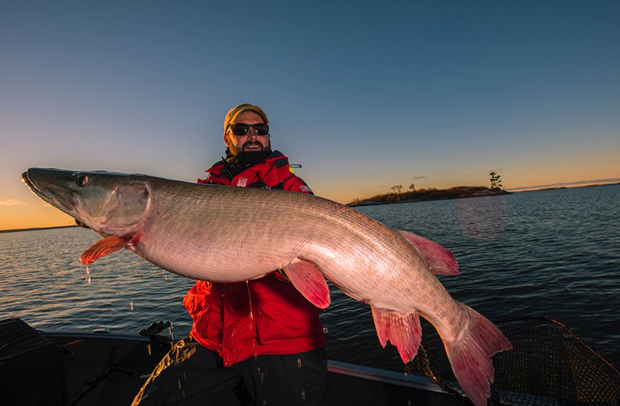
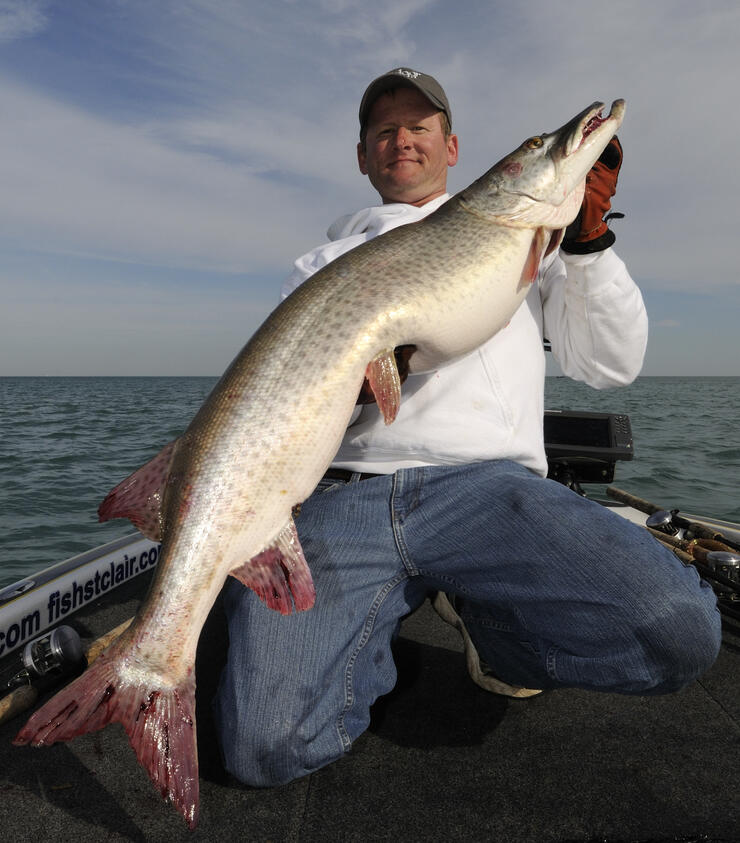
There is no finer place in the world to fish for muskies than in one of the many fabled waters in Northern Ontario. And there is no better time to catch the big toothy critter of your dreams than in the fall. The action only heats up and gets better from now until freeze-up in late November and early December.
Indeed, many muskie anglers have been chomping at the bit, waiting anxiously for the water temperature to cool down and drop below the 60° F / 15° C threshold. It signals the time of year to put away the casting rods and reels and dig out the trolling outfits.
But is it really the case?
Or is it more a function of muskie anglers doing, well, what they've always done? Indeed, if anglers are guilty of anything, it is repeatedly doing the same thing so frequently that the practice takes on a life of its own.
It is what I was thinking when I thrashed out the cold water facts with renowned muskie researcher Sean Landsman.

Landsman is an avid angler and assistant editor of Muskie Inc. He is also the author of Project Nobel Beast, which he completed as part of his post-graduate work at Ottawa's Carleton University. For several years, he used state-of-the-art radio transmitters and acoustical devices to track 30 muskellunge ranging in size from as small as 30 inches to as large as 52 inches in the Ottawa and Rideau rivers of southeastern Ontario.
What he discovered reduces to rubble so many widely held muskie beliefs.
"Knowing what I know now," says Landsman, "I would never troll for muskies. I would cast for the fish all season long, from ice out in the spring until ice up in the fall."
Whoa, wait a minute. Never troll for muskies and only cast?
"We miss tons of fish," Landsman chuckles, "because catching a muskie is such a random event. So many fish are attracted to the 'in-between' areas. You can pattern them, but only after you study them carefully. It is also the benefit of running and gunning. There are so many fish that are not in the classic areas that most muskie anglers target. Having said that, however, one of the things that surprised me was the ability of certain structures to hold fish all year round, regardless of the season, weather or water conditions."
Wow, if that doesn't pop the balloons on a string of long-held muskie convictions, I am not sure what does. But it is only the beginning of the cascading dominoes.
"Another thing that surprised me," says Landsman, "is that huge fish are still using shallow weedy water in late November. And it doesn't matter to the fish if the weeds are living, dead or dying. Or if they're green and vibrant or brown and withered. The weeds still provide good ambush cover. So if there are prey fish around, the muskies will be there. If the prey fish move on and vacate an area, on the other hand, then the muskies will move along with them.
"I can't tell you how enlightening it was to track a 52-inch muskie into two feet of water on November 23, the last day of the study. I followed other muskies into cold, shallow weedy water as well. They would go way back into the marshy cattails. Sometimes right up on top of the weeds. I am now confident that casting a glider over shallow weeds – dead or alive – in late November is not a waste of time."
If you've picked yourself up off the floor and dusted yourself off after reading this, you'll be interested to know what Landsman also says: that he frequently found the muskies he was tracking in water that was so shallow he could visibly see the fish cruising along the shoreline and using the edges of the weeds.
"They're faithful to edges," he says. "It could be the defined edge of timber in a reservoir or a weed edge in a lake. They're exploiting their preference to use the edges of their habitat as ambush cover. And they use the same habitat all year long."
Of course, I'd be remiss if I didn't also mention that Landsman says he tracked muskies in the late fall that were relating to the deep rock structures most muskie anglers identify as important fall fishing locations. The spots most of us have grown up fishing in October and November.

And that is the point.
Because so many muskie anglers are like lemmings, creatures of habit, they repeatedly fish the same well-known and easily identified community locations, as if somehow needing to convince themselves that what they're doing is scientifically sound.
In the process, however, they are leaving unscathed so many better late fall locations that you can savour for yourself. And where you can make your Northern Ontario muskie dreams come true.