5 Keys To Canadian Muskies
The fish of 10,000 casts; an elusive predator fish with legend and lore.
By Jim Saric

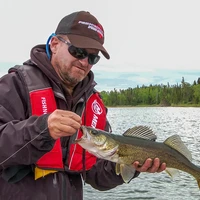




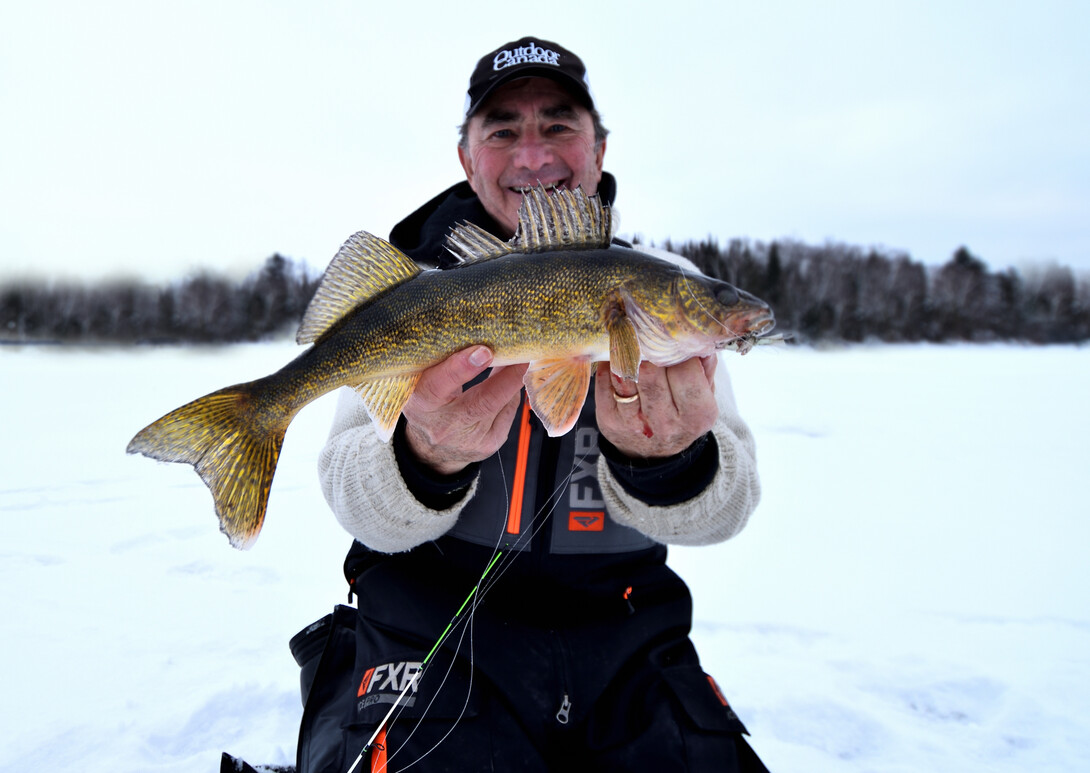
I always step onto the ice hoping to find the fish in an aggressive take-no-prisoner mood. But wishing isn’t part of any successful ice fishing pattern that I am aware of, so I am always prepared with at least one, and usually two, deadstick rods with which to catch difficult "day walleye."
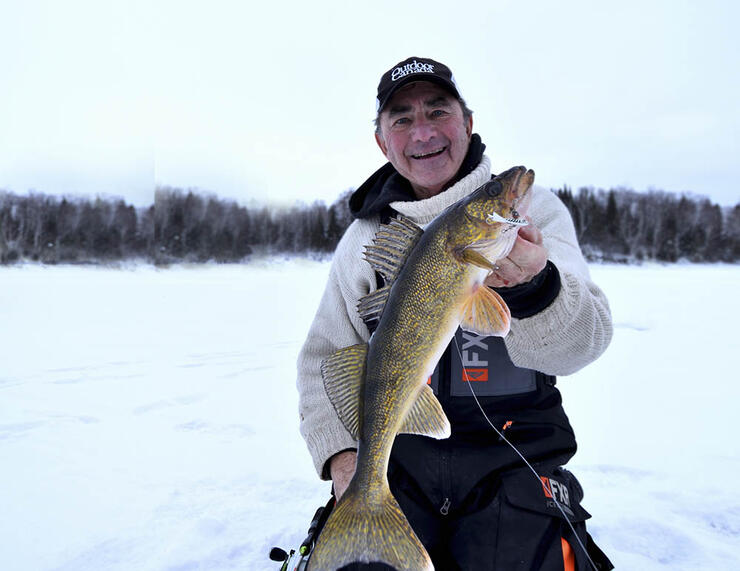
The fact of the matter is that when the sun is shining down brightly and the dim-light-loving walleyes are proving a challenge to catch—as typically happens around noon—properly dead-sticking a lively minnow will tilt the odds heavily in your favour.
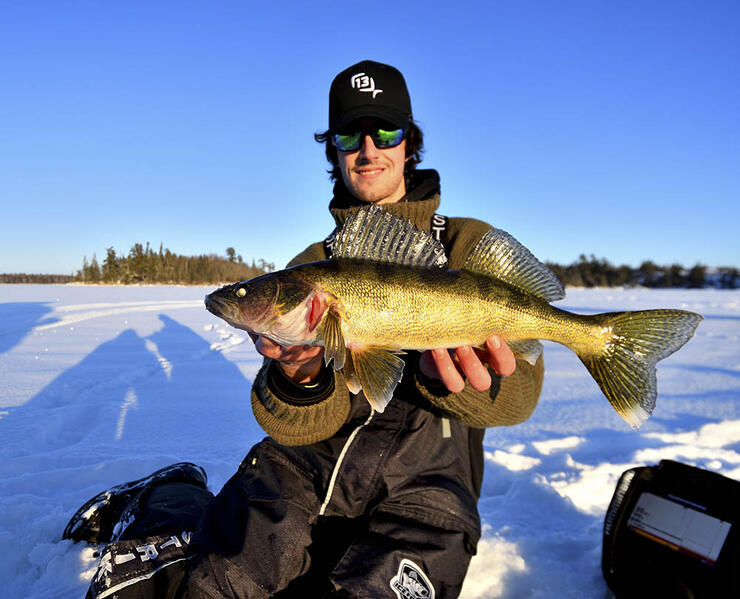
Sounds simple enough, right? And it is, so long as you pay attention to several subtle dead-sticking details. The first is using a rod with a standout, colourful, nimble, springy tip. My favourite is a 13 Fishing Widow Maker Deadstick rod featuring a neon green tip that I can spot and monitor from a distance. The second is spooling on a lighter monofilament or fluorocarbon line, typically a 4, 5 or 6-pound test, that doesn’t inhibit the mobility of your minnow.
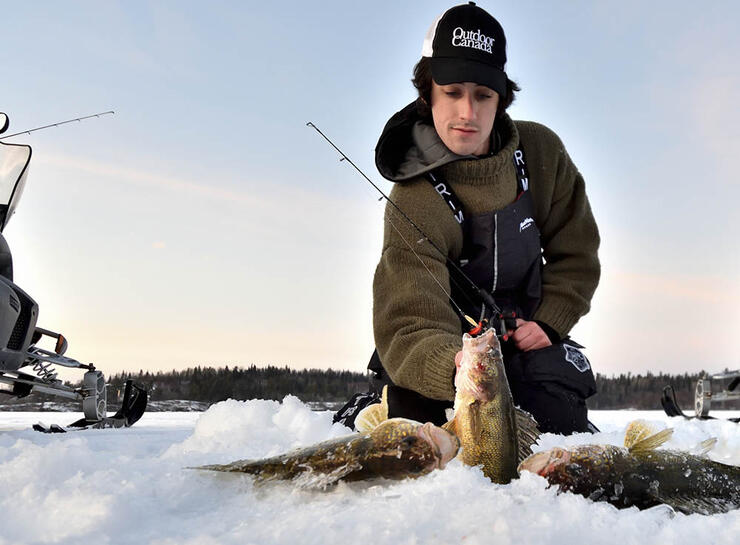
The jig you pick also plays a pivotal role in your difficult-day walleye success. Sticking with our finesse approach, I find a 1/16- to 1/8-ounce jig perfectly complements the setup. And while you can certainly ice walleyes using a standard ball head design, a vertical jig like the VMC Tear Drop is doubly deadly.
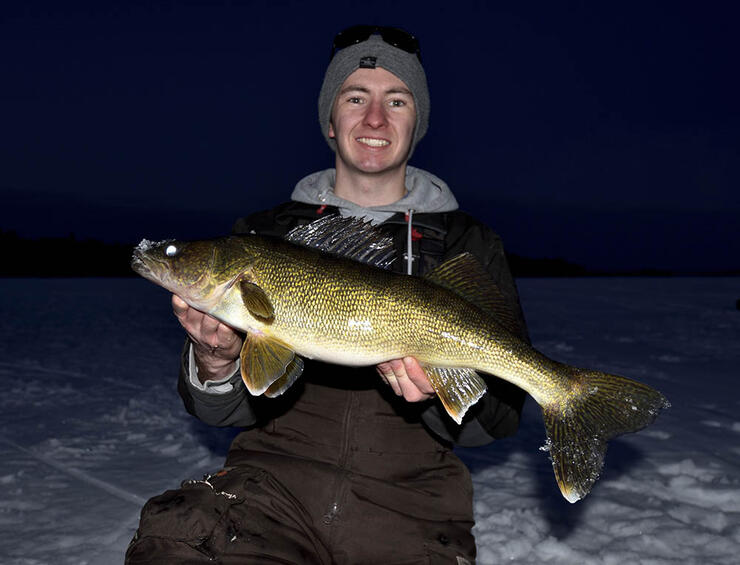
The light jig, by the way, plays a starring role because it provides a subtle splash of fish-attracting colour, but it also tethers the minnow to a long leash beneath your hole. By that I mean the minnow can quiver and struggle to swim away when a walleye approaches, but the light jig doesn’t frighten or overawe the walleye. And when the labouring minnow runs out of steam, the slight weight of the jig pulls it back down under your hole and into the big-eyed predator’s gaping mouth.
Now, for the coup de grace that completes the system. Always attach your minnow by sliding the thin wire hook ever so slightly under the skin starting from just behind the dorsal, so the point emerges in front of the fin pointing toward the head. Walleyes always take your bait head first, so positioning it this way places your hook in the perfect spot for a solid set.
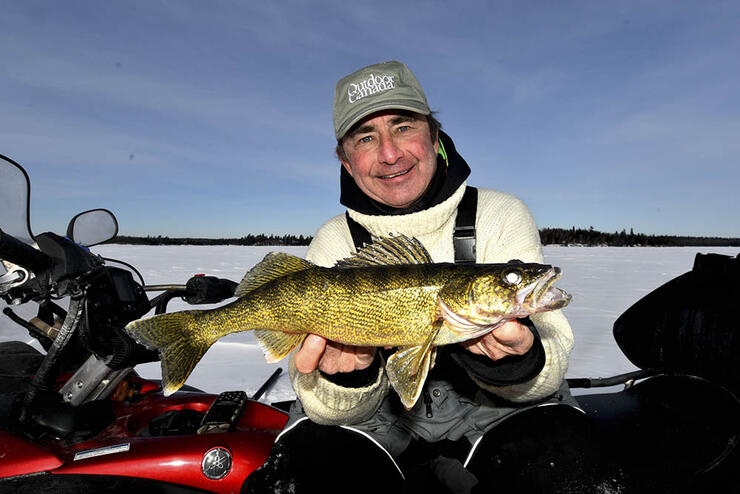
Now, simply lay your rod across a pail so that the brightly coloured tip is situated horizontally a foot or two above the hole, with your line going straight down. When a walleye gobbles up the shiner, dace or chub you’ll see it signal the bite and bend the tip over so effortlessly it feels no resistance whatsoever. That is your cue to run over quickly, grab your rod, set the hook, reel in the walleye …. and repeat.
Most days I’ll drill a dozen or more holes on the spot I am fishing and set my dead stick rod in the middle of the Swiss cheese. Then I’ll move between the other holes jigging a spoon, lipless crankbait or Jigging Rap-style lure. Being assertive like this in one hole attracts and calls in walleyes to investigate the hoopla and when they’re combative, they’ll smack the lure. But when they are not, they’ll spot the struggling minnow and slide over and eat it.
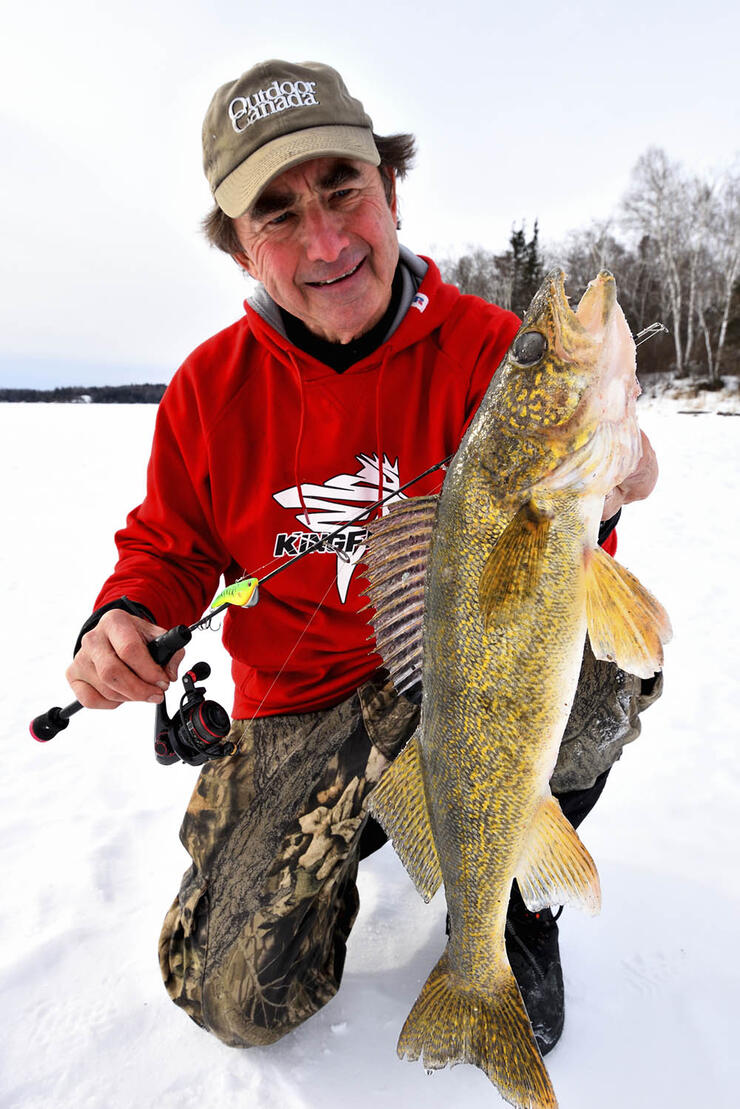
I was ice fishing for walleye on one of my favourite Sunset Country haunts the other day and when I arrived in the morning, the holes I was jigging aggressively were the clear-cut winners. But, then, around 11:00 o’clock I noticed that the deadstick rock was garnering more than its fair share of attention. Between noon and 2:30 PM, it was so much the victor, that I actually stopped jigging altogether and relied on two deadstick setups. I quickly released several nice Walters, including a trio over 20 inches. For the last couple of hours of the day, as the light was quickly fading, however, I went back to the original tag team setup and caught fish both ways.
So much for difficult day walleyes in Northern Ontario.