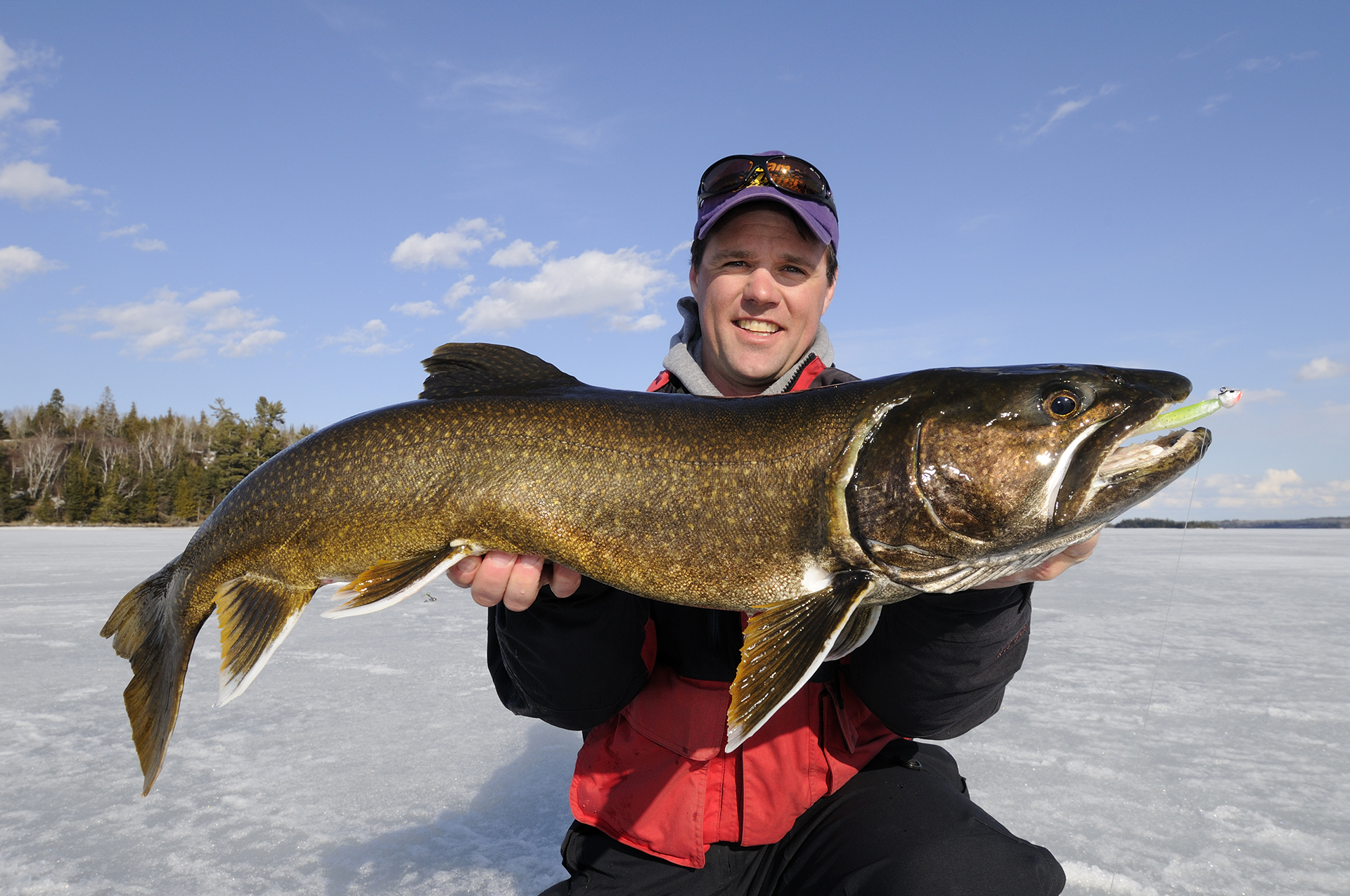

Fishing Esnagi Lake
Train-in Fishing at Lodge Eighty Eight
By Troy Lindner







I was loading the snow machine onto my trailer that I had parked on the side of one of the many ice roads crisscrossing Lake of the Woods the other day, when an acquaintance, who was coming up the lake at sunset, pulled alongside, rolled down the passenger window, and asked: "How'd you make out?"
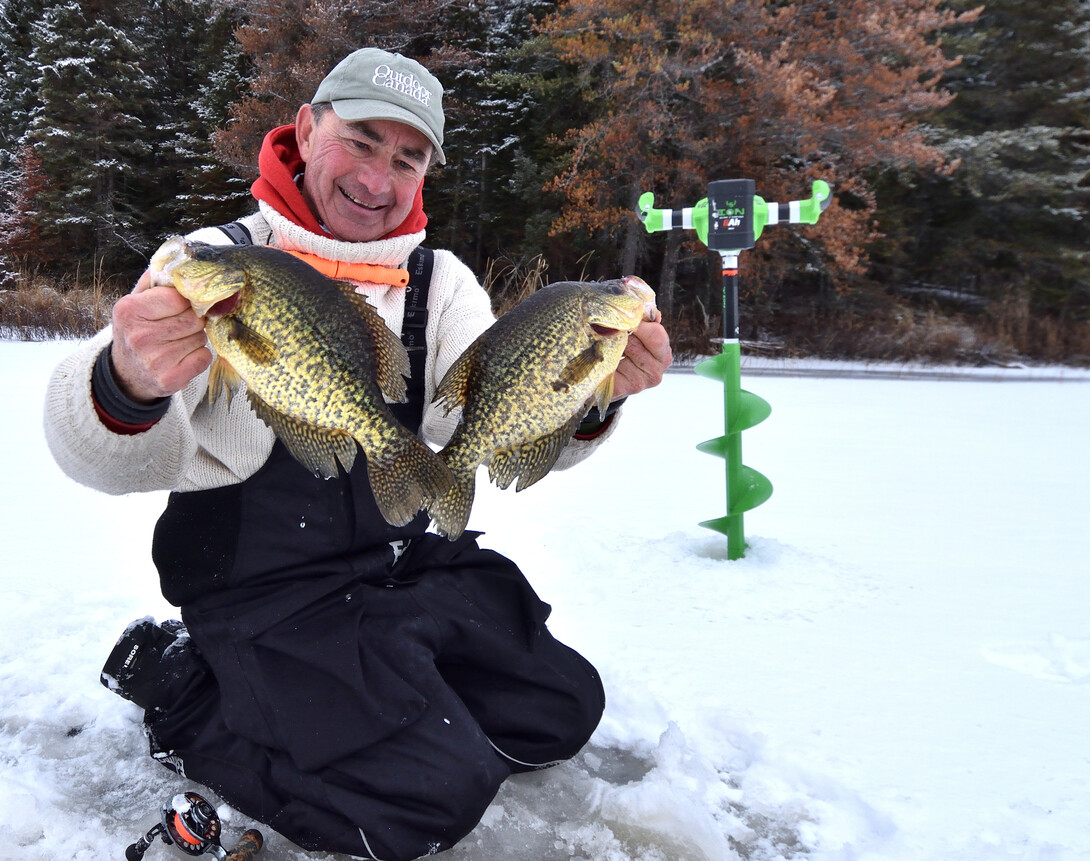
"Oh, man, it was a superb day," I replied, mentioning that I'd caught a mixed bag of jumbo perch, walleye and several bonus black crappies to boot.
"Hmmm," my friend lamented as he rolled the window back up and slowly drove away. "I didn't get a bite all day."
If he had stayed around a little longer, I would have told him that, truth be told, I never felt a bite all day either. Instead, I saw every fish eat my bait. There is a huge difference, especially in the mid-winter season when activity levels have peaked and settled down and the fishing has stabilized.
Indeed, on the fish-filled day in question, I'd set up at the end of a long slender underwater point that stretches out from the end of an island like an accusing finger. The walleye and perch were bunched up on the tip where the end of the bouldery structure merges with the lake bottom, while the crappies were holding in much shallower water near some ragged, scattered vegetation.
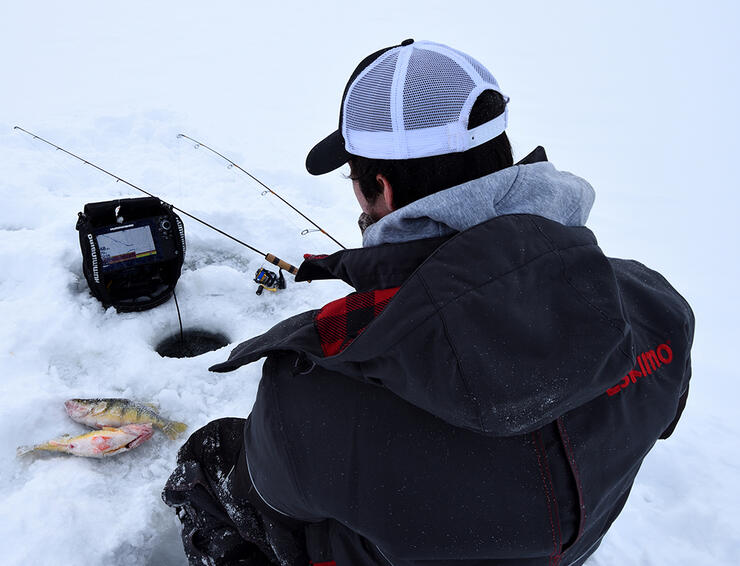
I could see the fish swimming into and out of the cone on my Ice Helix sonar unit, and they were much more aggressive than I had expected they would be, given the bluebird skies, warm sun, and light wind. But as I watched the crappies and perch, in particular, rise up to intercept my falling lure—often as soon as it cleared the bottom of the hole—an important detail became apparent. When the two objects met, and the fish sucked in my bait, they either remained where they were or rose up even slightly higher in the water column.
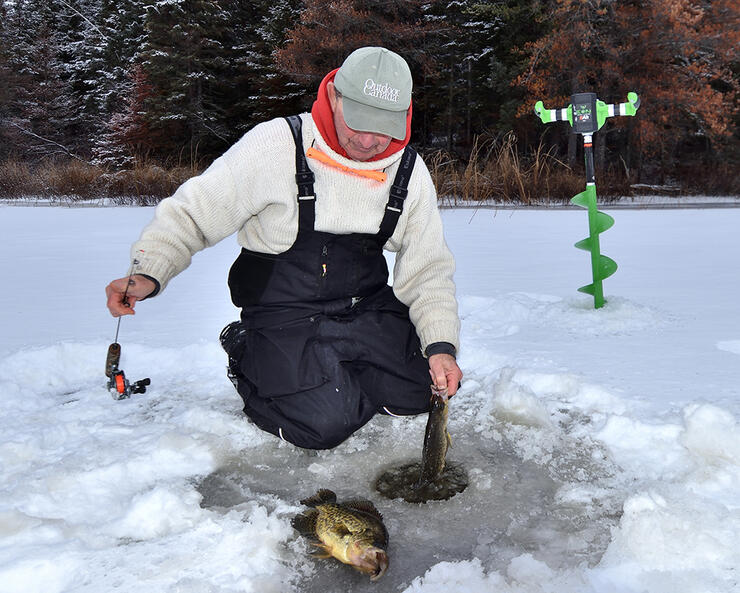
Understand what I am saying? They didn't rush up, grab the bait, and then rush back down to the bottom, which would have signalled an easy-to-feel strike, but rather they stayed put in the water column. So, if I was waiting to feel a fish bite—like my friend apparently was—I'd still be there right now, fishless.
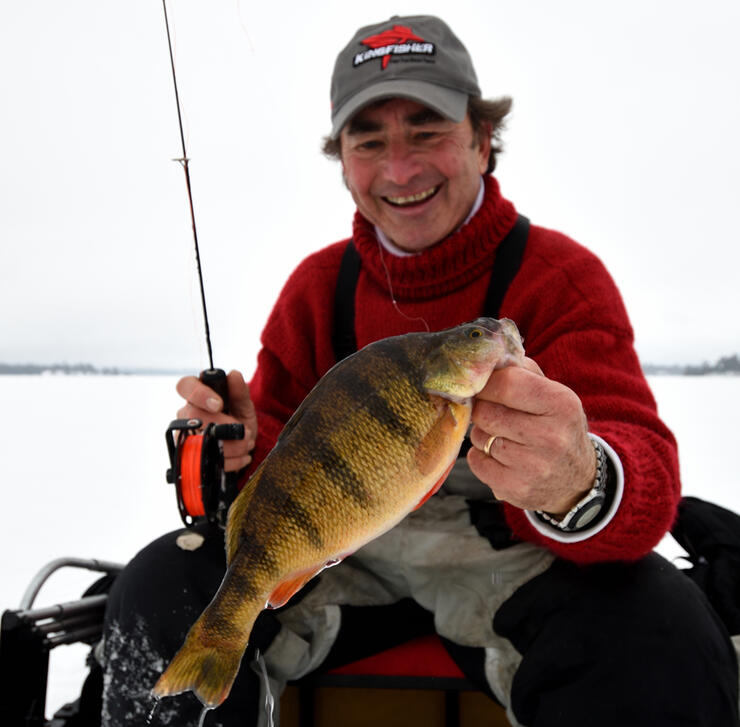
Instead, I have come to rely over the years on spooling the brightest fishing line onto my ice reels. My favourite is the florescent orange Sufix Ice Fuse which is downright gaudy which is why I always add a 2- to 3-foot long, clear monofilament or invisible fluorocarbon leader to the business end.
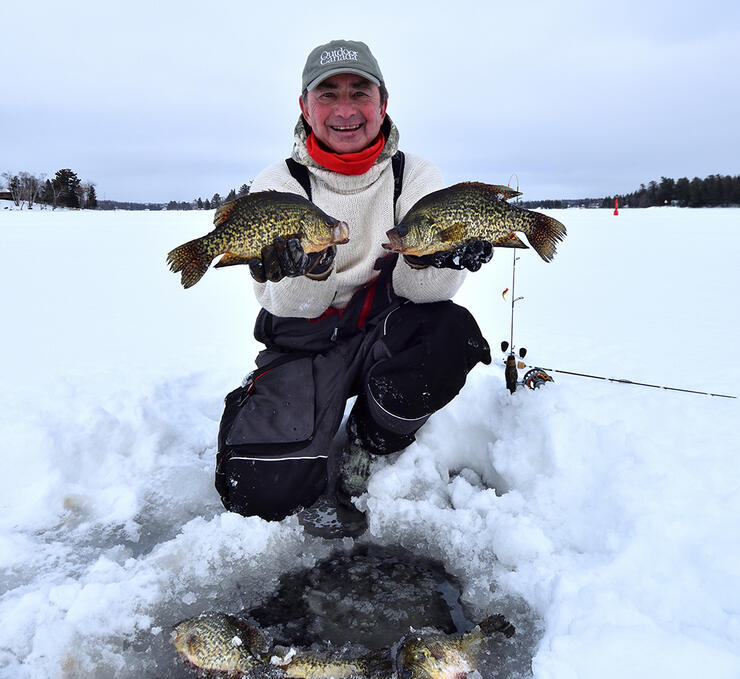
Now, one other quick detail that will help you ice more and bigger fish this winter. Place your sonar unit smack dab in front of you and not off to one side. You want it straight in front so that when you look at your rod tip it is lined up perfectly with your sonar screen.
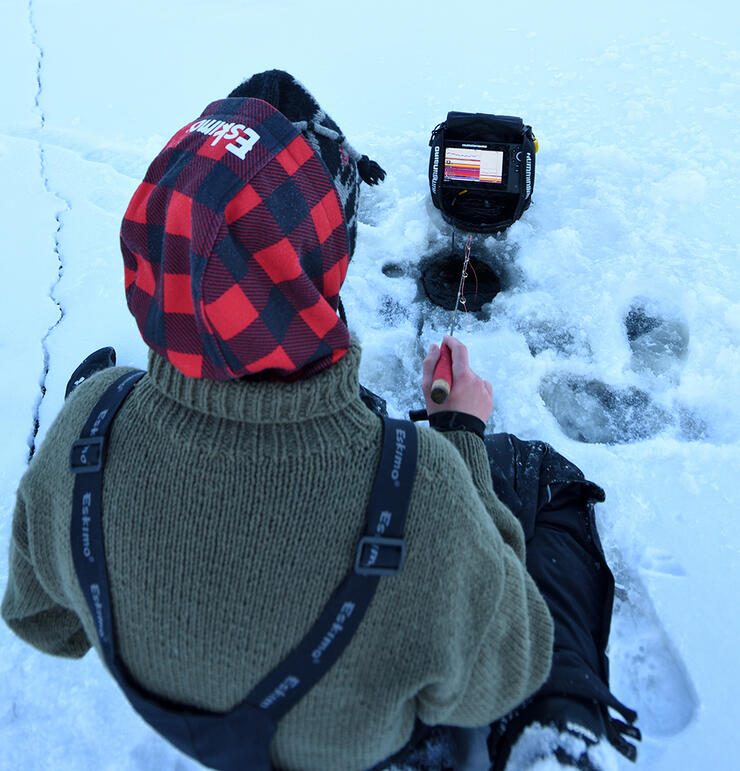
Now, drop your jig, spoon, or live bait into the hole and follow its progress down to the fish on the sonar screen. When crappie, perch, or walleye rises up to eat it, keep your eyes glued to the section of the bright line between your rod tip and the water. Often the only thing you will see is it straightening out. Many days you won't feel a single bite, but you'll see every fish inhales your bait, signalled by the tightening of your line. And before it can spit out your lure, you can set the hook and put another walleye, yellow perch, black crappie, bull bluegill, or pumpkinseed onto the ice.
I should mention, too, that many times you will drop your bait to a fish, watch it cover your lure on the sonar screen, and then see your bright line go limp. It's a sure sign that the fish has eaten your bait and risen up, often just an inch or two higher up in the water column, signalling a strike.
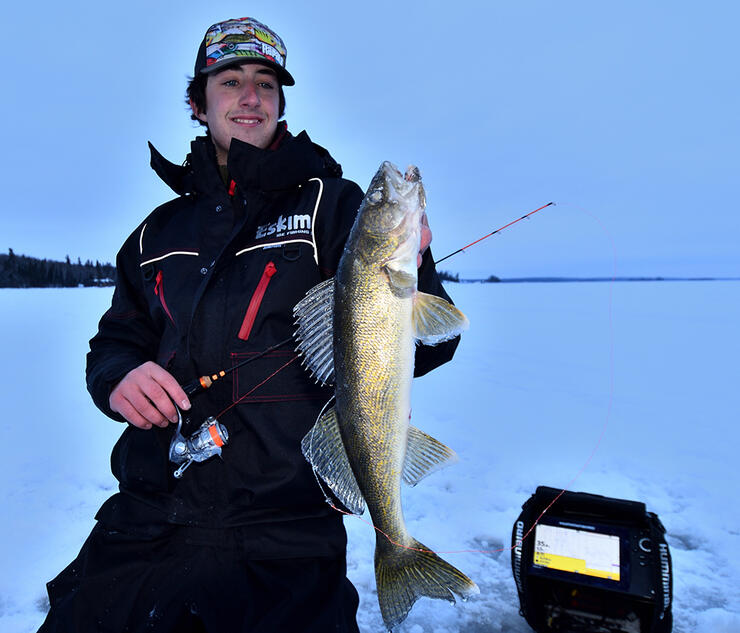
Spring bobbers are another fantastic way to see, rather than feel, a fish bite your bait in the winter. They are simply 12- to 18-inch-long pieces of ultra-thin titanium wire that you can affix to the end of your rod. I use shrink wrap to hold them in place so they bend under the slightest amount of tension or weight. Even a tiny tungsten jig will bend over a spring bobber so that when a fish takes the bait it will spring up, not necessarily down, signalling a bite. And, if you add a spring bobber to the end of your rod and use a bright fluorescent main line, it is double trouble for the fish.
So much so that when your buddy pulls alongside as you load your gear into the truck after another amazing day ice fishing in Northern Ontario, and asks, "How was the fishing?"—you can chuckle and reply, "It was amazing, and I never felt a single bite!"