
7 Ways to Land Your Catch
With a little patience and a little know-how, landing fish doesn’t have to be a nail-biting experience.
By Bob Izumi





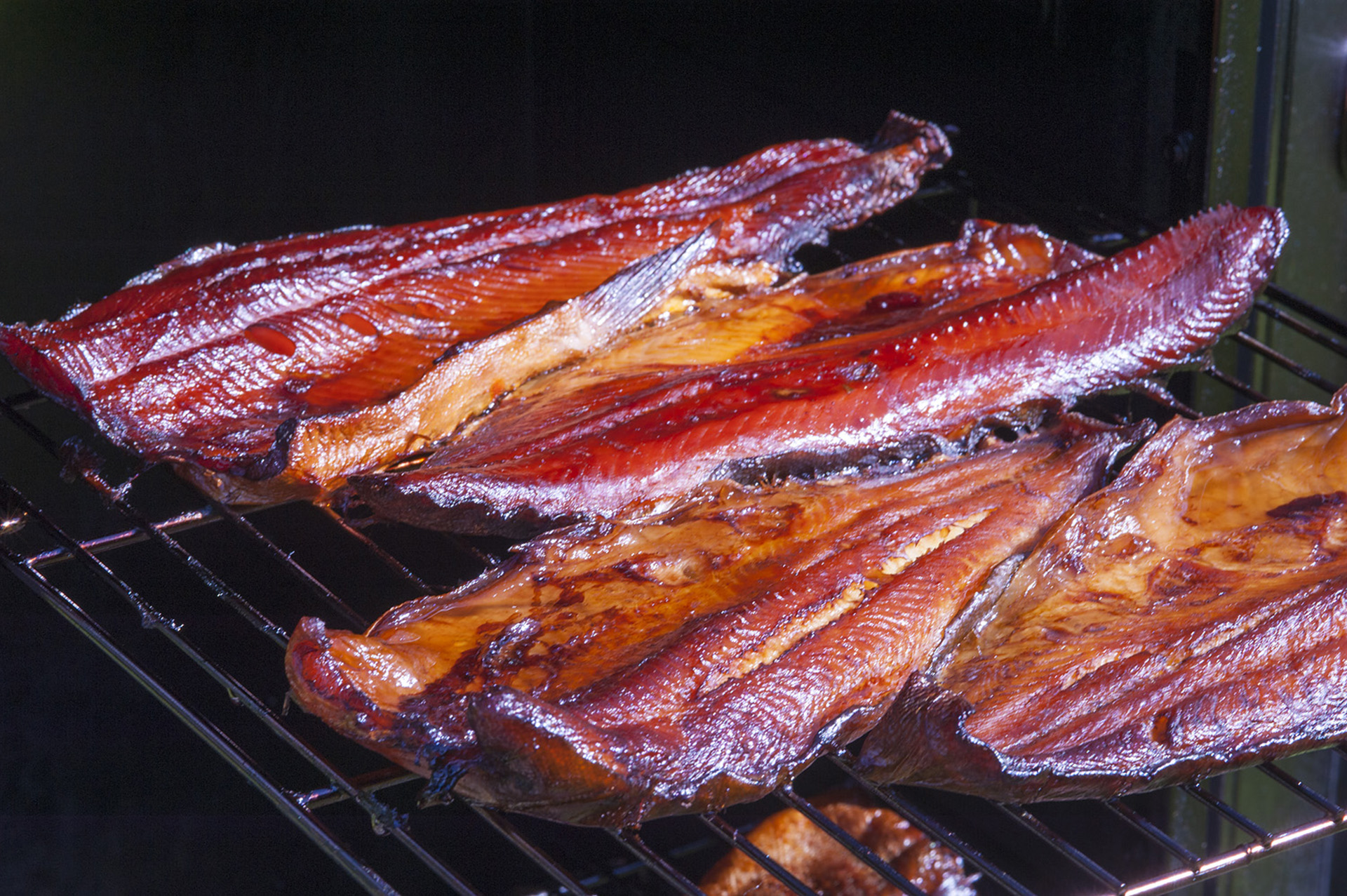
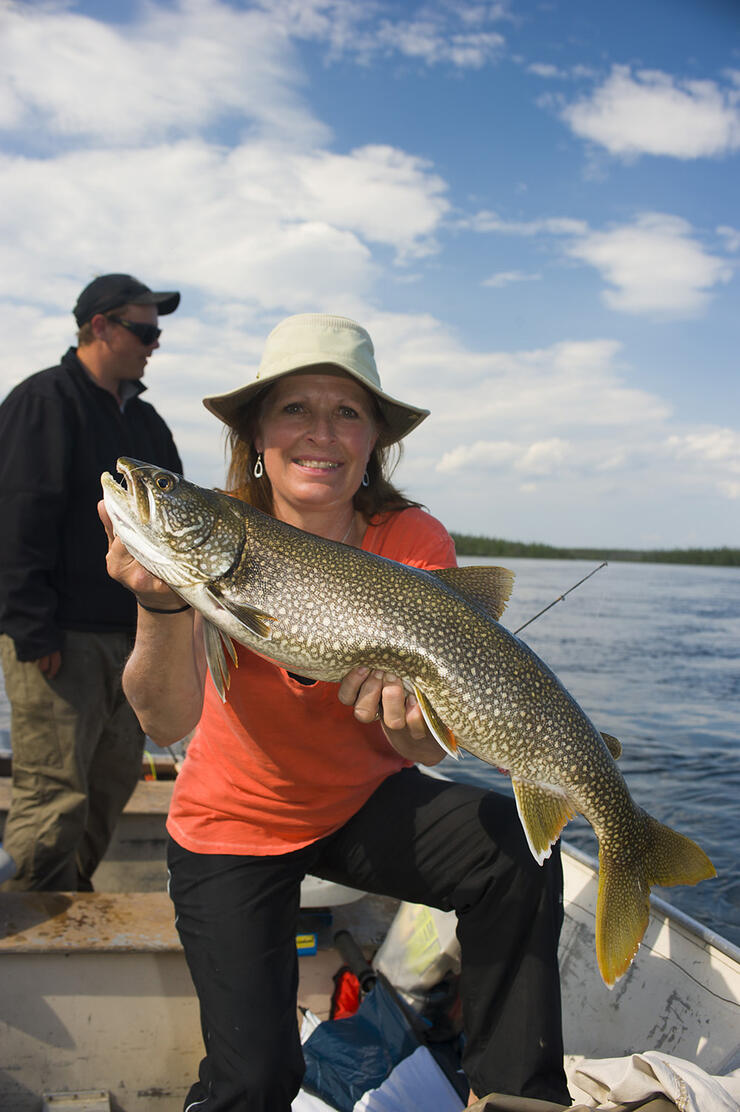
Catching and eating fish from the cold and clear waters of Northern Ontario is one of the perks of living in this corner of the world. With a wide range of species available and a broad selection of cooking methods—from barbecuing to frying to steaming—consuming fish flesh never gets old. Angling chefs who want to add to their repertoire should try smoking fish.
I find rich-flavoured oily fish is the best for smoking. My favourites are lake trout, salmon, brook trout, and splake, but smoking will lend its unique flavour to any fish. I've smoked pike, walleye, and even ling with good results.
Smoking fish is not difficult. It just takes time. One method is cold smoking, which actually cures the fish through a drying process that can last several days at a constant temperature of around 32° C (90° F). Although cold-smoked fish will keep indefinitely, the time‑consuming process requires critically controlled conditions prohibitive to the backyard smoker.
The best method for the average angling gourmet is hot smoking, which actually cooks the fish at a low temperature over a six- to eight-hour period. Hot-smoked fish keeps in the refrigerator for about two weeks.
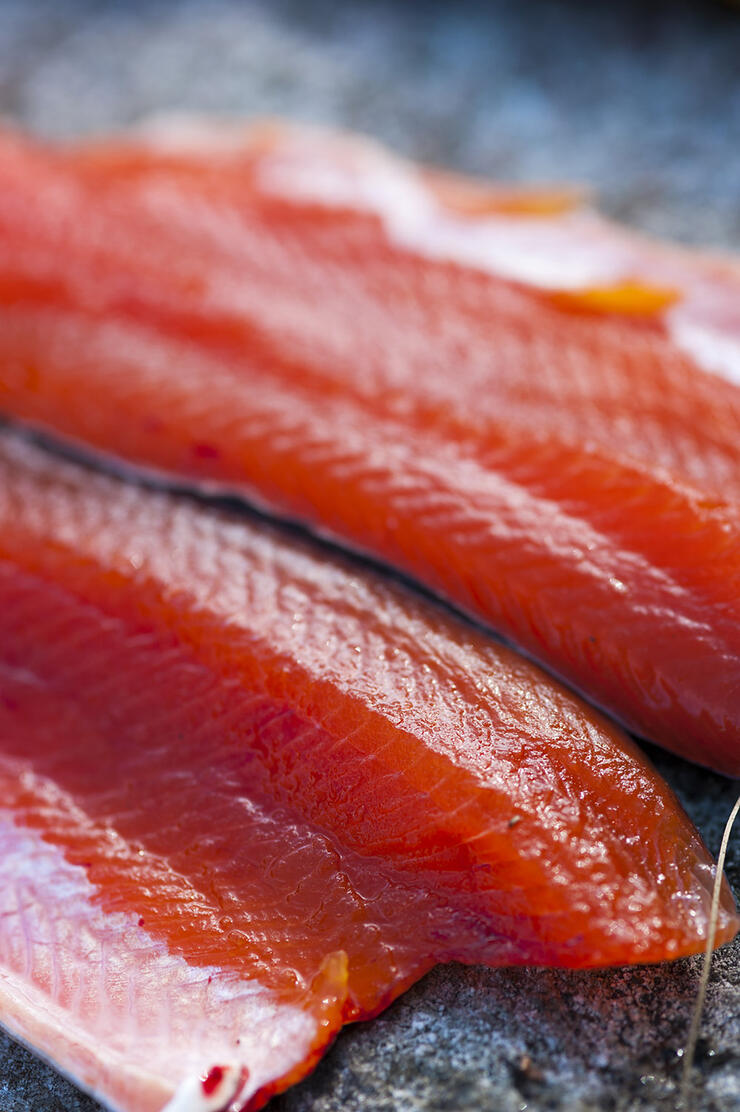
Smaller fish can be smoked whole, but any fish over three pounds is best filleted. Leave the skin on to help hold the fish together. Leave filets whole or cut them into manageable pieces before rinsing them with cold water.
The following brine is enough for up to eight pounds of fish. The proportions of salt and sugar can be adjusted to suit your personal tastes.
Put ingredients in a non-metallic container and stir until the salt and sugar are dissolved. The container should be large enough to hold and totally submerge the fish in the brine solution.
I use a large round Tupperware container whose inside diameter is slightly larger than a dinner plate. Once the fish is in the brine, I place the plate on top to ensure the fillets stay completely submerged.
I place the fish in brine just before going to bed and leave it in a cool place for six to eight hours. In the morning I rinse the filets thoroughly with cold water, and then I have the whole day for drying and smoking.

Place the rinsed filets on newspaper skin side down and pat dry with a paper towel. Put filets on a rack in a well-ventilated area and let dry until a shiny film forms over the flesh. This can take three or four hours, but a fan blowing over the flesh helps to speed the process. The film, or pellicle, seals the fish, keeping it from losing moisture during smoking.
The thickest filets should be placed closest to the heat source of the smoker you are using. Maintain heat at 50° C (120° F) for three to four hours. Increase heat to 80° C (180° F) for two to four hours. Small pieces should only require one or two hours at 80° C, but filets over an inch thick will likely take the full four hours to cook completely. Smoked fish is great hot out of the smoker, but gets even better after mellowing a day or two in the refrigerator.
A key ingredient to smoking fish is a smoker. There are many commercial models on the market that work quite well, and many more homemade contraptions crafted from anything from old refrigerators to metal garbage cans.
Anything that will keep the fish in an atmosphere of dense smoke at consistent temperatures for a long period of time will do. A common mistake of the novice is smoking at excessively high temperatures. The ability to control the temperature is one of the most important functions of any smoker. On homemade models, a meat thermometer inserted through a small hole in the side will provide accurate temperature readings.
Although I prefer using a smouldering hardwood fire, one of the simplest and most popular ways of producing heat and smoke is placing wood chips in a cast iron pan over an electric hot plate or propane burner.
Whichever way you decide to create your smoke and heat, the type of wood you use has a great influence on the flavour and aroma of the fish. Never use evergreen, unless the idea of spruce-flavoured trout appeals to you. Stick to hardwood and fruit woods. Sugar maple is pretty hard to beat, and birch—with the bark removed—provides excellent results.
It takes some time and planning to successfully smoke fish, but the marriage of delicate fish flesh to the smoke from smouldering hardwood is well worth the effort.