Winter Fish Scents
How to Use Fish Scents When Ice Fishing
By Gord Pyzer














The two biggest largemouth bass I have ever caught—10-pound bookend behemoths—came from the famous phosphate pits in Florida while fishing with legendary angler, Bill Dance. I hooked them both on a Texas-rigged plastic worm.
That was many years ago, but I brought my newfound knowledge home to Northern Ontario and a Texas-rigged worm has remained my go-to bait for bass. I was thinking about that the other day when my grandson Liam slid the net under another gorgeous green monster that I hooked while inching a worm through the stalks of a lush bed of cabbage. To a 19-year-old who has grown up firing a slew of exciting new presentations, crawling a 7 or 8-inch worm along the bottom must look old school. But as I said to him at the time, the day a largemouth bass turns up its nose to a worm is the day that bass stops eating. The truth of the matter is, the presentation is timeless.
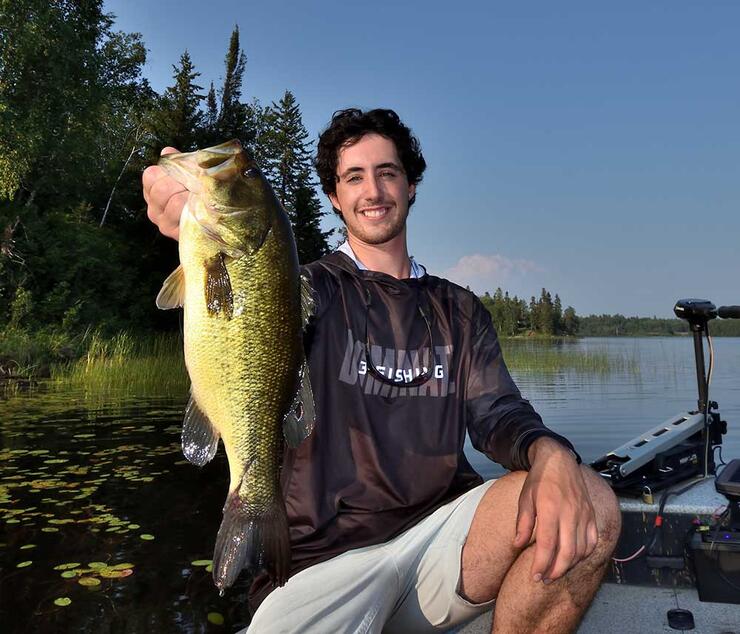
Indeed, back when I caught the behemoths with Dance, I was casting a six-inch black Mister Twister Phenom that featured a curly twister tail. It remains my worm of choice early in the morning, later in the evening, when it's overcast, and any time I find the fish in an ornery mood. I think they pick up on the vibrating tail and it makes them angry. When it is sunny, and calm, and there is a lot of boat traffic, on the other hand, I opt for a 7-inch Z-man Mag FattyZ worm with a straight tail.
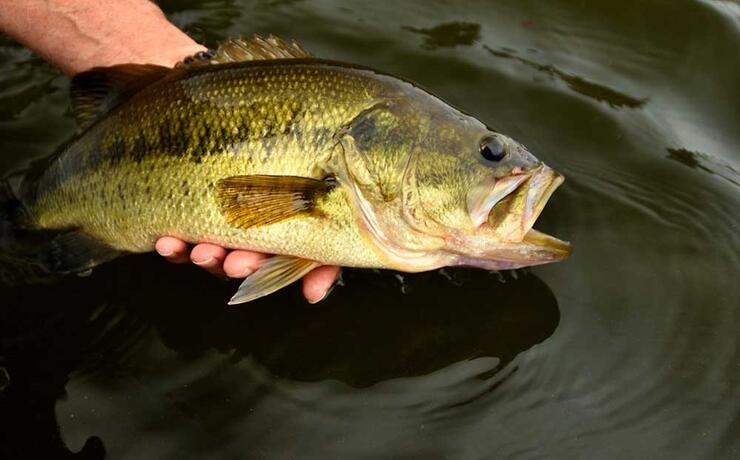
Two other things I rely on are a rubber bobber stop and tungsten bullet weight. I like to slide the stop down the line so that it snugs my sinker up against the worm making it easy to slither it through thick matted weeds.
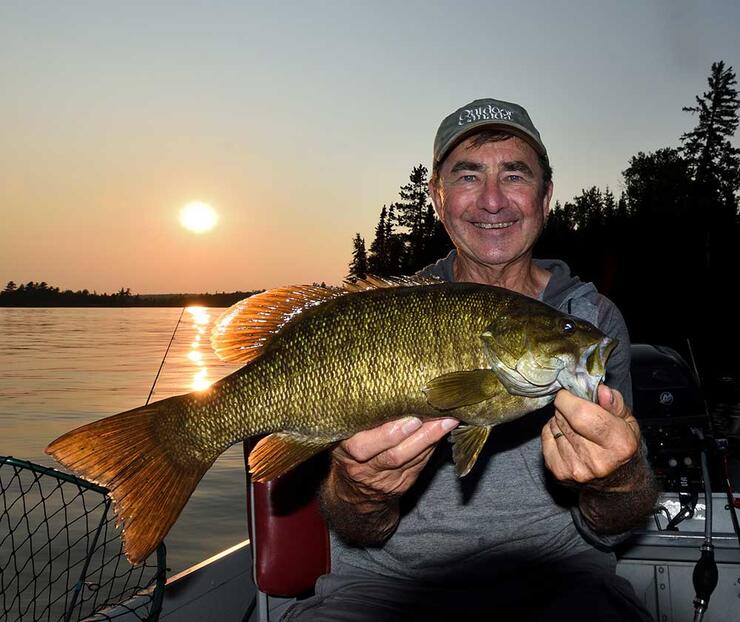
But when the vegetation is sparse, like you typically find in front of a deep weed line where the sunlight ceases to penetrate and the vegetation stops growing, I’ll slide the rubber stop up my line a few feet and fish the sinker “unpegged.” I like doing this because when I feel a bass pick up the worm I run the line over the second finger on my rod hand at all times so I can feel the subtle slurp of a giant—I can drop my rod tip, let it swim away without feeling the weight and then cross his eyes.

Of course, back in the day, we relied on wooden toothpicks to peg our sinkers by siding them inside before breaking them off. As soon as they got wet, the wood swelled and held everything in place. These days I use line-friendlier rubber pegs made specifically for the job.
Another great trick is to use a snell knot to tie your hook—I favour 2/0 to 4/0 Gamakatsu worm hooks—to your mainline or leader. When you apply tension, it kicks out like a dog’s leg on a 45° angle, resulting in much better hookups.

Finally, one of the most important and often overlooked things is to rig your worm as straight as possible. To do this, insert your hook into the nose of the worm about 1/8-inch and then pass it out the side so that the hook eye and knot are hidden inside the plastic. Then, rotate your hook, lay it against the worm, and notice where the bend begins. Now, take the point and pass it through the worm at this precise spot—I mark it with my finger—so that the portion of your hook between the point and bend emerges and lays flush atop the plastic. Now, carefully pull back on the worm and slide the end of the hook lightly under the skin, like a sliver, so that it’s Tex-posed and snag-less. You can now pitch it anywhere—lily pads, cabbage weeds and tree limbs—and never hang up.
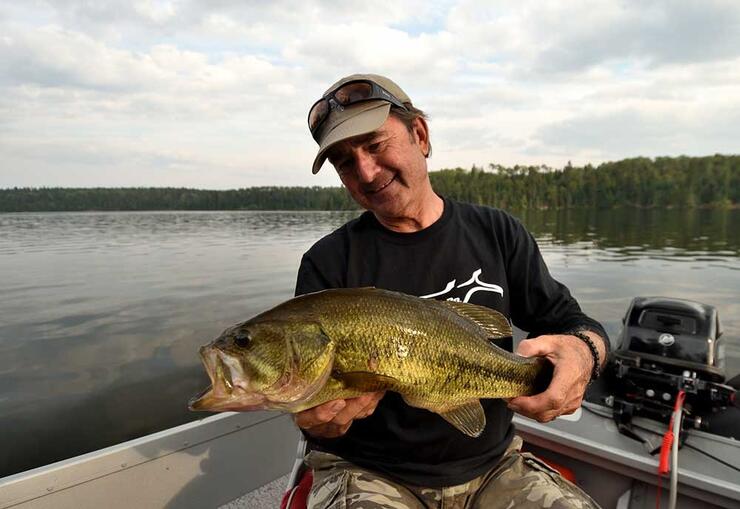
Try it on your next Northern Ontario bass adventure and you’ll quickly discover why a Texas-rigged soft plastic worm is timeless…and catches the biggest bass that swims.