
Youngs Wilderness Muskies
A trip to Lake of the Woods never disappoints The Musky Hunter
By Jim Saric




Depending on where you ice fish in Ontario, the season is officially underway. I was jigging for stocked trout on a small lake near Nestor Falls the other day and had six inches of solid safe black ice beneath my boots. A little further to the east, over near Dryden, folks are hauling out their permanent shelters, towing them behind quads and snowmachines. And it is only going to get livelier in the days ahead.
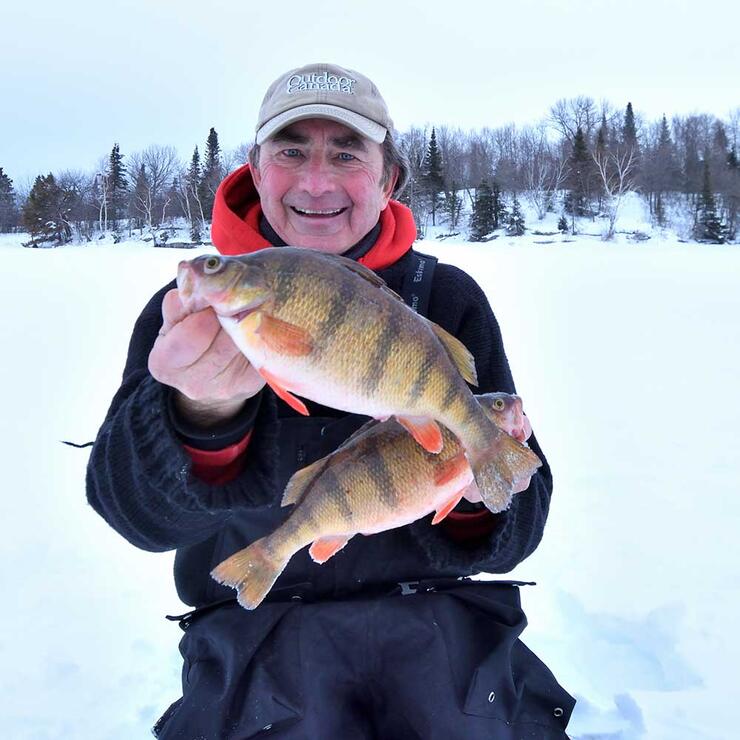
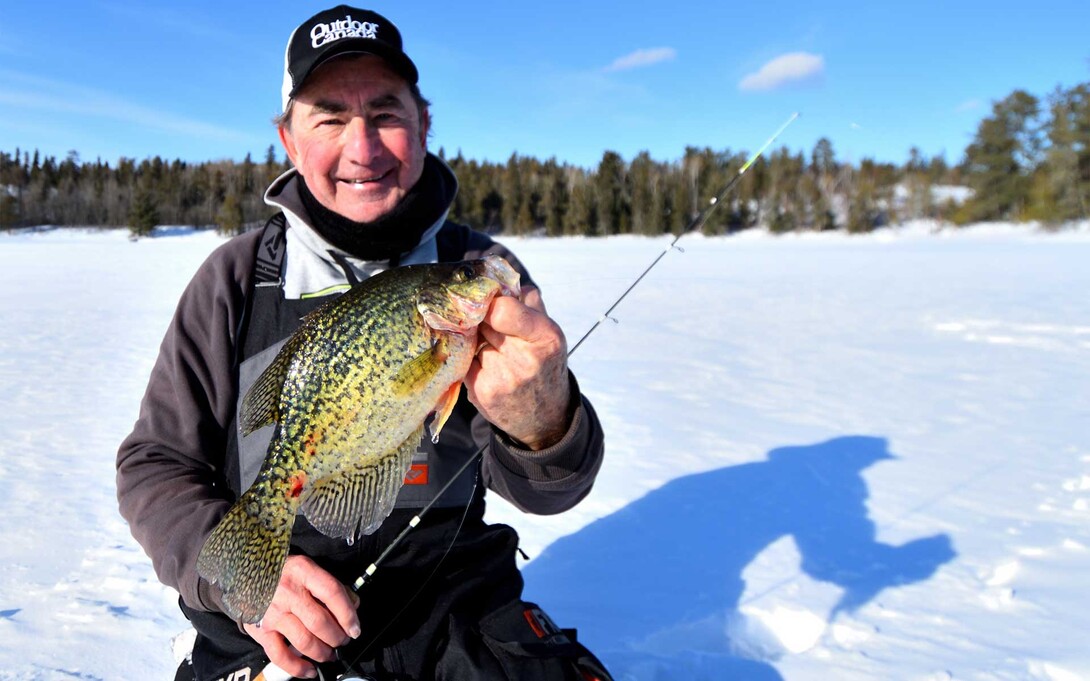
In anticipation of some of the finest ice fishing to be found on the planet, my grandson Liam and I presented seminars recently at The Ultimate Ice Fishing Show in Toronto. The crowds of keen ice anglers who attended were amazing and one of the hot topics in the question-and-answer sessions that followed each presentation was: How can I catch more and bigger panfish — yellow perch, black crappies, and bull bluegills — this season?
The answer may surprise you. The best way to catch panfish is getting inline with fluorocarbon. By that, I mean spooling fluorocarbon line on one of the new inline-style reels that have revolutionized how we ice fish for panfish in Ontario.in line
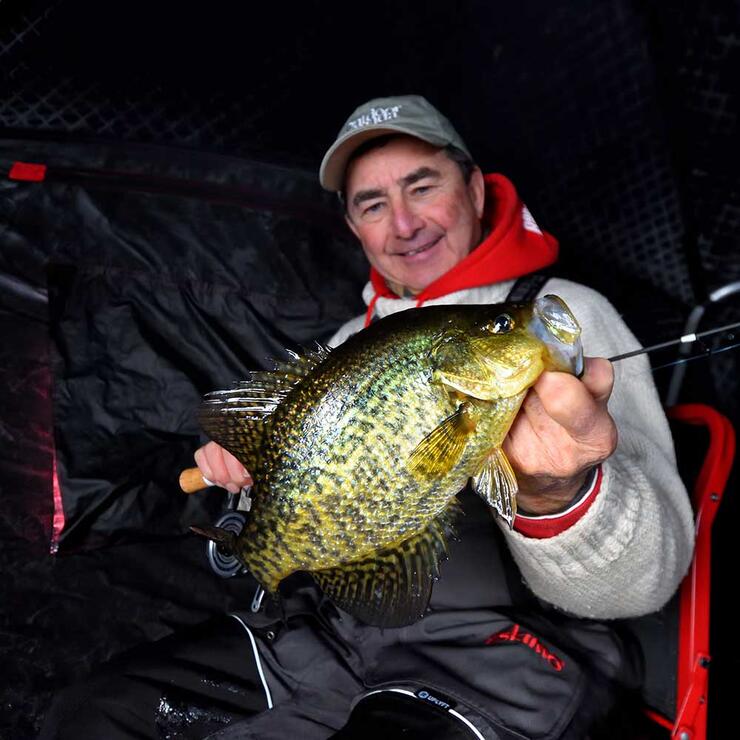
Now, I know what many of you are thinking. You’ve tried fluorocarbon line in the past and the coily, wiry unmanageable stuff jumped off the spool and created an ugly mess. That can happen when you put it on a spinning reel, but it doesn’t occur when you use one of the new in-line ice fishing reels like 13 Fishing’s hugely popular Black Betty. The reason is that the spool on the reel is the same relative size and shape as the spool of line. So, when you transfer it across, you’re storing it in the same position. Understand what I am saying? Because the spool on your inline reel is much bigger than the one on your spinning reel — and shaped like the spool of line — you’re not introducing any new curves or bends and thus, reducing the likelihood of coils.
In addition to this huge advantage, since you spool the line directly onto the reel — and any fish that you catch pull it directly off — you eliminate line twist. So, for the first time ever, really, you can take advantage of the many benefits that fluorocarbon lines offer to catch more and bigger panfish in Ontario.
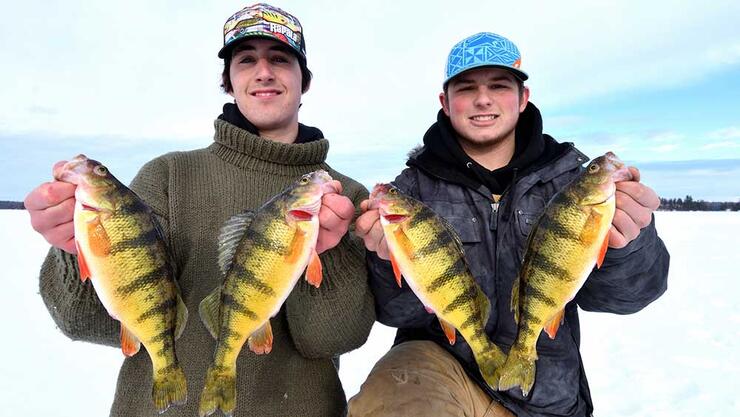
Because your line is spooled directly onto an inline reel you totally eliminate line twist.
The first advantage of fluorocarbon is that it doesn’t soak up and retain water the same way that monofilament and braided lines do. It is a much harder and less porous material, so water beads off it instead of creating a candle and icing up inside your guides. On a cold winter day, this is a blessing beyond belief.
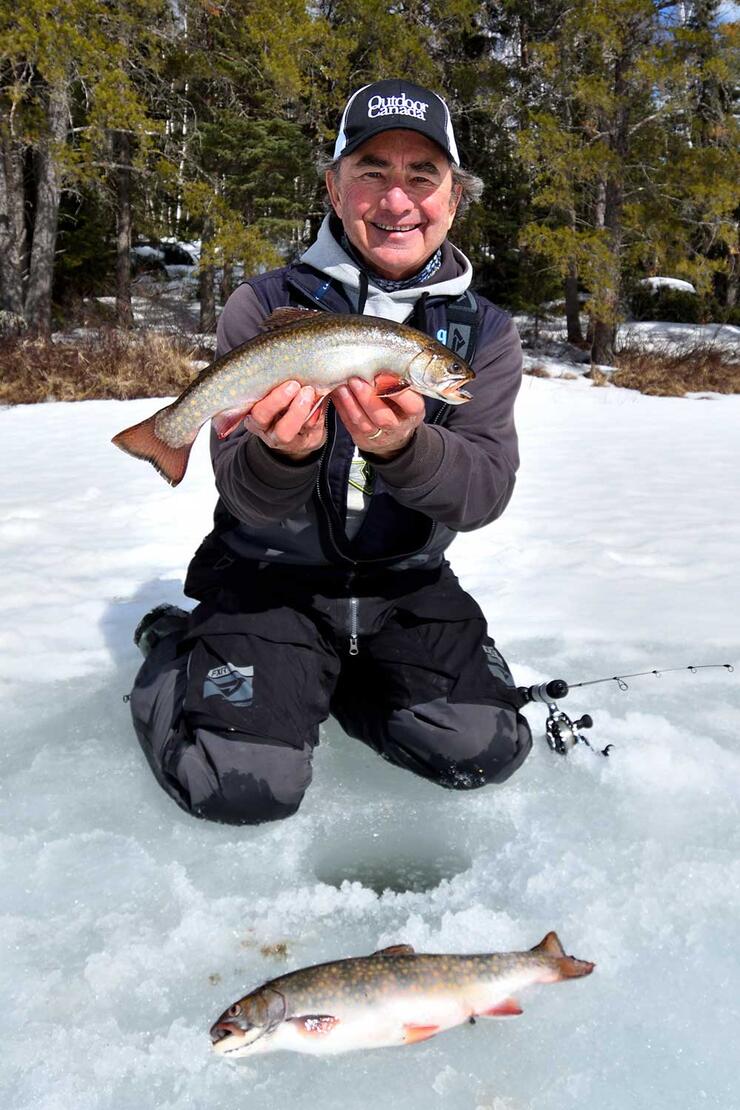
In addition, unlike monofilament and braided lines that are light and float on the surface, fluorocarbon is heavy and dense, so it helps you get your small lures down quickly to the fish. I love the fact, too, that when I am ice fishing with fluorocarbon line it tends to fall straight down from the tip of my rod into the water.
And having essentially the same refraction index as water, fluorocarbon is clear and thus, invisible to the fish. When they’re being particularly obstinate I have seen this make a big difference, while at other times it has allowed me to use a slightly heavier line — say four-pound test instead of three — and gain the strength benefit at no cost to visibility.
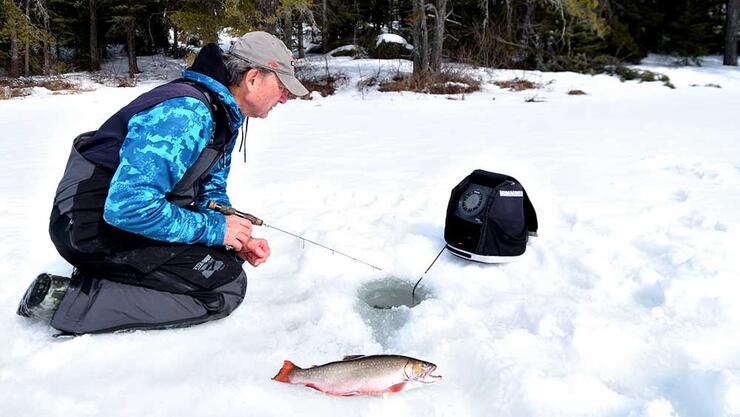
Fluorocarbon is invisible under water so it is the line to use when the fish are being obstinate.
Last, but by no means least, fluorocarbon line is low stretch, so it is sensitive, letting you feel a crappie sneeze beside your lure. But it still stretches a little to keep a big bull bluegill or fat jumbo perch pinned when you’re using a short ice fishing stick that might recover too quickly.
What it all means, fortuitously, is that for the first time ever, you can ice fish for panfish with maximum efficiency and effectiveness — in Ontario — where your ice fishing dreams come true.
See you out on the ice.


