
Fishing and Foraging
Add some fresh foods and forage to your fishing adventures!
By Alyssa Lloyd







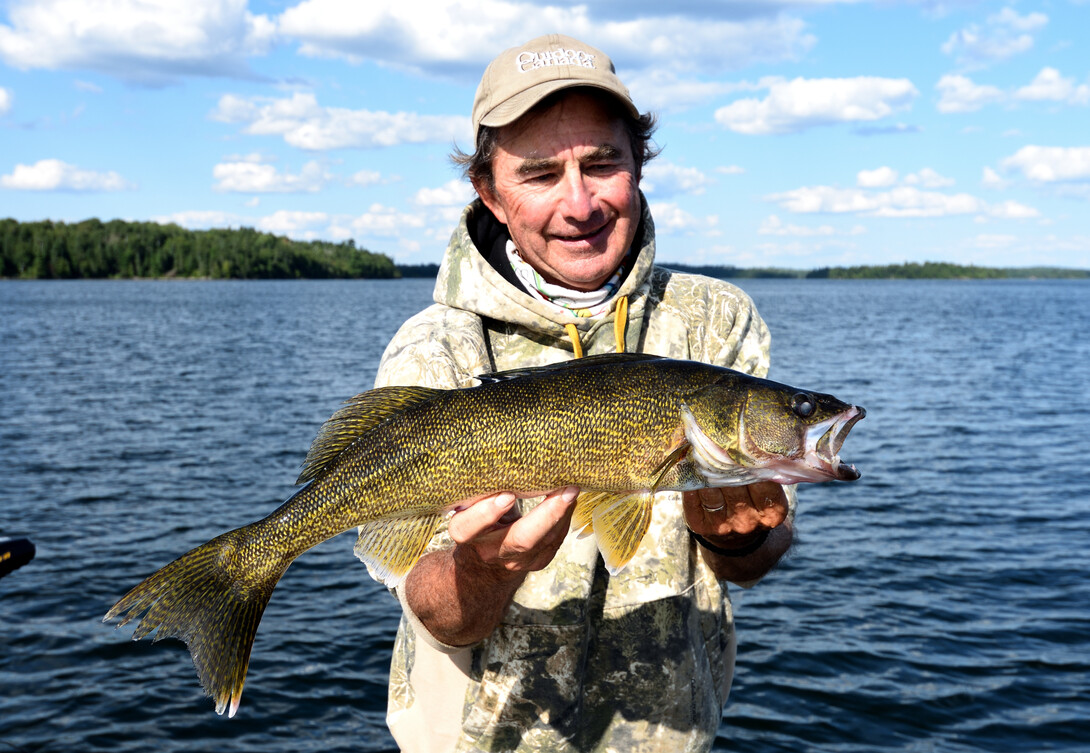
While I was out walleye fishing in the spring, I saw the first mayflies of the season gracefully lifting off the water in Northwestern Ontario's Sunset Country. I've always thought we should call them Juneflies because the month of June brings forth massive hatches of majestic flies across all of Northern Ontario.
I say majestic, too, because everything about these regal bugs is good news for walleye and walleye anglers.
For starters, mayflies don't have a mouth—their sole mission at the end of their lives is to mate, lay their eggs on the surface of the water and then die—so they don't bite.
Better still, however, is the fact that Ontario fisheries managers have discovered that walleyes hatched in even-numbered years, like this one, are far more likely to survive than had they been born last year or next year. In other words, a year bearing an odd number.
The reason, as I have mentioned in the past, is that the life cycle of the handsome mayfly Hexagenia Limbata stretches over two seasons. For most of that time, the creatures live unseen as juicy, nutritious bite-size nymphs at the bottom of our lakes, before finally hatching as the adult flies that we see for a few brief days each June.
Amazingly, however, the mayfly hatch is so pronounced in even-numbered years that the billions of nymphs—there can be as many as 120 per square metre—crawling along the lake bottom act as a buffer crop that is devoured by almost every fish in the lake. As a matter of fact, yellow perch, northern pike, and adult walleye so relish eating mayflies that they turn their attention away from munching on small young-of-the-year walleyes.
But the billions of mayfly nymphs scurrying across the bottom—walleye peanuts, I like to call them—can spell trouble for the walleye angler looking to tempt the fish to bite their lures. I mean, that is one heck of a lot of competition.
Invented by walleye angler and guide Dave Spaid back in the 1990s, Slow Death was designed to offset and counter the slowdown of the walleye bite as we transitioned from spring to summer. It involves removing the blade from a traditional crawler harness and using a #1 or #2 True Turn hook that, when you thread on half a nightcrawler, causes the bait to corkscrew and spin when you troll it slowly behind a bottom bouncer.
When walleye anglers tried the technique in Northern Ontario, they discovered not only that it worked extremely well, but also that it mimicked a hatching mayfly.
Part of the reason for the effectiveness of the Slow Death technique is that you can troll the spinning crawler nub much more slowly than you can pull a standard crawler harness. So you can put it into cracks and crevices, nooks, and crannies that walleyes are prowling.
I've long believed, too, that the pinched-off piece of nightcrawler exudes a special scent that walleye find particularly taste-tempting and delicious. In other words, finger-lickin good.
Having said that, however, the one downside of using a real nightcrawler is that when you feel a walleye hit your hook—many companies make bent Slow Death ones these days—and you miss it, it almost always rips apart the bait, causing you to waste time putting on another chunk.
For this reason, I stick almost exclusively these days to using soft plastic scented worms. They hold on to the hook much better and allow a walleye to strike the bait repeatedly before you finally hook it, especially if you leave a short tag on the knot you've used to tie on your hook and then carefully thread the head over the connection. In this way, it functions as a killer bait keeper.
Oh, yes, one other critical attention to detail that will pay big walleye rewards is to always inspect your Slow Death rig alongside the boat, before you put it down, to ensure it is spinning absolutely perfectly. You'll be amazed how adjusting the position of the head or trimming a fraction of the tail will increase or decrease the spin. So keep adjusting and experimenting until you have it corkscrewing through the water properly.
And a corkscrew is what you're going to need when you pop open a bottle of champagne to celebrate another splendid day on the water in Northern Ontario, catching walleyes feeding on majestic mayflies.