The First Ride. The Last Ride. Snowmobiling’s Two Most Unforgettable Days in Northern Ontario
Every snowmobile season has two defining rides: the one that brings you back to winter, and the one that quietly lets it go. Which one stays with you most?
By Virgil Knapp
Virgil Knapp is a freelance motorsports photographer and writer.
March 20, 2026
Every winter has a beginning and an end, and snowmobilers feel both of them long before the mileage shows it. The first ride of the season starts weeks before you ever fire up the engine. It lives in the forecast you check too often, the early photos of groomers heading out, and the moment a few OFSC trails finally flip from red to green on the online map.
In Northern Ontario, the last ride arrives more quietly. Warmer sun on the dash, bare patches sneaking into familiar corners, long shadows stretching across a trail that suddenly looks tired. You rarely realize it is the finale until you are loading up the sled, brushing more gravel than snow off the skis.
Photo credit Virgil Knapp
The First Ride: That First Day Back on Snow in Northern Ontario
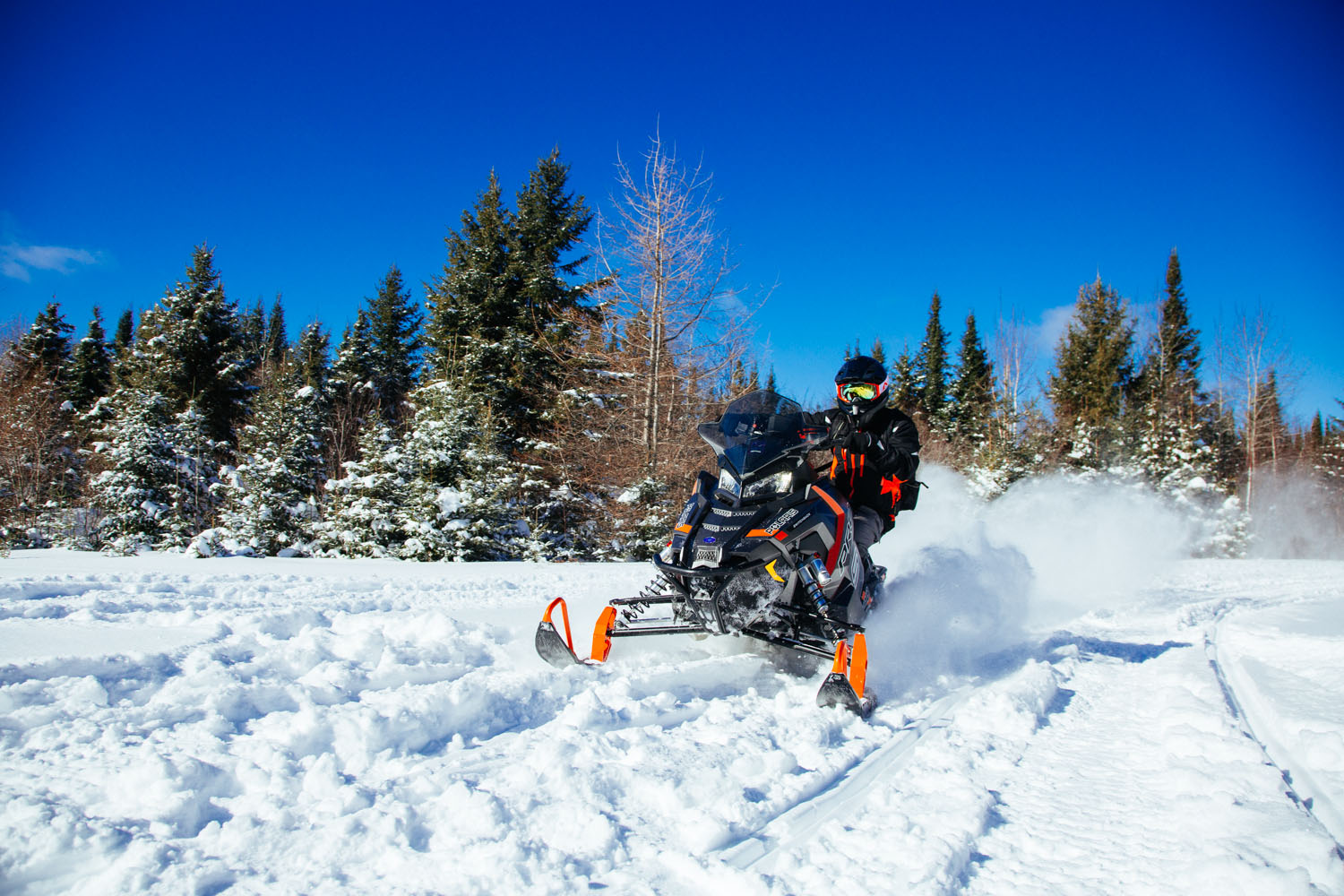
On that first ride, everything feels sharp. The air bites harder when you step away from the truck. The sled sounds louder and cleaner after months of sitting still. Even a routine junction looks new under fresh snow and low winter light. You fuss with straps, wrestle with stiff zippers, and second‑guess your layering until the first 20 kilometres settle you down. Out on the trail, every vibration stands out and every hint of two-stroke exhaust hangs in the cold longer than you remember. Your whole body is relearning what winter feels like.
Early Season Snowmobiling in Northern Ontario: What To Expect on the Trails
Early-season conditions are a mix of excitement and caution. The base is thin in spots, with rocks and stumps hiding just under the powder, especially on corners, hills, and open fields. Lakes may not be staked yet, so you route around them on land until local clubs officially open the crossings. Tracks and engines are prone to overheating when there is more ice than loose snow, so you keep one eye on the temp gauge even as you enjoy the novelty of finally being out.
The payoff is the quiet: a handful of sleds at the parking lot, long stretches of untouched corridor, and the feeling that you are getting away with something while everyone else is still waiting.
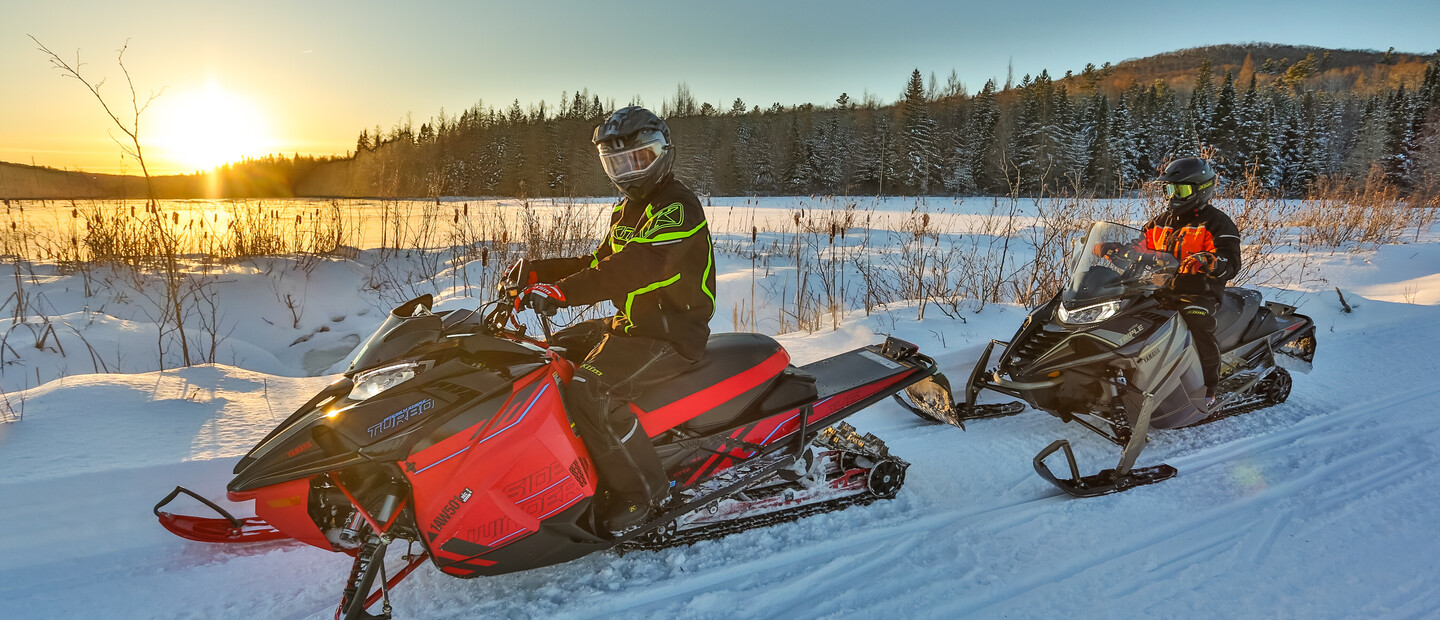
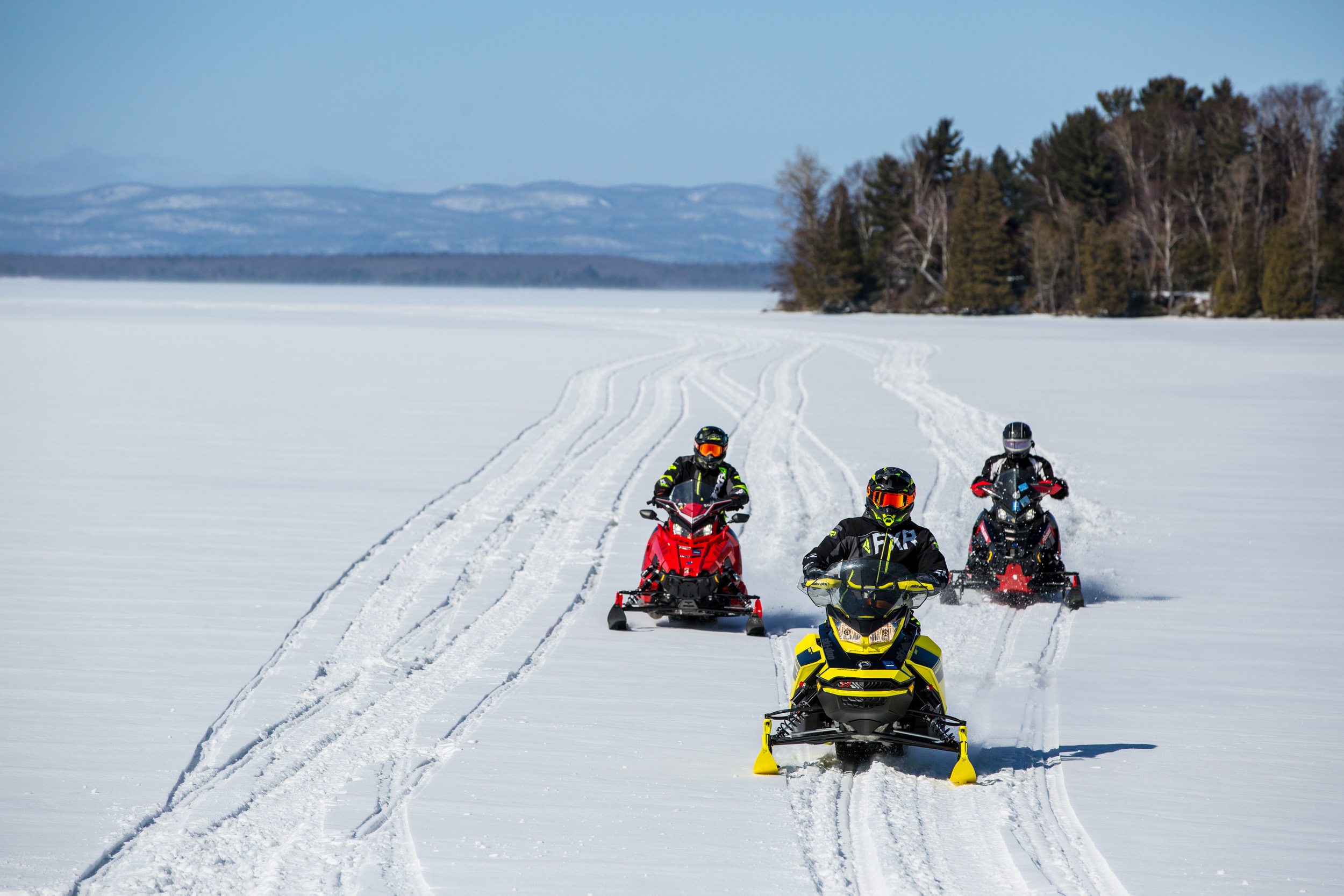
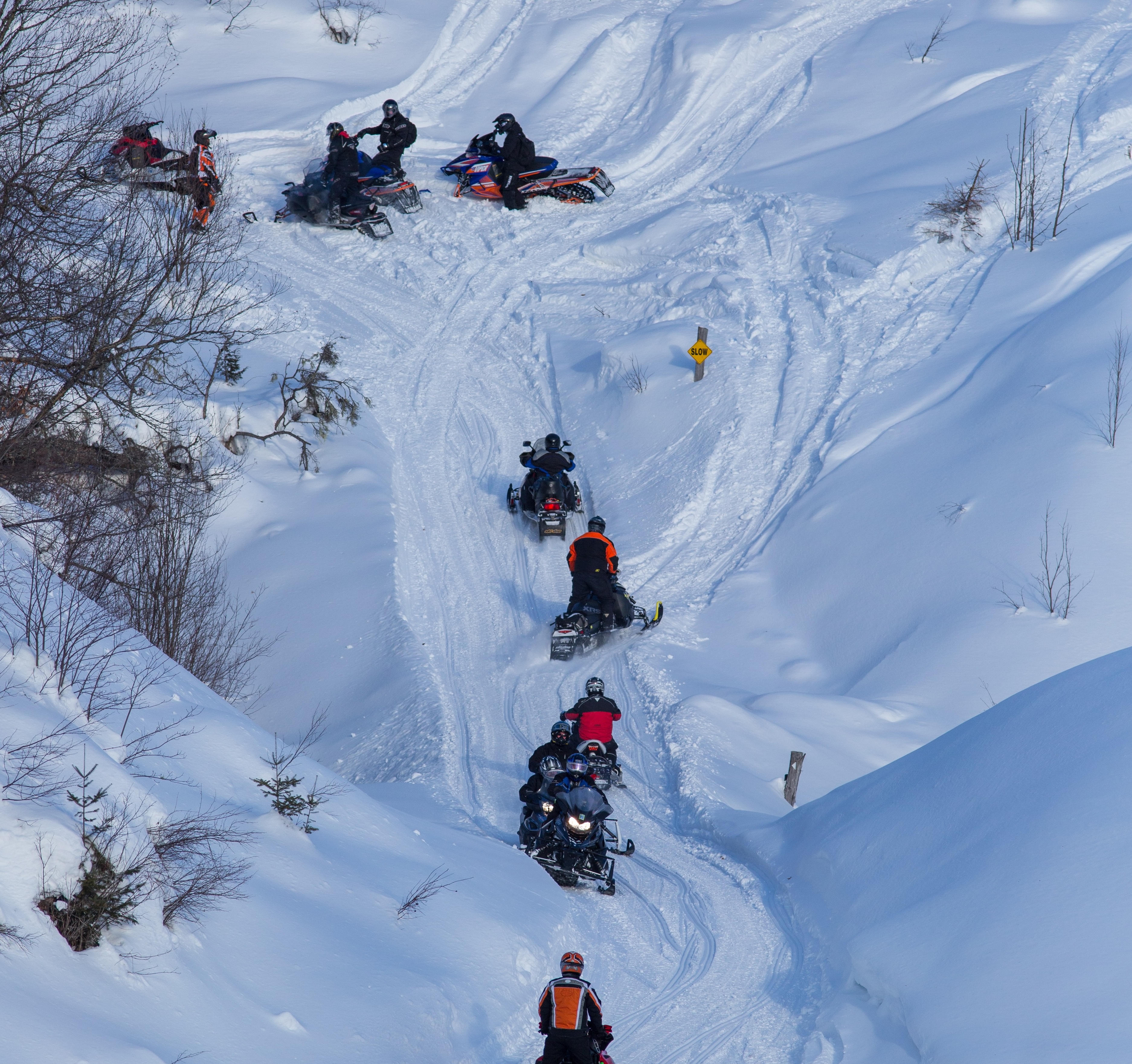
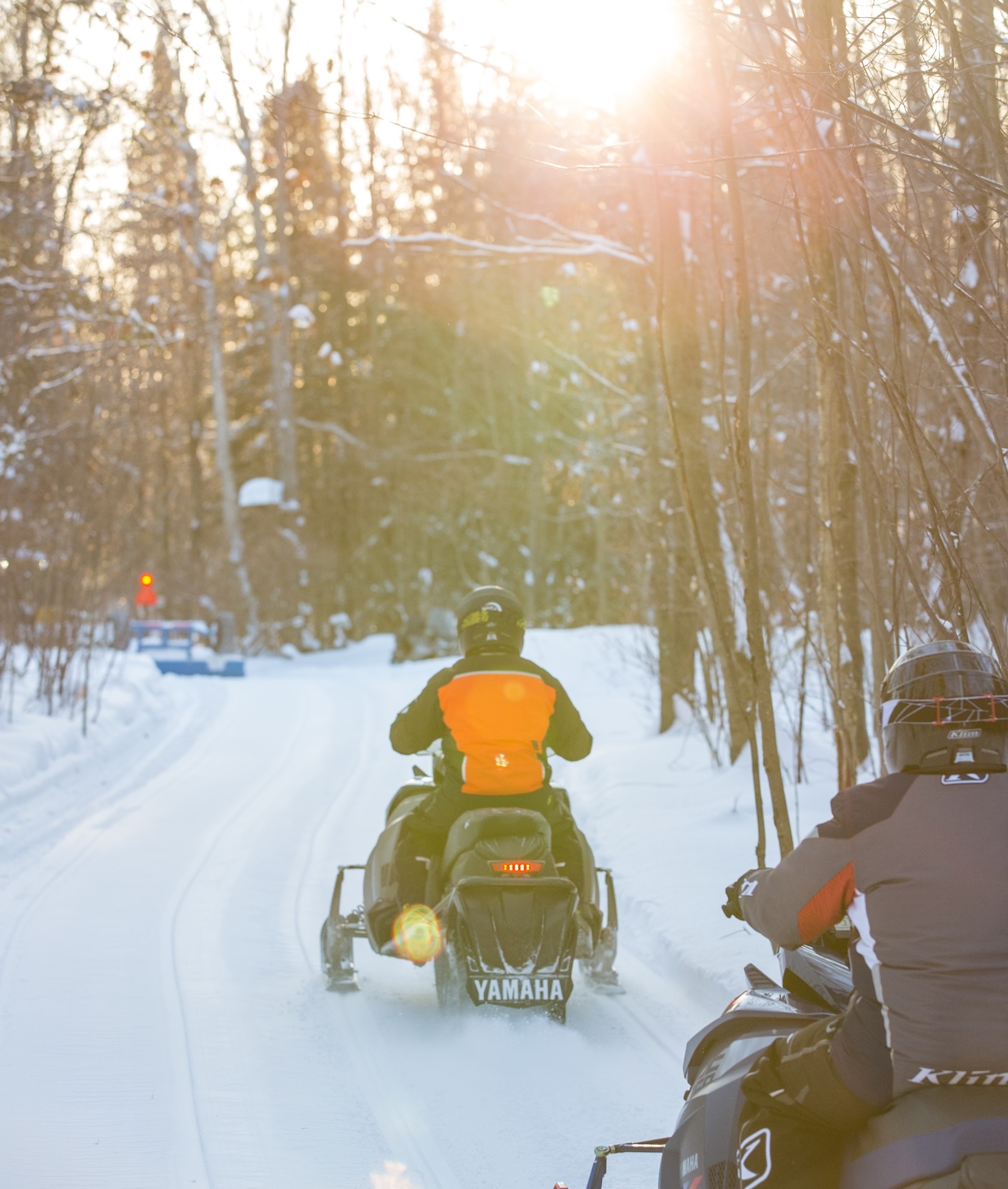
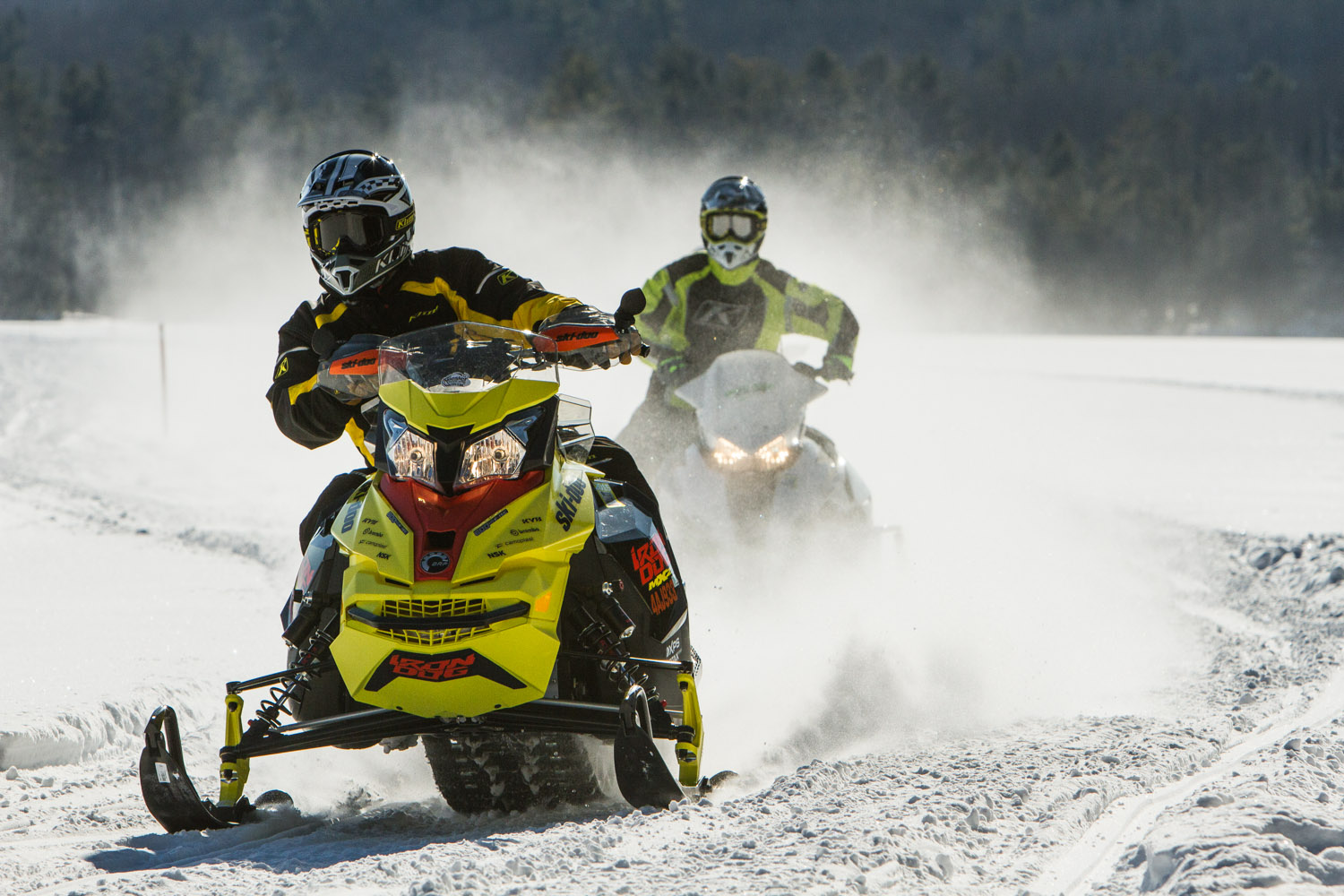
While mid-winter has the best snow conditions, you’ll find the most traffic out on the trail. / Taking advantage of the extra sunlight afforded by late winter riding. // Photo credits Virgil Knapp
The Last Ride: When Northern Ontario Trails Begin To Let Go
By the time the last ride rolls around, the mood has shifted. The sun is higher and sticks around longer. Corners that were perfectly banked in mid‑winter are pushed wide and dirty. Road crossings turn to mud and slush, forcing you to pick your way across just to get back onto the white stuff. Lakes are still monitored and marked by clubs, but you pay more attention to shoreline cracks, slush holes, and ice reports, knowing the season's grip is starting to loosen. The sound of the track changes too, droning deeper through wet, heavy snow, like the sled is as tired as you are.
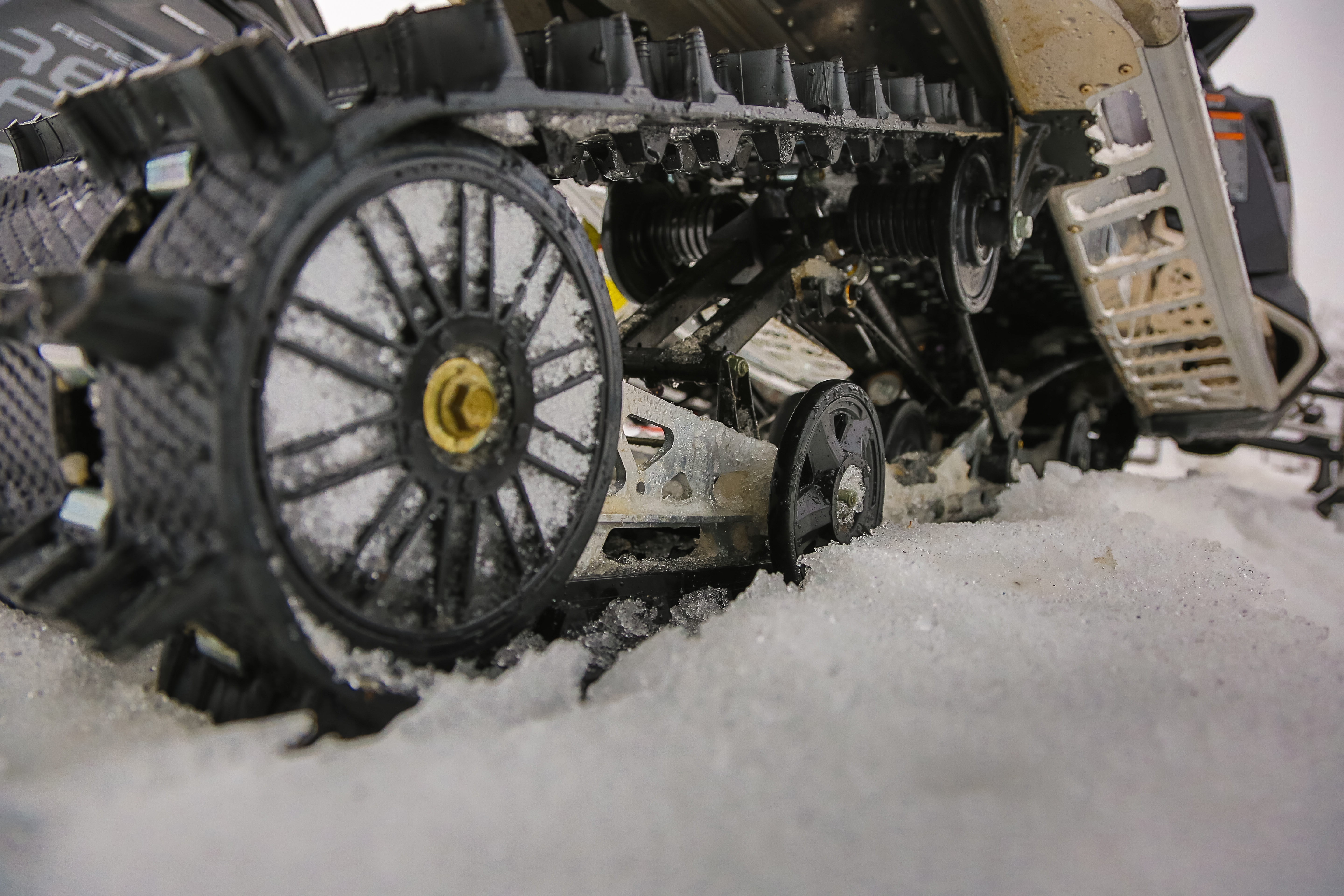
Keeping the track cool in late-season slushy snow is key. // Photo credit Virgil Knapp
How To Plan Early- and Late-Season Snowmobile Trips in Northern Ontario
Planning those bookend rides becomes its own ritual. Early in the winter, you watch the OFSC Interactive Trail Guide like a hawk, looking for districts that open first and being picky about where you commit to a long day. You keep loops shorter, build in backup plans, and treat every closure sign as non-negotiable while the base is still fragile.
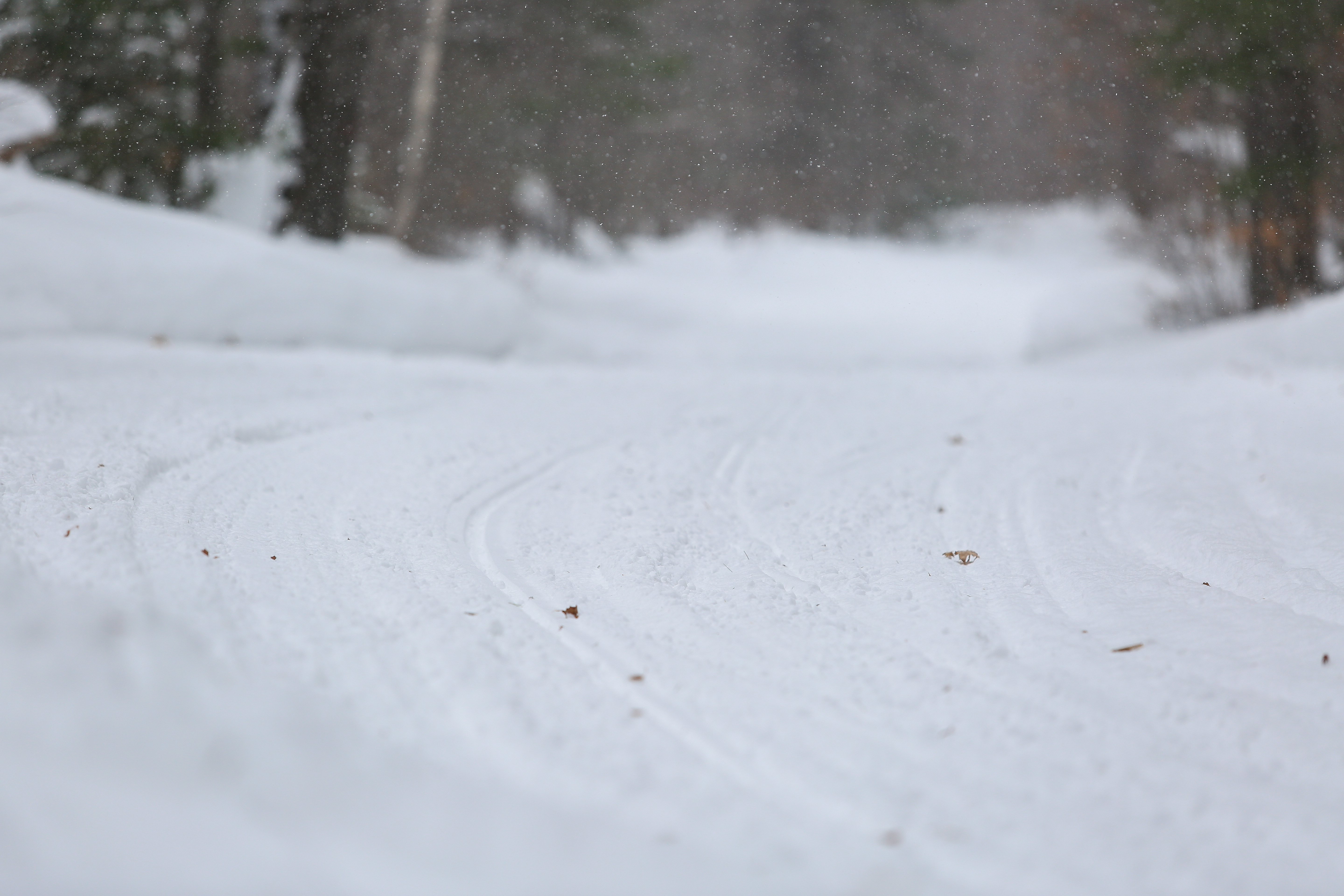
A healthy deep base typical of January and February. / Extending your season late will provide warmer riding temperatures with obvious drawbacks in ice depth. // Photo credits Virgil Knapp
Early Season vs. Late Season Snowmobiling in Northern Ontario: Which Kind of Rider Are You?
Ask around any trailhead, and it becomes clear that riders splinter into two camps. Early-season diehards live for that first green line on the map. They are willing to trailer farther north, put up with a few bumps, and ride colder days if it means being the first ones back on snow. For them, the best time to snowmobile in Northern Ontario is “as soon as the trails open,” even if conditions are limited.
Others are mid-winter and late-season loyalists. They would rather wait for full coverage, deeper base, and a network that is mostly open from end to end. These riders love February powder, long daylight, and the easy confidence that comes with well-established ice and predictable grooming. For them, the last ride of the year is more of a casual victory lap than a desperate grab for one more day of riding.
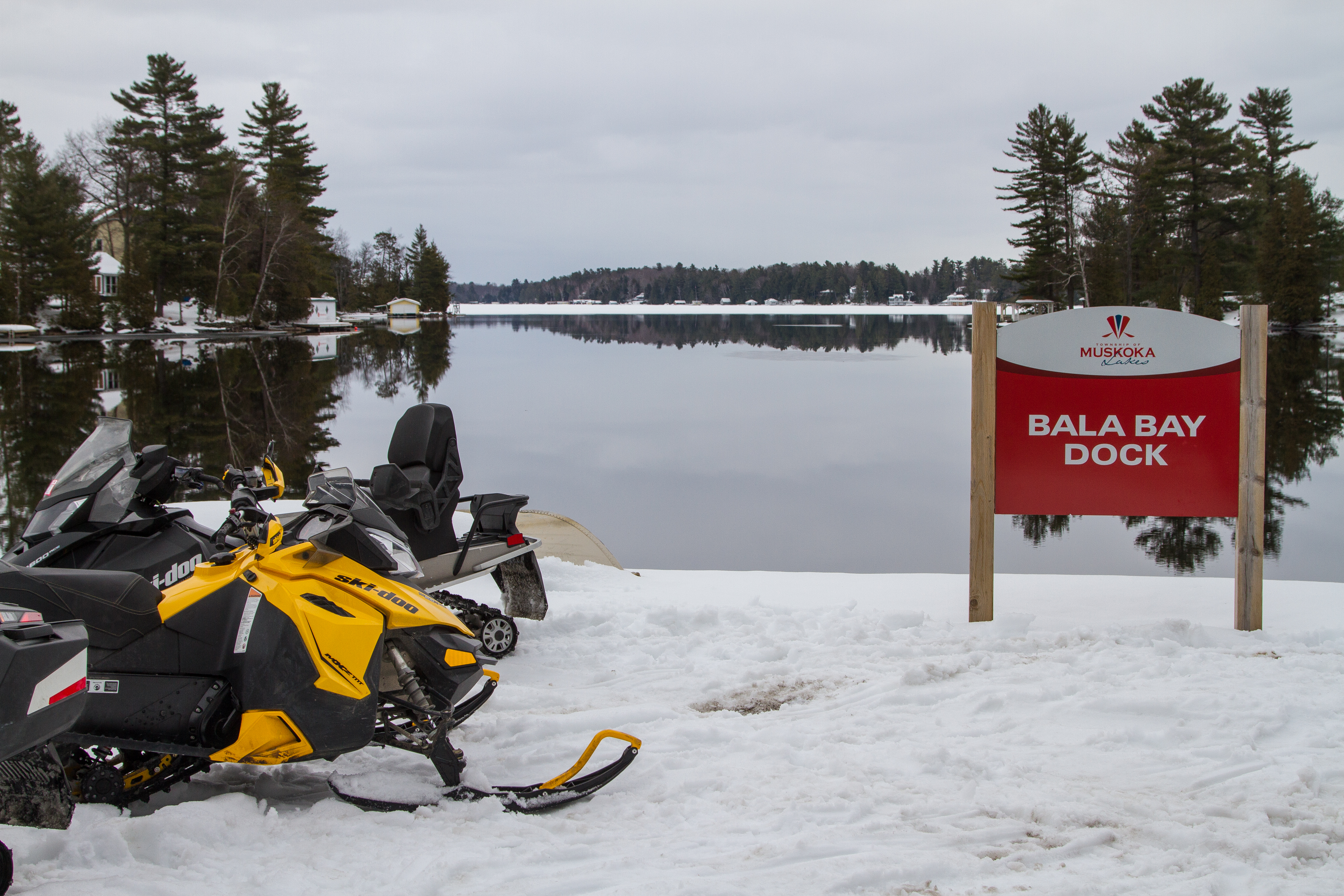
Photo credit Virgil Knapp
Most of us land somewhere between: we remember the first ride for the butterflies and the last ride for the long shadows and the way your sled sounds packing slush instead of powder. Those two days bookend everything else the season throws at you. You might forget exact distances or which weekend you rode which loop, but you never forget what it felt like to finally get back on the trails, or what it felt like to shut the trailer door on the sled and know that, for this year at least, it is over.
The Last Ride Isn't Final
The last ride does not have to feel like the end. It is just another marker, the same way the first ride is: a reminder there is always a stretch of trail you did not quite reach, a loop you saved for better snow, something left unfinished as you load up for the drive home—and that is usually the part that stays with you long after the season is over.