Top Three Ontario Musky Waters
Where to catch the fish of 10,000 casts.
By Jim Saric








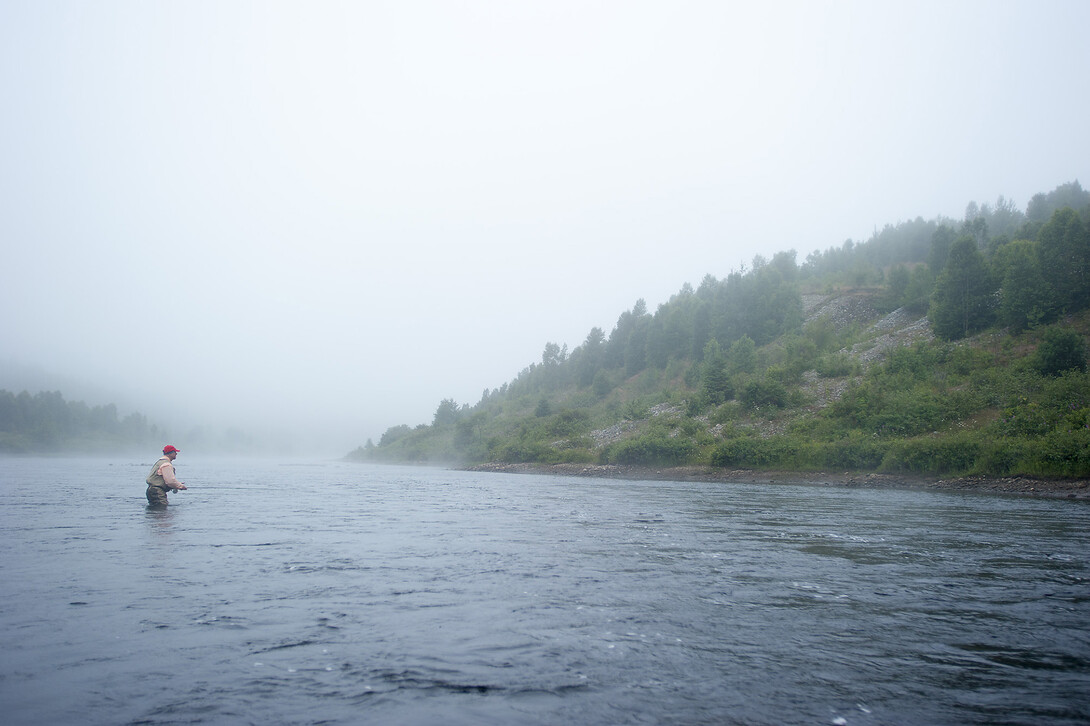
I suspect there are quite a few keen anglers who have shied away from fly fishing due to some well-deserved preconceptions about the activity. We all have our own idea of what constitutes a successful fly angler. For some, it means having an enviable collection of hand-tied flies and knowing the Latin names of the creatures they represent. Others see success as the accumulation of high-priced gear. Still, others see it as the ability to lay out long roll casts into a strong headwind. However, such measures of success are precisely the sorts of things that keep many would-be fly anglers several boat lengths away from the sport. This is a shame because the path to becoming a successful fly angler need not be strewn with lofty goals and gear.
I choose to take a much more down-to-earth approach to success; one that makes fly fishing a lot more accessible to the average angler. The successful fly angler is simply one who has the gear and the skills to catch fish on a fly and has fun doing it. Spend as much as you want for a functional fly rod/reel setup – prices range from reasonable to astronomical – then follow these tips on how to acquire the skills that will make you a successful fly angler:
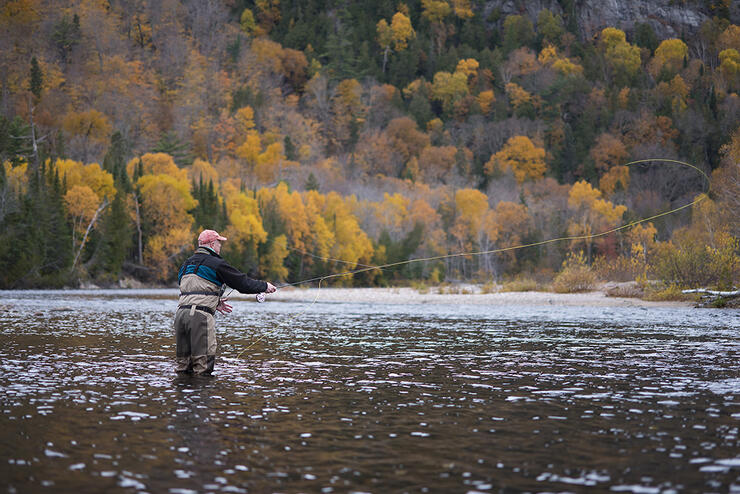
Fly casting is not difficult but it’s very different from casting a baitcaster or spinning reel in that it’s the weight of the line that propels our offering to the fish not the weight of the lure. In fact, not tying on a fly during yard practice will avoid hooking trees, clotheslines and the back of our heads during the early stages of developing our fly-casting skills. Simply find an open area and work on casting rhythm and distance. A half-hour casting in the yard can save hours of grief on the water.
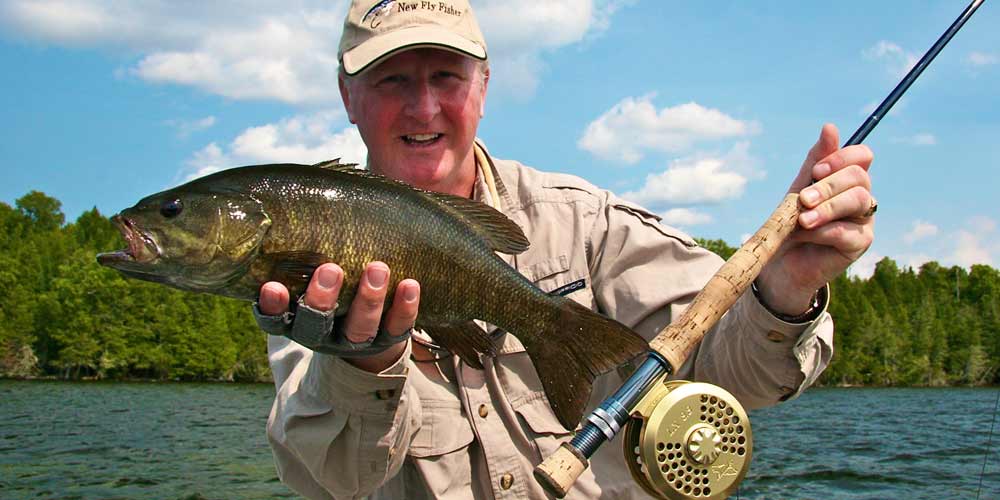
Sure, casting is poetic, contemplative, beautiful and relaxing but it all wears a little thin when we’re not catching fish or have no hope of catching fish. Angle waters that we know have good fishing. Fortunately, the options for fly anglers in Northern Ontario are vast, and a bit of research can pinpoint waters with eager fish. Smallmouth bass is a prime candidate and stocked brook trout or splake lakes are great premiere fly fishing destinations.
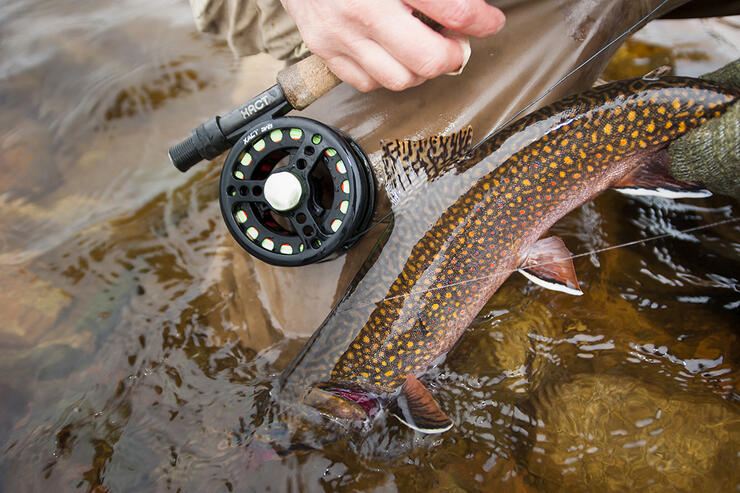
Go when the fish are biting. This will vary depending on where you live and if you fish inland lakes or rivers. As a general guide, the first waves of warm weather in spring tend to get insects hatching and put trout on the feed. While large rivers can be good all summer inland lakes tend to slow down through mid-July and August but fortunately, that’s when smallmouth bass step up to pick up the slack. The point is to go fly fishing when there’s the best chance of hooking up. One obvious example is during the mayfly hatch, which usually occurs in June throughout Northern Ontario.
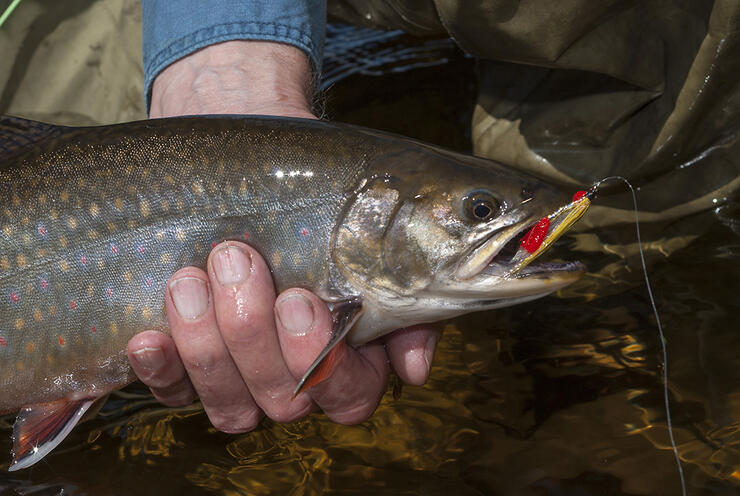
If we’re serious about catching fish on a fly then only bring fly fishing gear. Too many times we’ll give fly fishing a hasty attempt and then reach for our familiar and trusty spinning gear. Having only fly gear will ensure we make a valiant attempt and we might just be surprised at the results. If fishing in close quarters with others make sure they are in the same groove; either you both fly fish or both spin cast. The two don’t go well together because spin casting is a much faster way to cover water while fly fishing is a bit slower and methodical.
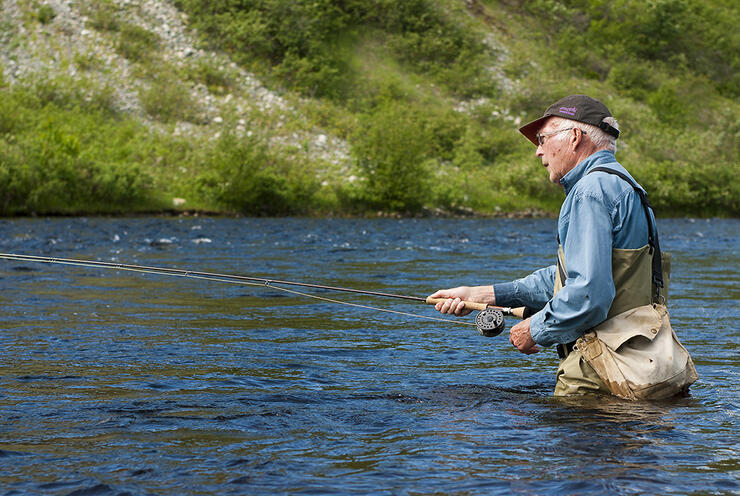
Seeing a trout or bass rise to the surface is a gift because it tells us there’s at least one fish around, and where it is. It also tells us they are feeding and looking up. Examining any flies we see on the surface will help us to choose a reasonable imitation from our fly box. Move within a cast’s length of the rising fish and deliver the fly. Sometimes the fish will suck it imperceptibly from underneath, other times it will porpoise and side-mouth our artificial insect, other times it will jump well out of the water and crash down on our fly. There’s always the chance it won’t hit at all but be sure to try several different patterns before moving on.
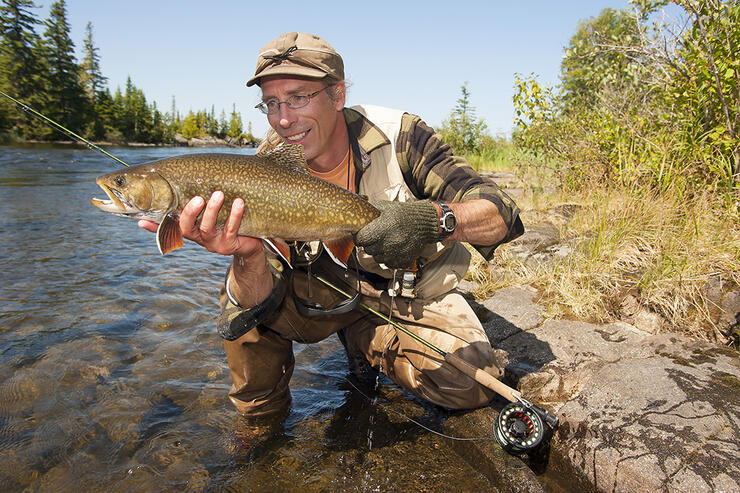
Maybe not the most exciting, hands-on, way to fly fish but it can be effective, especially with a heavier fly and a sink tip line. Just tie on a minnow-imitating streamer fly, let out a pile of line and paddle slowly around a lake’s perimeter, twitching the line every now and then. Trolling is a great way to cover water and a relaxing break from casting and retrieving along the shoreline. It can also be very effective at catching fish and works as a search pattern to locate hot areas.
After catching our first fish on a fly, there’s no looking back.