Winter Fish Scents
How to Use Fish Scents When Ice Fishing
By Gord Pyzer














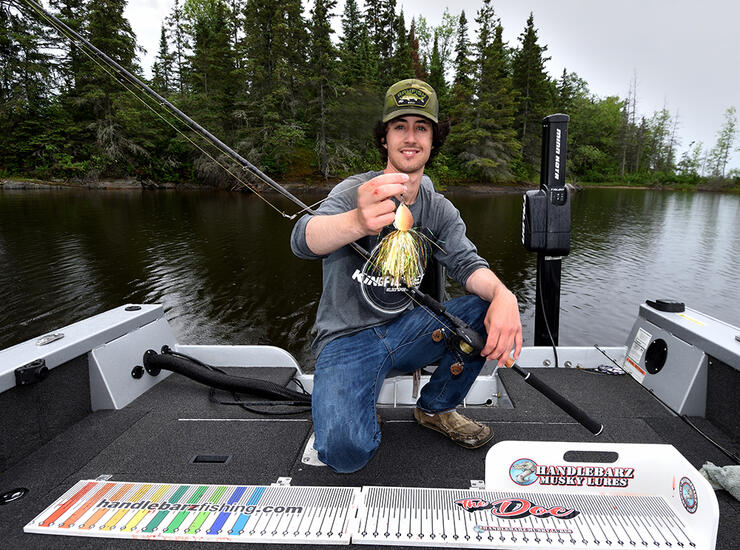
It's a rare occurrence when the pieces of the puzzle fit together quickly, neatly and easily. Especially, if you're a muskie angler. Even when you're fishing in world-class water, which Ontario has in embarrassing abundance, the fish are still few and far between. Fortunately, the recent Northern Ontario musky season opener was one of those puzzle-solving exceptions. And the lessons my grandson Liam and I learned can hopefully be applied to future big-toothy-critter-chasing expeditions.
It started, surprisingly enough, with loons.
"Have you ever noticed," Liam asked, as he fired out a big, double-bladed, gold glitter-coloured Handlebarz inline spinner, "how often we see a fish follow our lures when there are loons feeding around us?"
Wow, I thought, the kid is onto something because while I love seeing schools of baitfish on the sonar screen when I am muskie fishing, I had never really thought about how loons fit into the picture. Yet, in several of the spots we fished on the season opener, the birds were diving and feeding around the boat. In fact, at one calm point, I freaked out when I thought I spotted a muskie following my lure, only to see the folded-back wings and black-and-white-polka-dotted feathers on the back of a loon chasing it. The bird popped up less than five feet from the front of the boat and let out a blood-chilling screech.
"I think he is giving you the gears," Liam chuckled.
But the fact remains that fish-feeding birds, like loons, are often as good, and many times better, than your sonar at telling you whether there is muskie food in the area. I say better because if you spot three or four birds, spread out across a fairly large area, and they keep putting their heads underwater and diving down, you can be sure they've found a school of emerald shiners, yellow perch, recently-hatched ciscoes or smelts without even turning on your unit.
Now I'm sure you're thinking, muskies don't waste their time eating the same little baitfish and minnows that loons do. And it is true–they don't. But walleye, bass, perch, crappies, and small pike do. It is elemental food pyramid stuff.
In fact, I remember a few years ago, musky fishing with a good friend, John Anderson, who owns the Ottawa River Muskie Factory, and I could hear John's heart palpitating when he spotted a massive school of shiners below the boat. "Emerald shiners drive fish behaviour in the Ottawa and many other river systems," he said with a smile. "Everything eats emerald shiners, and muskies eat everything."
So, that was the first piece of the opening day puzzle we put into place. The second was when I noticed it was 11:30 AM. "The MHTV app says there is a 90-percent peak feeding period occurring between 12:00 o'clock, and 1:00 o'clock," I said to Liam. "Then the activity level is supposed to plummet dramatically. Where do you think we should be when the magic hour rolls around?"
"Remember that spot where you raised the giant on opening day last year," he replied.
"I sure do," I said. "That was one of the biggest fish we saw all season, and it has haunted my dreams ever since."
"Let's go there," he smiled.
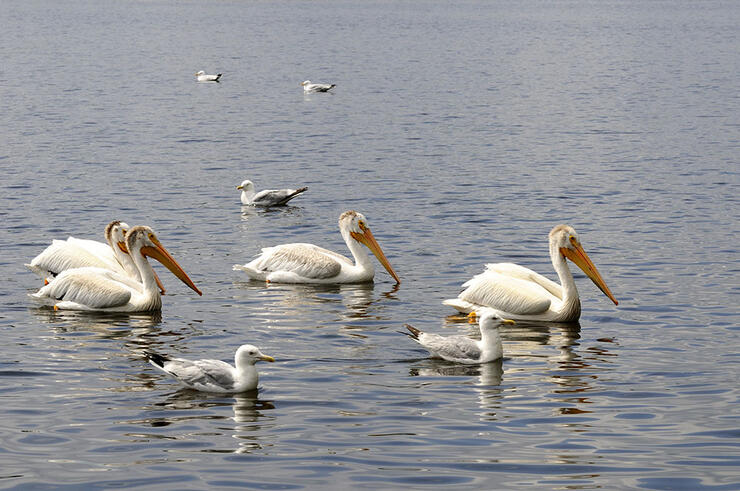
And so, believe it or not, we motored across the lake so that we could fish our potentially best spot during the peak period of the day. And guess what we spotted before the Kingfisher even came off the plane and dropped the electric trolling motor, and picked up our rods? Yep–a pair of feeding loons and at least eight or nine white pelicans.
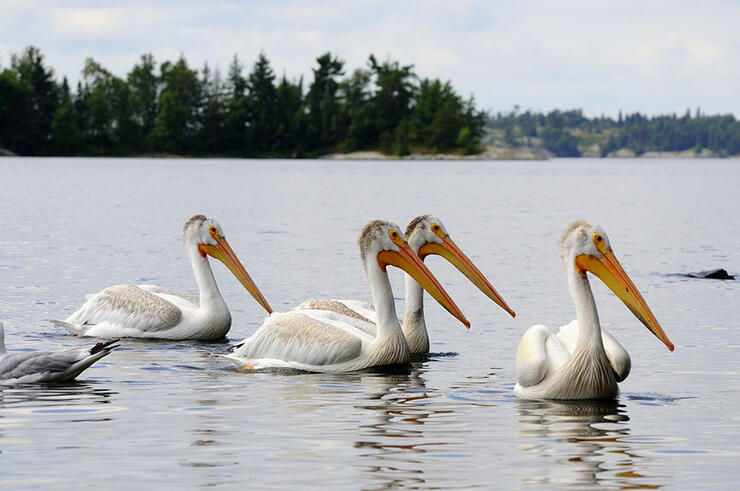
Could it get any better?
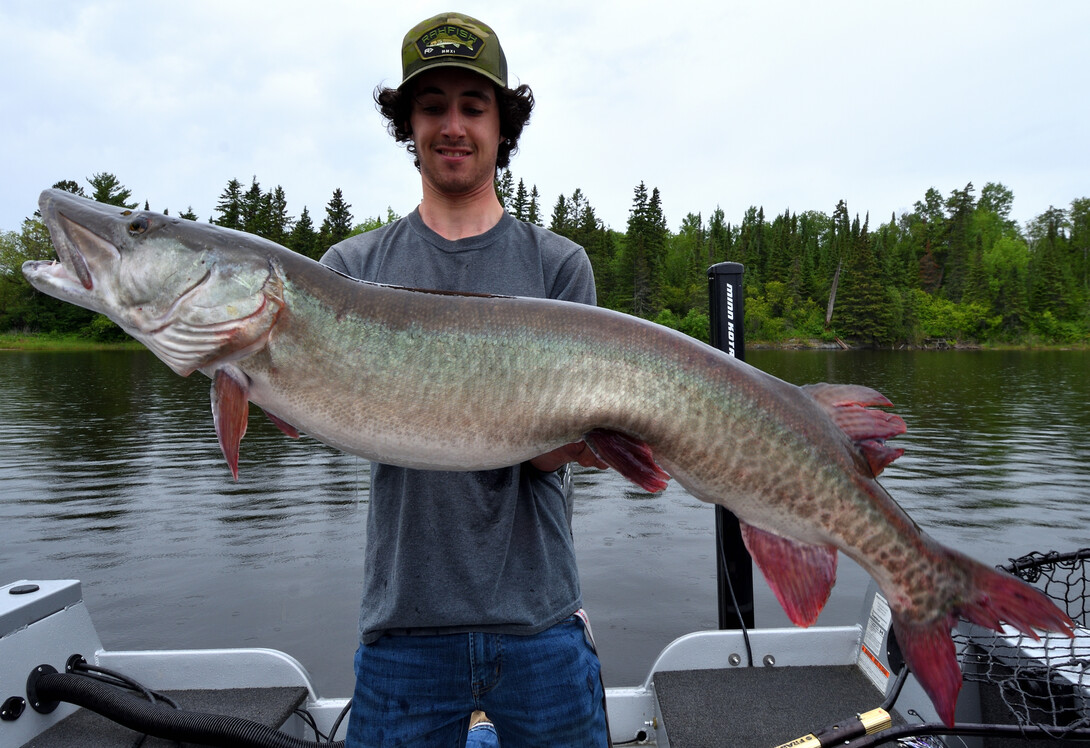
Well, it could, because we had made no more than a dozen casts at best, when I heard Liam holler, "There's one!" and I turned around at the precise moment a giant crocodile opened its huge mouth, ate his bait at the side of the boat and exploded in a Mount Vesuvius eruption of head-shaking, foamy white water.
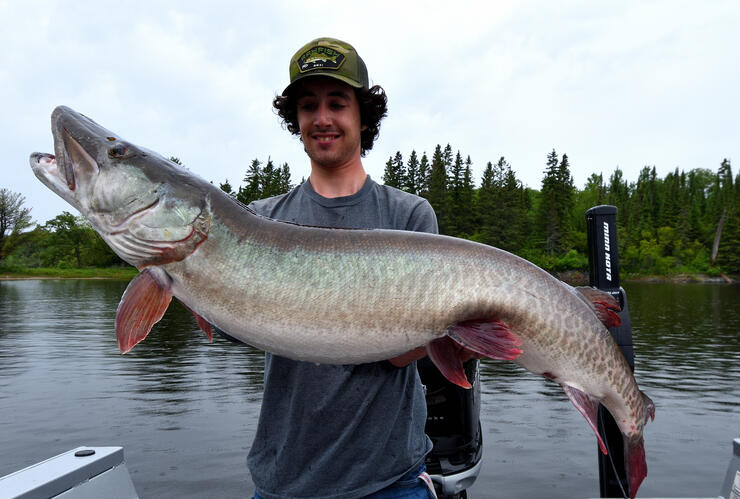
A couple of minutes later, I clipped the points off the hook with a pair of bolt cutters and Liam struggled to lift the magnificent 50.25-inch muskie out of the net. It easily topped 40 pounds in weight and was all the evidence we needed to finish piecing together the puzzle.
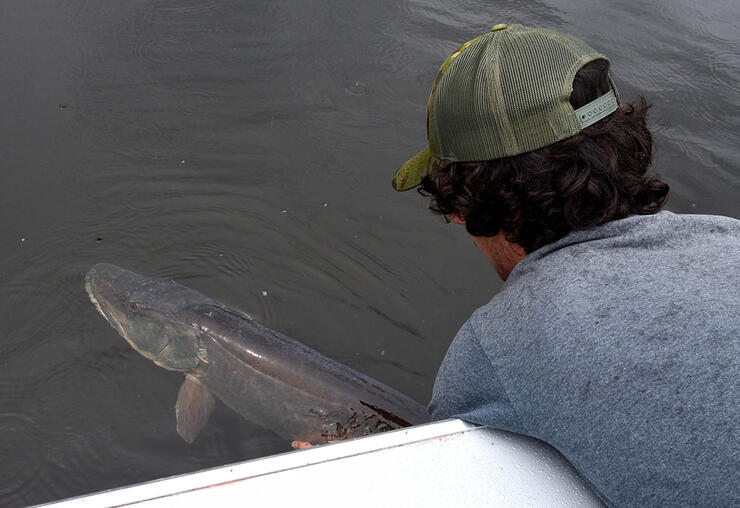
Be in your best spot when the peak period arrives every day, and if there are loons and other birds diving for baitfish around you, hang on tightly to your rod.