A very strong El Niño says mild. The Great Lakes say snow. Which one wins this winter? Here’s the call, region by region.
By Jeff McGirr
Jeff McGirr is a powersports & marine enthusiast who loves sharing Northern Ontario experiences with you through his articles and videos.
October 28, 2026
Is Ontario in for another great winter on the trails?
The sleds are sitting there. They’ve been cleaned, polished, serviced, fuelled and probably started at least once already, even though there is absolutely no reason to start them yet.
And if you’re anything like me, you’ve already looked toward the sky a few times wondering the same thing:
When is winter coming?
There is something about this time of year for a snowmobiler. The leaves are changing, the days are getting shorter, and there is a definite bite starting to creep into the morning air. Conversations that were all about boats, ATVs, bikes, and summer adventures slowly turn toward snow, ice, grooming and that first ride.
Then comes the inevitable question: What kind of winter are we going to get?
Well, it’s time once again to stick my neck out. Welcome to the 14th Annual Ontario Snowmobilers Winter Weather Forecast.
And this year, the answer isn’t absolute; honestly, it’s dicey.
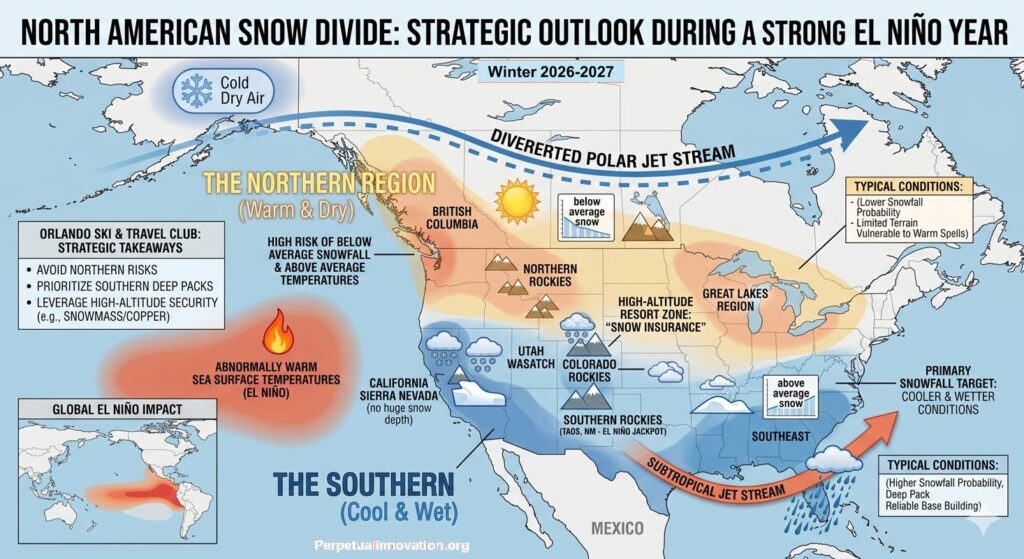
We’ve got a very strong El Niño developing. We’ve got long-range forecasts calling for warmth across much of Canada. We’ve got other outlooks suggesting parts of Ontario could still be snowier than normal. We’ve got the Great Lakes holding an enormous amount of heat heading into winter.
And, as every Ontario snowmobiler knows, winter in Ontario is for sure, but how much can be questionable.
Ontario is Ontario.
One side of the province can be riding in a blizzard while another is looking at rain. That’s what makes forecasting our winter so darn interesting. So, let’s dig in.
The short answer: Yes, Ontario should get a good snowmobiling winter, just not an early or easy one. Expect a slow, volatile start in the south, the best riding from January through February, and Northern Ontario carrying good conditions into March.
1. Looking Back: Last Winter’s Forecast Earned an A−
Before I make another prediction, I think it’s only fair to look back at the last one. After all, anyone can make a winter forecast in October. The real fun is coming back the following fall and asking: “Okay, how did we actually do?”
Last year’s forecast called for an early, active and generally favourable winter, driven in part by the expectation of a developing La Niña pattern. I was looking for repeated cold intrusions, significant snow events and good base-building conditions, particularly across Northern Ontario.
I also warned that southern Ontario would be more variable, with freeze/thaw cycles and a greater chance of mixed precipitation. So, let’s score it.
The early start? Nailed it.
The first OFSC trails became available on December 6, 2025, and more than 10,000 kilometres were available by early January. That is exactly the kind of start a snowmobiler wants to see. Not necessarily every trail open everywhere but enough winter arriving early to get the season moving.
Frequent snow and cold? Pretty darn close.
There was a brief mild spell, but winter rebounded quickly. By January 22, more than 20,000 kilometres of OFSC Prescribed Snowmobile Trails were available, and the network passed 25,000 kilometres on January 27. And it didn’t stop there. The available network eventually peaked at more than 28,000 kilometres during February and into March.
That’s a lot of green on the Interactive Trail Guide. That’s a lot of groomer hours. And, more importantly, that’s a lot of happy snowmobilers.
Northern Ontario? Another good call.
The forecast pointed toward the north as one of the better places to find dependable winter conditions, and that’s exactly where snowmobilers could turn when conditions became more variable elsewhere. Northern Ontario once again demonstrated what makes it such a special snowmobiling destination: When winter shows up, it knows how to stay awhile.
Southern Ontario? This is where the forecast needed a little more humility.
The forecast correctly warned about variability and freeze/thaw risk, but the season ultimately delivered enough widespread snow and sustained winter conditions to produce an exceptional province-wide riding season. The OFSC’s final assessment was even stronger: it called 2025–26 “one of the most memorable riding seasons in recent years.”
Overall score? I’m giving last year’s forecast: A−
The big picture was right. Winter arrived early. Snow came. Cold came. The trails opened. The network expanded rapidly. And Ontario snowmobilers had a season that many of us will remember for a long time.
Where did I miss? I was perhaps too cautious about just how good the season would become. And that’s a good lesson for this year’s forecast.
Don’t confuse a few warm spells with a bad winter.
Last season proved that Ontario doesn’t need six months of deep freeze to produce an incredible snowmobile season. It needs enough cold at the right time, enough moisture, and a storm track that cooperates. Mother Nature handled the rest.
2. What a Strong El Niño Means for Ontario Snowmobiling
If you’ve been following the weather this year, you’ve probably heard one word repeatedly: El Niño. And this isn’t just any El Niño.
Current international and North American outlooks are watching an unusually strong El Niño developing in the tropical Pacific. For snowmobilers, that immediately gets my attention.
Historically, strong El Niño events tend to push Canada’s winter pattern toward milder conditions overall. Before you put the sled up for sale, keep reading. Because Ontario doesn’t always follow the national script.
Mild does not mean snowless.
And that distinction could be extremely important this winter. A winter can have an above-normal average temperature and still deliver some spectacular snowstorms.
Think about it this way: you don’t need six months of -20°C. You need enough cold. You need moisture. You need the storm track in the right place. And, most importantly, you need those ingredients to line up at the same time. That is what I’m watching.
3. Environment Canada’s Warm Winter Outlook: Don’t Stop There
Environment and Climate Change Canada’s current seasonal forecast is leaning toward above-normal temperatures across Ontario as we head into winter. But here’s the part that is easy to miss. These are seasonal averages, not a prediction that every day will be warm. A seasonal forecast cannot tell us that January 17 will be -18°C and January 18 will produce 25 centimetres of snow. And that’s precisely where things get interesting for snowmobilers. A winter averaging a few degrees warmer than normal can still contain several brutally cold Arctic outbreaks. It can still freeze lakes. It can still produce major snowstorms. And it can still give us some outstanding riding windows.
The question isn’t necessarily: Will Ontario be cold all winter? My question is: Will Ontario get enough sustained cold at the right times to build and preserve a good riding base? That’s a much more useful question.
4. The Great Lakes Snow Machine: Lake-Effect Snow in 2026–27
If there’s one thing I learned from writing these forecasts over the years, it’s this: Never underestimate the Great Lakes. The lakes enter winter carrying an enormous amount of stored heat. And when Arctic air finally arrives, those enormous bodies of relatively warm water can become giant atmospheric engines.
Cold air moves across the open water. The air picks up moisture. Then that moisture gets dumped downwind. Hello, lake-effect snow.
This is one of Ontario’s greatest winter-weather advantages for snowmobiling. And it could become a major storyline in 2026–27. Several current long-range outlooks are pointing toward meaningful snow potential in southern Ontario despite the warmer overall temperature signal.
That’s a combination I like. Not necessarily because it guarantees every trail will be buried—but because the ingredients are there for some serious snow events.
The trick will be timing. A warm lake plus cold air is fantastic for snow. A warm lake plus marginal temperatures is a recipe for something considerably less exciting.
You know what I’m talking about. Snow. Then rain. Then freezing rain. Then ice. Then snow.
Then we get to scrape the trailer and wonder why we live here. And five minutes later we’re checking the forecast again because the next storm might be the big one.
That’s snowmobiling in Ontario.
5. Northern Ontario Snowmobile Outlook: Where Winter Still Has the Upper Hand
Now we get to the part of the province I really like talking about. The north.
Current long-range guidance generally gives Northern Ontario a better chance of maintaining genuinely wintry conditions than southern Ontario. The farther north you go, the less vulnerable you become to those annoying wintertime temperature swings.
A storm comes through. Snow falls. Temperatures drop. The snow stays. The trails get a base. Then the groomers go to work.
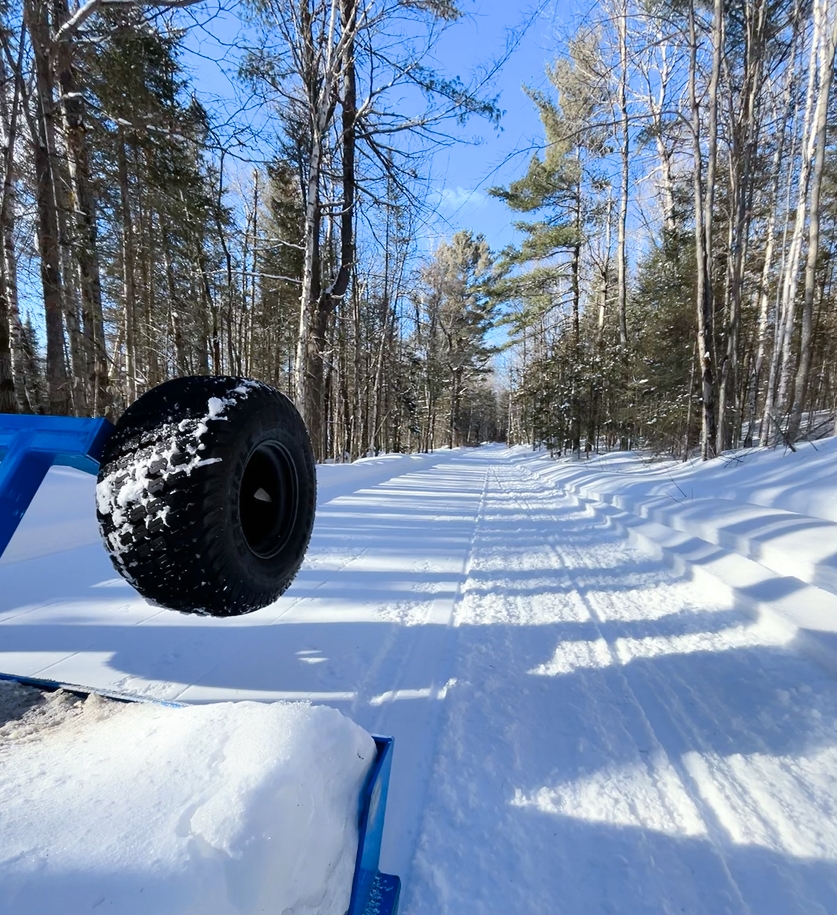
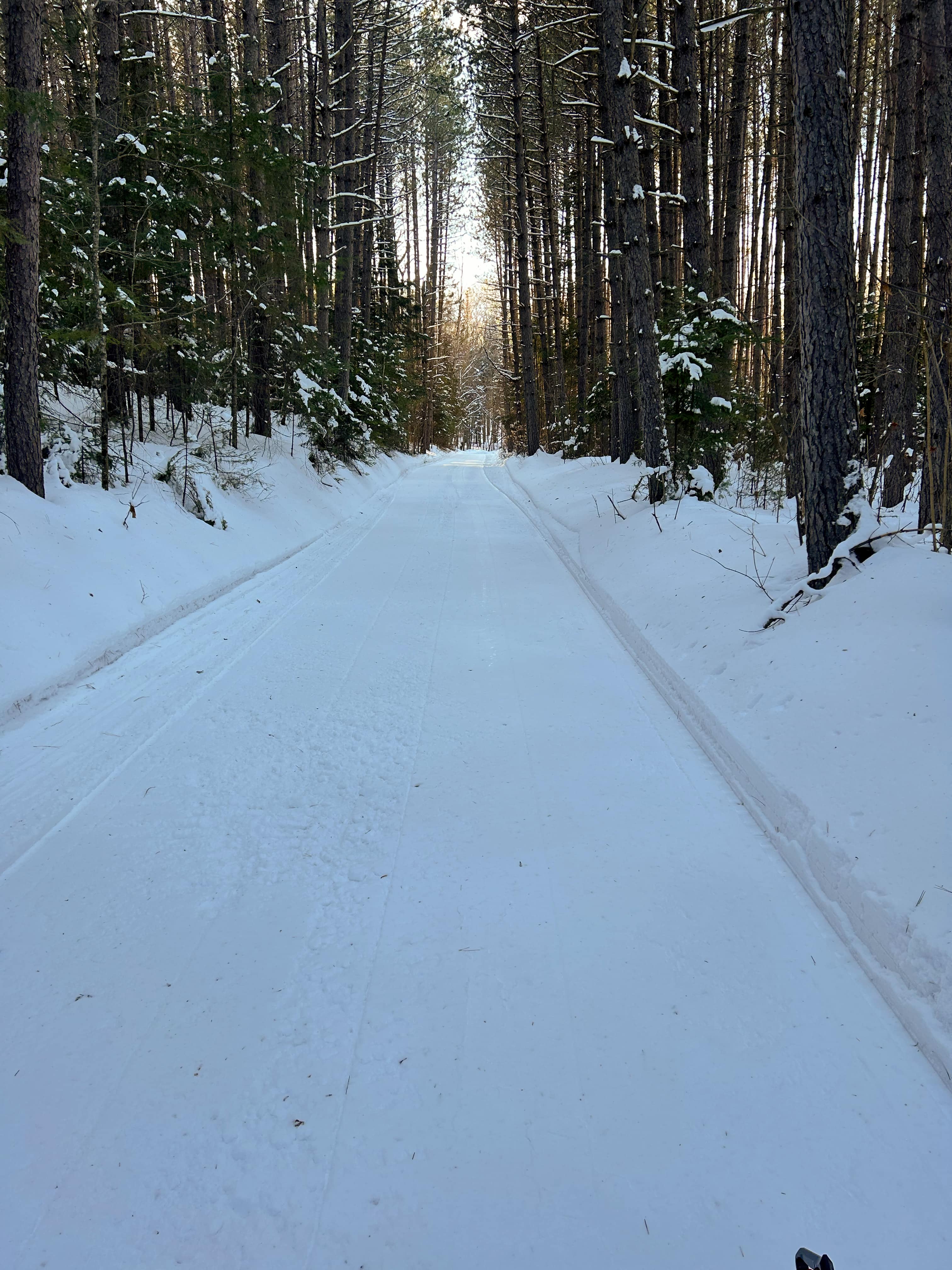
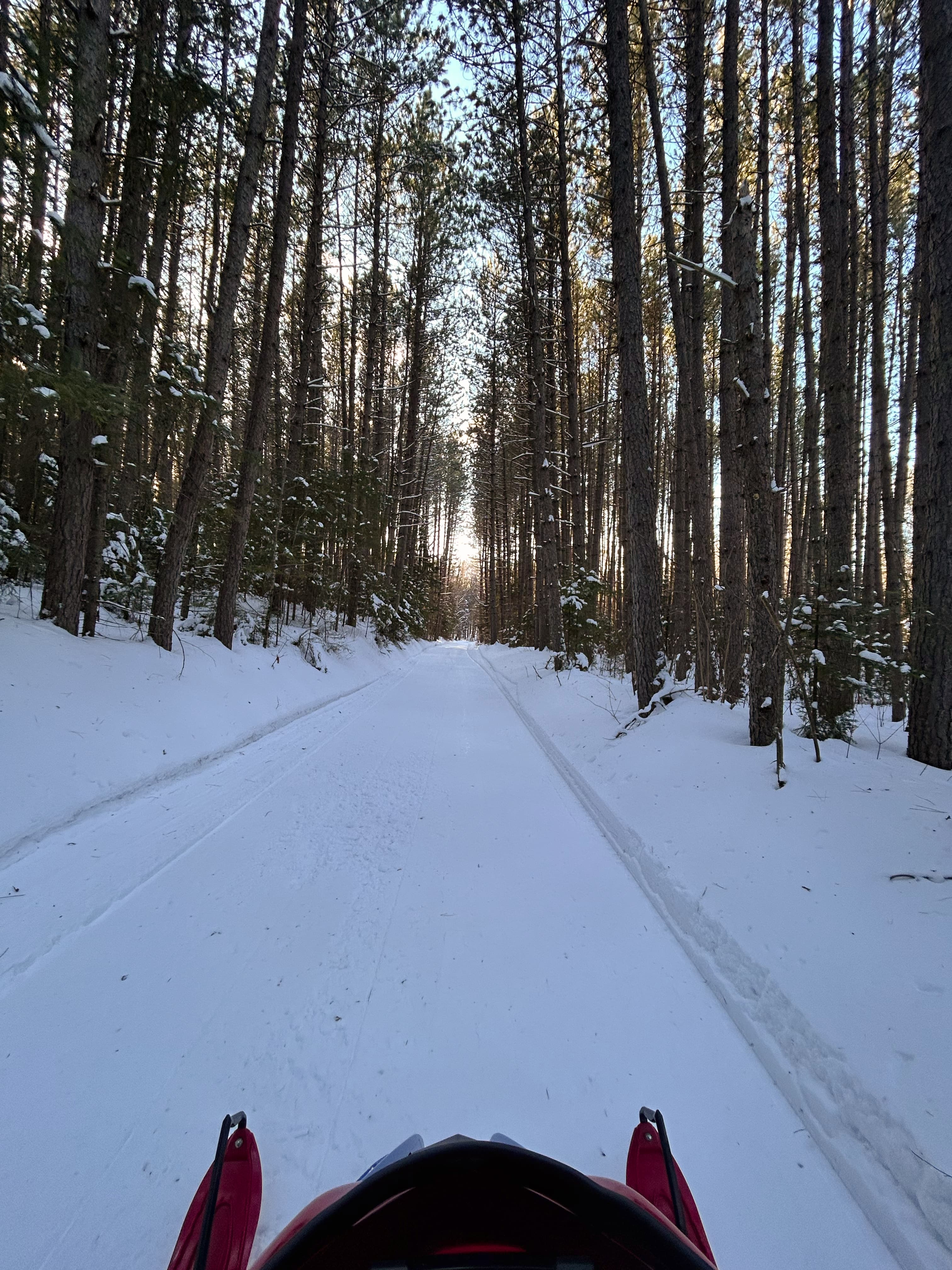
And suddenly you’re riding through a tunnel of snow-covered spruce with that wonderful low hum coming from the engine and the skis cutting through freshly groomed snow.
That’s the Ontario I love.
My Northern Ontario call: Good to very good riding potential once winter gets established. I’m expecting the northern half of the province to be the safer bet for consistent mid- and late-season riding. And when southern Ontario is having one of those classic winter battles between snow and rain?
The corridor stretching through Northeastern Ontario has something going for it that a lot of southern riders don’t have: latitude, terrain and distance from the biggest warm-water influences.
The latest seasonal guidance still leans warmer than normal, but that doesn’t erase the region’s ability to build and hold snow once winter arrives.
And there is another factor. Storm tracks.
If we get repeated systems moving across the Great Lakes and into Northern Ontario, the northeast could repeatedly find itself on the receiving end. I expect this region to be one of the better bets for riders looking for dependable winter conditions once we get into January.
The biggest question is the start. I’m not expecting a spectacularly early, locked-in winter everywhere. But once the switch flips? I think the northeast could really turn on.
7. Northwestern Ontario Snowmobile Forecast: Thunder Bay to Kenora
The northwest is always an interesting part of this forecast because it doesn’t need to wait for the same storm pattern as southern Ontario. There is plenty of cold available.
I don’t expect a relentlessly frigid winter. But I don’t need one.
Give me a few good Arctic shots. Give me some moisture. Give me a favourable storm track. Then let the groomers do what they do best. The result could be some fantastic riding.
My call: good overall potential, with the best conditions developing after winter becomes firmly established.
8. Southern Ontario Snowmobile Forecast: A Season of Timing
If you ride south of the big snowbelt, this forecast is going to require a little more patience.
The long-range temperature guidance isn’t exactly screaming “Old-Fashioned Canadian Winter.” But several outlooks are still pointing toward meaningful snowfall potential.
Why? Because this is where storm tracks, Great Lakes temperatures and Arctic air can collide.
A storm could begin as snow. Then the warm sector arrives. Now it’s rain. Then the cold air crashes back in. And suddenly you’ve got a skating rink.
Or—and this is the outcome we’re all hoping for—the cold air arrives first, the storm tracks perfectly, and the same system drops 20 or 30 centimetres of beautiful white powder across the trails.
Southern Ontario is going to be a timing game.
I expect more freeze-thaw cycles than our friends farther north. I also expect some very impressive snow events.
So don’t write off southern Ontario. Just don’t expect every week to be perfect.
This is where I am keeping my eye on the snow gauge.
The lake-effect machine can turn these regions from “Where’s winter?” to “Where did the trail go?” remarkably quickly.
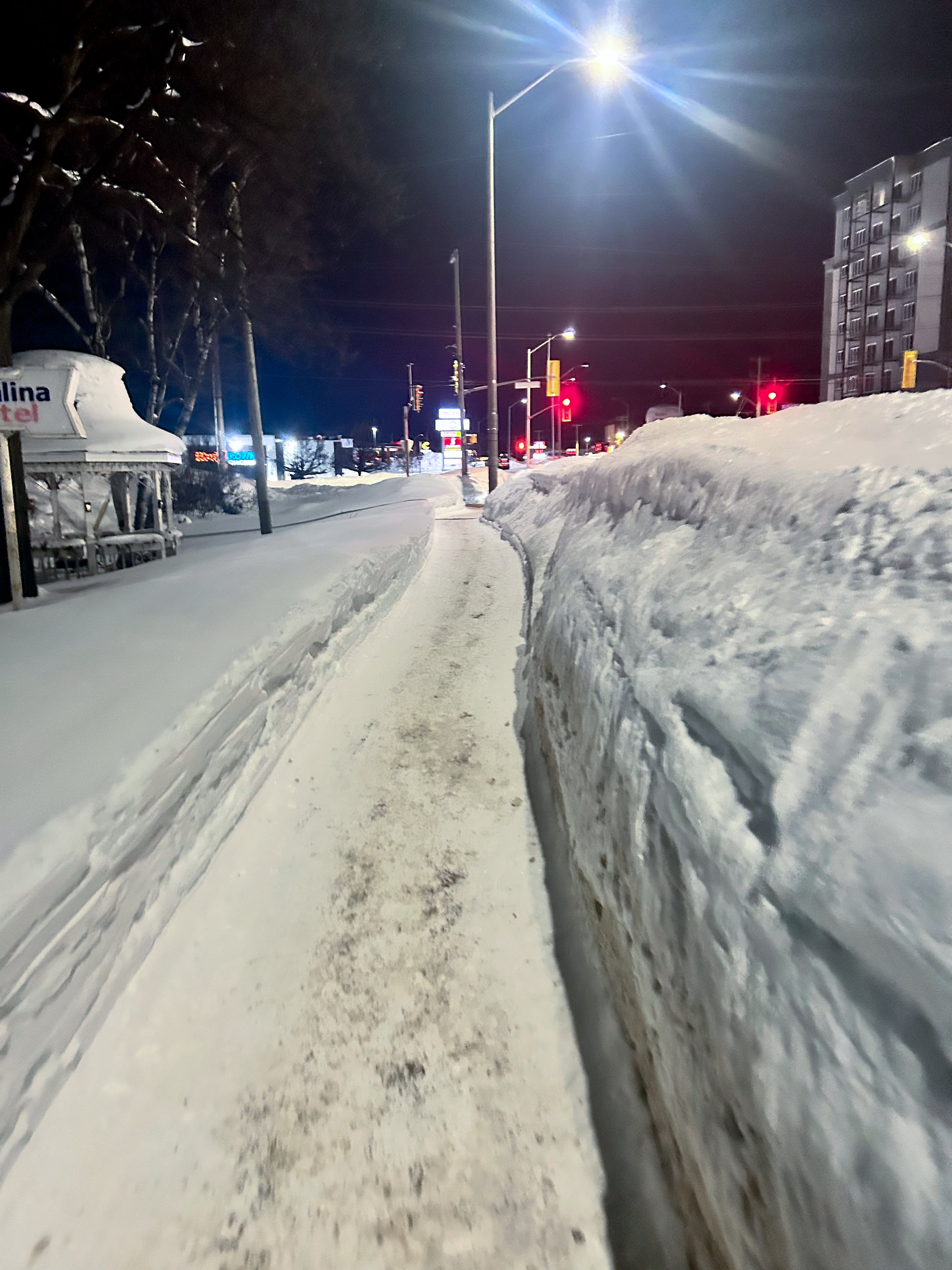
We’ve all seen it. The forecast says a few centimetres. You wake up the next morning, and the snowbank is halfway up the garage door.
Okay, maybe I’m exaggerating. But you get the idea.
The snowbelt is capable of making its own winter. And that’s why I think riders in these regions should remain optimistic.
10. What Are the Woolly Bears Saying About Winter?
Of course we’re not going to write an Ontario winter forecast without talking about the woolly bears.
I mean, come on. We have satellites. We have supercomputers. We have atmospheric models. We have ocean temperatures.
And then we have a little caterpillar crawling across the lawn.
I’m keeping the woolly bear index alive. Why? Because it’s fun. And because generations of northern Canadians have watched nature for clues about the coming winter.
Interesting, entertaining and absolutely worth discussing around a campfire.
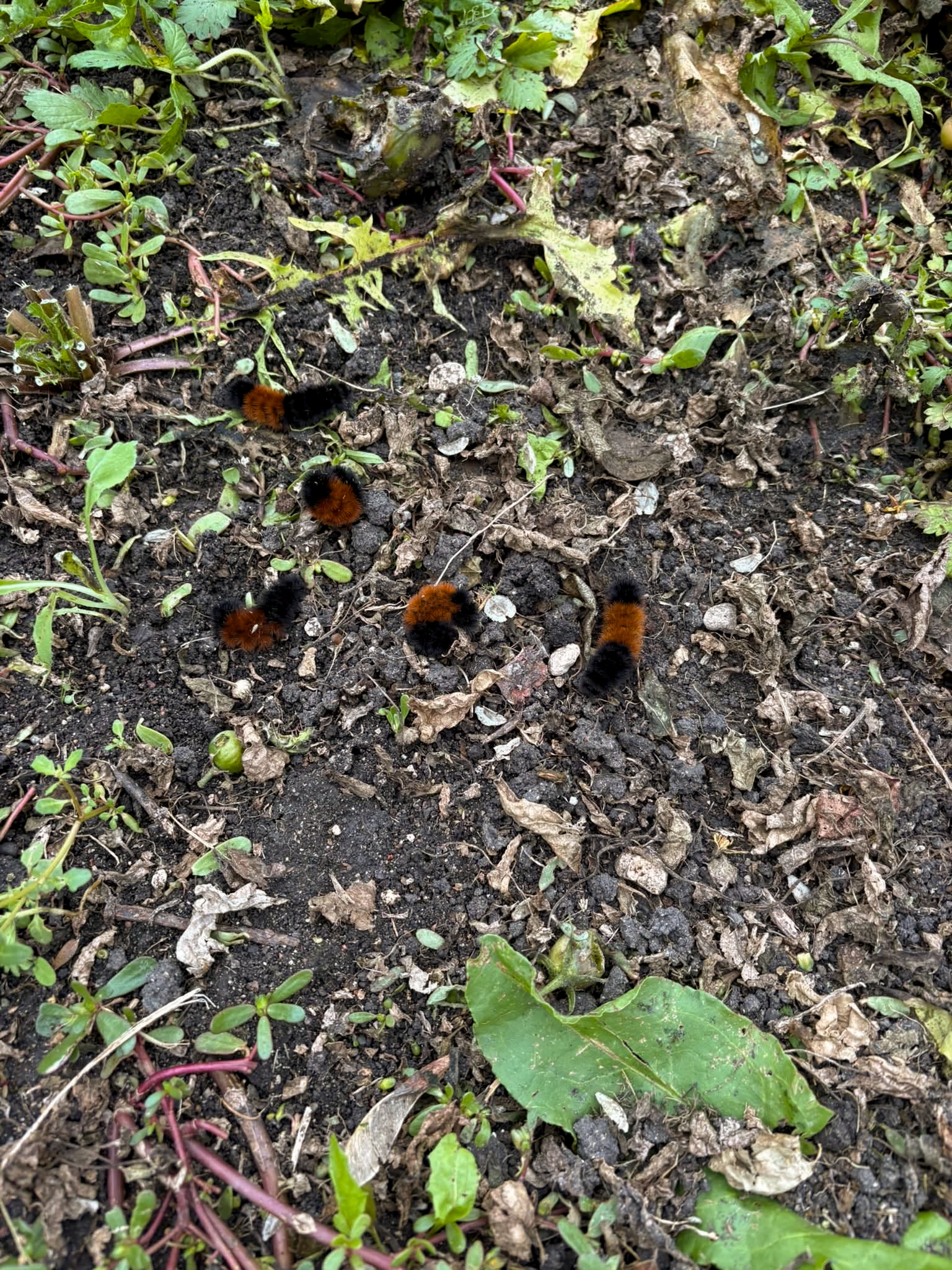
If the caterpillars are wearing heavy black coats, I’ll listen. You judge for yourself thanks to Audrey and this quint of woolly bears.
11. Backroads Bill Steer’s Natural Signs: What Is Nature Telling Us About Winter?
There is more than one way to forecast an Ontario winter. While the meteorologists study ocean temperatures and atmospheric patterns, Backroads Bill Steer has his eyes on the natural world—and this year, Nature is sending some mixed signals.
After a roller coaster of a summer, with intense early storms followed by a much drier stretch, one thing stood out: the wind. It seemed to blow almost every day! But that wind may have helped produce something beautiful, contributing to a much more colourful fall than last year, when the leaves were noticeably dull.
As Bill puts it, “Lots of uncertainty but Nature knows!”
Four Parts of Natural Weather Prognostication
Bill points out that many traditional forecasts overlook what he considers the four parts of natural weather prognostication. By observing wildlife, animal behaviour and the changing landscape, he looks for clues that might tell us what lies ahead.
And this year, those clues are giving us a bit of a mixed bag.
Northern Ontario: An Early Blast of Winter?
For Northern Ontario snowmobilers, Bill sees signs that winter could arrive with an early punch. The songbirds appeared to leave earlier than expected toward the latter part of summer. The rut and the rubbings on trees also seemed to arrive ahead of schedule.
As Bill observes, the birds know something—and perhaps the animals do, too.
But there are other signs worth considering.
The beaver lodges appear to have less mud packed around them, while the animals’ feed beds are not as extensive as usual. To Bill, these observations point toward a milder winter overall.
Central Ontario: More Rain, Less Snow?
Heading farther south, Bill expects a different story. Central Ontario could see more rain and drizzle, with ice forming slowly as temperatures fluctuate.
For snowmobilers, that means patience may be required, particularly early in the season. As always, latitude will play an important role, with trail conditions likely to improve as you move north toward the 49th parallel.
And while Bill isn’t predicting a winter loaded with snow, he isn’t suggesting we put away the shovels just yet!
Fewer Snowfalls but Some Powerful Storms
Bill’s overall prediction is for less snow than usual, but he expects some irregular and intense storms to make their presence felt. He has also noticed that hives have been closer to the ground this year, another natural sign he considers when looking ahead.
And remember that persistent summer wind?
Bill expects it to continue, potentially blowing freshly fallen snow around and creating challenging conditions in exposed areas.
For snowmobilers, that could mean a winter of contrasts: quieter stretches interrupted by powerful storms, shifting snow and the occasional need to dig out the driveway before heading for the trails.
Looking Ahead to Spring
The spring equinox is scheduled for March 20, and Bill expects the return of early birds and increased animal movement to begin around that time.
Until then, his message is a simple reminder of what makes winter in Northern Ontario so special.
“Enjoy the winter while you can.”
Whether Nature is predicting an early blast, a milder season or a few memorable storms along the way, one thing is certain: there is plenty to watch for as Ontario heads into another winter.
Bill Steer
12. Will the Polar Vortex Bring Arctic Cold to Ontario This Winter?
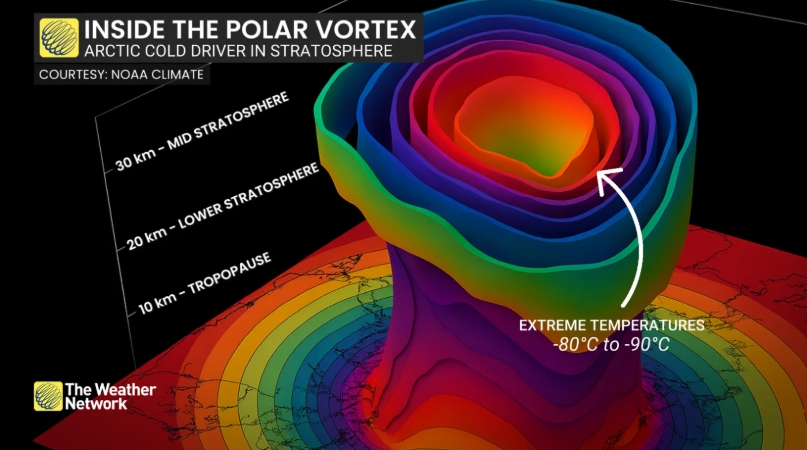
Here’s another one snowmobilers love to talk about. The polar vortex.
Can it break apart? Can Arctic air spill south? Could Ontario get one of those legendary deep freezes? Absolutely.
But I wouldn’t build this year’s forecast around a prediction of a persistent polar-vortex breakdown months in advance.
Instead, I’m watching for individual Arctic intrusions. And I think we’re going to get them. That’s important.
Because even in a generally warmer winter, a few well-timed Arctic outbreaks can make all the difference.
A week of deep cold in December can freeze the lakes. Another cold shot in January can lock everything in. And suddenly the riding season is in business.
That’s what I’m looking for. Not necessarily six straight months of misery. Just enough real winter to make Ontario a snowmobiler’s paradise.
13. The Sledder’s Pulse: OFSC Trails and Clubs Are Getting Ready
While Mother Nature is doing her thing, the people who actually make snowmobiling happen are already at work.
The OFSC and its member clubs have demonstrated once again that a good winter is about much more than snowfall.
The 2025–26 season saw more than 28,000 kilometres of trail available at its peak, thanks not only to favourable conditions but also to thousands of volunteers preparing trails, negotiating land access, grooming and maintaining the network.
This is the part of snowmobiling that doesn’t get enough attention.
Every time we ride a beautifully groomed trail through the forest, there are volunteers and clubs behind that experience.
Someone brushed it. Someone signed it. Someone inspected it. Someone negotiated the land-use agreement. Someone fixed the bridge. Someone climbed into a groomer at an ungodly hour so that we could ride a smooth trail the next morning.
And when you see a groomer, give the operator a wave. We’re all in this together.
14. When Will Snowmobile Season Start in Ontario?
Here’s my prediction. I don’t think Ontario gets a classic early winter everywhere. I think fall hangs around. Southern Ontario may have to wait. There will probably be some false starts.
We’ll see snow that melts. We’ll see cold that disappears. We’ll see somebody post a photograph of a snowmobile in November and immediately trigger 500 comments about whether the lakes are safe.
Northern and Northeastern Ontario should have the best chance of building a durable base. The snowbelt could get hammered by lake-effect events once Arctic air begins crossing the Great Lakes. Southern Ontario will be much more variable.
Then, as we move through January and February, I expect the best and most dependable riding to shift increasingly toward the traditional northern destinations. And that brings me to my prediction.
The 2026–27 Ontario Snowmobile Season Prediction
A Slow Start, A Strong Middle, and a Winter Worth Chasing
There. I’ve said it.
I believe Ontario is going to have a good snowmobiling winter.
Not necessarily an easy one. Not necessarily an early one. And certainly not one without rain, thawing and a few frustrating weekends.
But a good winter? Yes.
My best guess is that southern Ontario sees a more volatile start, with several opportunities for snow interrupted by mild periods. The northern half of the province should fare better.
Once winter gets established, I expect the best riding window to develop from January through February, with Northern Ontario potentially carrying good conditions well into March and perhaps beyond in the snowiest corridors.
The snowbelt is my wild card. If the lake-effect machine gets cranking, some areas could receive ridiculous amounts of snow. And that’s exactly what we want.
More vulnerable to warmth and freeze-thaw cycles. Ride when the window opens—and be ready to travel north when it doesn’t.
The Last Word
Every year I write this forecast, I wonder if I’m finally going to get it exactly right.
Then I remember something. Nobody can predict an Ontario winter perfectly. Not Environment Canada. Not NOAA. Not the almanacs. Not the woolly bears. Not Backroads Bill. And certainly not me.
There are simply too many moving parts. But that’s also what makes winter so much fun.
Because somewhere out there, right now, the ingredients are beginning to line up. The lakes are cooling. The days are getting shorter. The first real Arctic air is waiting up north. Linda bought her first snowmobile. Matt’s back in for the 3rd time now. The clubs are preparing the trails. The groomers are being serviced. The permits are on sale. And a whole bunch of snowmobilers are sitting around pretending they aren’t checking the long-range forecast every morning. I know I am.
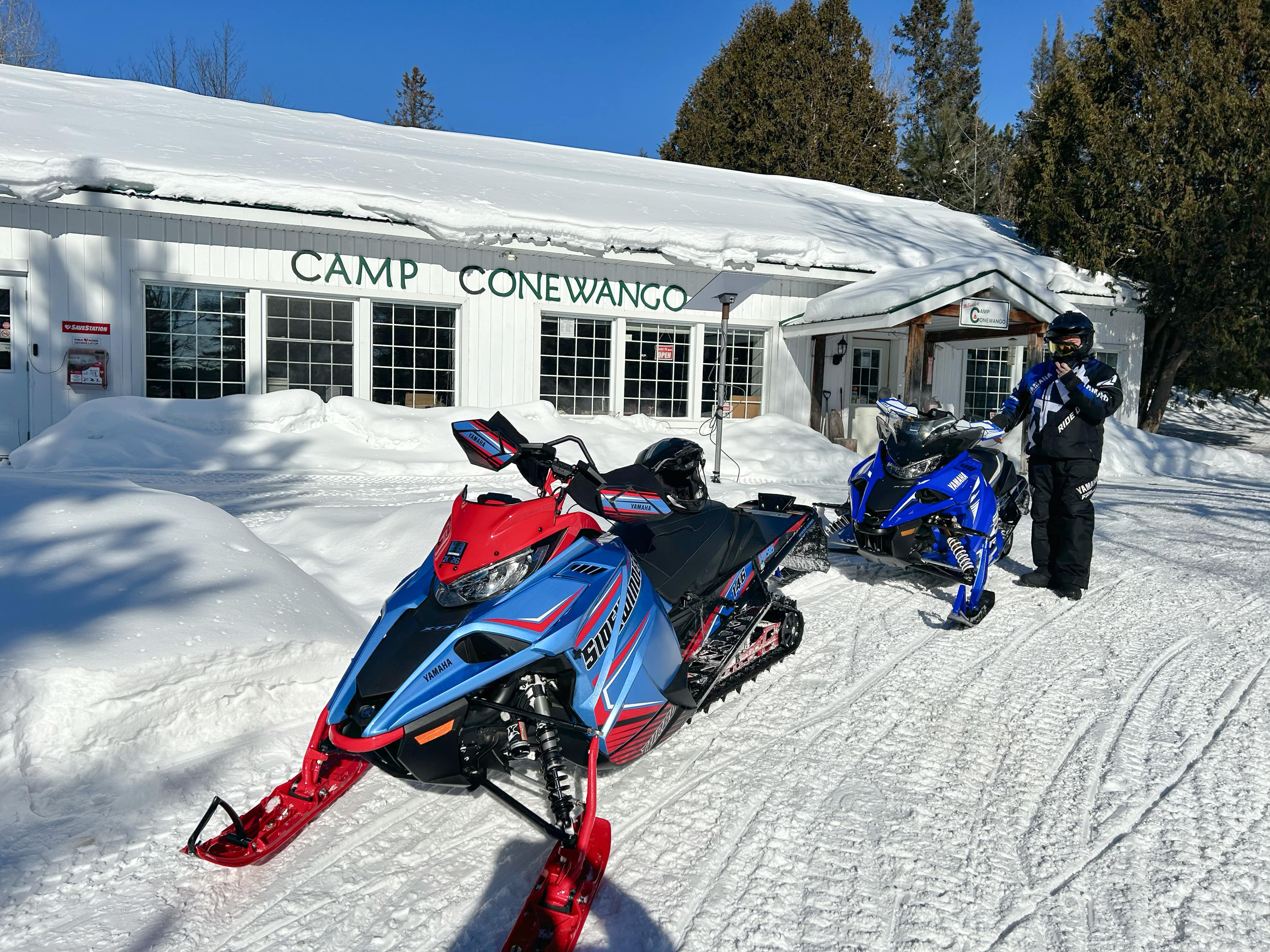
So here’s my advice. Don’t wait for the perfect forecast. Get the sled ready. Buy the permit. Call your riding buddies. Book that Northern Ontario trip you’ve been talking about for three years.
And when the snow finally comes?
GO RIDE.
Because there is nothing quite like that first morning when you fire up the sled, pull your visor down, roll onto a freshly groomed trail and realize that winter has finally arrived.
The forest is white. The lakes are frozen. The engine is humming.
And for a few hours, there isn’t anywhere else in the world you’d rather be.
That’s why we do this. That’s why we wait for winter.
And remember, if there’s one thing that's guaranteed in Northern Ontario, it's winter. See you on the trails!