
Polarized Sunglasses
Why Quality Shades are a Must-Have Piece of Fishing Gear
By Bob Izumi









The secret to enjoying your days on the ice in the splendour of Northern Ontario isn’t necessarily measured by the number of fish you catch. Rather, it is the fun you have with your family and friends. But let’s be honest, you can’t enjoy a day of ice fishing if you’re cold. So, let’s change that right now because, trust me, I know a thing or two about staying warm. And it doesn’t involve pouring hot coffee into a cup and dipping your frozen fingers into the steaming liquid to thaw them out. I’ve been there — done that — and it isn’t fun.
Fortunately, with today’s modern insulated clothing options, it has never been easier to be comfortable ice fishing. But there are some real secrets to staying warm and the first one is remembering that if one pair of long underwear is good, two pairs are better. Try it just once this winter and you’ll shake your head in amazement, wondering why you haven’t been doubling up all along.
The first pair of long johns that I put next to my skin is soft light high-tech and heat-retentive, while the second pair is the same old-fashioned woollen long johns that you probably wore as a kid. Remember the scratchy Stanfields that were so itchy you couldn’t keep still? Tug a pair of those over the first soft layer and you’ll feel the heat build up immediately. It is the layering effect you hear survival experts talk about and nothing beats wool for the second set.
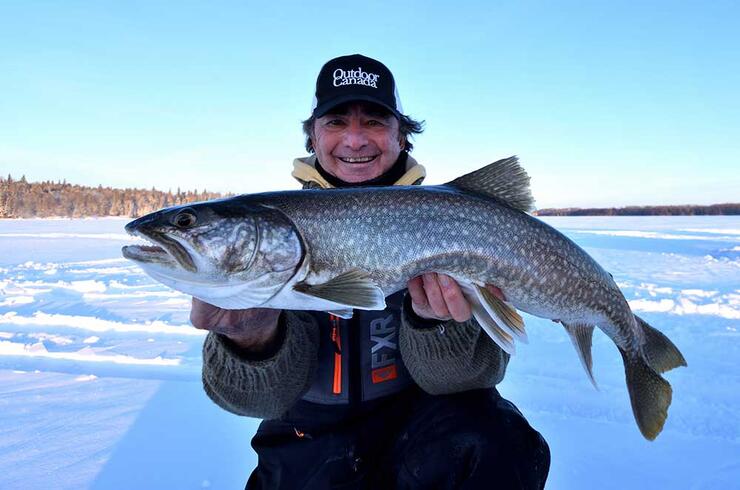
The other thing you will feel immediately is a layer of heat emanating from your back and neck. You want to stop that warmth from escaping and the best way to do it is by wearing a fleece-lined neck warmer. The best I’ve ever found is the plush FXR Excursion Ice Pro Neck Gator which is so wide and high you can pull it up to cover your ears and face. Now, tug on a loose hoody.
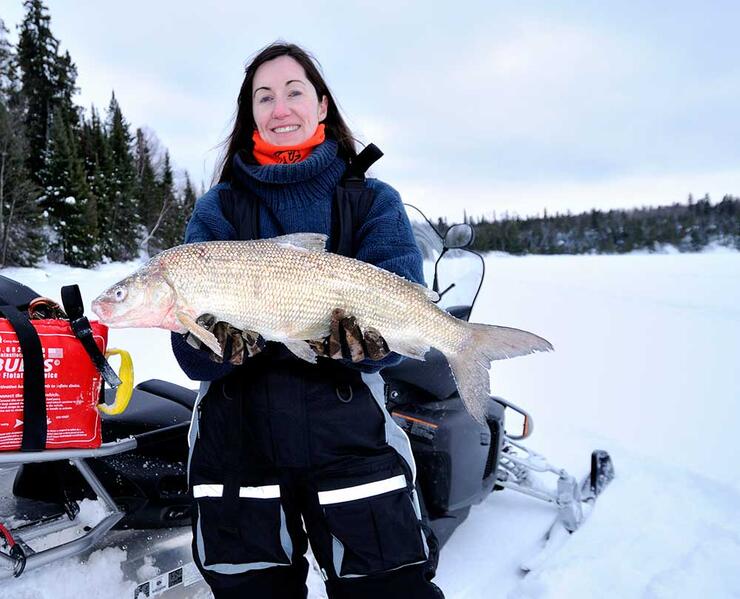
For the lower half of my body, I typically choose between two options, depending on the air temperature outside. If it is really cold — below -20° C or -5 °F — I like to wear a pair of jogging pants over my long johns and under my snowmobile bibs. They’re light and roomy and while they don't add much in terms of warmth, the layering effect works wonders. When it is above -20°C, on the other hand, I simply pull my bibs over the twin pair of long johns that I am wearing. I know it sounds counterintuitive not to wear jogging pants, but today’s high-tech insulated snowmobile bibs are amazingly wind-resistant, waterproof, and warm, so the space between your long johns and bibs is an excellent form of insulation.
I use those same air temperature parameters to guide me in completing the top half of my body. Below -20°C I tug on a thick wool turtleneck sweater — so there are four loose heat-trapping layers — before donning my snowmobile jacket from which I have removed the liner. Above the threshold, however, I will leave the liner in place and the sweater at home. The role of the jacket is to block the wind when I am fishing but especially when I am travelling on the machine.
Now, I am sure you’re wondering: what about your head, hands and toes? These are the body parts that typically get cold first, linger like icicles the longest and ruin a day on the ice faster than anything else. Well, we’re going to devote Part 2 to those tender details. In the meantime, just remember that your head, hands and toes are your heat exchangers. So, when you dress as I’ve explained, you force your body to send excess heat to these terminal areas, keeping them much warmer than they would otherwise be if your body was cold.