
Spring Perch Fishing
Use These Tips on Your Next Ontario Fishing Trip
By Bob Izumi




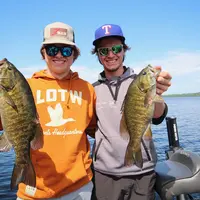

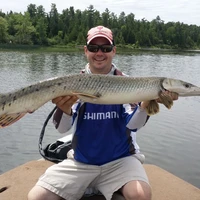

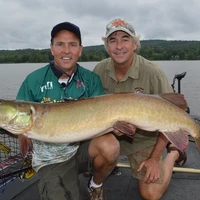
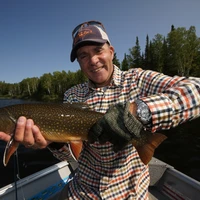


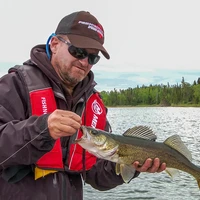
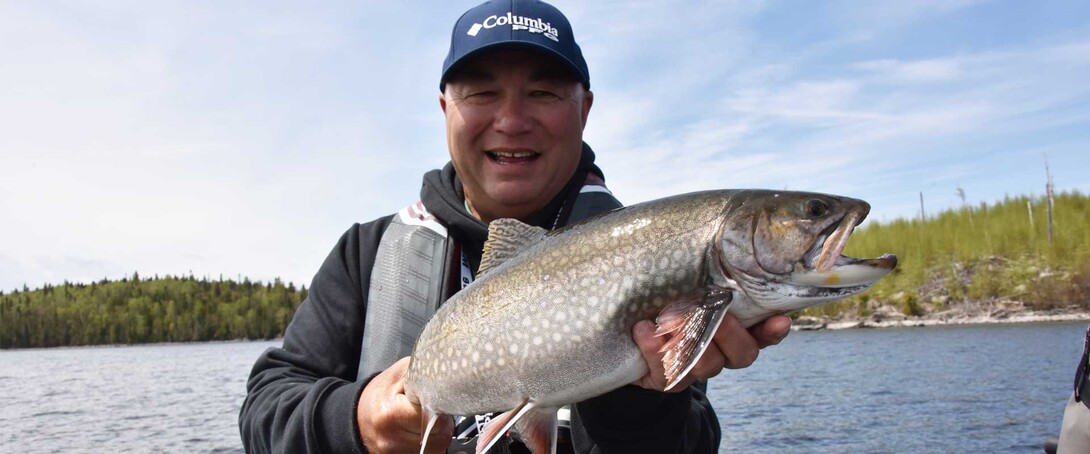
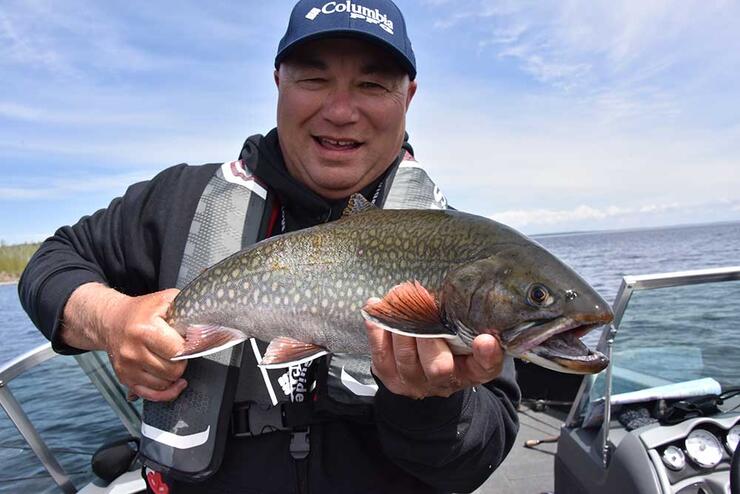
A few years back I had just returned from an incredible trip to Lake Nipigon and one of the things I noticed up there was how the brook trout were relating to shallow water areas that had a bit of breeze blowing onto them. It seemed that two to six feet of water was the magic depth during our late May trip. If it got sunny and flat calm the fishing was tough, but as soon as you got a bit of a breeze on the water—even a one-inch chop—it made all the difference in the world.
The fish were set up on contact spots made up of areas with boulders and a little bit of sand or gravel mixed in. If you had just a straight shoreline along the islands or mainland you got very few if any, fish. You could go down shorelines for miles and catch nothing, but as soon as you got to a contact point like a little rock shoal with a point on it, or a point inside of a bay, with a bit of breeze blowing on it there’s a good chance the fish would be there. It was amazing how you could pattern the fish on Nipigon by looking for these types of spots. Of course the better the structure was, the better the fishing was.
Several years ago, I fished an FLW Tour Open on Wheeler Lake in Alabama where I ended up in tenth place, although I felt I should have won it. I was fishing in a big, wide creek that was so shallow that most of the other anglers turned around and left once their trolling motors started to hit bottom in the mud and gravel. It was so shallow that you couldn’t even use the sonar on your trolling motor so I had to use the old “poor man’s depth finder,” poking around with my rod tip to judge the depth.
The creek channel in this big, wide feeder bay would sometimes only be three or four feet wide where the water went from about 10 inches to about 14 inches deep and I could barely get my bass boat in. Even then, I got stuck a number of times and had to push the boat off some of the mud. One of the keys in this creek was to follow the channel and find where the water was a little deeper against the shore. Sometimes it was 18 or 20 inches deep, sometimes up to two feet. I found one of these areas that had about five good trees on it that kept replenishing with fish. You could catch a fish from under one of the trees and if you’d come back a few hours later you’d catch another one on it.
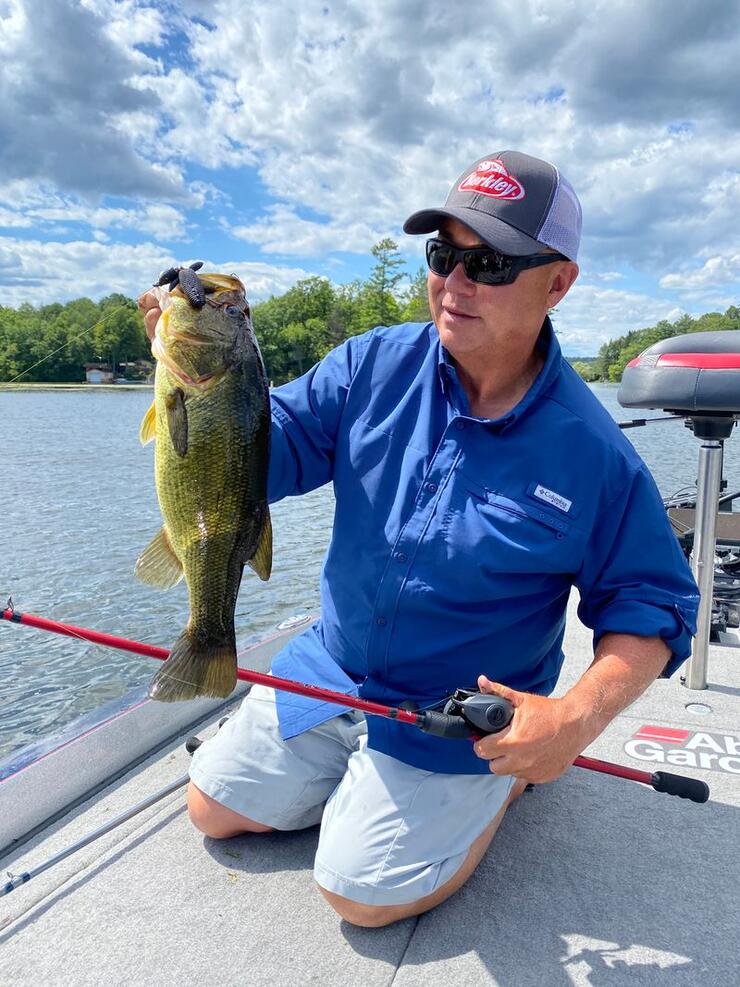
So, I came across this one tree in about a foot and a half of water and I pitched to the base of it, up near the shore, and caught a two-and-a-half pounder. As I was putting it in my livewell the boat swung around and my co-angler fired a cast right to the tip of the tree, where the breeze was blowing in and got a five-pounder.
My first cast should have been to the front face of that tree with the breeze blowing onto it because that’s where the biggest fish is usually going to be on a shallow spot like that. If that tree was out over deep water the prime spot might have been up near the base but, with only a foot or so of water, the prime spot obviously this day was on the tip of the tree where the wind was blowing in.
In that particular tournament, I was reading the water with my rod tip, poking around and trying to find depressions that were a little deeper. There’s no question the area held big bass and my choice of spots was on the money. Unfortunately, over the three-day tournament, I lost eight big fish and those execution issues probably cost me the win and over $100,000. When you fish as many tournaments as me you’re bound to have some good, bad, and ugly ones and I’ve certainly had a lot of all of the above over the years!
Reading water can be done visually with a good pair of polarized glasses, with your rod tip as I just mentioned, or with your electronics, depending on the situation you’re faced with. No matter where you’re fishing, one of the keys is to locate some type of transition area where a hard bottom meets soft bottom, especially if there’s a depth change with some cover. Fish use these places like highways and by zeroing in on a good piece of cover on the transition spot you definitely put the odds in your favour.