Complete Guide to Moosonee & Moose Factory Island
11 essential experiences for visitors.
By Mitch Bowmile



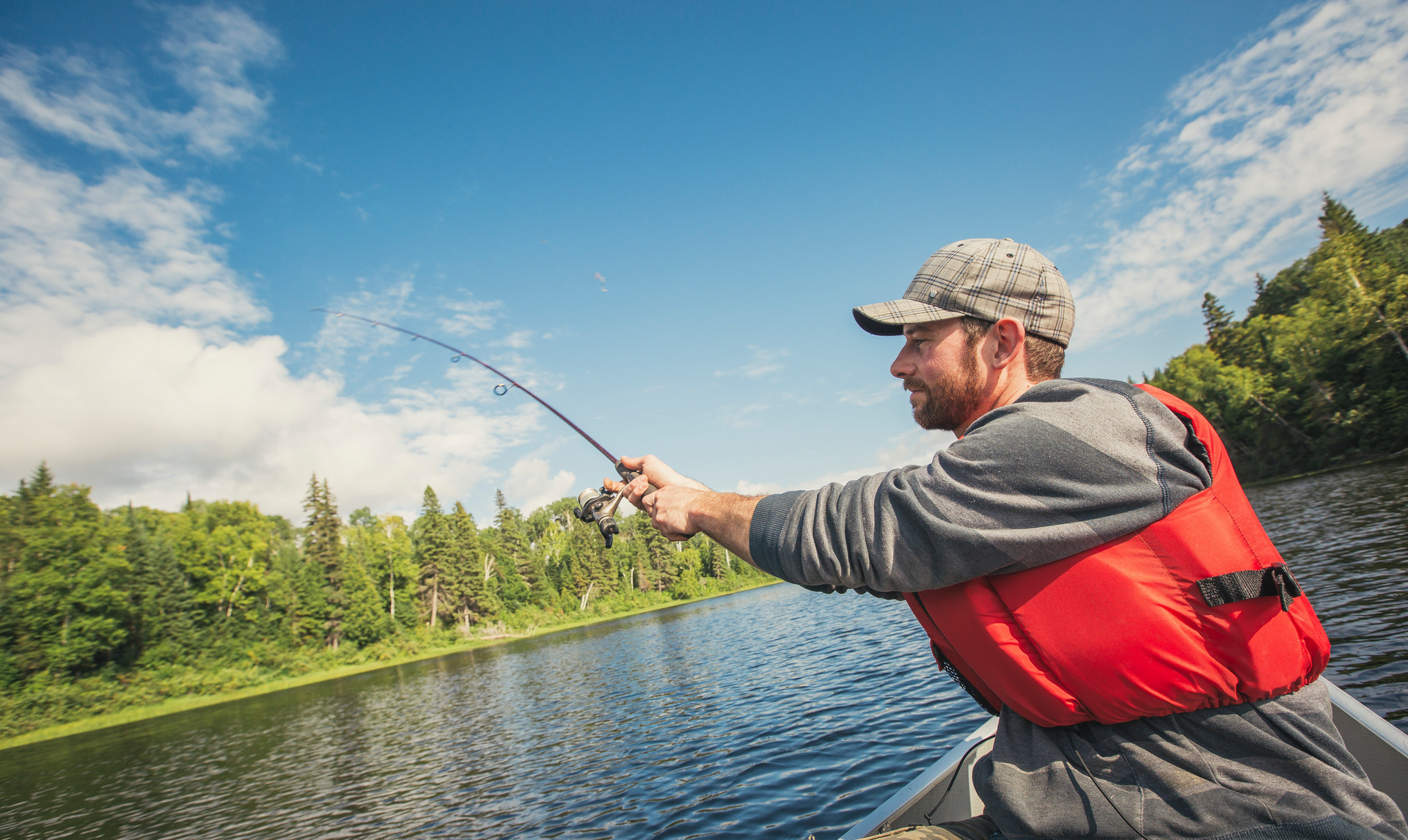
Being the best angler in the group is important—especially if you can easily catch a stringer of walleye or a tasty northern pike for shore lunch. Much more valuable, however, is to be the one who can fillet the catch of the day. It’s a bit of an art form that takes a lot of practice. One little fish bone found in meal by a fellow angler, and your abilities are soon downgraded to camp dishwasher.
There’s a variety of methods to prepare a fish but gutting or filleting are the two main preferences. Choosing between the two depends greatly on the species of fish caught.
When preparing a soft-ray fish (i.e., trout) then gutting the fish is the most acceptable—basically because the skin/scales of the fish don’t need to be removed (and are quite tasty to eat when cooked). A spiny-ray fish (i.e., bass, walleye, pike) need their scales removed if you’re going to gut them, so it’s best to fillet the meat.
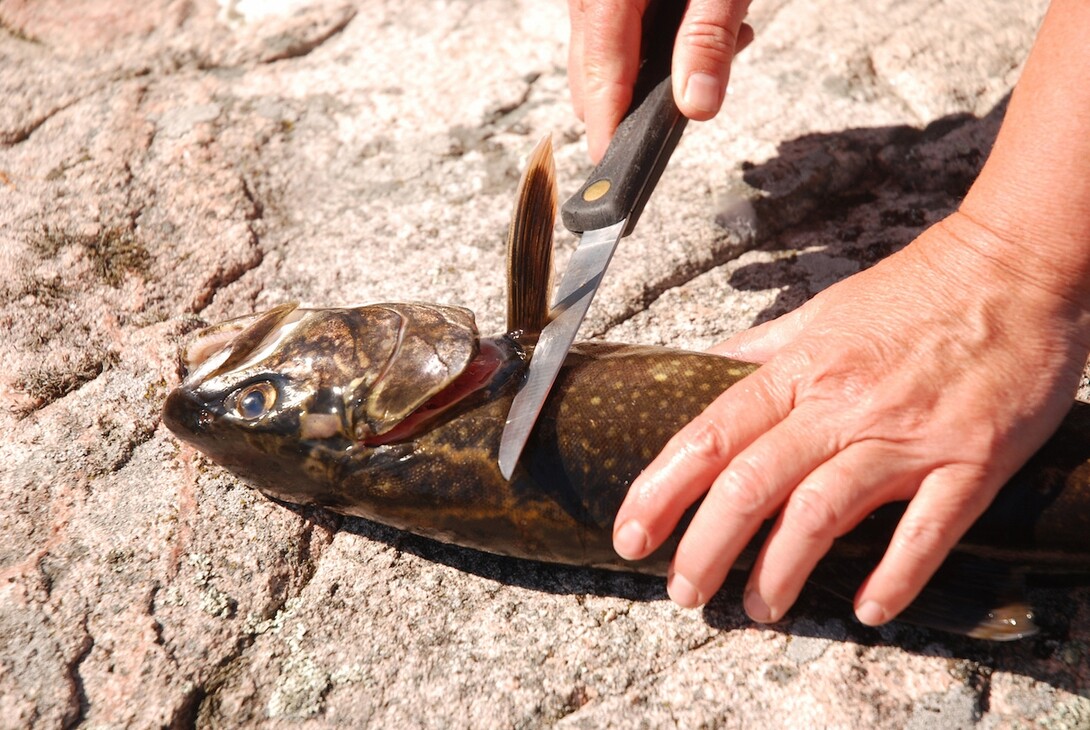
Using a sharp (filleting) knife, remove the head of the fish by cutting under the pectoral fin (located just past the gill plate). Cut the other side, and the head should fall freely off the body. Next, place the point end of your knife into the fish’s anus and cut up the belly right up to the bone between the two gill flaps. Remove the entrails inside the ribcage. Also, run your knife (actually your thumb works best) along the inside of the fish to scrape out the blackened blood vessels along the spine. Give the fish a good rinse and it’s ready to cook. You can bake, fry, or grill the fish. Just make sure it’s done in the centre. The flesh will flake away from the bones when it’s done. To remove the bones, take a hold of the backbone at the top end of the body and lift it gently away from the cooked flesh.
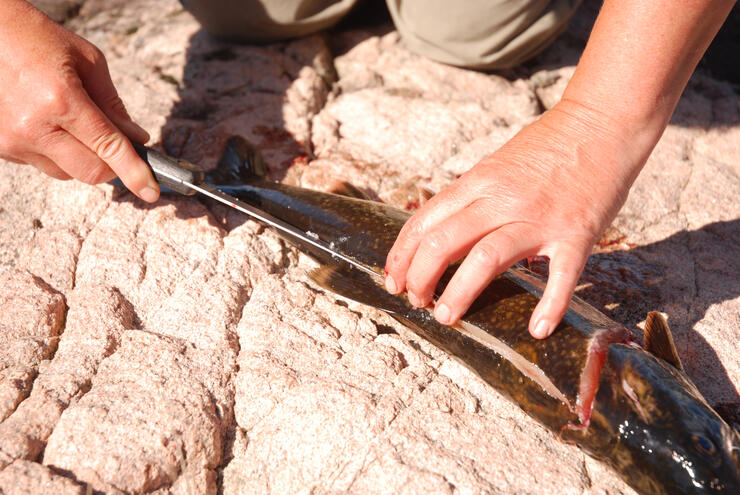
The idea behind filleting is to remove the meat from the bone (and skin) prior to cooking. It takes more skill and practice than simply gutting a fish but it’s far more effective for cooking it up in various recipes. It’s important to use a sharp and flexible filleting knife. The first step is to remove the head just as if you’re gutting the fish. You could also leave the head on as long as you cut the fillet free from the top of the head to behind the pectoral fin. Next, make an incision along the back on one side of the dorsal (top) fin.
Agnew Lake Lodge
Crane's Lochaven Lodge
Fish Bay Marina
Kesagami Wildnerness Lodge
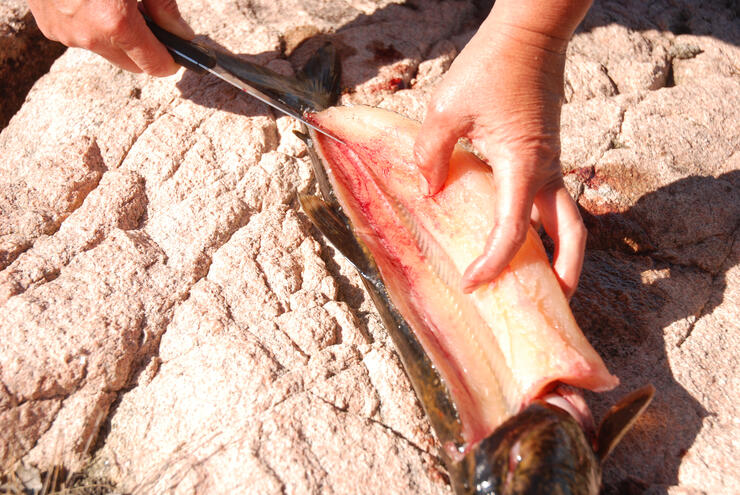
The idea here is to keep the incision going, running the knife along the dorsal bones from head to tail. Keep your knife angled towards the bone. If you're doing it right you will feel the blade touching the bone, even scraping along it while you slice the meat clear. Take note that the boney section of the fish ends before the anal fin so you can simply cut straight along this section to separate the fillet away from the body. The process is then repeated on the other side of the fish. This side is more difficult and you'll often remove less meat if you don't practise enough. The final step is to remove the fillet away from the skin. Place the fillet skin down onto a hard surface. Hold the tail end and run your filleting knife along, slicing between the skin and meat. Work the knife back and forth, slightly angled toward the skin, and the meat should easily separate from the skin.
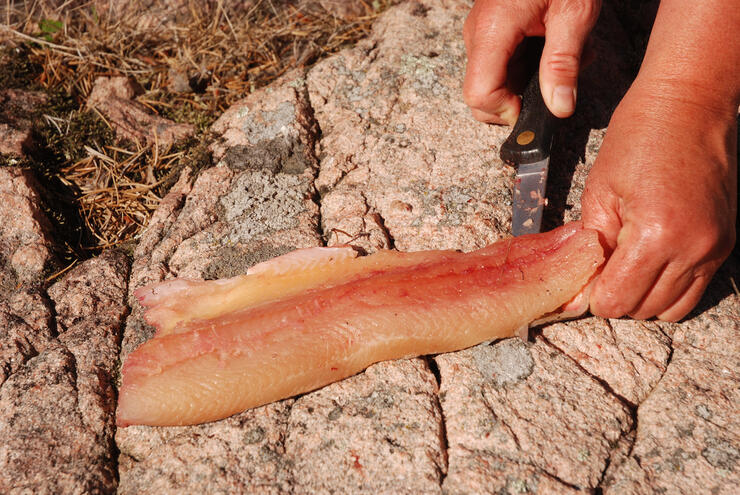
Some fish are bonier than others. Pike, for example, have another row of bones (called a Y-bone) running along the backbone. You need to remove this after doing the initial fillet. Place the fillet skin side to the ground. Locate the row of bones on the fillet by feeling them with your finger. Then, place your knife edge behind and slice alongside and underneath—make sure to turn your blade upwards to keep close to the bone and not waste any meat.
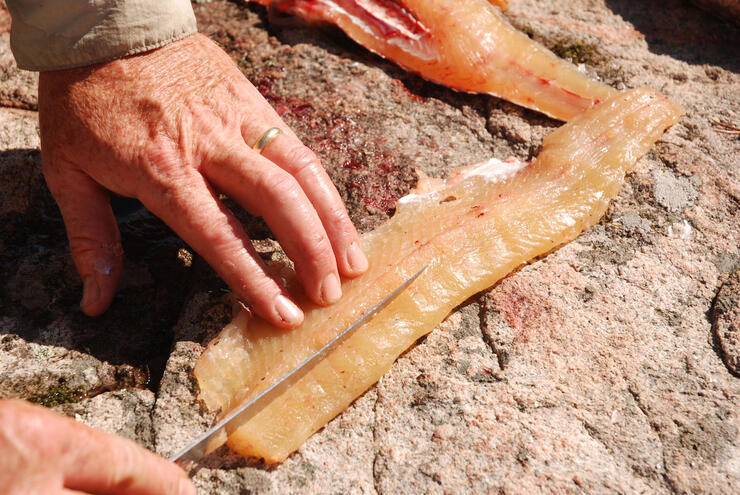
If you’re lucky enough to catch something, then take note that the sooner you eat it, the better. Fish taste best when they are prepared within hours—or minutes—of catching them.
Make sure not to prepare the fish near camp. Animals, including bears, will be attracted to the scent. If you have to clean a fish at camp then do it on a slab of rock along the shoreline that can be washed off. A paddle makes an excellent cleaning board. Dispose of the remaining bits well away from camp or far out into the lake or river you are camping on.