
20 Fall Views Away from the Crowds
Embrace adventure—it’ll be worth it.
By Nadine Robinson



Here in Ontario, we are fortunate to have a wealth of natural wonders around us. There are picturesque landscapes; but at a smaller scale, there is also beauty in our native wildflowers. By virtue of their name, wildflowers are wild. They are native plants which can grow without needing maintenance or cultivation, as the plants in our garden do. They can be found virtually anywhere, though they are most common in less developed areas. When botanists refer to wildflowers, they are only talking about herbaceous (non-woody) flowering plants, even though native trees and shrubs do flower.
Wildflowers are nice to look at, but they also play important roles in ecosystems. Their blooming aligns with the emergence of insects, which they rely on for pollination. Many of the flowers and insects have refined this relationship over thousands of years of coexistence, adapting to each other’s timing or needs. Pollen, flowers and seeds provide a food source for insects, birds and other animals. Learning about Ontario’s wildflowers is learning about the incredible biodiversity we have here and becoming more attuned to the fascinating natural world.
Several Ontario-specific field guides are available to learn wildflower identification. Often, successfully identifying plants requires answering a series of questions about the structure, colour or shape using a flow chart or dichotomous key, eventually leading to the correct flower. One good book is The ROM Field Guide to Wildflowers of Ontario, produced by the Royal Ontario Museum. While it isn’t specific to Ontario, Newcombs Wildflower Guide is one of the most comprehensive guides for those familiar with, or looking to learn to use, dichotomous keys.
Some apps are also really helpful for learning to identify wildflowers. Seek is one of the most user-friendly and also quite incredible. Users simply point their smartphone camera at the plant, and if the lighting and angles are correct, it will provide a machine-learning-based guess of the plant's identification. iNaturalist hosts the database that Seek uses, and their app works in a similar way but requires you to make an account. Through iNaturalist, machine learning suggests likely identifications, but community members, often with an interest or expertise in the species, can confirm or suggest alternatives. These apps work for any living thing: wildflowers, but also insects, animals, fungi or moss. It’s a great way to learn about all the incredible biodiversity around us. A bonus is that observations are used by researchers to better understand the ranges and distribution of species on a regional or even global scale.
While wildflowers are beautiful, many are extremely sensitive. Some have been nearly wiped out from local areas due to trampling or illegal collections. Staying on marked trails will avoid destroying wildflowers or compacting the soil they need to grow. Many wildflowers are highly specialized, and the conditions they grow in are difficult to replicate. In some instances, they are illegally collected for personal gardens. In addition to this practice being banned in provincial parks, relocations rarely work.
The best way to enjoy wildflowers is to follow Leave No Trace principles: travel on durable surfaces and leave what you find. Additionally, in the digital age, geotagging specific coordinates on social media may expose sensitive areas and organisms to overtrampling or collections. When posting photos, consider using general locations (like the provincial park or region), rather than specific trails.
After a dreary winter, forest floors across Ontario are carpeted with a dazzling array of short-blooming spring wildflowers. These wildflowers appear briefly when sunlight still reaches them, before the trees above get all their leaves and shade them out.
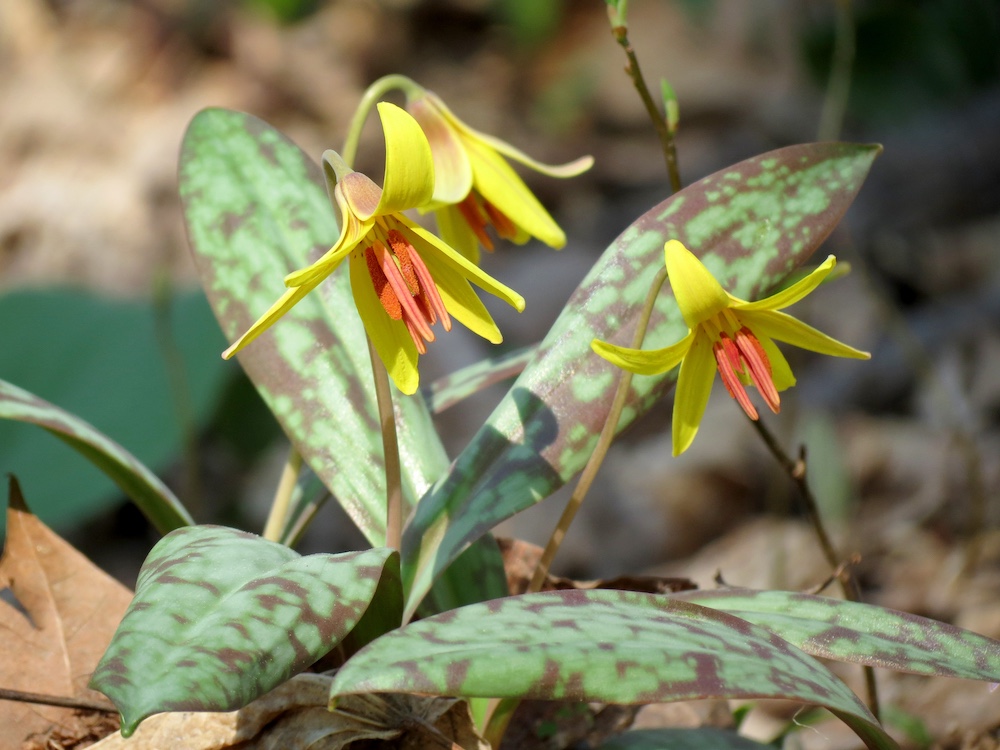
Yellow trout lilies (Erythronium americanum) are among Ontario’s first wildflowers to emerge after a long period of dormancy. They often grow in clusters under the shade of mature trees. The brown mottling on the leaves is reminiscent of the fish from which these lilies get their name.
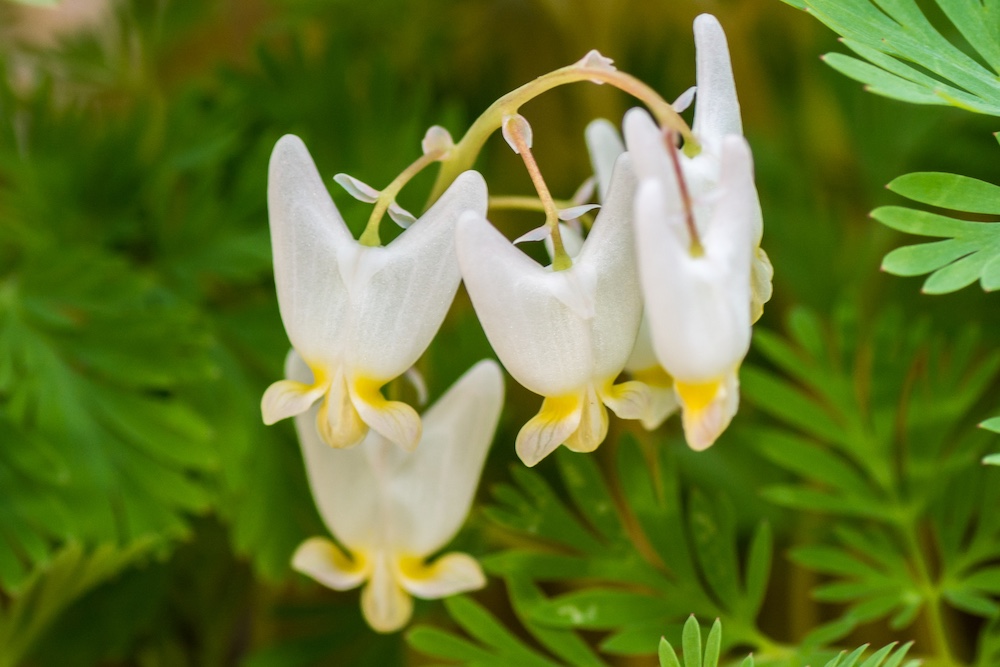
The aptly named Dutchman’s breeches (Dicentra cucullaria) really do resemble a pair of pants. The shape of the delicate white flowers attracts bumblebee queens, who are some of the few bees with tongues long enough to reach the pollen at the end of the flower structure. Their early bloom lines up with the timing of the queens’ emergence, when they are ready to restart their colony for the summer.
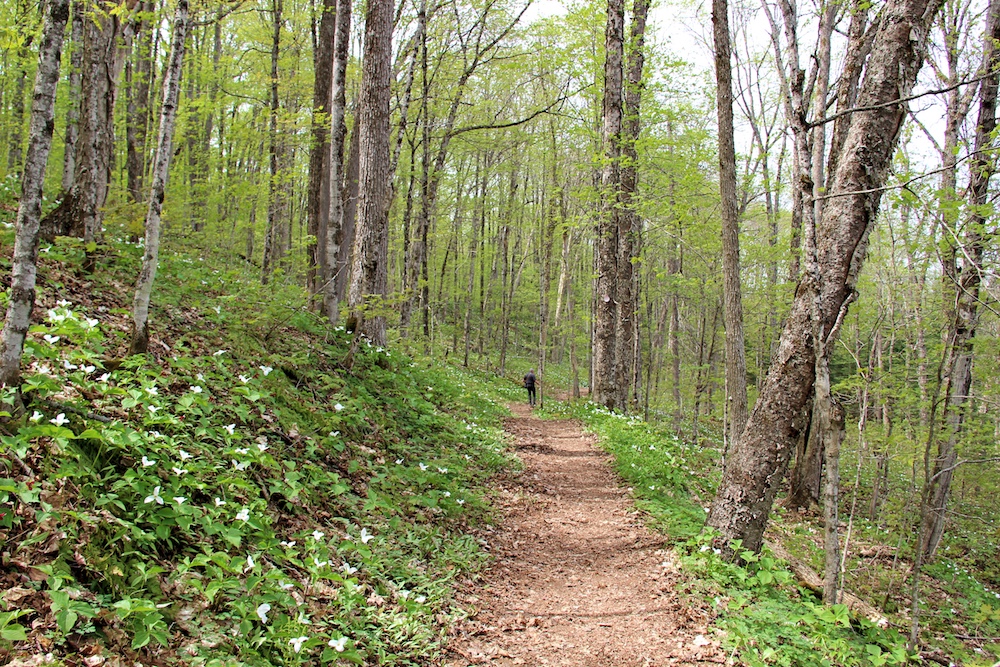
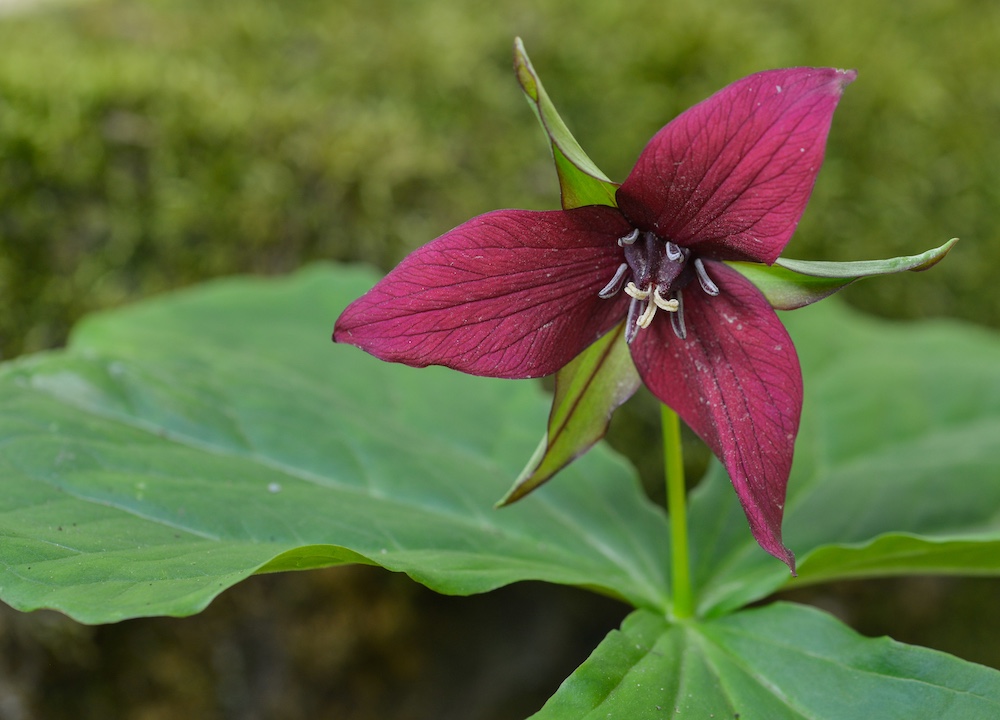
The white trillium (Trillium grandiflorum) is Ontario’s provincial wildflower, and it often covers the floor of sugar maple and beech forests. It is instantly recognizable by the three large white petals. It is often found near its relative, the crimson-petaled red trillium (Trillium erectum).
Most of the Northern Ontario wildflowers we know of as spring ephemerals are found in the Great Lakes-St. Lawrence forest, which extends from the St. Lawrence River north to the Wawa area, west to Lake Huron and the southern shores of Lake Superior, with pockets of this forest type in the Northwestern part of the province between Thunder Bay and the Minnesota border.
Spring ephemeral wildflowers are particularly abundant in hardwood forests dominated by sugar maple and beech trees, so visiting parks with hiking trails through the woods, like Awenda Provincial Park or Arrowhead Provincial Park, offers great opportunities to see them in their glory. You can read our Guide to Arrowhead Provincial Park to plan your visit. Late April to mid-May is often the best time to see these flowers.
As the summer settles in, some of Ontario’s weirdest and most wonderful flowers emerge. Orchids encompass a large, diverse group of flowers. The common feature is the fusion of the stamen (male part where pollen is released) and the pistil (female part that receives pollen) into a single structure called a column, whereas in other flowers these structures are separate, or sometimes even occur on separate plants. Orchids are celebrated by botanists and wildflower enthusiasts for their unique brightly coloured flowers.
Lady’s slipper orchids, or sometimes called “moccasin flowers” (Cypripedium spp.) are slow-growing, taking up to 17 years from the establishment of the seed to their first bloom. These flowers tap into fungal networks below ground, forming a symbiotic relationship where the fungi provide food for the seed to help it establish. In return, mature flowers transport sugars to the underground fungi networks.
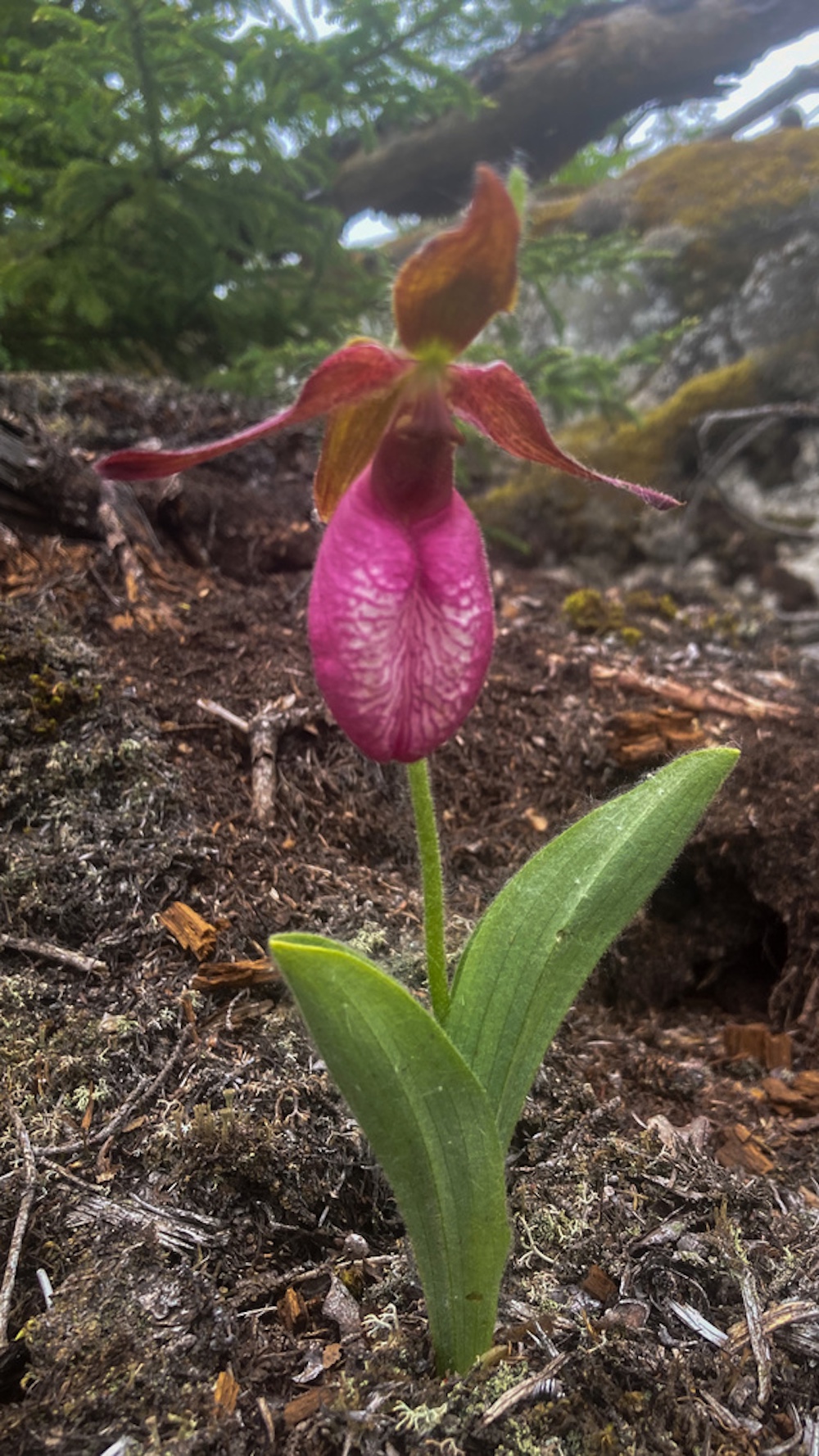
In Northern Ontario, one of the commonly found lady’s slippers is the pink lady’s slipper (Cypripedium acaule). It grows in shaded forests with acidic soil, often among jack pines. The distinctive bulbous pink flower is easy to spot when it is in bloom. They occur in a variety of shades, from light pink to deeper fuchsia. They occur throughout Ontario, but are particularly abundant in jack pine stands or on shallow soils from Muskoka north. Check out Lake Superior Provincial Park’s Nokomis Trail to see this wildflower. (Read our Guide to Lake Superior Provincial Park to learn more.)
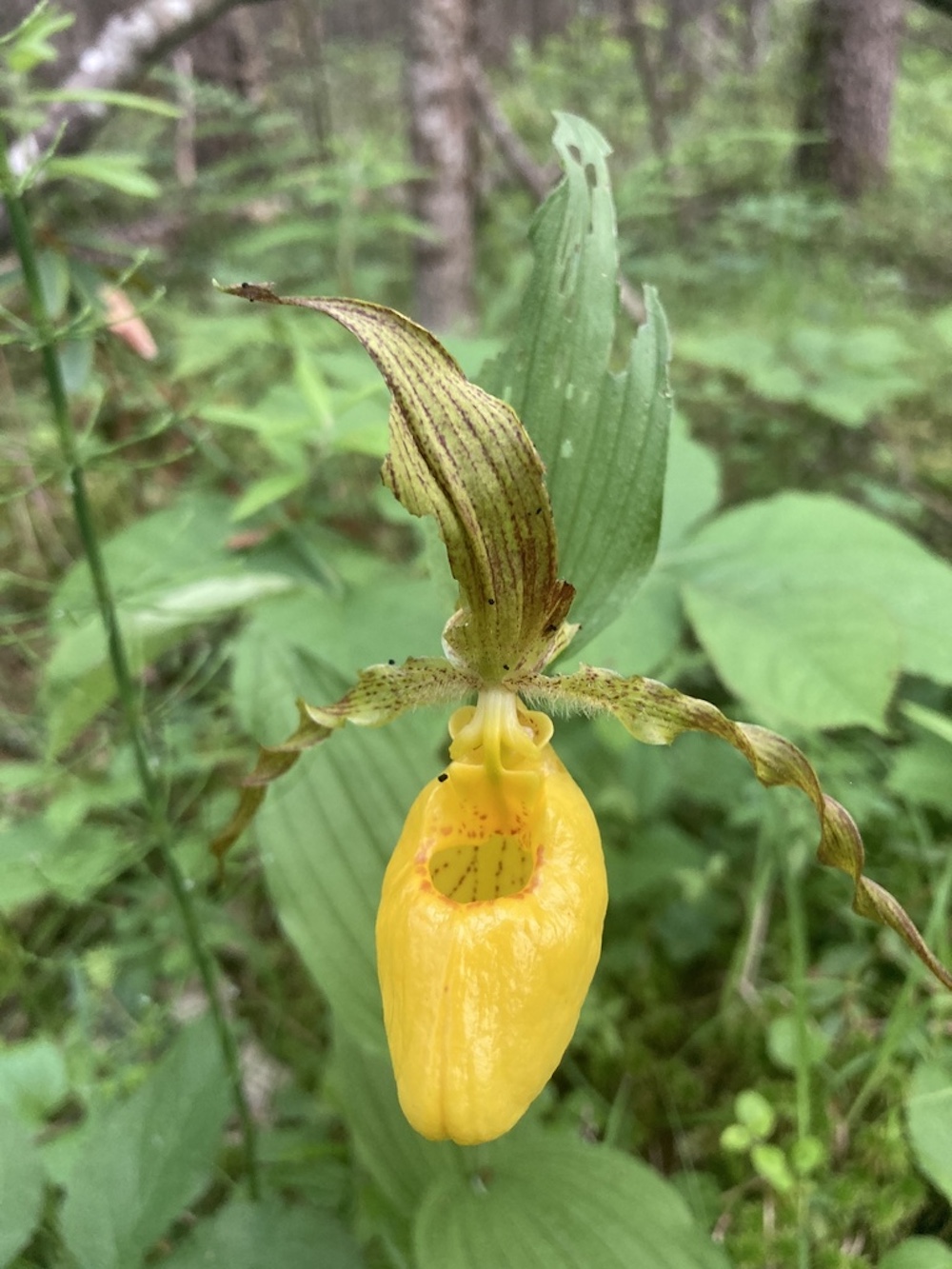
The closely related yellow lady’s slipper (Cypripedium parviflorum) is the lemon-coloured counterpart of the pink lady’s slipper. This yellow wildflower is found across Ontario, generally in wetter areas than the pink lady’s slipper. Where plants grow is often tied to the underlying geology and soil composition, and the yellow lady’s slipper prefers to grow in areas with high calcium content, such as the limestone barrens and alvars of Misery Bay Provincial Park on Manitoulin Island.
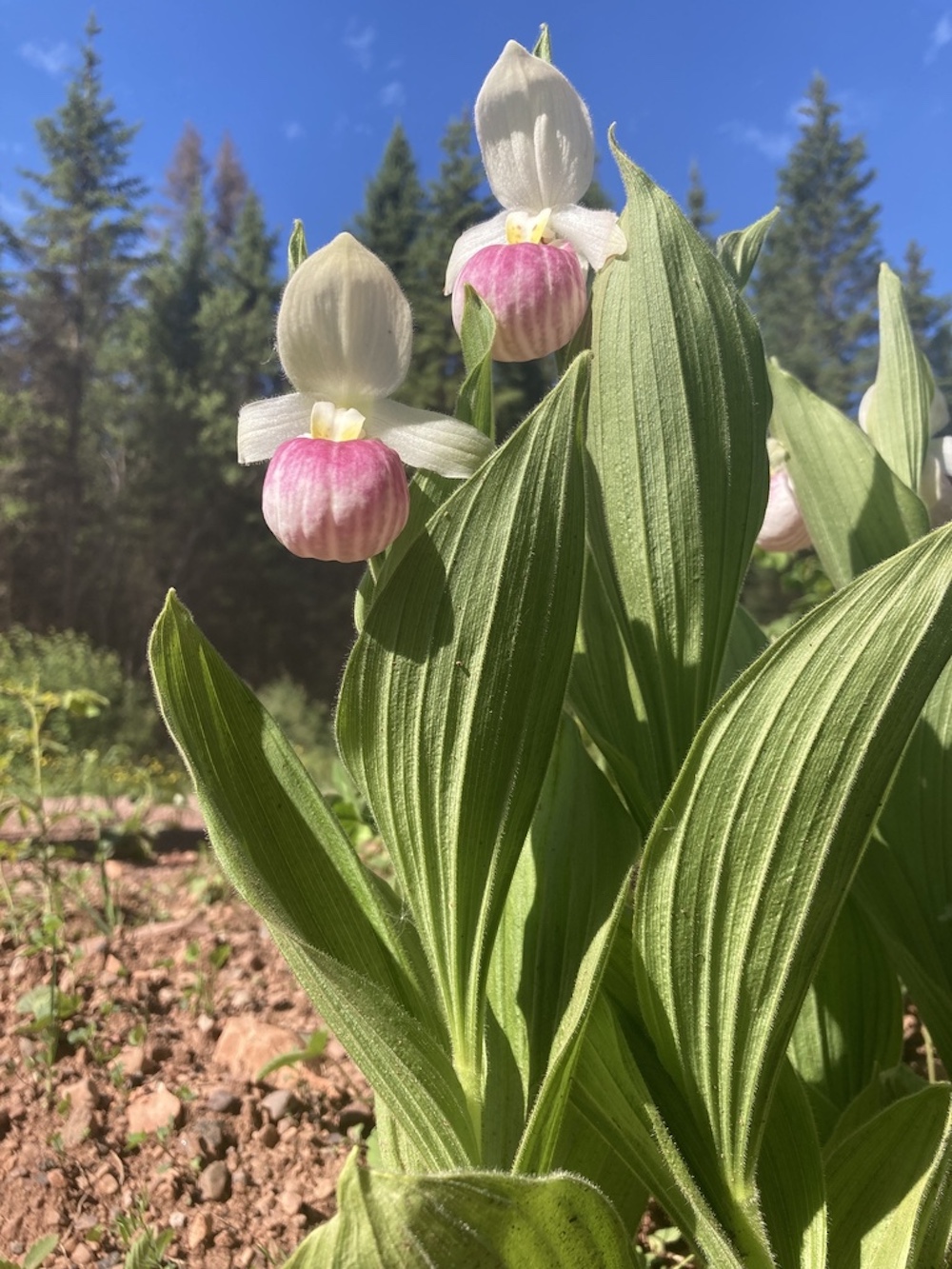
The showy lady’s slipper (Cypripedium reginae) is among the most beautiful wildflowers, with a combination of creamy white and soft pink on the flowerhead. These flowers often grow in clusters, standing out among the vibrant green mosses of the wetlands they inhabit. These are among the less common orchids, but are found in sporadic clusters throughout the province around alkaline wetlands, such as fens. They can also occur in unlikely places, like wet ditches along gravel roads.
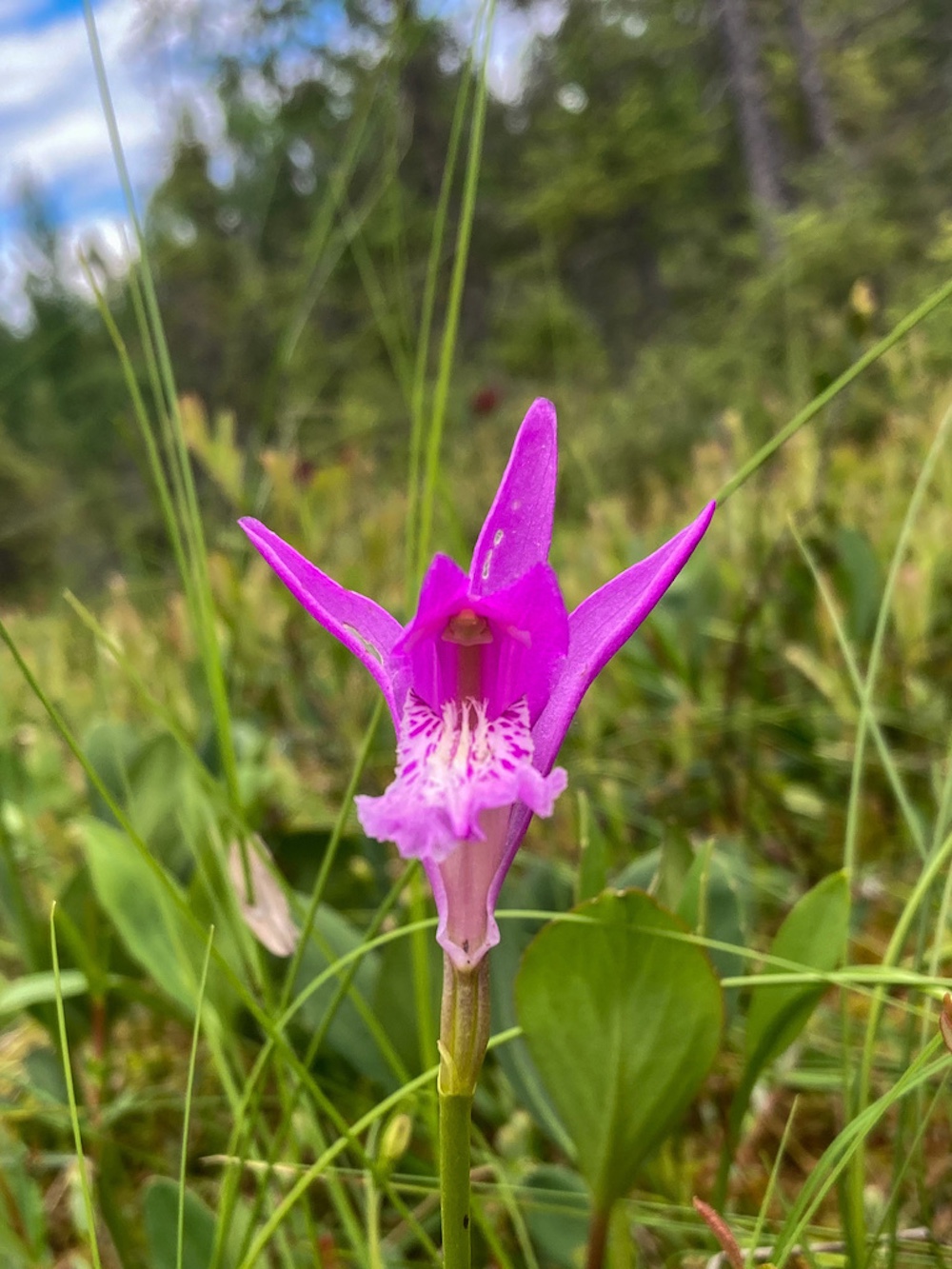
The dragon’s mouth has one of the best names for an orchid, and is one of the most unique-looking. These vibrant pink flowers are found on floating fens at water’s edges. Grundy Lake Provincial Park’s Swan Lake Trail is an excellent spot to glimpse these and other wetland-loving orchids. Read our Guide to Grundy Lake Provincial Park to plan your trip.
Any trails with floating boardwalks offer opportunities to view wetland wildflowers that may be otherwise tricky to spot, like at the beginning of the Pukaskwa Coastal Hiking Trail in Pukaskwa National Park.
A unique group of wildflowers fall within the Arctic disjunct family. In Ontario, these plants are holdovers from 9,000 years ago when the glaciers retreated from the area that is now the Great Lakes. In the immediate retreat of the glaciers, the climate was much more similar to that of the present-day Arctic. Only the hardiest plants were able to flourish.
As the climate warmed, more temperate plants established themselves, pushing out the Arctic plants in most areas. They have persisted in frigid microclimates along the shores of Lake Superior, where the icy waters maintain the cool temperatures that sustain these communities. Their main range is at higher latitudes or higher elevations; hence the term Arctic-alpine disjuncts, referring to communities outside the primary range.
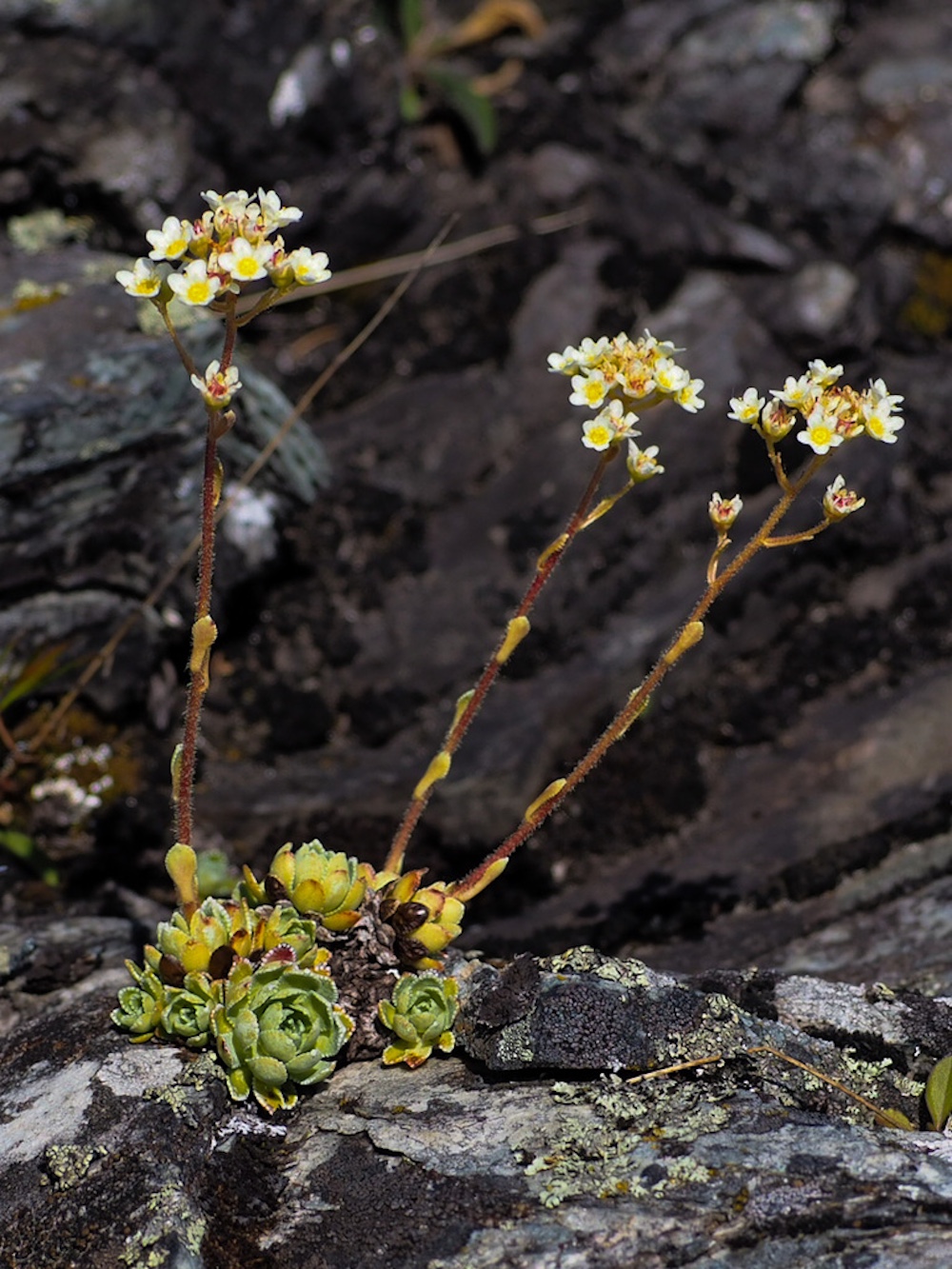
You can find the suite of hardy plants in the shaded crevasses of islands and rocky coastlines on Lake Superior’s North Shore. Encrusted saxifrage (Saxifraga paniculata) is an easily recognizable Arctic disjunct, with succulent leaves in an intricate rosette formation. The edges of the leaves are lined with lime secretions, giving the leaf margins a pearly appearance. The flower occurs in early June, and is a delicate white flower.
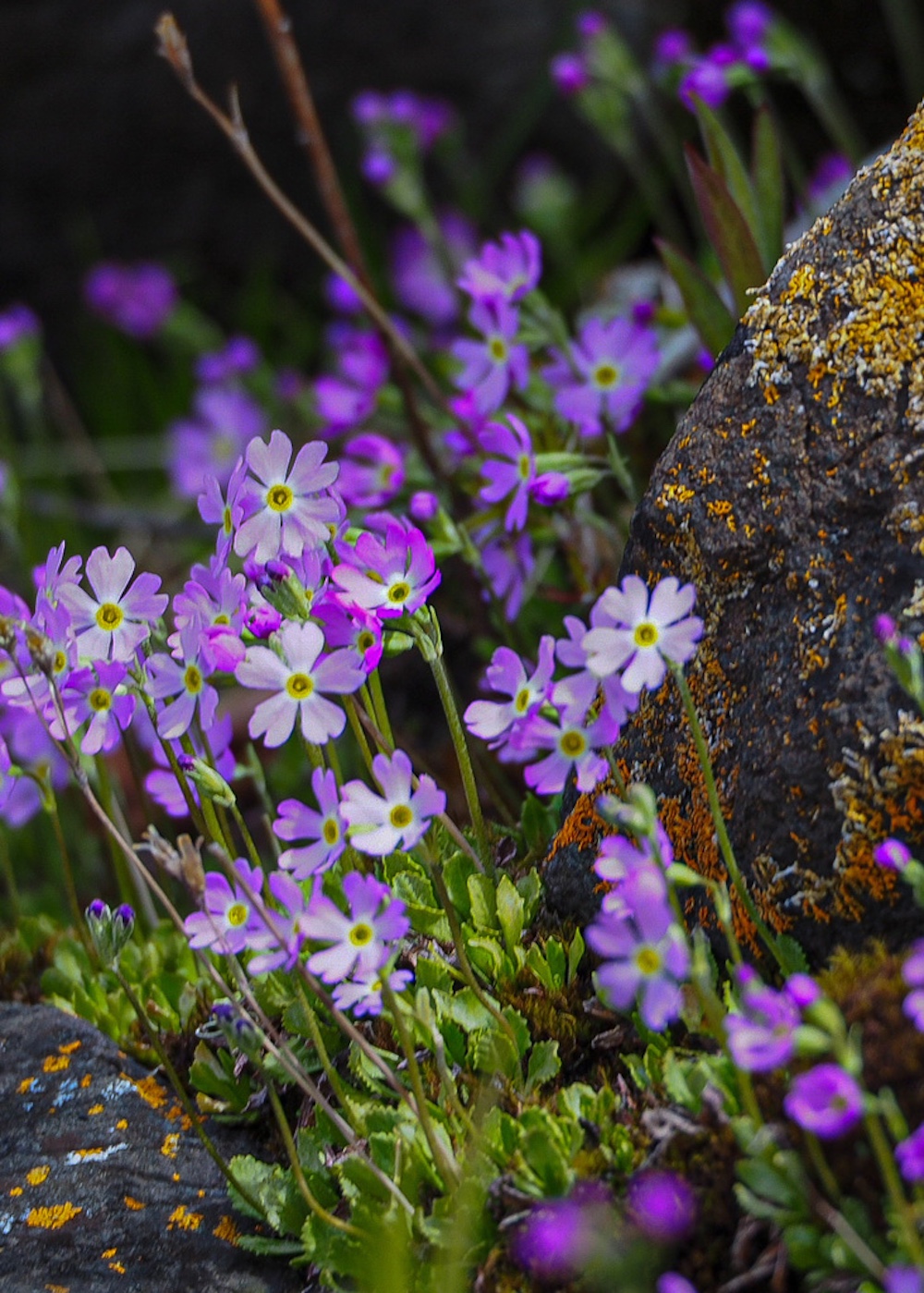
Mistassini (or bird’s eye) primrose (Primula mistassinica) is a delicate pink-purple flower that is extremely common in the subarctic Hudson Bay Lowlands, but also pops up along Lake Superior. The leaves of this wildflower are tiny; but when blooming, the intricate flower clusters add a splash of purple against the slate-gray basalt rocks on the shoreline.
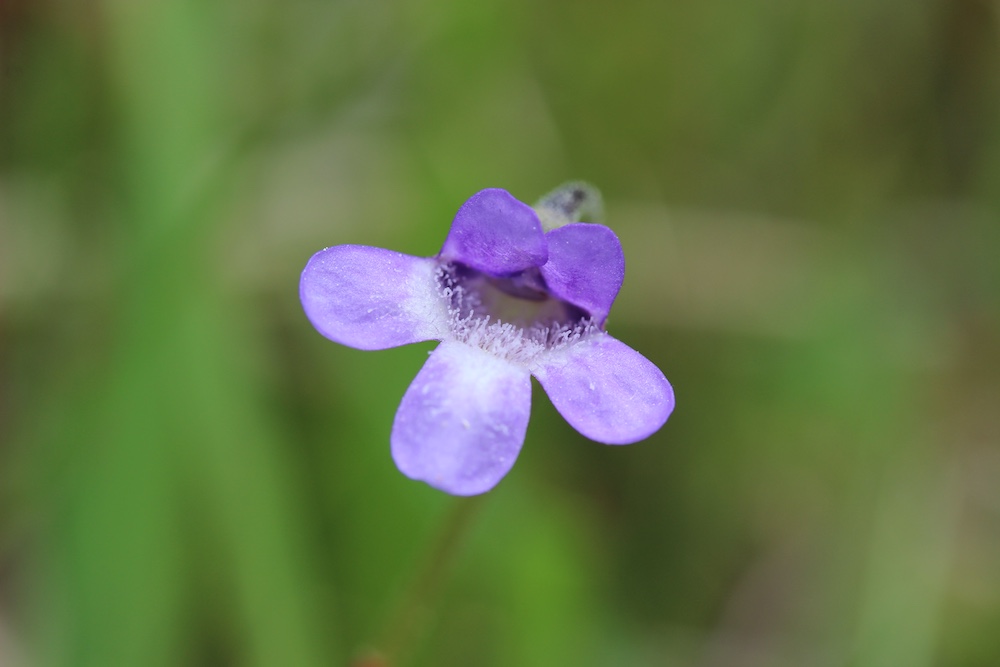
The common butterwort (Pinguicula vulgaris) is one of the weirder and more wonderful wildflowers along the North Shore. To survive in an area with such a short growing season and limited nutrients, this carnivorous plant supplements itself with insects. Its sticky leaves act as flypaper, trapping unsuspecting bugs that land on them, including blackflies. Butterwort is recognizable by the triangular yellow-green leaves and deep purple flowers. It can be found on saturated soil or moss in the cracks of rocks along the Lake Superior shoreline.
Arctic-alpine disjuncts are abundant and easily accessible in Pukaskwa National Park’s Southern Headland Trail or Neys Provincial Park. More adventurous wildflower enthusiasts can view these flowers from the water on a sea kayak trip through some of Lake Superior’s remote island chains.
Read our Guide to Neys Provincial Park to plan your trip.
The tail end of summer is brushed by the golds and purples of goldenrods and asters lining meadows and roadsides.
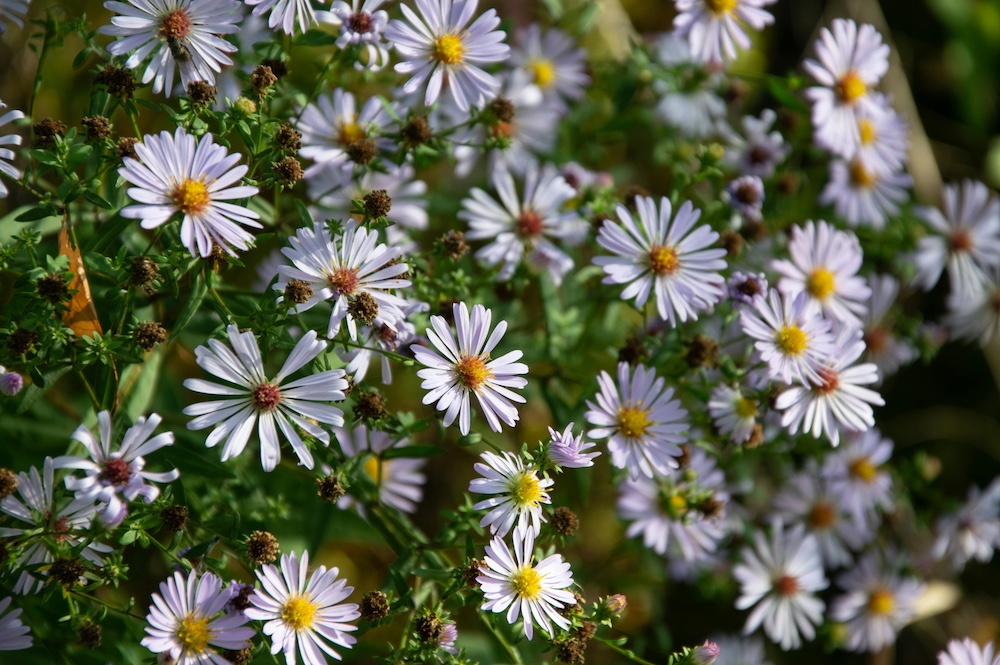
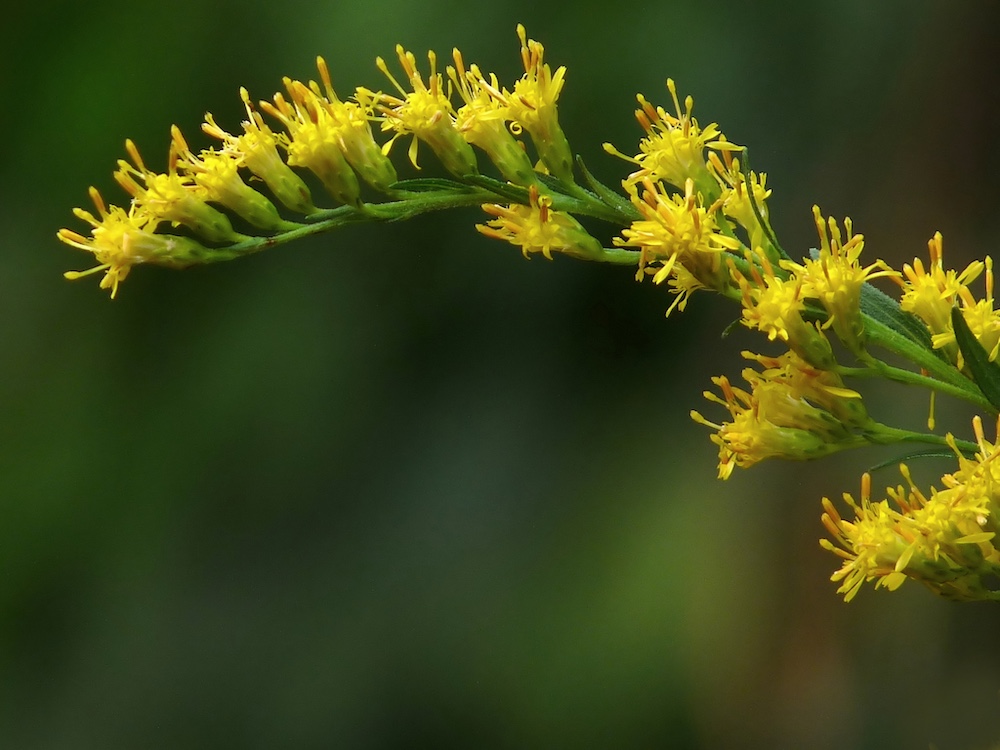
Asters (Symphotrichium spp.) are related to daisies, with delicate petals and range from white to deep purple. They readily grow in freshly disturbed areas, along with goldenrods (Solidago spp.), where they take over the fields. It’s no surprise that these native plants are vital pollinators for myriad insects, including bees and butterflies.
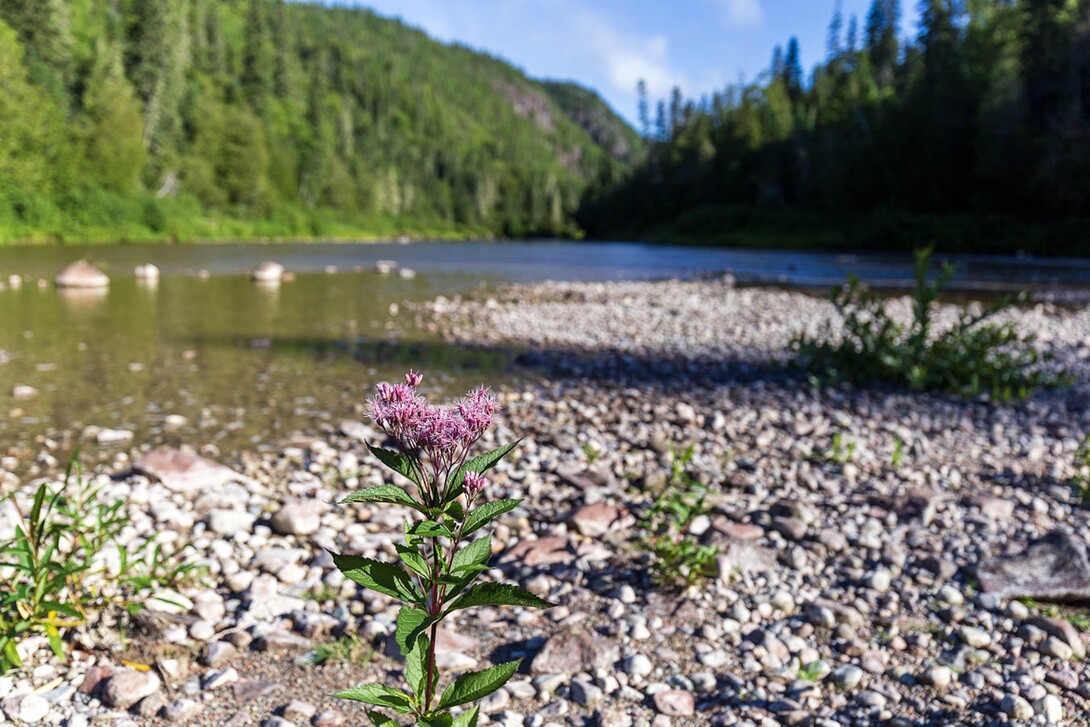
In wetter areas, Joe Pye weed (Eutrochium maculatum) joins these pairs. It takes on a deeper lavender and grows up to 1.5 metres tall.
These late-summer wildflowers bloom from July to September and are found throughout the province. Any natural area with meadows, marshes or clearings will have some of these to see. Try the Beaver Meadows Trail at Kakabeka Falls Provincial Park, or view them in the pastures on the drive to Sleeping Giant Provincial Park.
Read our Guide to Sleeping Giant Provincial Park to plan your trip.