How to Catch a Rare Aurora Trout
Found in only a handful of stocked lakes and open just ten weeks a year, the aurora trout takes some planning to catch.
By Len Talarico


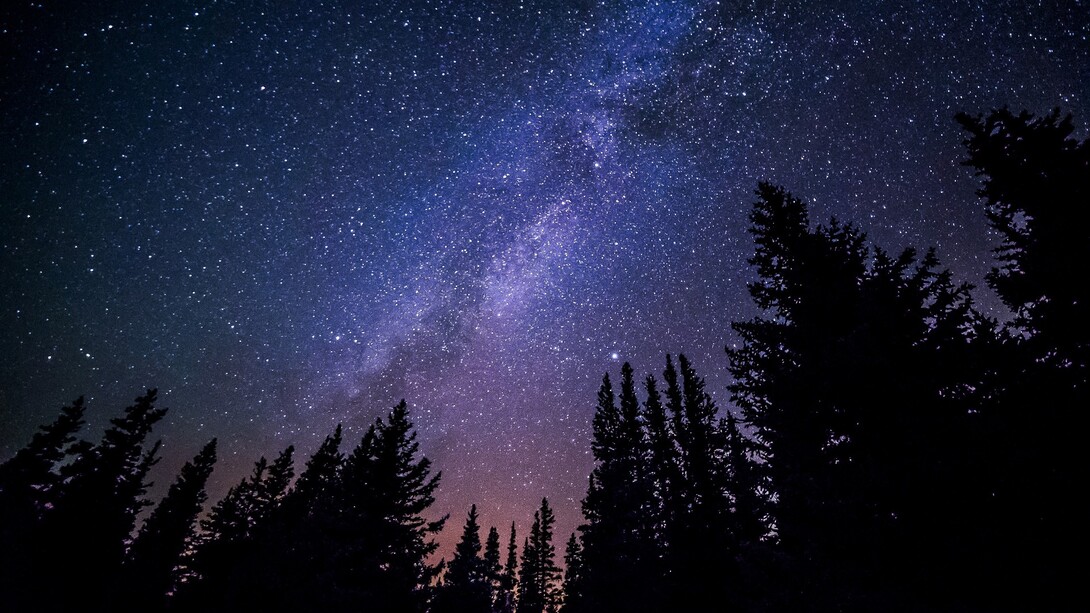
Whether it's “star light, star bright” or “twinkle, twinkle, little star," in song or in verse, we earthlings have always had a fascination with the night sky. It was the Greeks who first noticed groupings of stars that suggested the imaginary shape of an animal, object, person, or even a god. They created myths and stories about each constellation–stories which have survived to present day.
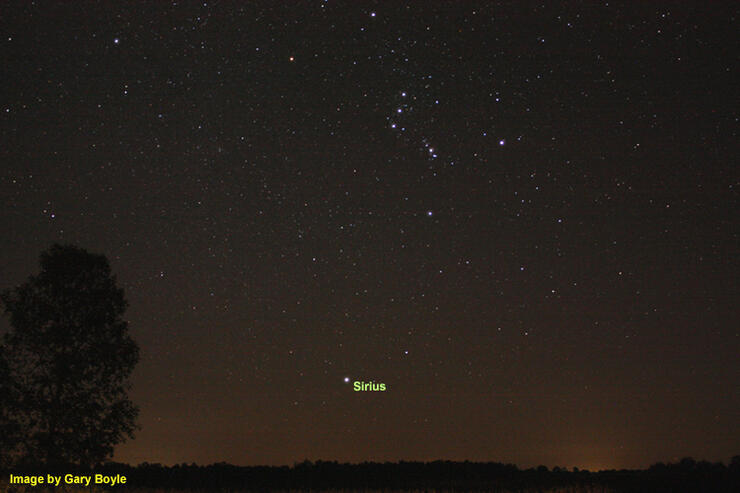
Farmers living along the Nile River had a different take on the sky. They noticed a correlation with early morning stars and the change of seasons. In mid-September, the constellation Orion the Hunter with the star Sirius rose in the east an hour before sunrise. This was their cue to harvest the crops before the Nile flooded their fields. Six months later, in late March, when Sagittarius the Teapot rose an hour before sunrise, spring was upon them and they knew it was safe to sow the crops for a new growing season.
And while the stories we tell about the night sky may change over time, the stars remain constant. In fact, the next time you're at your campsite or cabin enjoying the clear evening skies of Northeastern Ontario, look up and marvel at those same stars that human beings throughout time have gazed upon.
There are numerous stargazing apps available for both IOS and Android–just point your phone at the sky and the app will identify constellations, stars, and planets. Popular stargazing apps include SkyView Lite, NASA, and StarChart along with free "planetarium" programs for your desktop such as Stellarium. Along with identifying objects in the sky from wherever you are on the planet, you can go back and forth in "sky time" to better prepare for viewings and make sure you get the best pictures. One of these fantastic groupings will be visible on November 4th: the planets Mars, Venus and Saturn along with a thin crescent moon low in the western sky around 7 p.m. EST.
Autumn is the best time of year to enjoy the night sky. First of all, the sun sets earlier each night, allowing more observing hours. Pesky mosquitoes are no longer present and hot, hazy nights now give way to clear crisp evenings which make for ideal observing conditions. It is also the time we have our last look at the setting summer constellations and rejoice the appearance of our winter friends rising in the east.
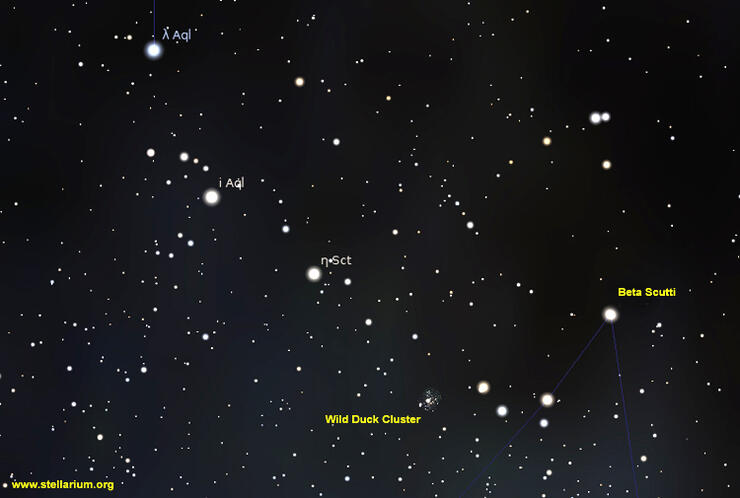
An impressive object to locate via binoculars is an open cluster of stars nicknamed “The Wild Duck.” Located in the constellation Scutum, this loose collection of stars is one of my favourite objects to show with a telescope at star parties. To hunt down this target, first locate Beta Scutti residing some 915 light years away. Appearing half the width of the full moon, the cluster is found at the eight o’clock position. The Wild Duck is located about 6,200 light years away from us and holds a few hundred suns.
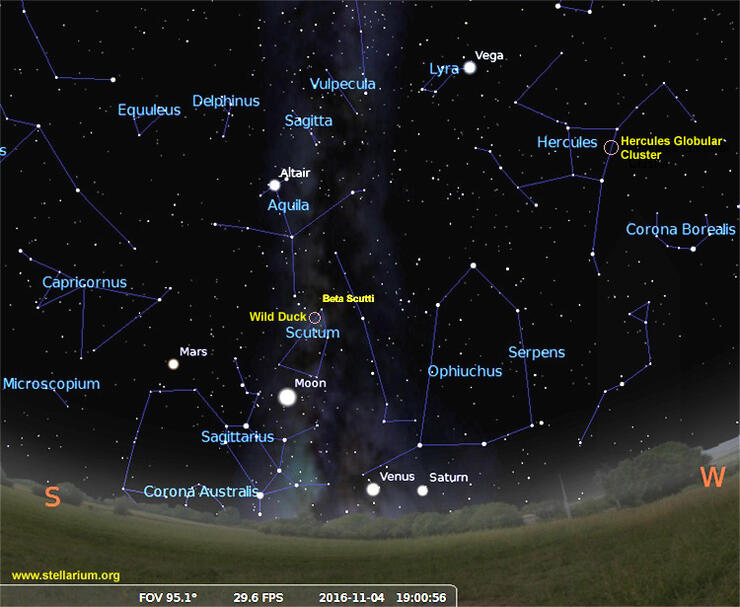
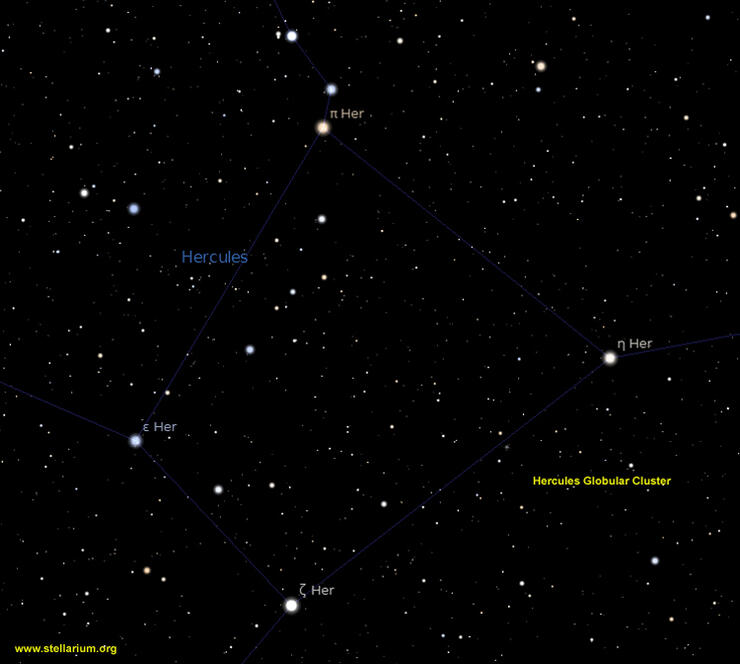
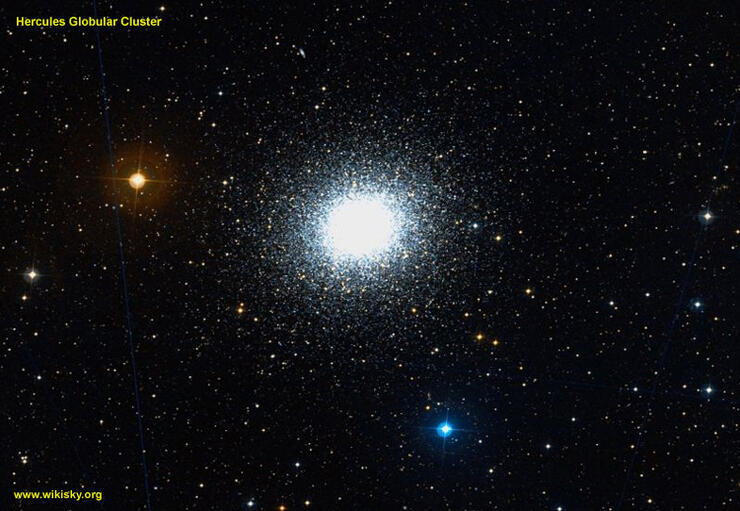
Next, locate the constellation Hercules to the upper right of the chart. Known as the Hercules Globular Cluster or by its catalogue number M13, astronomers estimate this fuzzy snowball of stars has a population ranging from 300 thousand to 1 million. Our Milky Way Galaxy contains 157 globular clusters.
The Milky Way is one of a recently revised estimate of 2 trillion galaxies in the known universe. Ranging in distance from tens of millions to hundreds of millions of light years away, the light gathering power only a telescope can deliver is required to locate these remote islands of stars. Binoculars allow you to see the greyish glow of a few closer galaxies up to about 30 million light years away–however dark skies and the moonless nights are ideal conditions for spotting them.
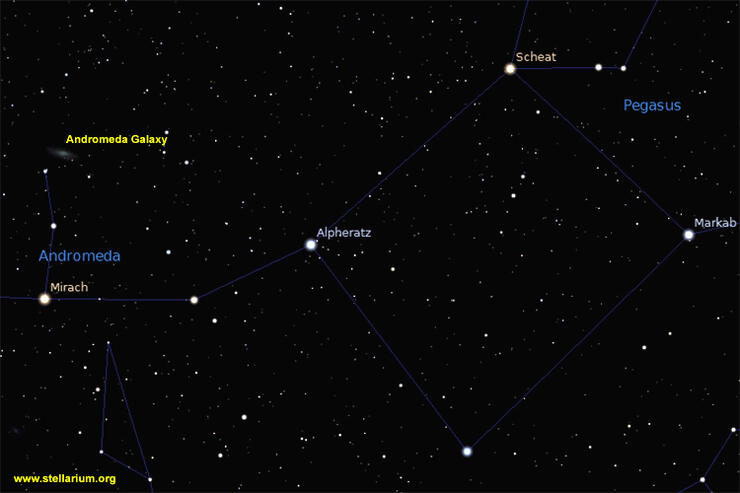
There is one galaxy you can see with the naked eye. At a distance of 2.5 million light years, the Andromeda Galaxy is our galactic next-door neighbour. It is now well positioned directly overhead on these cool autumn nights.
The dark skies of Northeastern Ontario are ideal to spot the Andromeda Galaxy–home of an estimated 1 trillion stars or five times the Milky Way’s population.
Until next time, clear skies everyone.