The Perfect Shore Lunch
Try this award-winning recipe on your next Ontario fishing trip.
By Gord Pyzer










Mid-summer and giant, knee-knocking northern pike go together like ham and eggs, champagne and caviar, or on my budget, peanut butter, and jelly. It is counterintuitive to what anglers think: the only time you can catch big toothy critters is early and late in the season when the weather and water are downright cold and nasty.
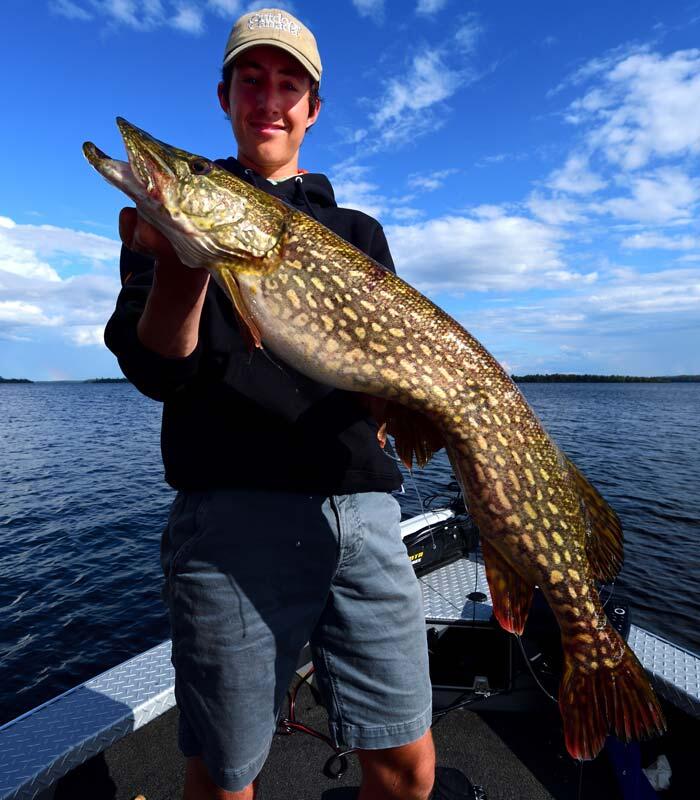
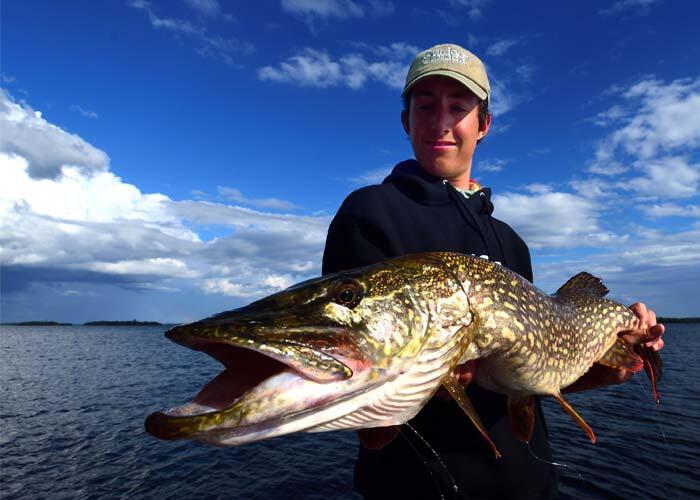
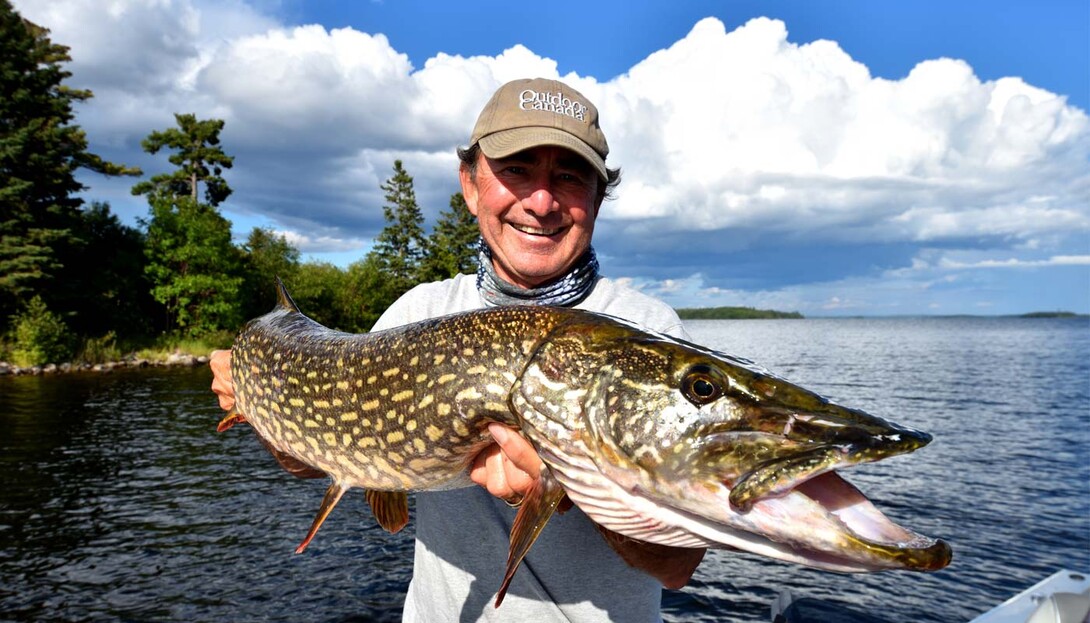
Give me a hot day in the middle of a gorgeous Northern Ontario summer, however, and I am in my glory. As I was the other day when grandson Liam slid the net under a magnificent 45-inch Sunset Country gator while a tropical sun beat down upon us.
I should mention, too, that the spot where I caught the pristine pike is the same spot where buddy Bob Izumi joined me several years ago to film one of his Real Fishing Television Show and where I also guided the then Vice-President of the Madison, Wisconsin Chapter of Muskies Inc. to his personal best fish.
In other words, it is a big fish spot.
And what makes it such a mammoth magnet is an ingredient that the vast majority of anglers typically overlook. It offers quick and easy access to deep water and the plethora of forage fish that swim nearby.
Understand what I am saying?
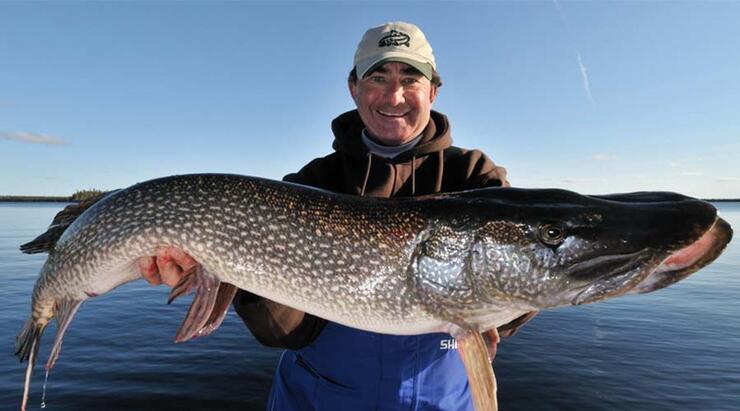
While the spot has a superb section of flat, shallow, warm water, the structure also breaks quickly into the main basin of the lake. And it is the secret ingredient that makes it and other spots like it shine. If a big northern pike or muskie wants to dine on a whitefish or herring, it can slide out quickly and grab it. But then the goliaths can swim right back up into the tepid shallows to optimize their metabolic rate.
Talk about the best of all possible worlds.
"If they are going to catch a fish out there, they’re not going to stay out there because it is not their optimal temperature," says Dr. John Casselman, the renowned esocid scientist who for years played a pivotal role in Ontario's aquatic research program. "They’re going to go where the optimal temperature is because the growing season is short and they have to take advantage of it."
According to Casselman, who carried out the celebrated muskie cliethrum program with the late Dr. Ed Crossman, from the Royal Ontario Museum, the optimal water temperature for big northern pike is in the range of 16° to 18° C (60° to 65° F). So, when they slide offshore to grab dinner, they're slipping into colder water temperatures and thus return quickly to the shallows. The best way for them to do this is by relating to structures that offer them quick and easy access to both venues.
In other words, structures with fast breaks.
"Let’s look at muskellunge," says Casselman, who, upon his retirement from the Ontario Ministry of Natural Resources, was presented with the prestigious Award of Excellence from the American Fisheries Society. "They’re usually found in shallow embayments. They require a higher optimum temperature than pike, about 2° to 3° higher, so in an area like Georgian Bay, the very biggest muskellunge are found really shallow. I’ve watched these railway ties swimming in and out, optimizing their temperature."
"Fish are tuned into their environment," Casselman chuckles, "whereas we are not. We put on a coat when we're cold or take it off when we're hot. Pike and muskies will feed out deep, but then come shallow to digest."
And that is when I asked Casselman the question, the answer to which turned on my light bulb. If you're a big pike or muskie, I wonder, why not just stay out in the deeper water with the food? Why run back and forth?
"Running back and forth is really gliding back into the bay," he explains. "I don’t know how much energy that takes, but think about how they can optimize their metabolism if they elevate their body temperature from 18°C to 24°C.
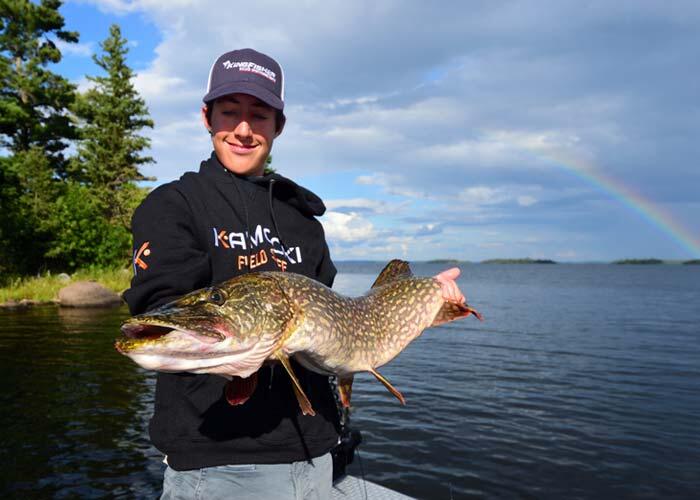
"You have to put the growing season into perspective. A big northern pike or muskellunge will spawn in the spring, then feed for maybe a month before it gets its condition back, so that puts it into mid-June or even later—let's say the first of July. They’re starting now to find food to grow, so they’re growing from the first of July until maybe the end of August. By the last week in August, they’re starting to develop eggs again. So, they need to optimize whatever extra time and energy is left over."
And the most efficient way they can do this, of course, is by relating to specific areas of your favourite lake, river, reservoir, pit, or pond—mammoth magnets, I call them—that offer them quick and easy access to both shallow water and the food-rich main lake basin.
In other words, structures with fast breaks.